

San Francisco startups operate in a legal minefield that most founders don’t see coming. Between California’s strict labor laws, complex equity structures, and the Bay Area’s competitive talent wars, one misstep can cost you thousands or derail your funding.
We at Primum Law Group have seen countless founders make preventable legal mistakes in their first year. This guide covers the SF startup legal advice you need to build on solid ground.
Why San Francisco Startups Face Unique Legal Challenges
California’s Employment Law Creates Immediate Risk
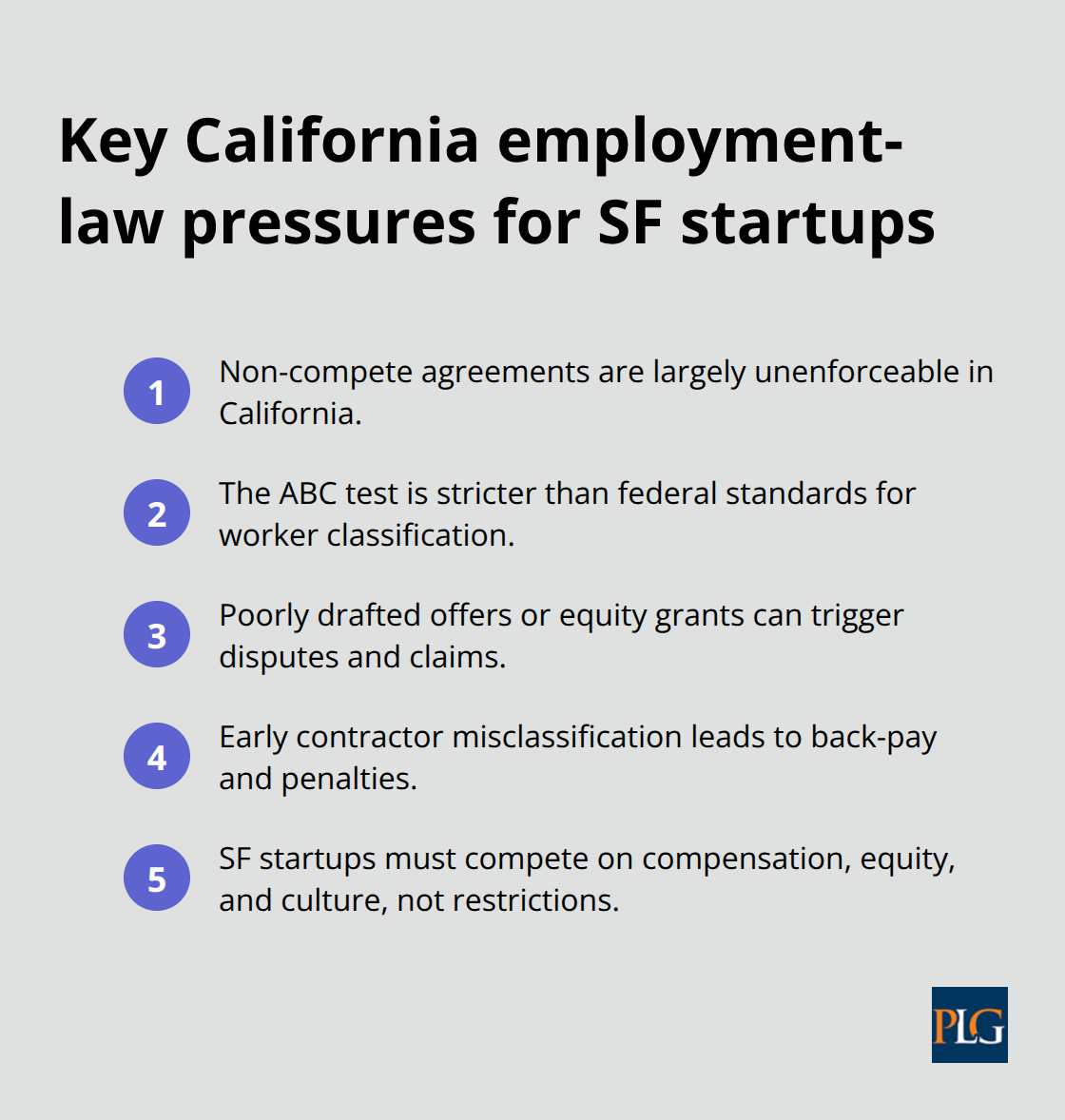
San Francisco startups operate under pressures that most other regions do not impose. California’s employment laws rank among the most founder-unfriendly in the country, which means your hiring decisions carry legal weight from day one. Non-compete agreements are largely unenforceable in California, so you cannot lock down talent through restrictive covenants the way companies do elsewhere. This forces SF startups to compete on compensation, equity, and culture instead of legal restrictions.
The talent market is so aggressive that a single poorly drafted offer letter or equity grant triggers misclassification claims or wage disputes. California requires companies to classify workers as employees or independent contractors based on the ABC test, which is stricter than federal standards. Most startups get this wrong initially, treating early hires as contractors to save money, only to face back-pay claims and penalty exposure later.
Equity Structures Demand Precision From Day One
Equity structures in the Bay Area are unusually complex because venture capital expectations shape how you must design your cap table from inception. Standard Silicon Valley practices like post-money SAFEs and option pools of 15–20 percent are not universal norms but investor preferences that founders often accept without negotiating alternatives that fit their company.
If you structure your equity incorrectly early, you cannot easily unwind it without triggering tax consequences or founder disputes. Venture investors will scrutinize your cap table before funding, and any structural weakness becomes a negotiating point that costs you later. The complexity multiplies when you add multiple funding rounds, secondary sales, or employee departures-each event requires careful documentation and tax planning.
Regulatory Obligations Start Immediately
The regulatory environment compounds this pressure significantly. Data privacy laws like California Consumer Privacy Act compliance obligations start the moment you collect customer data, not when you scale. Sales tax nexus rules for SaaS businesses shift frequently, and getting it wrong means back taxes plus penalties.
SF startups also face stricter intellectual property documentation requirements because venture investors will scrutinize your freedom to operate before funding. If you cannot prove your team did not build your product on previous employer technology, you lose funding or face litigation. These three pressures-employment law strictness, equity complexity, and regulatory tightness-intersect in ways that generic legal templates simply cannot address, which is why the next section covers the legal foundations that protect you from these overlapping risks.
Building Your Legal Foundation
Choose Your Entity Structure Before You Hire
Getting your entity structure right in San Francisco means understanding what venture investors will demand before they write a check. Most founders assume they should incorporate as a Delaware C-corporation because that is what everyone else does, but this choice carries real consequences. Delaware incorporation makes sense if you plan to raise institutional venture capital, because LPs in venture funds expect it and it simplifies employee option plans under Section 409A of the tax code. However, if you are bootstrapped or planning to stay small, a California LLC or benefit corporation may lower your tax burden and administrative overhead. The decision is not reversible without tax friction, so get this right before you hire your first employee or grant equity.
California benefit corporations let you legally pursue social or environmental missions alongside profit, which resonates with Bay Area founders but signals to some investors that you may prioritize impact over returns. Founders waste months later trying to convert structures because they did not align with their actual funding strategy.
Assign Intellectual Property in Writing From Day One
Intellectual property documentation is where most SF startups fail silently until a venture investor’s lawyer flags it during due diligence. You need written IP assignment agreements from every founder and early employee before they start work, not after. These agreements confirm that work created during employment belongs to the company, not the individual. California law presumes that inventions created outside work hours on personal equipment belong to the employee unless you have a signed agreement stating otherwise.
Assign all prior work, side projects, and pre-company code to your company in writing from day one. This protects you from disputes later when investors scrutinize your freedom to operate. A single unassigned codebase or patent application can kill a funding round or trigger litigation.
Structure Equity Vesting to Align Incentives
For equity compensation, stock option vesting schedules must follow Section 409A rules or your employees face immediate tax liability when they exercise options, destroying the tax advantage of equity. Standard practice is four-year vesting with a one-year cliff, meaning employees earn nothing for the first year and then earn monthly thereafter. If an employee leaves after six months, they own nothing. This structure protects the company from dilution caused by early departures and aligns incentives toward longer tenure.
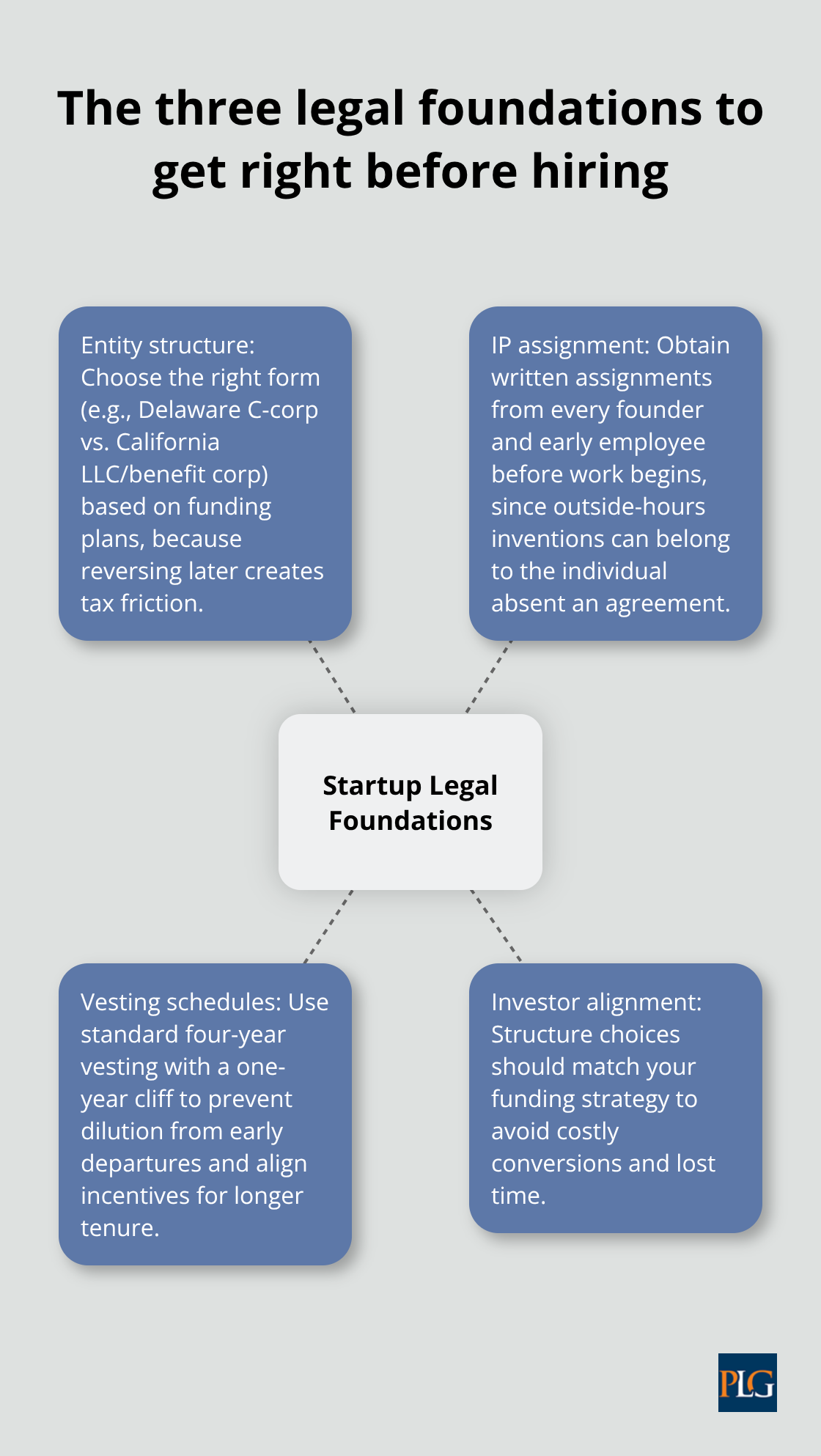
Startups that skip proper vesting documentation or use non-standard schedules create tax traps that employees and investors discover later, often triggering disputes or failed fundraising rounds. The complexity of equity structures in the Bay Area means that getting vesting right from the start saves you thousands in legal fees and prevents founder conflicts down the road. With these three foundations in place-entity structure, IP assignment, and vesting schedules-you are ready to address the hiring and compliance decisions that will shape your first year.
Common Legal Mistakes San Francisco Startups Make
Founder Agreements and Cap Table Chaos
Most San Francisco startups collapse under legal weight that founders could have prevented with proper documentation. Founder disagreements destroy more early-stage companies than market failure, yet founders skip written agreements because they trust each other or want to move fast. The moment a co-founder leaves, dies, or disagrees on direction, the absence of a written founder agreement becomes catastrophic.
Cap table management compounds this damage-if you cannot prove who owns what equity, your company cannot raise funding. Venture investors conduct cap table reviews before writing checks, and any ambiguity kills the deal. Founders who spent months building product discover they cannot close funding because their equity records are incomplete or contradictory.
Worker Misclassification Under California Law
California labor law violations happen through carelessness, not malice. Misclassifying a worker as an independent contractor instead of an employee under California’s ABC test exposes you to back-pay claims, penalties, and employer tax liability that can exceed tens of thousands of dollars. Wage and hour violations like improper break policies or off-the-clock work create class action exposure-one disgruntled employee filing a complaint can trigger audits affecting all employees.
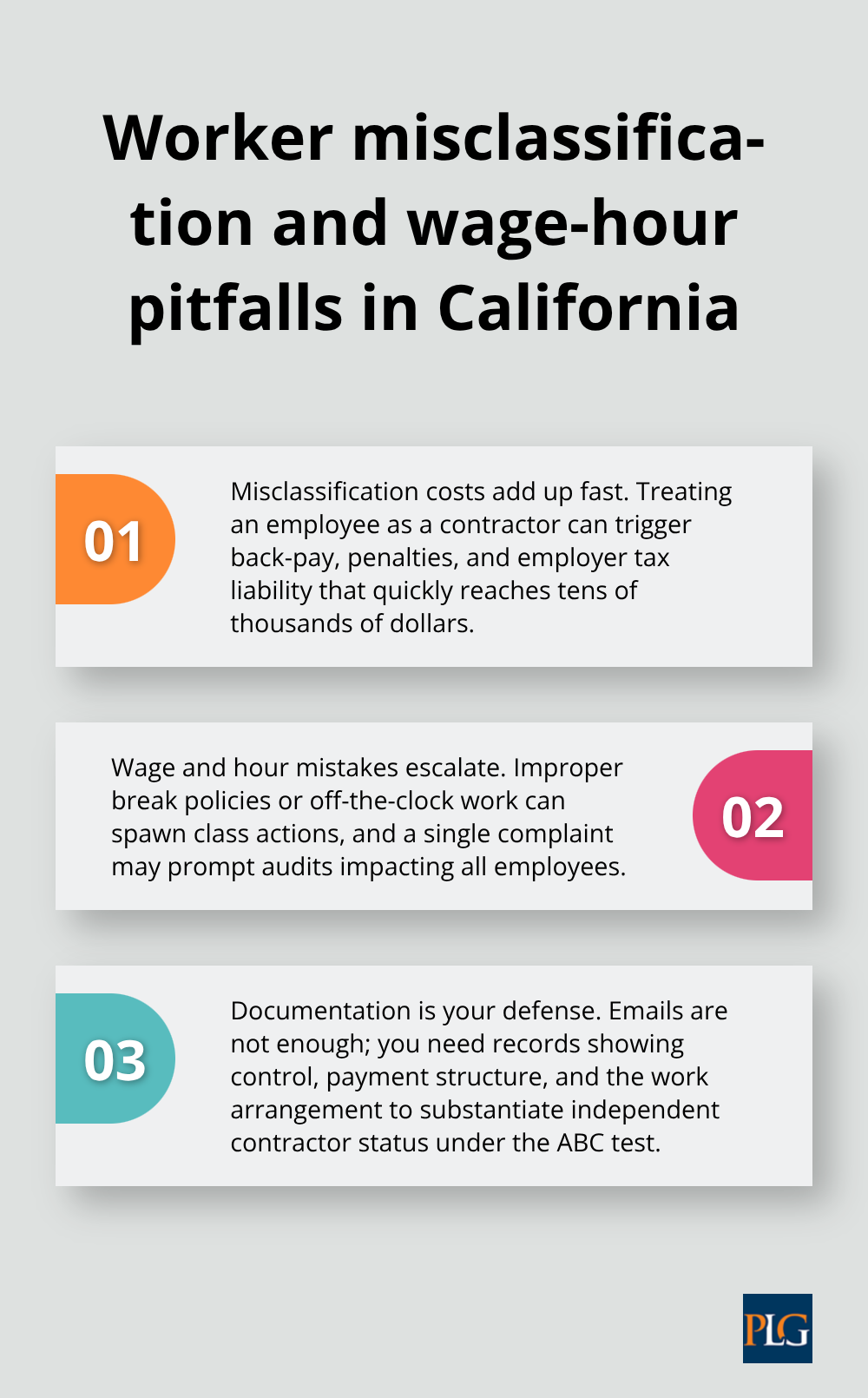
Documentation failures amplify these risks because without written records of decisions, you cannot defend your classification choices. A single email saying you intended to hire someone as a contractor does not satisfy California law; you need documented evidence of control, payment structure, and work arrangement that proves independent contractor status under the ABC test.
Missing Board Minutes and Equity Decisions
Poor documentation of early business decisions creates liability that compounds over time. Decisions about equity grants, option pricing, board approvals, and major pivots must be documented contemporaneously in board minutes or written resolutions, not reconstructed months later from memory. If you granted equity at an incorrect valuation because you skipped a 409A valuation opinion, employees face unexpected tax bills and investors view your cap table as unreliable.
If you made hiring or termination decisions without documented performance issues or compliance with California’s strict notice requirements, wrongful termination claims follow. The cost of fixing these mistakes retroactively-amending cap tables, obtaining late valuations, or defending litigation-far exceeds the cost of getting documentation right upfront. Startups that treat legal documentation as a checkbox rather than a protection mechanism pay for that mindset when growth stalls or disputes erupt.
Final Thoughts
The legal mistakes you make in your first year compound into funding obstacles, founder disputes, and compliance penalties that drain resources for years. SF startup legal advice requires understanding three overlapping pressures: California’s strict employment laws, venture capital expectations around equity structures, and regulatory obligations that start immediately. Getting your entity structure, IP assignments, and vesting schedules right before you hire protects you from the most common and costly mistakes.
Local legal guidance matters in the Bay Area because generic templates and out-of-state lawyers miss the specific intersection of California labor law, venture capital norms, and San Francisco’s competitive talent market. A Delaware incorporation decision that works for a bootstrapped company in Austin creates friction with Bay Area investors, while an employment agreement that passes muster in Texas violates California’s ABC test. The regulatory environment shifts faster in San Francisco than elsewhere, and staying compliant requires lawyers who track these changes actively.
Document your founder agreements, assign intellectual property in writing, and confirm your entity structure aligns with your actual funding strategy before you hire your first employee. If you have already hired without these protections, fix the gaps now rather than discovering them during due diligence. We at Primum Law Group help San Francisco startups build legal foundations that survive growth and attract investment-reach out to discuss your specific situation and get your legal house in order before the next funding round or hiring milestone arrives.