

San Francisco startups face a legal landscape that’s fundamentally different from other cities. California’s employment laws, investor expectations, and regulatory requirements create challenges that demand local knowledge.
At Primum Law Group, we’ve seen firsthand how startup counsel in San Francisco can make the difference between smooth growth and costly mistakes. The right legal partner guides you through funding rounds, protects your intellectual property, and helps you avoid the compliance failures that derail early-stage companies.
Why San Francisco’s Legal Landscape Demands Local Knowledge
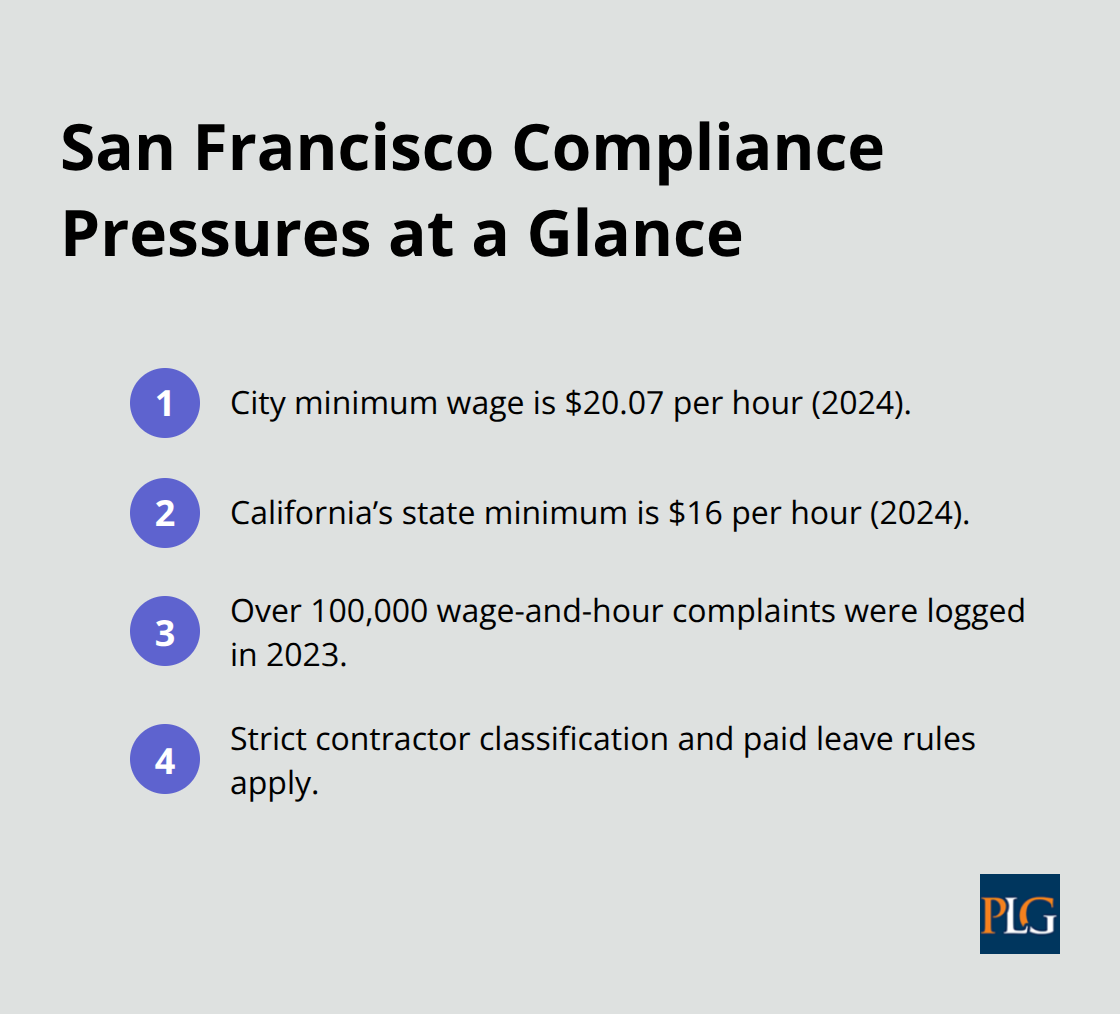
San Francisco startups operate in a regulatory environment that’s stricter and faster-moving than most U.S. cities. California’s employment laws set the bar higher than federal minimums, and San Francisco adds its own layer of local requirements on top. The minimum wage in San Francisco is $20.07 per hour as of 2024, significantly above California’s state minimum of $16. If you hire in the city, you face mandatory paid leave policies, strict classification rules for contractors versus employees, and aggressive enforcement by the Department of Fair Employment and Housing. These aren’t theoretical concerns-the California Department of Industrial Relations logged over 100,000 wage-and-hour complaints in 2023 alone. One misclassification or missed payroll deadline can trigger audits, penalties, and back-pay liability that drain early-stage cash reserves.
Local counsel understands how San Francisco’s enforcement agencies actually operate and what triggers their attention. They also understand investor expectations. Venture capitalists reviewing San Francisco startups expect clean cap tables, compliant stock option plans, and documented governance from day one. If your equity structure is sloppy, sophisticated investors will demand costly remediation before funding, or they’ll walk away. Tech investors in San Francisco increasingly focus on diversity and hiring practices-a poorly documented employment structure or discriminatory hiring pattern signals risk to firms that integrate ESG criteria into their investment decisions.
Cap Tables and Stock Options Shape Your Fundraising Success
Equity disputes destroy startups faster than almost any other legal problem. Your cap table is the definitive record of who owns what, and San Francisco investors will scrutinize it closely. If founders hold equity without proper documentation, if option grants lack vesting schedules, or if you’ve issued shares informally, you sit on a liability. The problem worsens during fundraising-due diligence exposes these gaps, and fixing them mid-round costs time and money you don’t have.
California law requires that stock options vest over time, typically four years with a one-year cliff, but only if your plan is properly drafted and compliant with securities laws. If you skip that formality, you risk having the IRS challenge your tax treatment or having a departing co-founder claim they own more than they actually do. Local counsel helps startups build cap tables and option plans that withstand investor scrutiny and prevent founder disputes before they start.
Equity Agreements Must Account for San Francisco’s Mobile Talent Market
San Francisco’s highly mobile talent market affects your equity strategy significantly. Employees move frequently between companies, and their equity agreements need clarity about what happens when they leave. Without proper documentation, departing employees can become equity disputes that consume management bandwidth and legal resources for years. Clear vesting schedules, acceleration provisions, and buyback terms protect both your company and your team members.
When you structure equity correctly from the start, you avoid the costly remediation that derails fundraising rounds and damages founder relationships. The next section explores how local counsel guides you through the entire funding process and helps you meet investor requirements that go far beyond equity documentation.
How Local Counsel Accelerates Your Funding and Growth
Funding Rounds Expose Every Legal Gap
Funding rounds expose every legal gap in your startup. When investors conduct due diligence, they scrutinize your cap table, option plans, corporate governance, IP assignments, and compliance posture. A single missing document or misaligned agreement can delay funding by weeks or trigger renegotiation of your valuation.
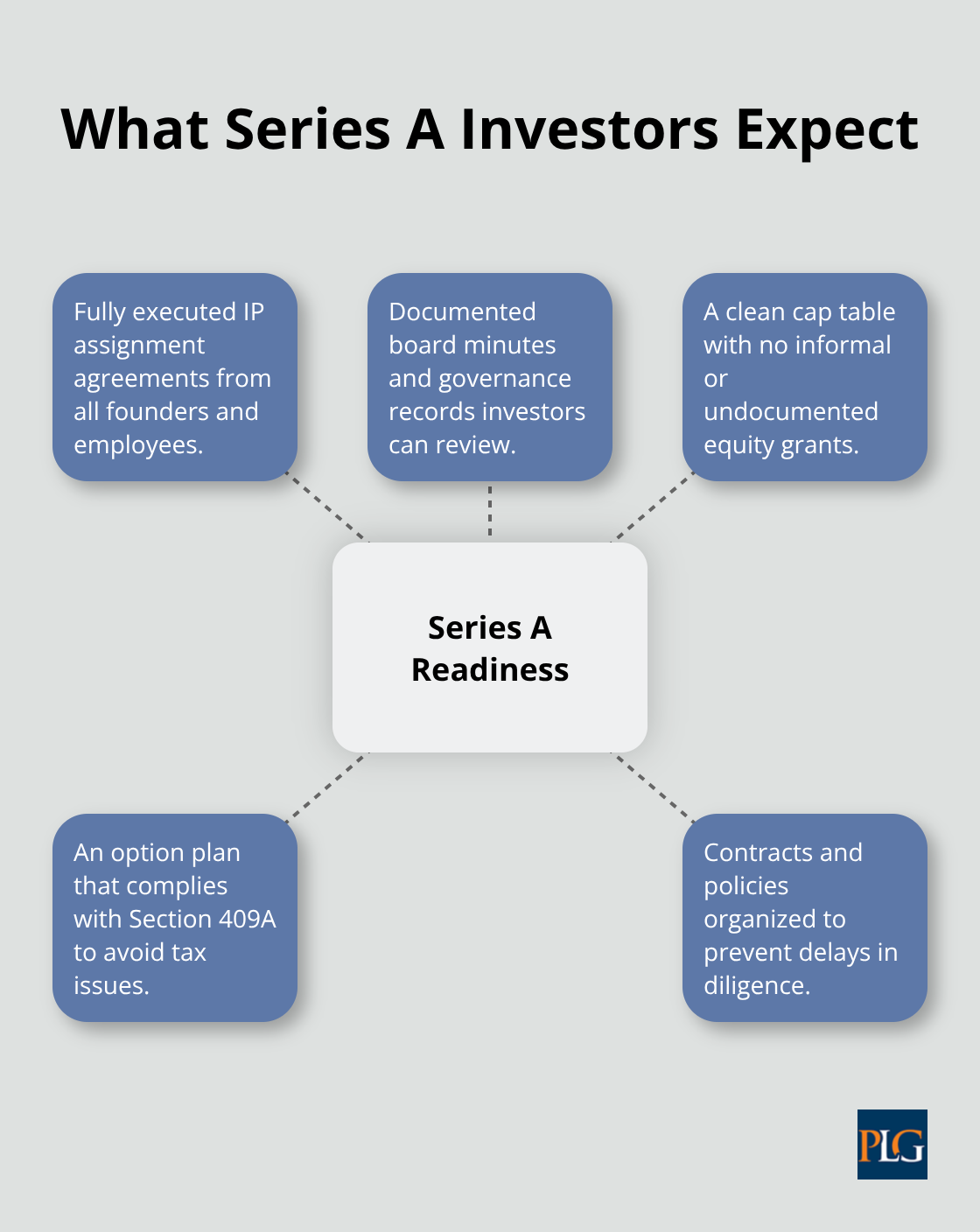
Local counsel in San Francisco understands what institutional investors actually require because they work with them constantly. They know that Series A investors expect fully executed IP assignment agreements from all founders and employees, documented board minutes, a clean cap table with no informal equity grants, and proof that your option plan complies with Section 409A of the tax code. Skipping these steps costs you dearly during fundraising.
Startups often lose months of momentum because their equity structure lacks proper documentation, forcing them to remediate issues while negotiating term sheets. Your counsel should also guide you on valuation mechanics and SAFEs versus priced rounds. If you raise through SAFEs, the terms matter enormously for your future cap table and dilution.
Understanding SAFEs, Valuation, and Tax Implications
Local counsel helps you understand how investor rights, conversion triggers, and pro-rata provisions affect your long-term ownership. They also help you navigate the tax side of fundraising, ensuring that option grants and equity awards don’t create unexpected tax liability for founders or employees. California’s tax environment compounds this complexity, particularly if you have employees across multiple states or plan to hire internationally.
Your counsel walks you through the mechanics of each funding vehicle so you make informed decisions about dilution and future control. They explain how a SAFE’s valuation cap and discount rate influence your cap table when you eventually raise a priced round, and they help you model different scenarios before you commit to terms.
IP Assignment and Business Structure Shape Your Valuation
Protecting intellectual property and minimizing tax exposure require deliberate structural choices from day one. Your operating agreement must assign all IP created by founders and employees to the company, not individuals. This is non-negotiable for tech startups in San Francisco. If your algorithms, code, or proprietary methods are held by individuals rather than the LLC, you face valuation discounts, investor hesitation, and acquisition complications.
Beyond IP, your business structure itself affects your tax burden. Many San Francisco startups operate as LLCs, but as you grow, an S-corp election can reduce self-employment taxes significantly. If you have multiple founders, you need a clear operating agreement that defines profit distribution, management authority, and buyout rights if someone leaves. Without it, California courts won’t fix governance disputes for you, and you’ll face expensive litigation.
Trade Secrets and Employee Mobility in San Francisco’s Market
Trade secret protection matters equally, especially in San Francisco’s competitive hiring environment. Your employment agreements must require confidentiality and non-solicitation language that actually holds up in court. California law restricts non-competes, so you need counsel who knows how to draft confidentiality and IP assignment language that survives scrutiny.
Local counsel helps you navigate employee mobility issues specific to San Francisco’s market, where talented engineers move frequently and take knowledge with them. Proper documentation protects your competitive advantages while you scale. As your team grows and your funding accelerates, the legal structures you build now determine how smoothly you handle the compliance and governance demands that come with institutional investment. The next section addresses the specific legal challenges that derail startups and shows you how to avoid them before they threaten your growth trajectory.
Common Legal Challenges Startups Face and How to Avoid Them
Founder disputes destroy startups more reliably than market conditions or product failures. When co-founders disagree on direction, compensation, or equity splits, the company stalls while lawyers bill thousands of dollars per month. The problem starts with sloppy documentation. Many San Francisco startups form with a handshake agreement and no written operating agreement, relying instead on California’s default LLC rules. Those defaults assume equal ownership and equal decision-making authority, which almost never matches reality. One founder handles product, another handles sales, a third manages operations. When tensions rise-and they will-no written record exists of what each founder actually agreed to. The result is litigation that costs $50,000 to $200,000 before trial, consuming cash reserves and management attention that should go toward customers and product.
Operating Agreements Prevent Costly Disputes
A properly drafted operating agreement prevents founder conflicts before they start. It defines each founder’s role, compensation, and equity stake. It specifies what happens if a founder wants to leave, gets sick, or dies. It sets buyout formulas and valuation methods so disputes don’t spiral into court.
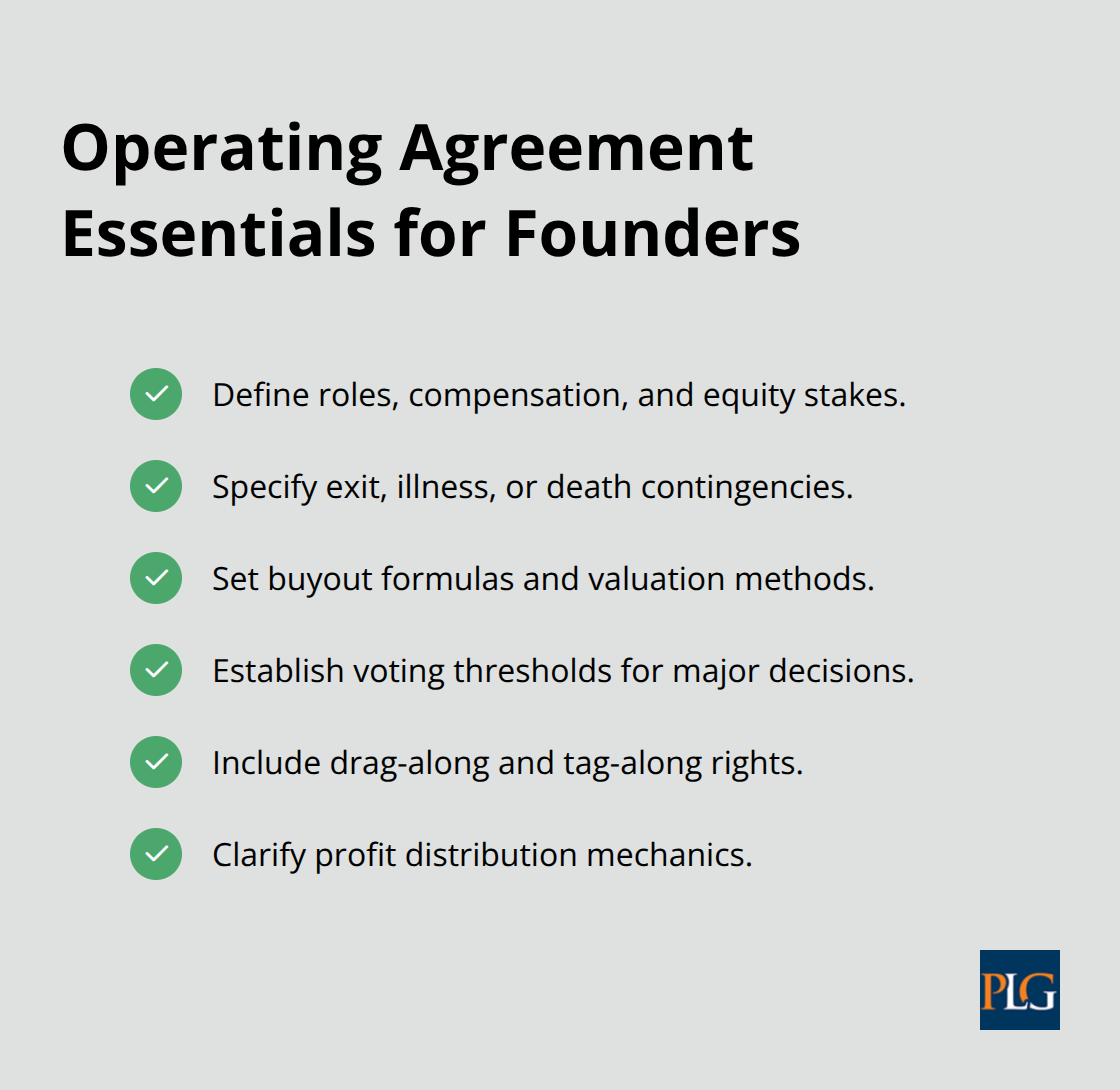
Without these provisions, California courts won’t fill the gaps for you. They’ll force you into expensive litigation to settle questions that a solid agreement would have answered upfront. The agreement should also address voting thresholds for major decisions, drag-along and tag-along rights for acquisitions, and clear profit distribution mechanics. Founders who invest time in this documentation at formation avoid the costly remediation that derails growth later.
Wage Claims and Compliance Violations Multiply Rapidly
Compliance failures hit San Francisco startups harder than almost anywhere else. The California Department of Industrial Relations logged over 100,000 wage-and-hour complaints in 2023 alone, and San Francisco’s enforcement is aggressive. Misclassifying a contractor as an employee costs you back wages, penalties, and payroll taxes. Failing to provide required break periods triggers class action suits. Missing deadlines for wage statements or final paychecks exposes you to penalties of $50 to $200 per violation per employee. One disgruntled employee who files a claim can trigger an audit that examines your entire payroll. Many startups discover compliance gaps only when an employee leaves and files a claim, at which point remediation costs thousands.
San Francisco’s minimum wage of $20.07 per hour (as of 2024) and mandatory paid leave policies create additional compliance obligations that exceed state minimums. Strict contractor classification rules mean that misidentifying a worker’s status carries real financial risk. Your employment agreements must reflect California law, not templates from other states. Local counsel reviews your hiring practices, payroll procedures, and classification decisions before problems surface.
Vendor and Partner Contracts Require Clear IP Ownership
Contract issues with vendors and partners create similar exposure. You sign a vendor agreement without reviewing intellectual property ownership clauses, and suddenly your startup doesn’t own the IP you created using their tools. You bring on a contractor without a proper statement of work, and they claim they’re entitled to equity or ongoing revenue share. These gaps don’t resolve themselves. They compound during funding rounds when investors demand clean contracts and clear IP ownership.
Vendor and partner contracts must explicitly define ownership, confidentiality, and liability. If you’re building software with a freelance developer, the contract must state that all code belongs to your company, not the developer. If you’re licensing technology from a vendor, the agreement must clarify whether you can modify it, sublicense it, or use it internationally. Without these specifics, disputes emerge during scaling or acquisition. A potential acquirer discovers that a key vendor claims ownership of critical functionality, and the deal stalls.
Your counsel should review template contracts before you use them repeatedly, catching problematic language that could affect your business. Many San Francisco startups use standard SaaS vendor agreements or contractor templates without modification, assuming the defaults protect them. They don’t. Vendor agreements often include indemnification clauses that expose you to unlimited liability if their software infringes on someone else’s IP rights. Contractor agreements sometimes include work-for-hire language that’s unenforceable in California, creating ambiguity about who owns the work. The cost of reviewing and negotiating these contracts upfront is minimal compared to the cost of fixing them mid-contract or during an acquisition. Startups that move fast without addressing these issues early discover during due diligence that their contracts are liabilities, not assets. At that point, renegotiation is difficult and expensive.
Final Thoughts
The legal decisions you make in your first year determine whether you scale smoothly or hit expensive obstacles during fundraising and growth. Founder disputes, compliance gaps, and unclear IP ownership compound over time, creating friction that slows your momentum and drains resources you need for product development and customer acquisition. San Francisco’s regulatory environment and investor expectations demand that you address these issues from day one, not after they surface during due diligence.
Startup counsel in San Francisco understands the specific challenges your company faces because they work with founders and investors in this market constantly. They know how San Francisco’s employment laws differ from other states, what institutional investors actually require in your cap table and governance, and how to structure your business to minimize tax exposure while protecting your intellectual property. They’ve seen the mistakes that derail startups and know how to prevent them before they become problems.
Working with counsel who understands your local market accelerates your path to success in concrete ways. Your funding rounds move faster because your legal foundation is clean and investor-ready, your hiring and payroll processes comply with San Francisco’s strict requirements, and your contracts with vendors, partners, and employees clearly define ownership and liability. Contact us to discuss how we can support your growth and build the legal infrastructure that lets you focus on your business instead of managing legal crises.