

San Francisco businesses face complex legal requirements that demand proper documentation from day one. Corporate law documents form the backbone of every successful company, protecting owners and maintaining compliance with state regulations.
We at Primum Law Group see companies struggle with incomplete paperwork that leads to costly legal issues down the road. Understanding which documents you need and when to file them can save your business thousands in penalties and legal fees.
What Formation Documents Does Your Corporation Need?
Articles of Incorporation Requirements
Articles of Incorporation represent the most important document for any California corporation. California requires a $100 filing fee for corporations with shares, and the document must include your corporation’s name, registered agent information, and the number of authorized shares. The California Secretary of State processes these filings through their Bizfile Online system, which offers the fastest processing times available.
You must file a Statement of Information within 90 days of incorporation and pay an additional $25 fee. Companies that miss this deadline face penalties that start at $250 and increase over time.
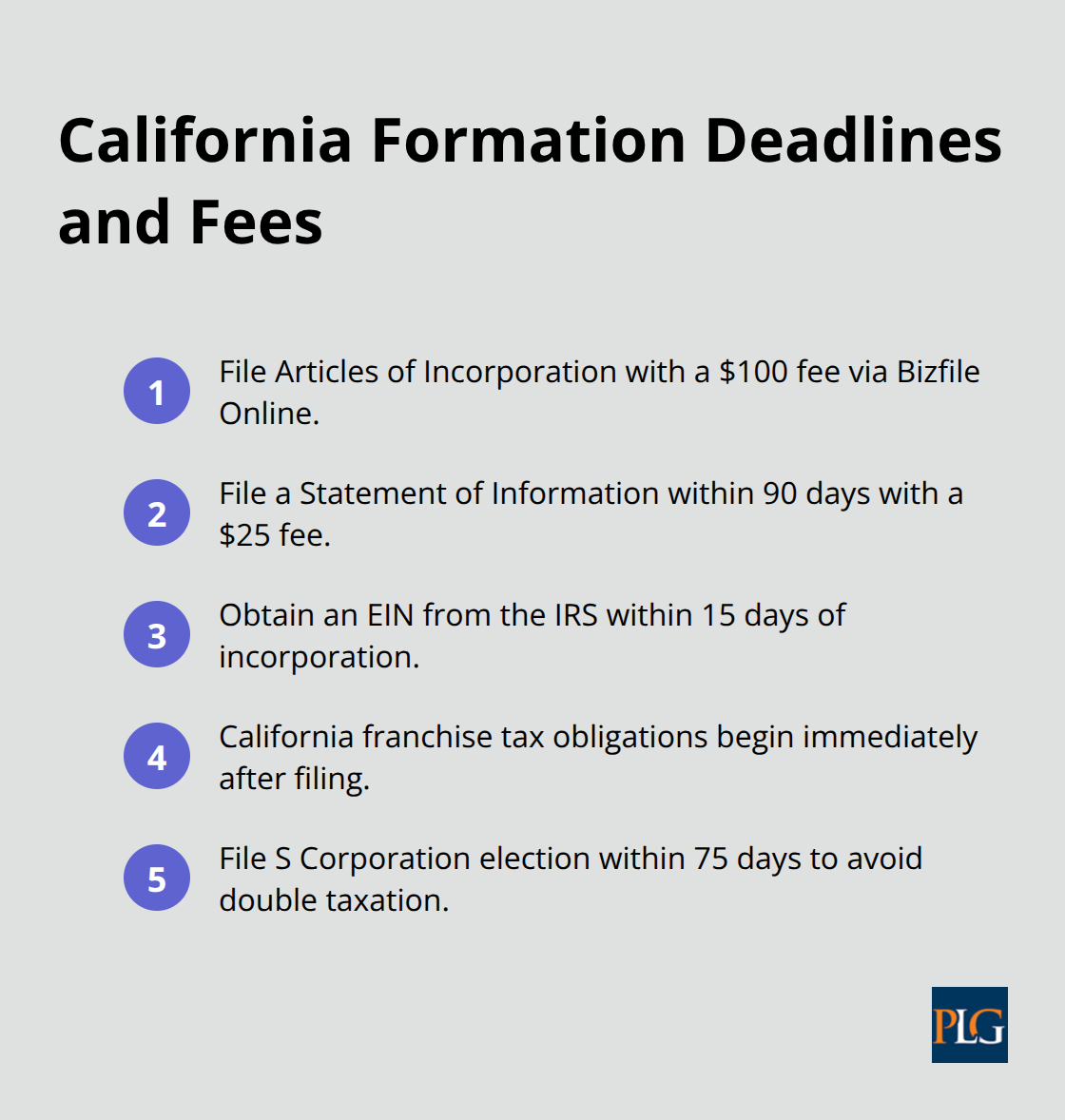
The IRS requires an Employer Identification Number within 15 days of incorporation, and California franchise tax obligations begin immediately after you file your documents.
Corporate Bylaws and Internal Operations
Corporate bylaws define how your company operates internally, though California law does not require public filing. These documents establish voting procedures, board meeting requirements, and officer duties. Well-drafted bylaws prevent disputes between founders and provide clear guidance for decision-making processes.
Professional corporations face additional licensing requirements specific to their industry, while S Corporation elections must be filed within 75 days of incorporation to avoid double taxation (a critical deadline that many new business owners overlook).
Stock Certificates and Ownership Records
Stock certificates prove ownership in your corporation, but California allows electronic records instead of physical certificates. Cap table management becomes essential as your company grows – you must maintain accurate records of all share issuances, transfers, and option grants. Poor record-keeping creates problems during funding rounds or potential acquisitions.
These foundational documents work together to establish your corporate structure, but they represent just the beginning of your compliance obligations.
What Compliance Documents Keep Your Corporation Legal?
Board Resolutions and Meeting Minutes
California corporations must maintain detailed records of every board decision through formal resolutions and meeting minutes. The California Corporations Code requires annual board meetings and documented votes on major decisions like executive compensation, dividend declarations, and significant contracts. Companies that skip proper documentation face personal liability exposure for directors and officers when disputes arise.
Board resolutions must include specific language about voting outcomes, attendance records, and the exact nature of decisions made. Meeting minutes serve as legal proof that your corporation follows proper governance procedures, which becomes vital during audits, litigation, or investment due diligence processes.
Annual Filing Requirements and Deadlines
California corporations must file a Statement of Information annually with a $25 fee, due within 90 days of the anniversary month of incorporation. The state triggers automatic penalties starting at $250 when companies miss this deadline, with escalation to suspension of corporate privileges after extended non-compliance.
The California Franchise Tax Board requires annual tax returns regardless of income levels, with minimum franchise tax obligations of $800 per year. Set up automated calendar reminders six weeks before each deadline (the state provides no grace periods or warning notices before penalties begin accumulation).
Corporate Record Management Systems
Proper record management protects your limited liability status and prevents piercing the corporate veil claims. California law mandates maintenance of corporate records for at least three years, including stock transfer ledgers, financial statements, and all board communications.
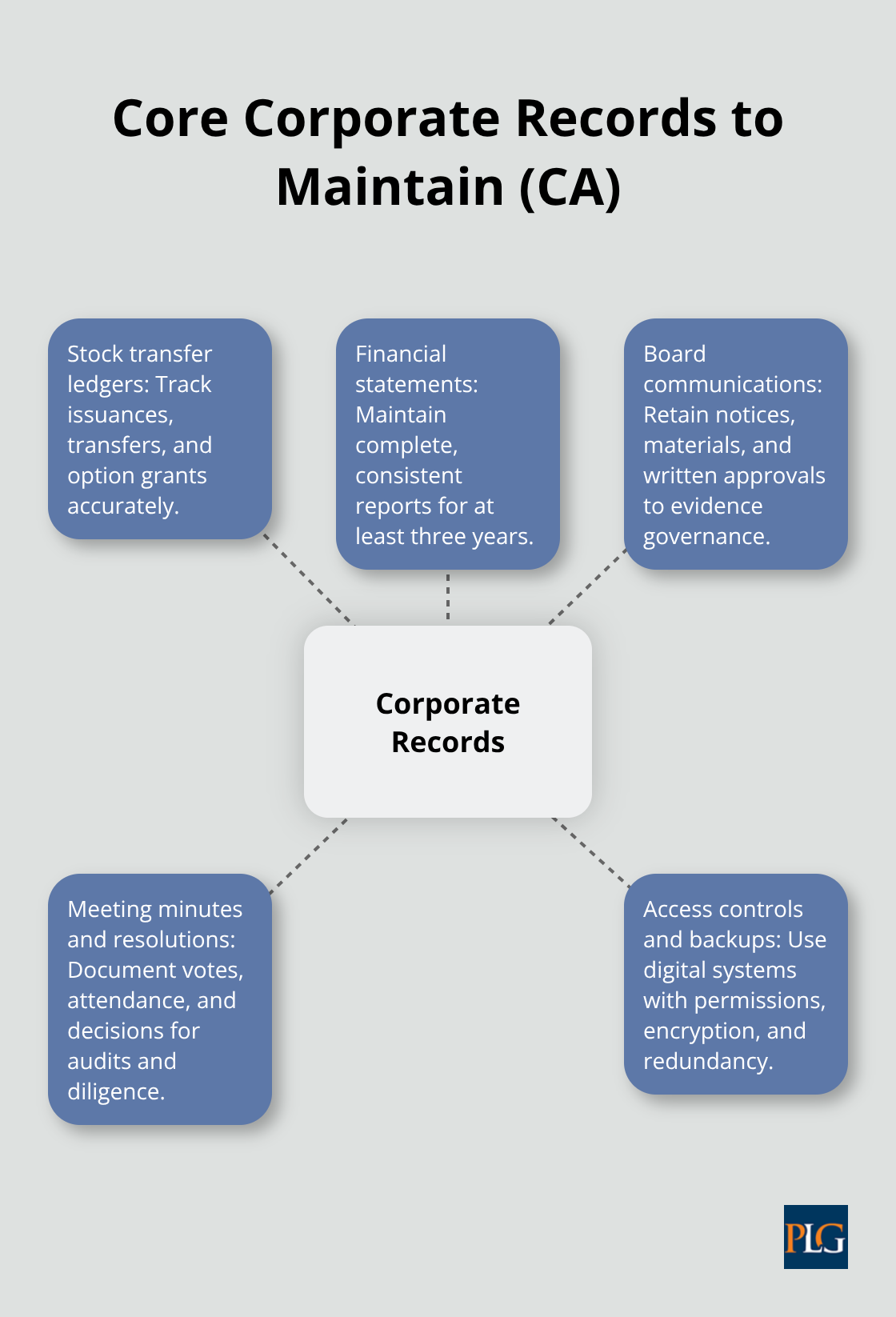
Digital record systems work better than physical files for most San Francisco businesses, but you must implement backup procedures and access controls. Companies with poor record management face average legal costs of $15,000 when disputes require document reconstruction, according to recent California State Bar data.
These compliance requirements form the foundation of corporate governance, but your business also needs transactional documents to handle day-to-day operations and growth opportunities.
Which Commercial Documents Drive Business Success?
Shareholder Agreements That Prevent Conflicts
Shareholder agreements control how ownership disputes get resolved and prevent costly litigation that destroys companies. These agreements must address buyout procedures, transfer restrictions, and decision-making authority before problems arise. California law allows minority shareholders to petition for dissolution when disputes reach deadlock, which makes clear governance structures mandatory for multi-owner corporations.
Tag-along and drag-along provisions protect all shareholders during potential sales, while right of first refusal clauses prevent unwanted outside investors. Companies without proper shareholder agreements face average legal costs of $75,000 when ownership disputes reach litigation (according to California State Bar data). Voting trusts work better than shareholder agreements when companies need centralized control during specific periods like merger negotiations or restructuring.
Employment Contracts That Protect Your Business
California employment law heavily favors workers, which makes comprehensive employment agreements essential for protection of company interests. At-will employment provides limited protection against departing employees who take clients or trade secrets to competitors. Non-compete agreements remain unenforceable in California, but non-disclosure and non-solicitation provisions receive court protection when properly drafted.
Contractor agreements require careful classification to avoid misclassification penalties that average $15,000 per worker according to California Department of Labor data. The ABC test determines contractor status – companies must prove workers operate independently, perform work outside normal business scope, and maintain established independent businesses. Misclassification triggers retroactive payroll taxes, workers compensation premiums, and potential class action lawsuits.
Commercial Contracts That Generate Revenue
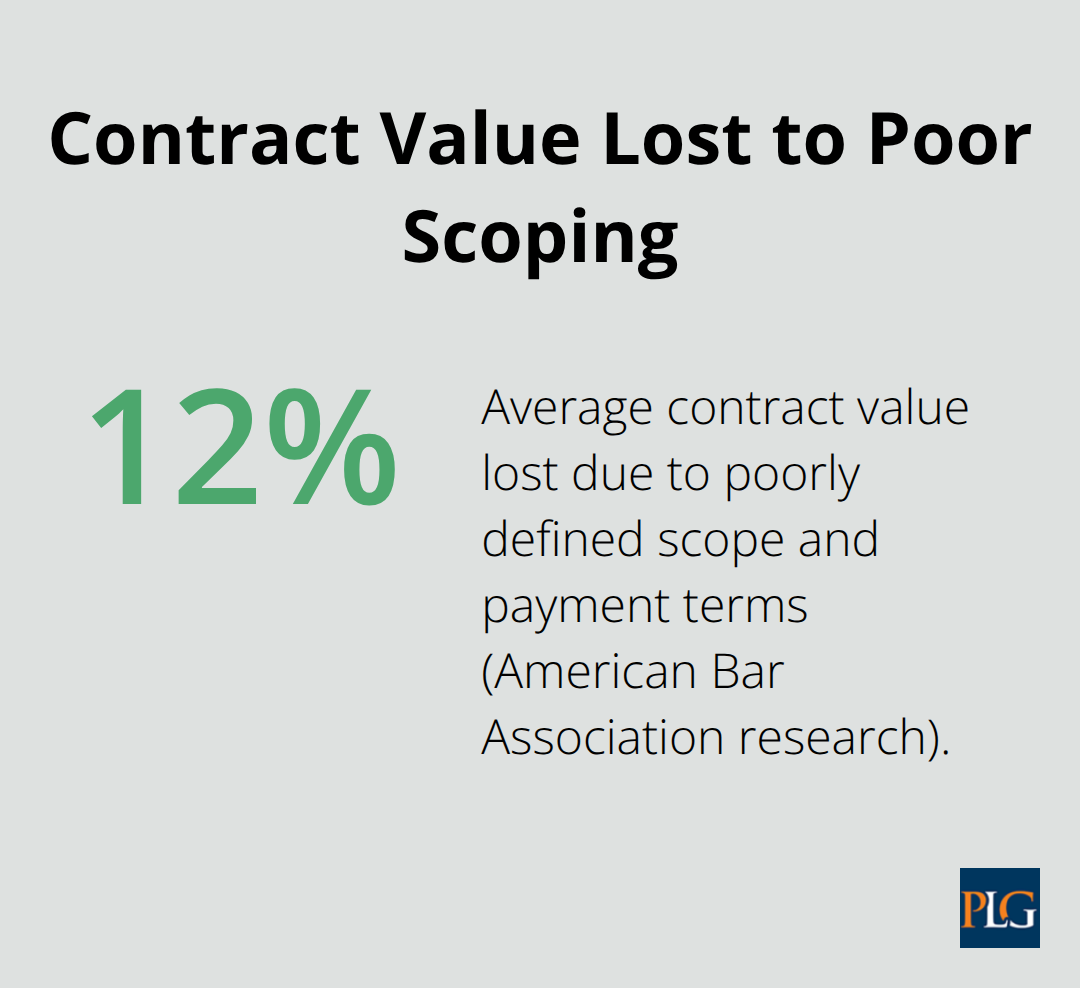
Service agreements and vendor contracts form the revenue backbone of most San Francisco businesses, but standard templates create more problems than they solve. California Commercial Code requires specific performance terms, payment schedules, and dispute resolution procedures to create enforceable obligations. Companies lose an average of 12% of contract value through poorly defined scope and payment terms (based on recent American Bar Association research).
Indemnification clauses shift liability between parties and must comply with California Civil Code limitations on consumer protection. Limitation of liability provisions work only when they pass unconscionability tests that California courts apply strictly. Professional service contracts need errors and omissions coverage specifications, while technology agreements require intellectual property ownership definitions and data protection compliance measures.
Final Thoughts
San Francisco businesses must maintain comprehensive corporate law documents to protect their operations and avoid costly penalties. The California Secretary of State processed over 180,000 corporate filings in 2024, yet many companies still face compliance issues that proper documentation could have prevented. Your corporation needs formation papers like Articles of Incorporation, compliance records including board resolutions and annual filings, and commercial agreements that govern business relationships.
Companies face legal vulnerabilities that expose personal assets and business operations to unnecessary risk when they miss any document category. The average cost of fixing documentation problems after they occur runs $25,000 higher than proactive legal planning (according to California State Bar data). Companies should seek legal guidance when they form their corporation, during major transactions, or when compliance requirements become complex.
We at Primum Law Group help San Francisco startups, investors, and executives navigate these requirements through comprehensive legal services and business transaction support. Start by conducting a document audit, implementing digital record management systems, and establishing annual compliance calendars. These steps keep your corporation legally protected and operationally efficient.