

Most startups in San Francisco move fast on product and hiring, but stumble on legal foundations. The wrong business structure, missing founder agreements, or inadequate IP protection can derail growth and complicate future funding.
At Primum Law Group, we’ve seen how startup counseling services aligned with your growth stage prevent costly mistakes and accelerate investor confidence. This post covers the legal challenges you’ll face, how strategic support compounds your advantage, and the missteps that sink otherwise promising companies.
The Three Legal Foundations That Make or Break Early-Stage Startups
Choose Your Business Entity Before You Scale
Your first legal decision is your business entity. Most San Francisco founders default to Delaware C-corporations, but that choice carries real consequences. A C-corp triggers double taxation on dividends and creates complexity around founder equity that can slow down seed rounds. An LLC offers pass-through taxation and simpler governance, but it signals to investors that you’re not serious about scaling. Founders often regret entity choices within 18 months when they realize their tax bill or investor expectations don’t align with their structure.
The decision matters most before you take outside capital or hire employees. Once investors enter the picture, converting entities becomes expensive and messy. If you’re bootstrapping and don’t plan to raise institutional funding, an LLC often makes more sense. If you’re targeting venture capital, a Delaware C-corp is the market standard and what investors expect to see on your cap table. Pick based on your actual funding timeline, not what you think you should do.
Document Founder Agreements and Cap Tables From Day One
Founder agreements are where most early-stage teams fail silently. Co-founders skip them because the relationship feels solid, then hit conflict over equity splits, vesting schedules, or departure terms. California law won’t fill these gaps for you, and without a written agreement, a departing founder can claim ownership of intellectual property they helped build or demand their full equity stake even after leaving.
Vesting with a four-year schedule and one-year cliff is market standard in the Bay Area, but you need to document your specific terms upfront. If one founder leaves after six months, the cliff protects the company from carrying dead weight. If a founder departs after two years, they vest 50 percent of their equity and no more.
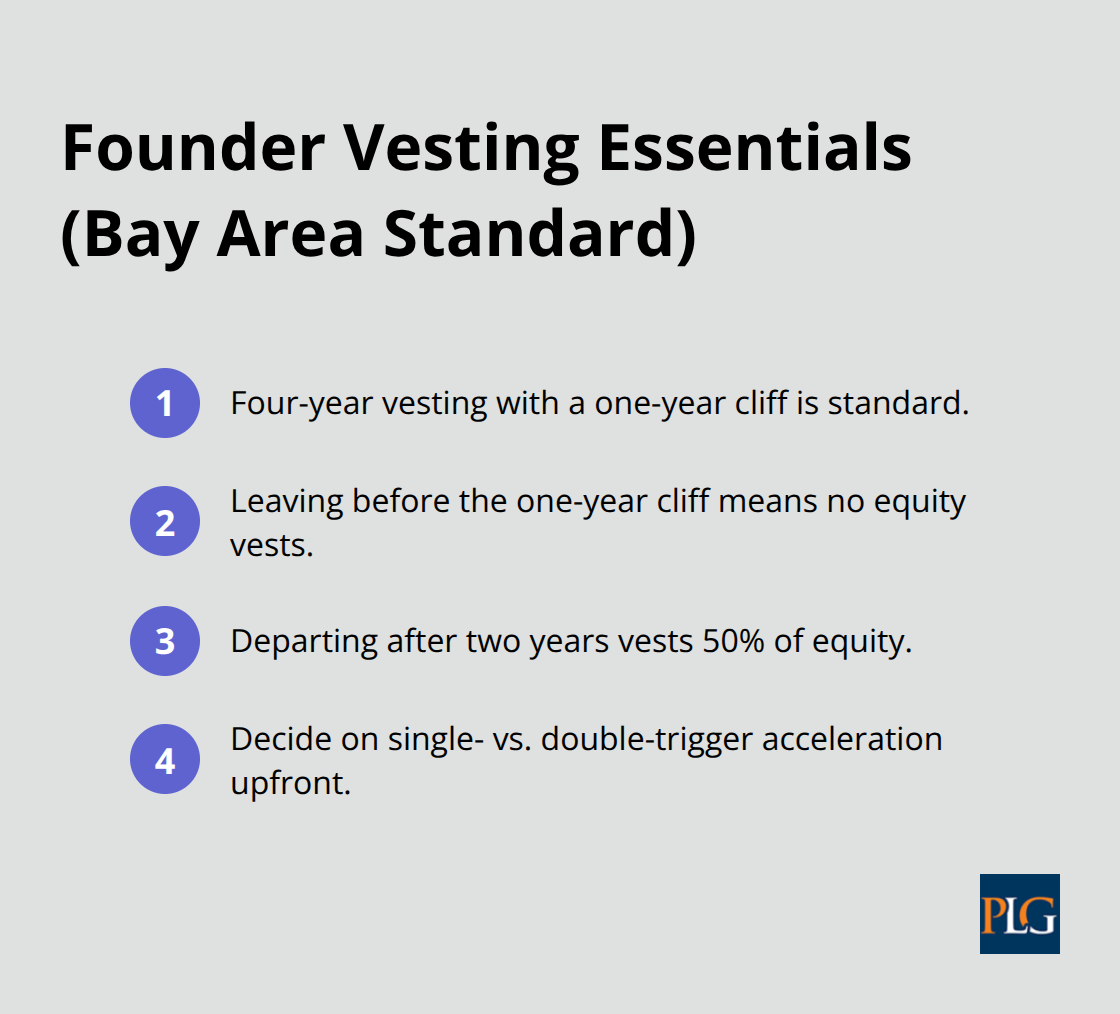
Acceleration provisions matter too-decide now whether an acquisition triggers single-trigger acceleration of all unvested equity or double-trigger acceleration only if the founder loses their role.
Document these terms before you start hiring or take investment. Cap tables must be clean and complete from day one. Missing founder equity assignments or unclear ownership percentages create nightmares during due diligence. Investors won’t move forward until your cap table is bulletproof. Funding rounds often stall for months because founders failed to document early equity grants or track option grants properly.
Handle Securities Compliance Before You Close Capital
Securities regulations protect investors but create compliance obligations for you. If you’re raising capital from outside investors, you’re issuing securities. Many founders think a simple convertible note or SAFE sidesteps regulation, but these instruments still require proper documentation and compliance with federal and California law.
You must file a Form D with the SEC within 15 days of your first sale if you’re raising beyond a small circle of accredited investors. State-level blue sky laws add another layer-California requires coordination with the state’s Department of Financial Protection and Innovation for certain offerings. The safe harbor under Regulation A or Regulation D provides some protection, but only if you follow the rules precisely.
Skipping these steps exposes you to fines, investor lawsuits, and forced repayment obligations that can sink an early-stage company. The compliance cost is real but manageable if you handle it from the start. Waiting until you’re weeks away from closing a Series A to figure out securities compliance creates panic and legal bills that could have been prevented. These three foundations-entity structure, founder agreements, and securities compliance-set the tone for everything that follows as you scale.
Legal Support That Moves Capital and Scaling Forward
Protect Intellectual Property Before You Ship
IP protection before your first line of code ships separates startups that attract serious capital from those that don’t. Most founders postpone trademark and patent filings until after funding closes, but investors scrutinize IP ownership during due diligence and won’t commit until they see clean assignments. If you’ve brought in contractors, used open-source code, or accepted help from advisors without documenting ownership transfers, you’re sitting on a compliance problem that will surface during investor review.
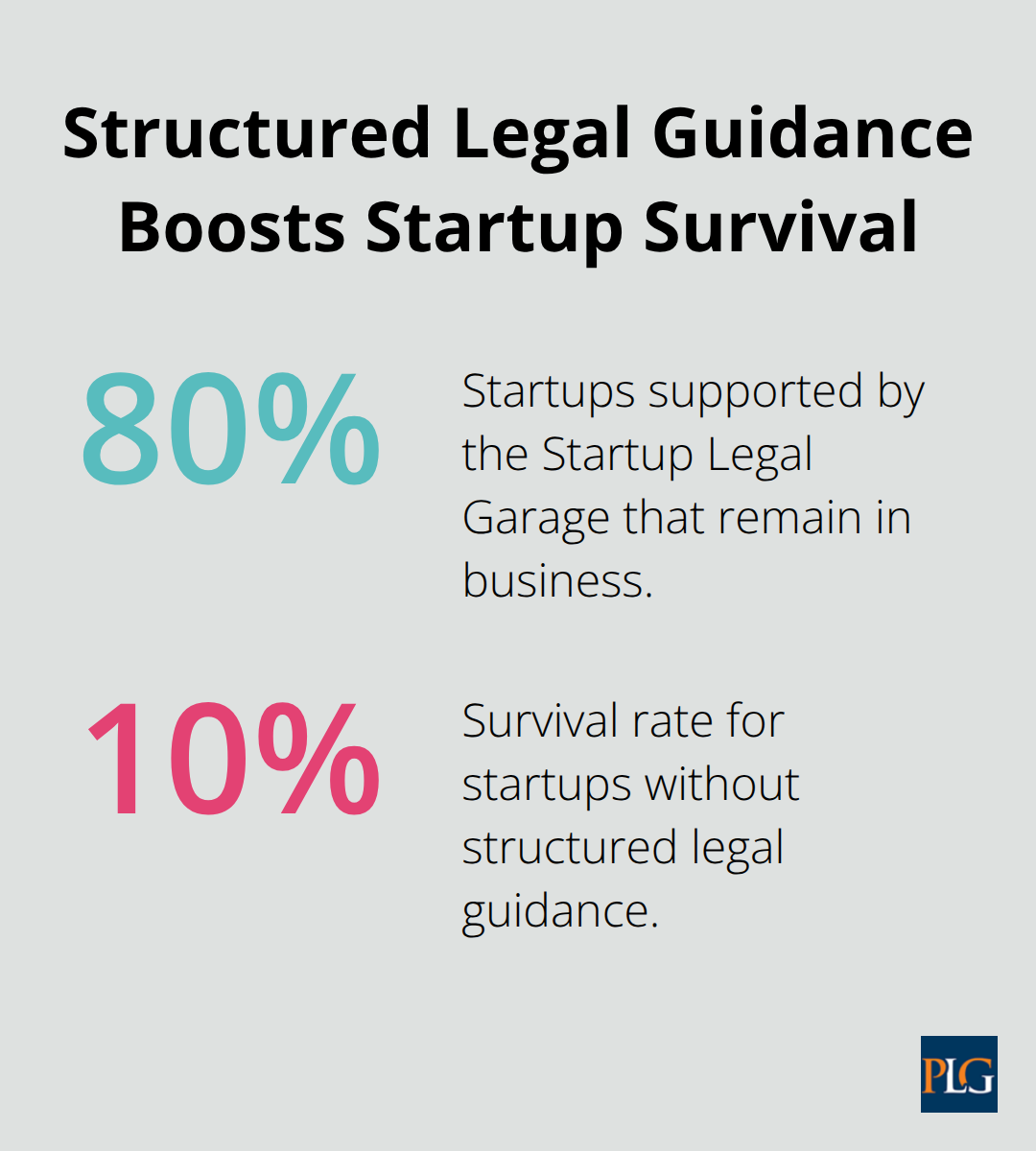
The UC College of the Law San Francisco’s Startup Legal Garage has supported 550+ startups to date, and their emphasis on IP audits from day one directly correlates with founder success rates-80% of startups served by the program remain in business, compared to roughly 10% survival for startups without structured legal guidance. Conduct an IP audit before you take institutional funding: catalog every line of code, design asset, trademark, and trade secret your team has created or contributed to. Ensure that founders and contractors sign IP assignment agreements transferring ownership to the company. If you’ve incorporated open-source libraries, verify licensing terms and document them in your codebase so you don’t inadvertently violate GPL or other copyleft obligations. This work takes weeks, not months, and it prevents investor walkways during due diligence.
Structure Your Cap Table and Term Sheet Negotiations
Funding rounds move faster when your cap table and governance are bulletproof from the start. Term sheets contain dozens of provisions-liquidation preferences, anti-dilution protections, board composition, conversion rights-and most founders negotiate these terms without understanding which ones actually matter for future rounds. Liquidation preferences determine who gets paid first if your company is acquired or fails, and non-participating preferred shares (the market standard) protect investors without crippling founder upside.
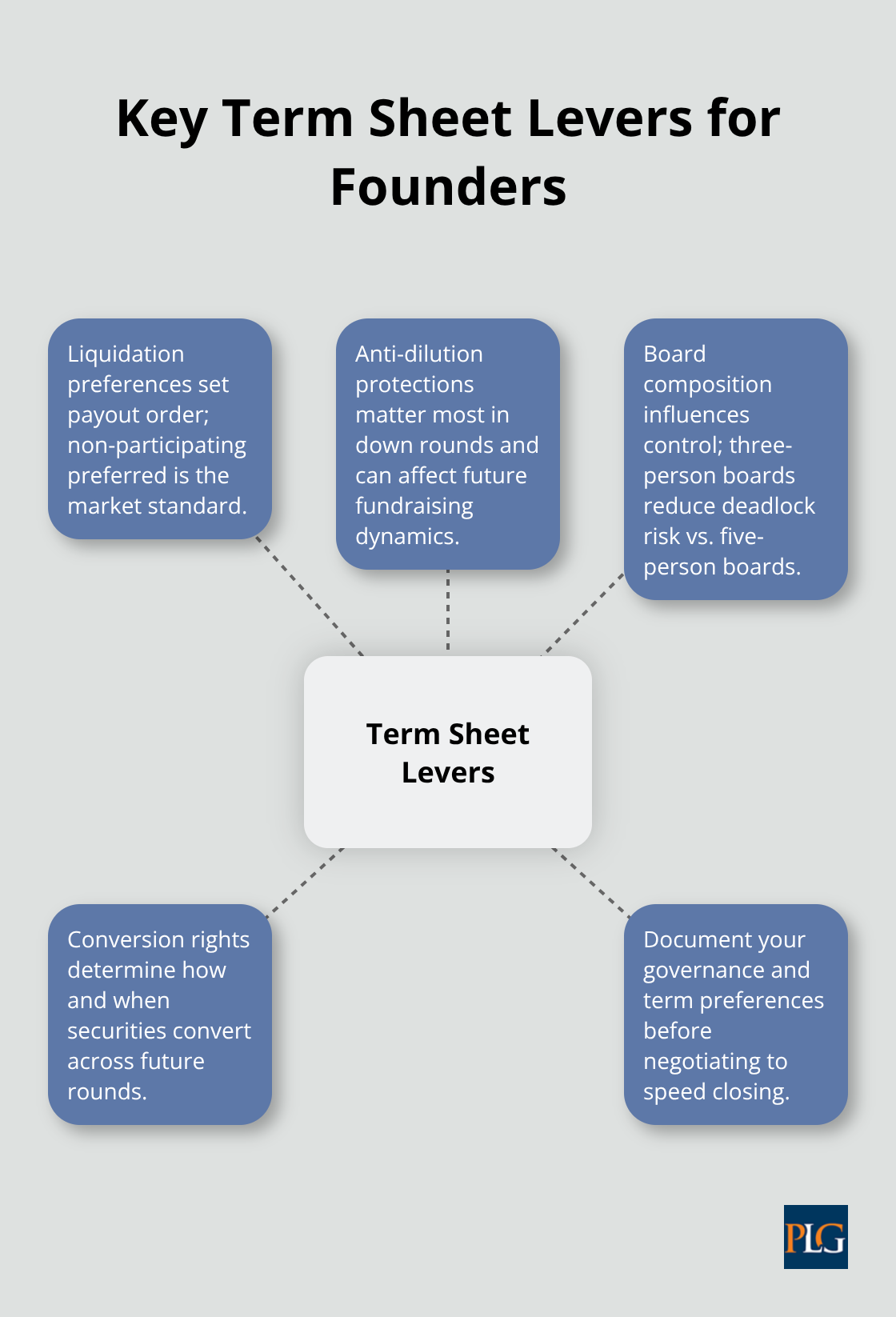
Anti-dilution protections prevent your equity stake from shrinking too much in down rounds, but broad-based weighted-average anti-dilution creates resentment between founders and investors and makes future fundraising harder. Single-trigger acceleration clauses vest all unvested equity immediately upon acquisition if you stay through closing, while double-trigger acceleration only triggers if you lose your role post-acquisition-insist on double-trigger to protect investors from rewarding departing founders. Board composition matters more than most founders realize: a three-person board (two investor directors plus one founder) gives you a working majority on most decisions, while a five-person board creates deadlock risk.
Document your term sheet terms and governance preferences before you enter negotiations, and involve legal counsel who has seen hundreds of term sheets and knows what’s truly negotiable versus what’s market standard in the Bay Area.
Establish Governance Frameworks That Scale
Scalable governance means documenting board meeting minutes, maintaining current cap tables, and establishing a written consent process for major decisions so you’re not scrambling to hold formal meetings every time you need investor approval. Many startups skip governance documentation until Series A due diligence forces them to retrofit everything, but that creates gaps and inconsistencies that slow closing. Bylaws, board resolutions, and stock ledgers establish the infrastructure that investors expect to see when they review your company. These documents signal that you run a professional operation and that your cap table reflects actual ownership rather than handshake agreements.
The legal work you complete now determines how smoothly your next funding round closes. Investors won’t move forward until your governance framework is clean and complete. Employment agreements, equity plans, and contractor documentation all feed into the due diligence process, and missing pieces create delays that can cost you months and momentum. The companies that close funding fastest are the ones that treated legal foundations as a competitive advantage rather than a checkbox to complete later.
Common Startup Legal Mistakes and How to Avoid Them
Founder Equity Splits Require Written Documentation
Most San Francisco founders know they need legal documents but treat them as a box to check rather than a competitive advantage. The result is predictable: incomplete founder agreements that explode into disputes, missing equity records that halt fundraising, and employment contracts that violate California wage law. These mistakes aren’t theoretical-they cost founders money, delay funding rounds, and sometimes kill companies outright.
Founder equity splits require written documentation that specifies ownership percentages, vesting schedules, and what happens if a co-founder leaves. Without this agreement, California law defaults to equal ownership regardless of who did the work, and departing founders can claim unvested equity or argue they own intellectual property they touched. Document vesting terms before anyone touches code or customer conversations-four years with a one-year cliff is market standard in the Bay Area, but your specific terms need to be in writing and signed.
Employment Agreements and Contractor Classification
Employment agreements separate contractors from employees, which matters enormously under California law: misclassifying someone as a 1099 contractor when they should be W-2 creates wage claims, unpaid overtime liability, and penalties from the state labor commissioner. Set clear job titles, compensation, benefits eligibility, and classification status before someone starts work.
The UC College of the Law San Francisco’s Startup Legal Garage reports that 80% of startups served by the program remain in business, a figure that stands out precisely because startups without structured legal guidance face roughly 10% survival rates. The difference often comes down to whether founders documented their agreements from day one or scrambled to reconstruct them during due diligence.
Equity Plans and Tax Compliance
Equity plans require a board-approved plan document, grant agreements that specify vesting and acceleration terms, and 83(b) elections filed with the IRS within 30 days of grant if you issue restricted stock-missing the 83(b) deadline costs founders thousands in unnecessary taxes on vesting equity. This step separates founders who understand equity mechanics from those who learn the hard way.
Cap Tables and Due Diligence Readiness
Due diligence before fundraising means assembling a clean cap table showing every equity grant, every option issued, every security outstanding, and proof that founders assigned their pre-company IP to the company. Investors won’t close until they see this documentation, and startups that wait until weeks before closing to assemble these records face either funding delays or rushed legal work that costs two to three times more than preventative documentation.
The companies that move fastest through fundraising are the ones that treated legal paperwork as a growth accelerator rather than a compliance burden. Founders who delay these documents thinking they’ll handle them later face months of remediation work that could have taken weeks upfront.
Final Thoughts
Early legal planning separates startups that scale from those that stall. The founders who move fastest through funding rounds treat legal foundations as a competitive advantage from day one, not a checkbox to complete later. Your business entity, founder agreements, IP protection, and cap table documentation determine whether investors will commit or walk away during due diligence.
Startup counseling services aligned with your actual growth stage prevent the costly mistakes that derail otherwise promising companies. Involve legal counsel before you take outside capital, before contractors touch your code, and before you hire your first employees. The cost of preventative legal work is a fraction of the cost of remediation during due diligence or the cost of disputes that written agreements could have prevented.
At Primum Law Group, we work with San Francisco and Silicon Valley startups at every stage, from formation through Series A and beyond. Contact Primum Law Group for a consultation and align your legal foundation with your growth ambitions. The companies that win move forward with confidence, knowing their legal house is in order.