

Your startup’s brand is one of your most valuable assets, yet many founders overlook trademark protection until it’s too late. We at Primum Law Group have seen countless startups lose market position or face costly legal battles because they didn’t secure their trademarks early.
Trademark protection for startups isn’t optional-it’s foundational. The difference between registering your brand now versus later can determine whether you build lasting business value or hand opportunities to competitors.
Why Your Trademark Matters More Than San Francisco Startups Think
Your trademark is your startup’s first line of defense against market confusion and competitive theft. When a customer sees your logo or hears your company name, that recognition represents real money in your bank account. A strong trademark protects that association, preventing competitors from trading on the goodwill you build. In San Francisco’s startup ecosystem, where multiple companies launch weekly in overlapping niches, trademark protection separates the founders who retain control of their brand from those forced into costly rebrands. Research from A-CAPP Center shows startups with both patents and trademarks are roughly ten times more likely to secure funding compared to those without IP protection. This isn’t coincidence-investors view early trademark registration as a signal that founders understand their market position and have thought strategically about long-term value.
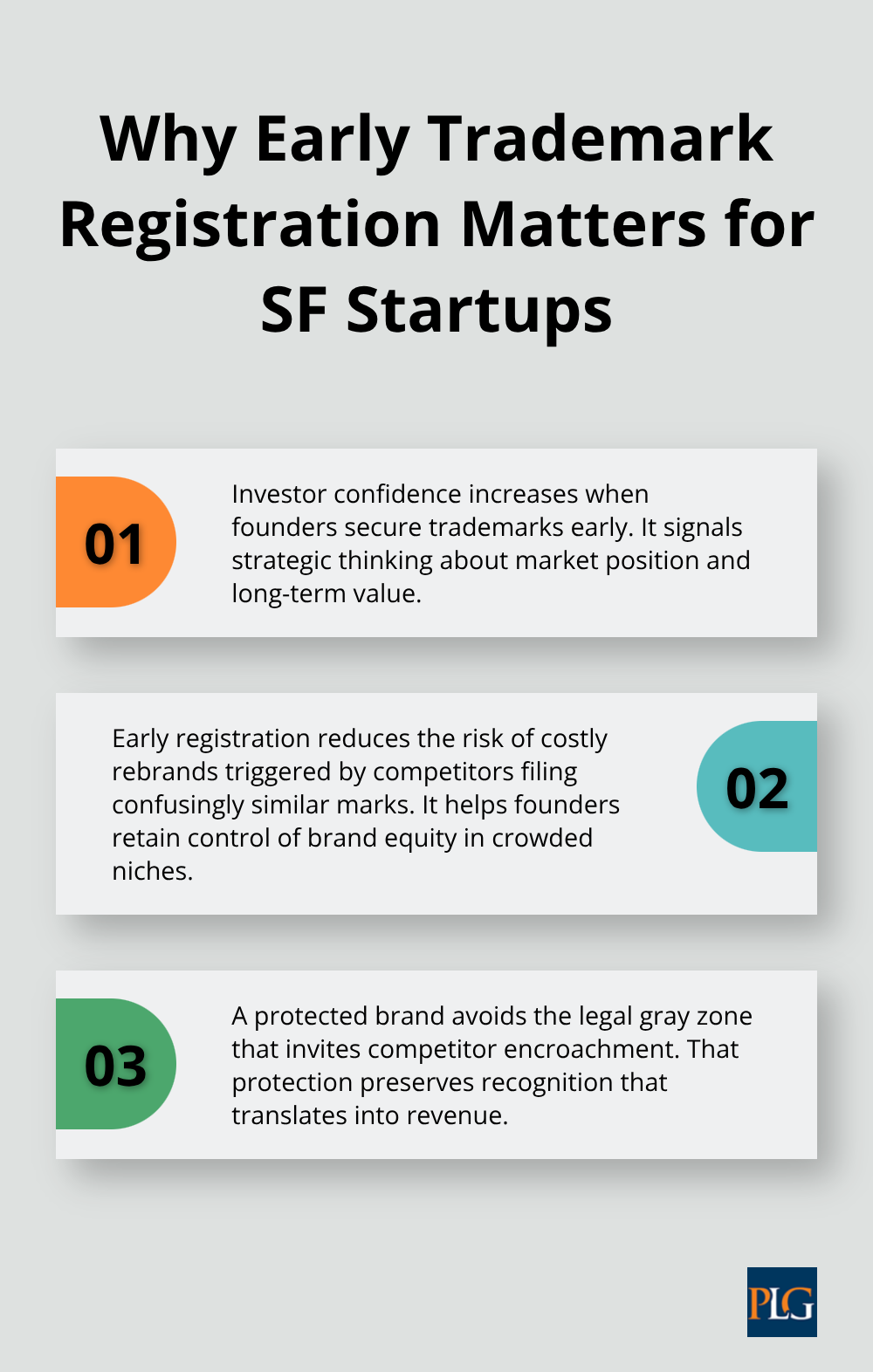
Without federal registration, your brand exists in a legal gray zone where competitors can file similar marks, operate in adjacent markets, and gradually erode your competitive advantage.
The Financial Cost of Waiting
Trademark registration after launch creates a dangerous gap where you build brand equity without legal protection. If a competitor files a similar mark while you remain unregistered, you may face a cease-and-desist letter, forcing a complete rebrand. The costs compound quickly: new logos, updated packaging, domain registration, website redesign, and marketing collateral changes can exceed fifty thousand dollars for an established startup. Federal registration with the USPTO costs only three hundred fifty dollars per class using TEAS Plus filing, yet most founders treat this as a luxury rather than a necessity. The math is stark-spend three hundred fifty dollars now or fifty thousand dollars later.
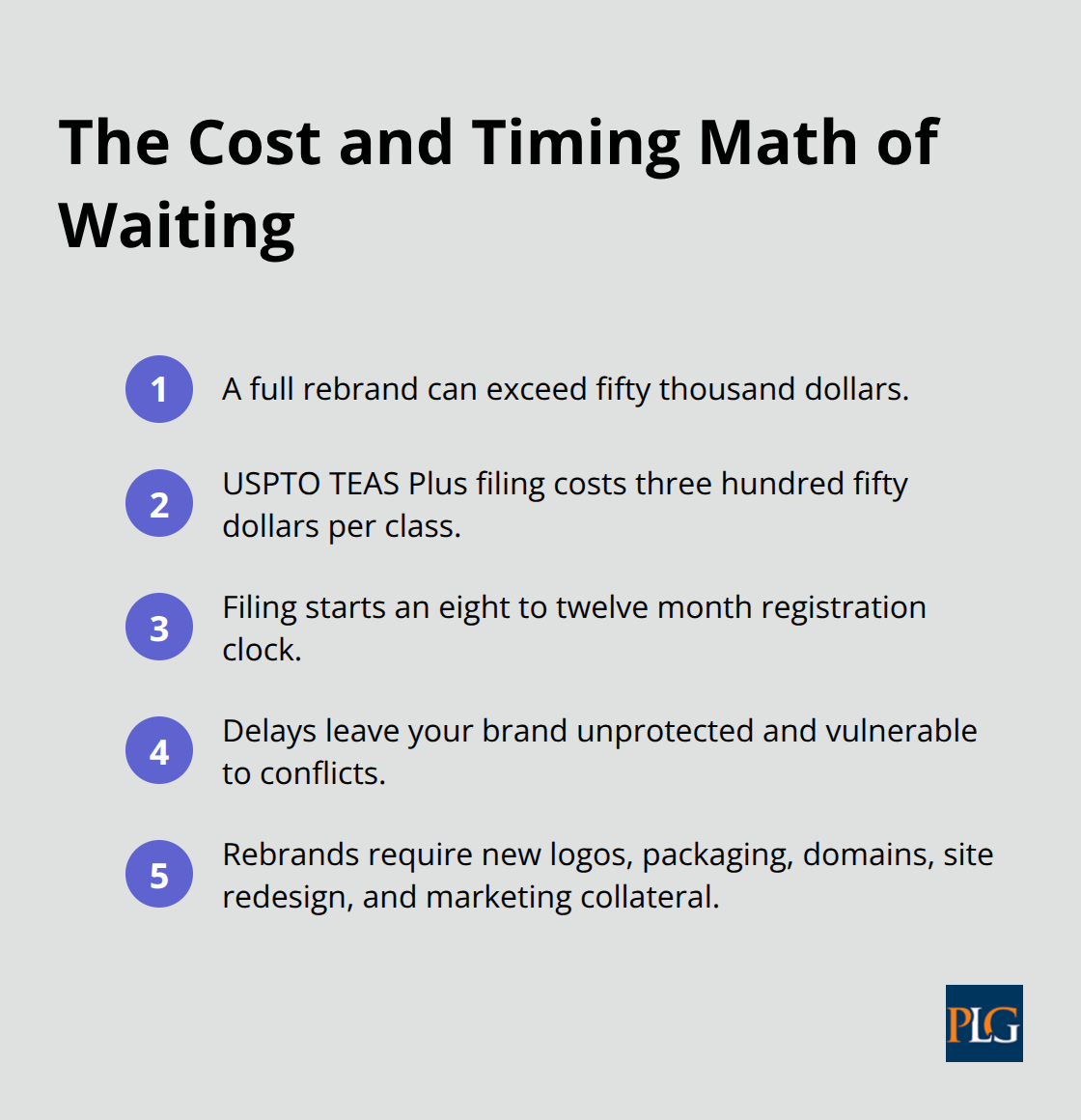
Registration also takes eight to twelve months under normal circumstances, meaning the clock starts the moment you file, not the moment you launch. Every month you delay is a month your brand operates unprotected in a market where someone else could claim it first.
Building Assets That Investors Actually Value
Trademarks transform your brand from an intangible idea into a measurable business asset that increases your company’s valuation. During fundraising rounds or acquisition conversations, federal trademark registration proves you control your brand name, logo, and market position. Acquirers specifically assess trademark portfolios because they eliminate post-acquisition rebranding costs and legal disputes. A registered trademark in multiple classes protects your core product line and prevents competitors from claiming related marks in adjacent categories. For example, you can register your name in both Class 35 (advertising and business services) and Class 42 (software development services) to prevent a competitor from offering similar services under a confusingly similar mark. San Francisco startups operating in highly competitive sectors like fintech, health tech, and consumer apps face elevated collision risks, making early registration not just prudent but essential. The Madrid Protocol allows you to file internationally through a single application via the USPTO, typically costing one thousand to twenty-five hundred dollars depending on target countries and classes. This approach is far cheaper than filing individually in each jurisdiction and gives you priority dates that matter in federal court and foreign trademark offices.
What Happens When You Skip the Search
Many founders assume their chosen name is available without conducting a proper trademark search first. This assumption costs them dearly. A comprehensive search of the USPTO TESS database (which contains over two million registrations) takes hours but prevents months of legal conflict later. You also need to check your state’s Secretary of State database and search for common-law usage-marks that competitors use without federal registration but still own through actual market use. A thorough search costs about two hundred to four hundred dollars if you hire someone, or nothing if you conduct it yourself, though DIY searches often miss state-level marks or prior users operating in niche markets. Filing without this groundwork means you risk an office action from the USPTO, which requires you to respond within six months or abandon your application entirely. The real danger emerges when you’ve already invested in branding, marketing, and customer acquisition around a name that someone else can legally claim. At that point, you face either a costly rebrand or a legal battle you cannot win.
How to Protect Your Trademark Before Launch
Search the USPTO Database and Beyond
Start your trademark search immediately, not after you’ve built your brand around a name. The USPTO TESS database contains over two million active registrations, and searching it takes roughly two to four hours if you’re methodical. Search for exact matches, phonetic similarities, and visual similarities to your intended mark. Don’t stop at the federal database-check your state’s Secretary of State database for LLC and corporate registrations, search Google for common-law usage (marks competitors use without federal registration), and scan social media platforms where competitors might already operate under similar names.
A thorough DIY search costs nothing but demands patience. If you hire someone to conduct this search, expect to pay two hundred to four hundred dollars. This investment prevents far costlier problems later. Many San Francisco startups skip this step because they assume their name is unique, then discover mid-growth that someone filed a confusingly similar mark first. When that happens, you face either abandoning the name you’ve built equity around or engaging in a legal dispute you’re unlikely to win.
File with the Right Classes and Strong Specimens
File your trademark application with the USPTO using TEAS Plus, which costs three hundred fifty dollars per class. Choose your classes carefully. If you’re a software company offering both SaaS tools and professional services, register in Class 42 (software development) and Class 35 (business services) to prevent competitors from claiming related marks in adjacent categories. Many founders register only their primary class, creating protection gaps that competitors exploit.
Your application requires specimens showing actual use in commerce or a declaration of genuine intent to use within six months. For apps, include app-store screenshots with your mark clearly visible. For consumer products, submit packaging or marketing materials. Weak specimens trigger office actions and delay registration. Expect eight to twelve months for standard registration, though office actions can extend this timeline significantly. Once registered, your trademark becomes a federal asset that increases your company’s valuation during fundraising or acquisition discussions.
Monitor, Enforce, and Maintain Your Rights
After registration, treat trademark enforcement as an ongoing responsibility, not a one-time task. Monitor quarterly for infringement using Google Alerts, domain registrar searches, and social media scans. If you discover infringing use, send a cease-and-desist letter, which typically costs five hundred to fifteen hundred dollars and often deters infringers without litigation.
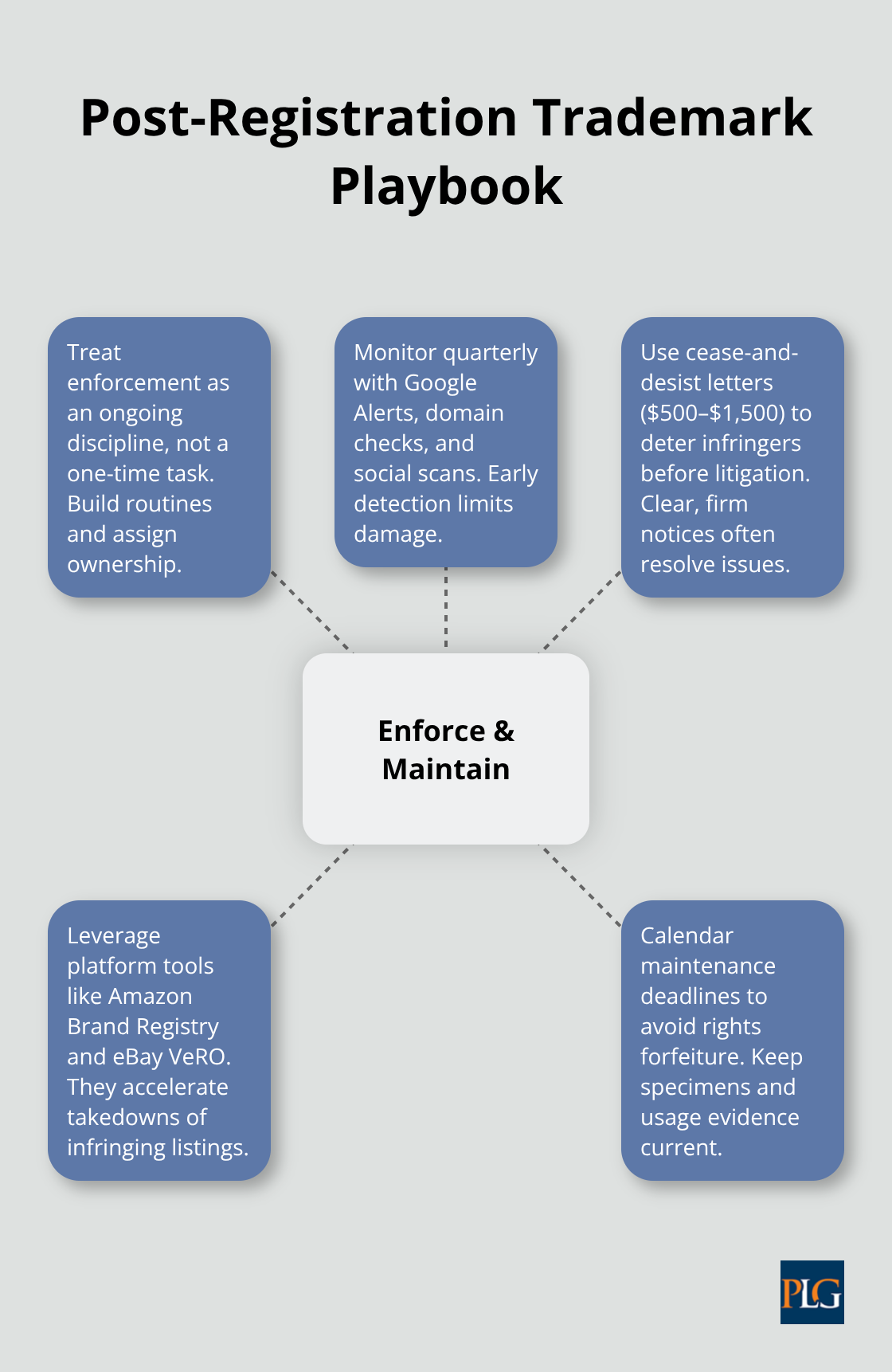
For e-commerce platforms, enroll in Amazon Brand Registry and eBay VeRO to remove infringing listings rapidly.
Maintain your registration through a Declaration of Continued Use between years five and six (costing three hundred twenty-five dollars), then renew every ten years. Missing these deadlines forfeits your federal rights entirely. Plan for international protection if you anticipate growth beyond the United States. The Madrid Protocol covers one hundred twenty-two member countries and allows a single application through the USPTO, typically costing one thousand to twenty-five hundred dollars depending on your target countries and classes. This approach is substantially cheaper than filing individually in each jurisdiction and establishes priority dates that matter in foreign trademark offices.
The USPTO will issue an office action if your mark conflicts with existing registrations, and you’ll have six months to respond or lose your application entirely. Once you’ve secured federal protection, the real work of building brand resilience begins-and that’s where understanding common mistakes becomes your competitive advantage.
Mistakes That Force San Francisco Startups to Rebrand
Selecting a Name Without Searching First
Most trademark disasters stem from founders skipping the legwork rather than lacking intelligence. You find a company name you love, assume it’s available because you haven’t seen it anywhere obvious, and build your entire brand around it. Then you file with the USPTO and receive an office action stating that a company in Class 35 already owns something phonetically similar. At that point, you’ve invested in logos, domain registration, social media handles, and customer acquisition around a name you legally cannot use.
San Francisco startups in competitive sectors like fintech and SaaS face particularly high collision risks because multiple companies often target identical customer pain points with similar naming conventions. The solution is non-negotiable: conduct a comprehensive search before you commit to a name publicly. This means searching the USPTO TESS database for exact matches and phonetic similarities, checking your state’s Secretary of State database for LLC registrations, and performing a Google search for common-law marks that competitors use without federal registration.
A thorough search takes two to four hours of methodical work or costs two hundred to four hundred dollars if you hire someone. Founders who skip this step are essentially gambling that no one else thought of their idea first-and in San Francisco’s dense startup ecosystem, that’s a bet you will lose.
Filing After Launch Instead of Before
Trademark registration after launch creates a dangerous window where you build brand equity and customer recognition without legal protection. During this window, a competitor can file a confusingly similar mark and force you into a costly legal dispute or rebrand. The USPTO issues registrations in eight to twelve months under normal circumstances, which means the clock starts the moment you file, not the moment you launch.
If you wait until month six of operations to file, you don’t receive protection until month eighteen-and by then, a competitor may have already registered something dangerously similar. The financial math is brutal: trademark registration costs three hundred fifty dollars per class now, but a forced rebrand after you’ve built customer recognition costs fifty thousand dollars or more in new logos, packaging, domains, website redesign, and marketing materials. Build your trademark strategy early by filing your trademark application simultaneously with or even before your product launch to avoid this trap.
Registering in Only One Class When You Need Multiple
Registering your trademark in only one class when your business operates across multiple categories leaves significant gaps in your protection. If you’re a software company offering both SaaS tools and professional consulting services, registering only in Class 42 leaves Class 35 completely unprotected. A competitor can file in Class 35 and operate a consulting business under a confusingly similar name while your trademark registration offers no legal recourse.
Each additional class costs three hundred fifty dollars per filing, which seems expensive until you face the alternative-a competitor legitimately operating in an adjacent market under your brand name. San Francisco startups operating in health tech, fintech, or consumer apps particularly need multi-class protection because their business models often span software, services, and physical products simultaneously.
Final Thoughts
Early trademark protection separates San Francisco startups that build lasting value from those forced into expensive rebrands. The three hundred fifty dollar investment in federal registration through the USPTO pays for itself the moment you avoid a costly legal dispute or forced rebrand. Trademark protection for startups isn’t a legal formality-it’s a business decision that directly impacts your fundraising potential, acquisition value, and competitive position.
We at Primum Law Group work with startups from incorporation through exit, and we’ve seen firsthand how early trademark strategy prevents the disasters that derail growth. Our team conducts comprehensive trademark searches, guides you through USPTO filing with the right classes and specimens, and establishes monitoring systems that catch infringement before it damages your brand. We coordinate your trademark strategy with your broader business structure to align your IP protection with your product roadmap and go-to-market timeline.
The next step is straightforward: conduct your trademark search immediately, file your application before or simultaneously with your product launch, and commit to ongoing enforcement and maintenance. Contact us at Primum Law Group to discuss your trademark strategy and protect your startup’s brand from day one.