
Your startup’s brand is one of your most valuable assets, yet many founders overlook trademark protection until it’s too late. We at Primum Law Group have seen countless San Francisco startups face expensive rebranding efforts and legal battles that could have been prevented with early trademark strategy.
The difference between protecting your brand now and waiting is significant. A solid trademark strategy startups implement from day one saves time, money, and the headache of losing the name you’ve built recognition around.
Why Early Trademark Protection Matters for Startups
San Francisco’s High-Risk Trademark Environment
San Francisco startups operate in one of the most competitive trademark environments in the country. The tech, consumer brands, fashion, and e-commerce sectors create constant collision risks with existing marks, and waiting to address this until later stages of growth is a costly gamble. When you file early, you establish priority dates that matter in federal court if disputes arise. The Northern District of California, which handles most Bay Area IP cases, respects priority based on filing dates and use in commerce, so moving fast puts you ahead of competitors who may be using similar names or logos without federal protection.
Trademark Protection and Investor Confidence
Research from the A-CAPP Center shows that startups with both patents and trademarks are about 10 times more likely to secure funding than those without trademark protection. This isn’t just about legal compliance-it’s about signaling to investors that you’ve thought through brand strategy and taken concrete steps to protect your competitive advantage. Federal trademark registration with the USPTO also turns your brand into a measurable asset that raises company valuation during fundraising or acquisition negotiations.
The Real Cost of Delayed Action
The financial impact of delayed trademark action is severe and immediate. A forced rebrand after you’ve already launched requires updating logos, packaging, marketing materials, domain names, and social media presence-costs that easily reach tens of thousands of dollars depending on your market reach. Beyond direct costs, rebranding damages brand recognition you’ve worked to build and confuses customers who’ve learned to associate your name with your product. Without federal registration, you rely on common-law rights, which are weaker, harder to enforce across state lines, and provide no protection in federal courts.
Investment Required Versus Risk Avoided
The filing fee is $350 per class with the TEAS Plus option, a small investment compared to the cost of losing your brand to a rival or facing litigation in the Northern District of California over infringement. San Francisco’s startup ecosystem moves quickly, and trademark strategy that waits for later rounds of funding arrives too late. The next section walks through the concrete steps you need to take to establish and protect your trademark rights from day one.
How to Protect Your Trademark from Filing to Enforcement
Starting your trademark protection journey requires three concrete steps that San Francisco startups must execute in order. First, you search for conflicts before filing anything. Second, you file your application with the USPTO and respond to any office actions. Third, you monitor your mark continuously to catch infringement before it damages your brand.
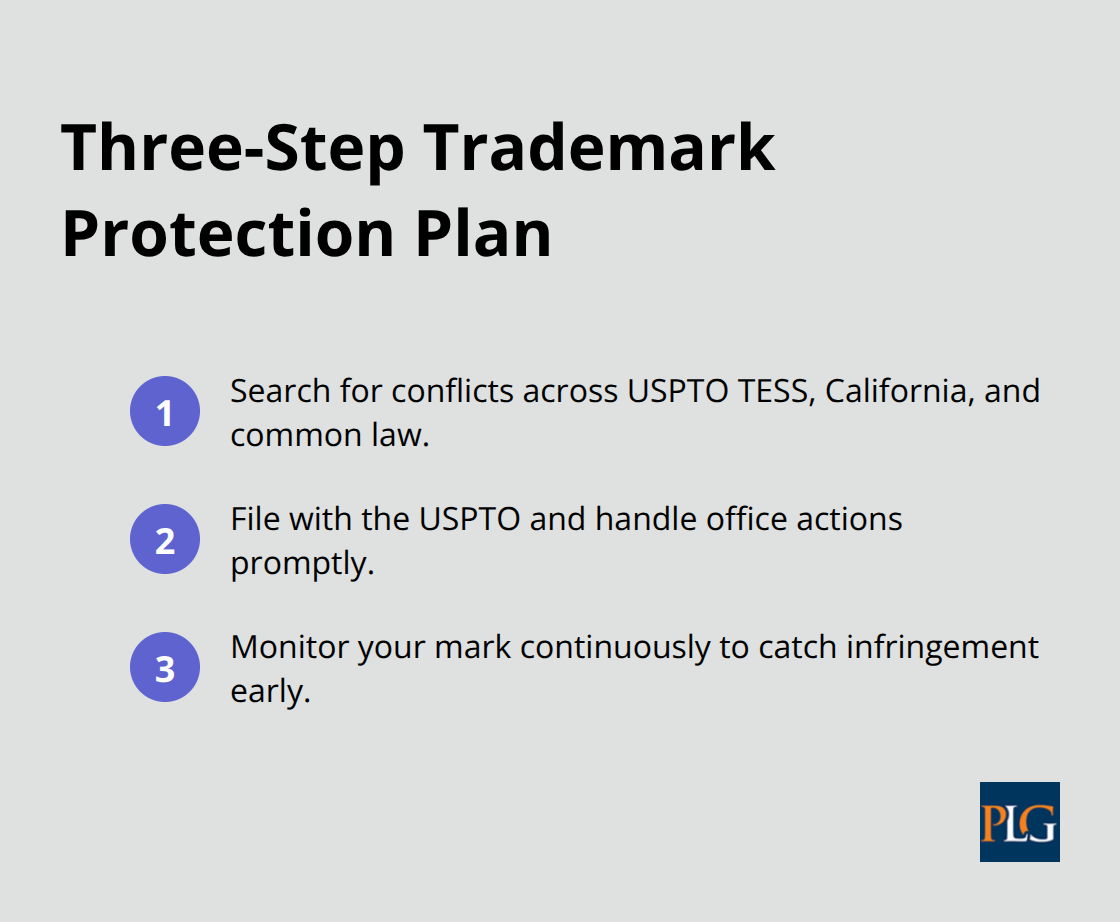
This sequence matters because skipping the search wastes the $350 filing fee, and skipping monitoring abandons your mark to copycats who will exploit the gaps you leave unguarded.
Search Before You File Anything
The USPTO’s Trademark Electronic Search System contains over 2 million active registrations, and searching there is non-negotiable. Many San Francisco founders search Google and assume that’s enough, then file only to face rejection or discover a conflict months later when the USPTO office action arrives. You need to search the USPTO TESS database, California’s state trademark database through the Secretary of State, and common-law usage across the web. A thorough search costs between $200 and $400 if you hire someone to conduct it, or it costs nothing if you do it yourself, but the DIY route often misses state-level marks or prior common-law users that can block your registration.
Misclassifying your goods or services during the search phase creates gaps in your protection. If you sell software but file under the wrong class, you leave your app unprotected while competitors can register similar marks in the classes you missed. The filing fee is $350 per class with TEAS Plus, so a two-class application costs $700. Getting the classes right the first time prevents you from needing to file additional applications later and paying extra fees.
File with Strong Evidence of Use
When you file with the USPTO, you must provide specimens showing your mark in actual commerce or declare a genuine intent to use it within six months. A specimen for a digital product like an app requires a screenshot from the app store showing your mark with the software. A specimen for physical goods requires packaging, labels, or advertising showing the mark. Weak or unclear specimens cause office actions that delay approval by months.
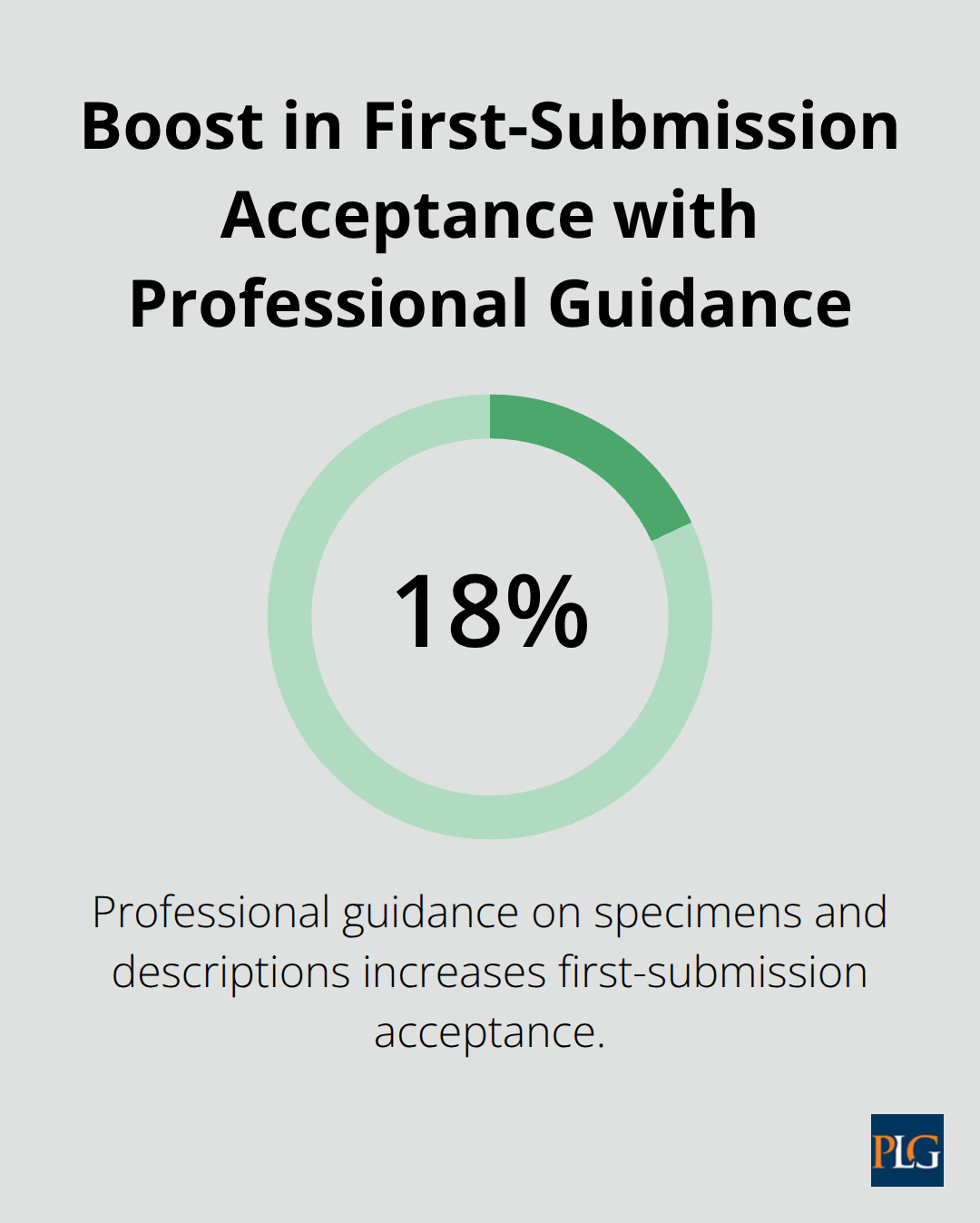
The USPTO typically takes 8 to 12 months to issue a registration, but office actions can extend that timeline significantly. You must respond to office actions within six months, and missing that deadline abandons your application entirely. Professional guidance on specimens and descriptions increases first-submission acceptance by about 18 percent according to trademark filing data, meaning you avoid delays and extra costs by getting it right initially.
Monitor Quarterly and Enforce Immediately
After registration, your work intensifies rather than ends. Amazon Brand Registry and eBay VeRO allow you to report unauthorized sellers and remove infringing listings within days, protecting your revenue stream before counterfeits gain traction. You should run quarterly searches for your mark across Google, domain registrars, and social media to reveal domain squatting and impersonation early. A cease-and-desist letter from an attorney costs $500 to $1,500 but often stops infringers before they escalate, avoiding proactive legal strategies that cost tens of thousands of dollars.
Startups that ignore monitoring for six months often discover their mark has been registered by another party or that counterfeit versions are selling on marketplaces, at which point enforcement becomes exponentially harder. You must also maintain your registration by filing a Declaration of Continued Use between years five and six, which costs $325 with the USPTO, and renewing every ten years. Missing these deadlines cancels your registration and surrenders your federal rights entirely.
International Expansion Requires Additional Planning
As your San Francisco startup scales and considers expansion beyond the United States, your trademark strategy must evolve. The Madrid Protocol provides a cost-effective path to protect marks in 130+ countries through a single application filed with the USPTO, though local offices still examine applications and your basic registration must remain in force. Intellectual property protection requires separate registration in each target market, with enforcement mechanisms that vary significantly between countries, so ongoing monitoring of the base mark remains essential. Planning international protection early-before you launch in new markets-prevents expensive rebranding and loss of market access when you expand.
International Trademark Strategy Beyond the United States
Your San Francisco startup’s trademark protection stops at the U.S. border without intentional international planning. The moment you consider selling into Europe, Asia, or Canada, your federal USPTO registration provides zero protection in those markets. Many startups discover this too late, finding that a competitor has already registered their mark in target countries, forcing expensive rebranding or blocking market entry entirely.
The Madrid Protocol: Streamlined Multi-Country Protection
The Madrid Protocol streamlines international trademark protection by allowing you to file a single application through the USPTO that covers 122 member countries, significantly reducing cost and complexity compared with filing separately in each jurisdiction. Filing through Madrid typically costs $1,000 to $2,500 depending on the number of countries and classes you select, far cheaper than filing individual applications in each country, which would cost $5,000 to $10,000 or more. However, this system still requires your U.S. registration to remain active as the foundation, meaning ongoing monitoring of your base mark is non-negotiable.
The examination timeline varies dramatically by country-some approve within 6 months while others take 18 to 24 months-so starting early prevents delays when you’re ready to launch internationally. San Francisco startups scaling globally should prioritize registrations in manufacturing countries first (typically China, Vietnam, or India), then target markets where you plan to sell, then future opportunities. This Three M’s approach focuses your budget on the jurisdictions that matter most to your business rather than scattering resources across 122 countries at once.

Local Requirements and Examination Variations
The practical reality of international trademark management is that no single system handles every market perfectly. The Madrid Protocol covers major economies but excludes some important markets, and even within Madrid member countries, local offices examine applications independently and can refuse registration based on local law. If your U.S. registration is challenged or cancelled, your corresponding Madrid registrations can collapse as well, making ongoing defense of your base mark essential.
You must also comply with jurisdiction-specific requirements despite the streamlined process-some countries require proof of actual use in commerce within specific timeframes, while others allow intent-to-use filings similar to the U.S. system. Enforcement mechanisms vary significantly too; counterfeiting penalties in China differ dramatically from remedies available in Germany or Canada, so your enforcement strategy must adapt to each market.
Coordinating International Expansion with Trademark Strategy
Many San Francisco startups working with counsel on international expansion find that coordinating trademark strategy with product launch timelines prevents costly gaps where you’re selling in a market but lack trademark registration there. Starting this planning before you’ve already launched prevents the expensive scenario where you’re forced to rebrand in a country after customers recognize your mark, or where you discover a local entity has already claimed your name and demands payment to release it.
Final Thoughts
Early trademark strategy for startups isn’t optional in San Francisco’s competitive landscape. The founders who move fast on trademark protection avoid the expensive mistakes that derail growth and damage brand recognition. We at Primum Law Group have watched startups lose years of brand equity because they delayed filing, skipped the search phase, or ignored monitoring after registration.
Common startup mistakes cluster around three areas: founders assume a domain name or LLC registration protects their brand, then discover federal trademark rights require separate action; they file without conducting a thorough search, leading to rejections or conflicts that waste the filing fee and delay protection by months; and they treat registration as the finish line rather than the starting point, abandoning monitoring and enforcement until a competitor or counterfeiter has already gained traction. Each of these mistakes is preventable with a structured approach to trademark strategy for startups.
Your next step is straightforward-conduct a search of the USPTO TESS database and California’s state trademark database to confirm your mark is available, select the correct classes for your goods or services, prepare strong specimens showing your mark in actual commerce, file your application and respond promptly to any office actions, and implement quarterly monitoring across Google, domain registrars, and marketplaces like Amazon and eBay. Primum Law Group helps San Francisco startups navigate this process with tailored counsel on clearance searches, application strategy, and ongoing enforcement.