

Employee equity vesting basics confuse most founders. You’re juggling retention, tax rules, and legal requirements all at once.
We at Primum Law Group help founders get this right from day one. This guide walks you through vesting mechanics, common mistakes, and strategies that actually work.
How Vesting Actually Works in San Francisco Startups
Vesting is the schedule that determines when an employee or founder actually owns their equity. Without vesting, someone could join your company on day one, receive a massive grant, and leave on day two with full ownership. Vesting prevents that. It ties equity ownership to time spent at the company, creating a retention mechanism and protecting your cap table from free riders. The mechanics are straightforward: you grant equity on day one, but the employee only owns it gradually over a period, typically four years. The employee’s right to exercise or receive shares grows month by month or quarter by quarter until fully vested. This is why vesting matters so much for founders-it aligns incentives and signals to investors that your ownership structure is disciplined.
The Four-Year Standard with a One-Year Cliff
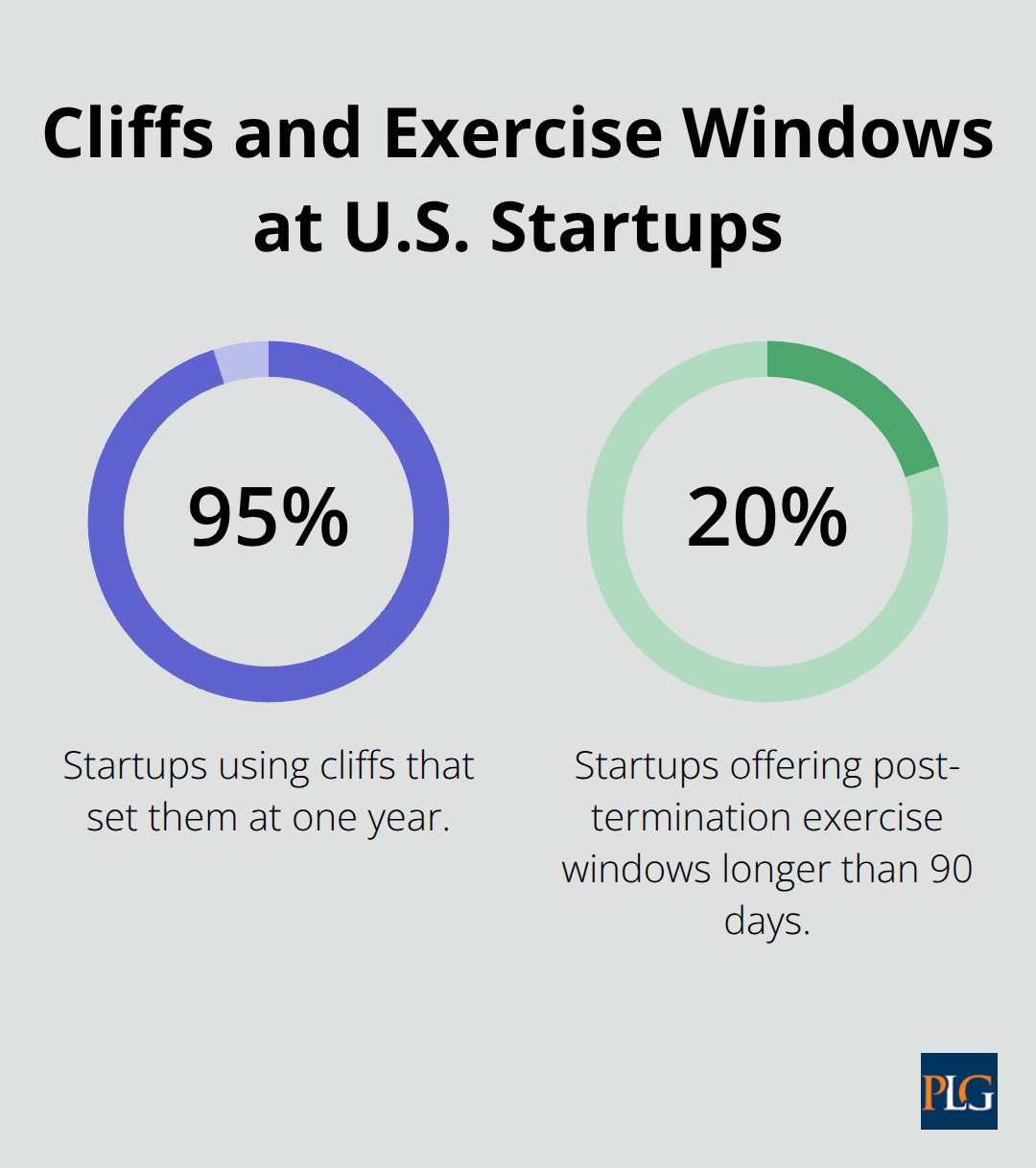
The startup market standard is a four-year vesting schedule with a one-year cliff, and this applies whether you’re bootstrapped or backed by venture capital. The cliff means nothing vests in year one. If someone leaves after 11 months, they get zero equity, no matter how valuable their contributions were. After the cliff passes, the remaining three years vest monthly, so the employee receives roughly 1/48th of their grant each month. About 95% of startups using cliffs make them one year long.
Cliffs create real problems for both employees and founders. They produce perverse incentives where early-stage hires, who often drive the most impact during months three through twelve, have zero upside until the cliff passes. Top performers know this and may demand cliffs be eliminated or shortened. If you want to attract strong talent for a shorter tenure-someone who might contribute significantly for 18 months then move on-a cliff forces you to either accept losing them without equity reward or negotiate an exception.
Daily vesting starting on day one offers an alternative that gains traction. An employee who leaves after one month receives roughly 2% of their grant. This removes the cliff-or-nothing binary and rewards contribution from day one.
Tax Timing and What Founders Must Track
Vesting and taxation are separate events, and this confusion costs founders money. For restricted stock units and restricted stock, the vesting date triggers ordinary wage income equal to the fair market value of shares at vesting minus what the employee paid (usually zero). This income becomes taxable immediately when vesting occurs, not when the employee sells.
For stock options, the picture changes: nonstatutory options create wage income only when exercised, equal to the gap between the stock’s fair market value at exercise and the exercise price. Incentive stock options, if held long enough, can qualify for capital gains treatment, but exercising them may trigger the alternative minimum tax.
California residents and part-year residents face additional sourcing rules. If you performed services in multiple states, California taxes only the portion of option income tied to California workdays. Calculate this using a ratio: California workdays from grant to exercise divided by total workdays in that period. An employee working half the time in San Francisco and half in Austin owes California tax on roughly half the option income.
Post-termination exercise windows also matter for cash flow. Employees typically have 90 days after leaving to exercise vested options. About 20% of startups now offer longer windows beyond 90 days, treating this as an employee-friendly benefit.
Managing Vesting Records and Cap Table Accuracy
Tracking grant dates, vesting dates, and exercise dates is non-negotiable. Spreadsheets work for a handful of grants, but dedicated equity management tools like Carta Launch handle the complexity once your company scales. Getting these dates wrong creates tax compliance problems and makes it harder to model cap table dilution accurately.
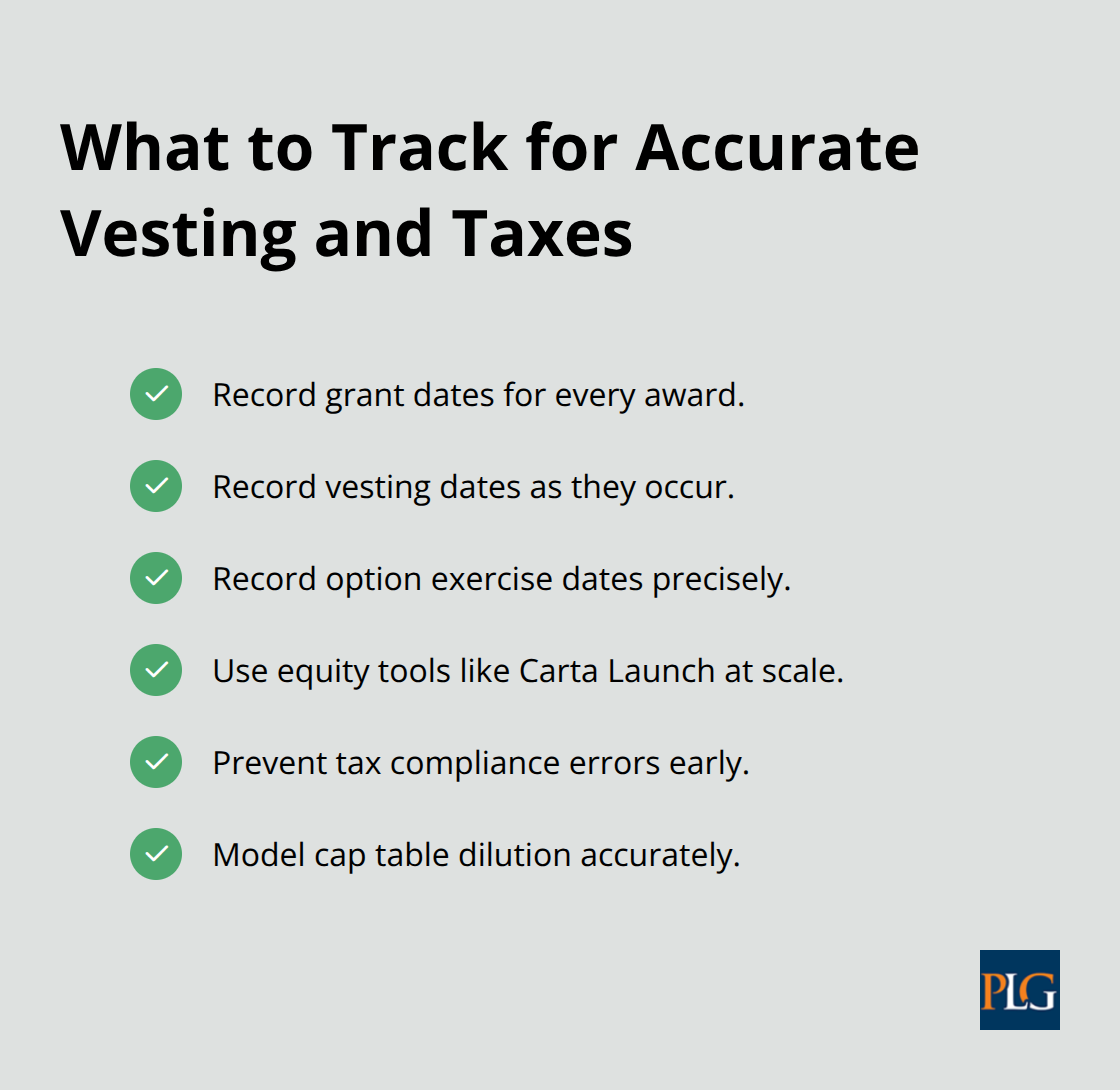
The right systems prevent costly mistakes down the road.
As your vesting structure takes shape, the next critical step involves how you actually communicate these terms to your team and what happens when circumstances change unexpectedly.
Structuring Vesting to Attract and Keep Talent in San Francisco
Different employees create different retention problems, and your vesting structure should address them directly. Early-stage engineers and product leads drive the most value during months three through twelve, yet the standard one-year cliff leaves them with nothing if they leave before month 13. This creates a retention gap you should fix. Try offering daily vesting from day one for early hires, especially those in critical roles. An employee departing after six months receives roughly 12.5% of their grant instead of zero. This approach signals trust, rewards actual contribution, and removes the perverse incentive to stay just to clear the cliff. Software tools handle daily vesting without complexity, and the four-year total horizon remains intact.
Matching Vesting to Role and Tenure Expectations
Employees expecting short-term roles need different structures than those hired for the long haul. Advisory roles often vest over two years because advisor engagements rarely last longer. Contractors and consultants shouldn’t receive vesting schedules at all-they should get restricted stock or cash. For your core team, the four-year schedule with a one-year cliff works if you commit to eliminating the cliff or shortening it to six months for exceptional talent. The median seed-stage startup allocates about 13.5% of fully diluted shares to employee option pools, rising to 17.2% for Series D companies. If your pool sits below 13.5% at seed stage, you’ll struggle to attract talent without offering larger individual grants that dilute founder ownership excessively. Adjust your pool size upfront to avoid this trap.
Acceleration Clauses That Protect Both Sides
Acquisition acceleration comes in two flavors: single-trigger and double-trigger. Single-trigger accelerates all unvested equity the moment the deal closes. Double-trigger requires both acquisition and termination without cause. Double-trigger is far more common because it protects the acquiring company-they want continuity and don’t want to hand out massive equity windfalls to departing employees. However, double-trigger only works if you define what counts as termination without cause clearly. Vague language around performance issues or reorganization creates disputes at exactly the moment you need certainty.
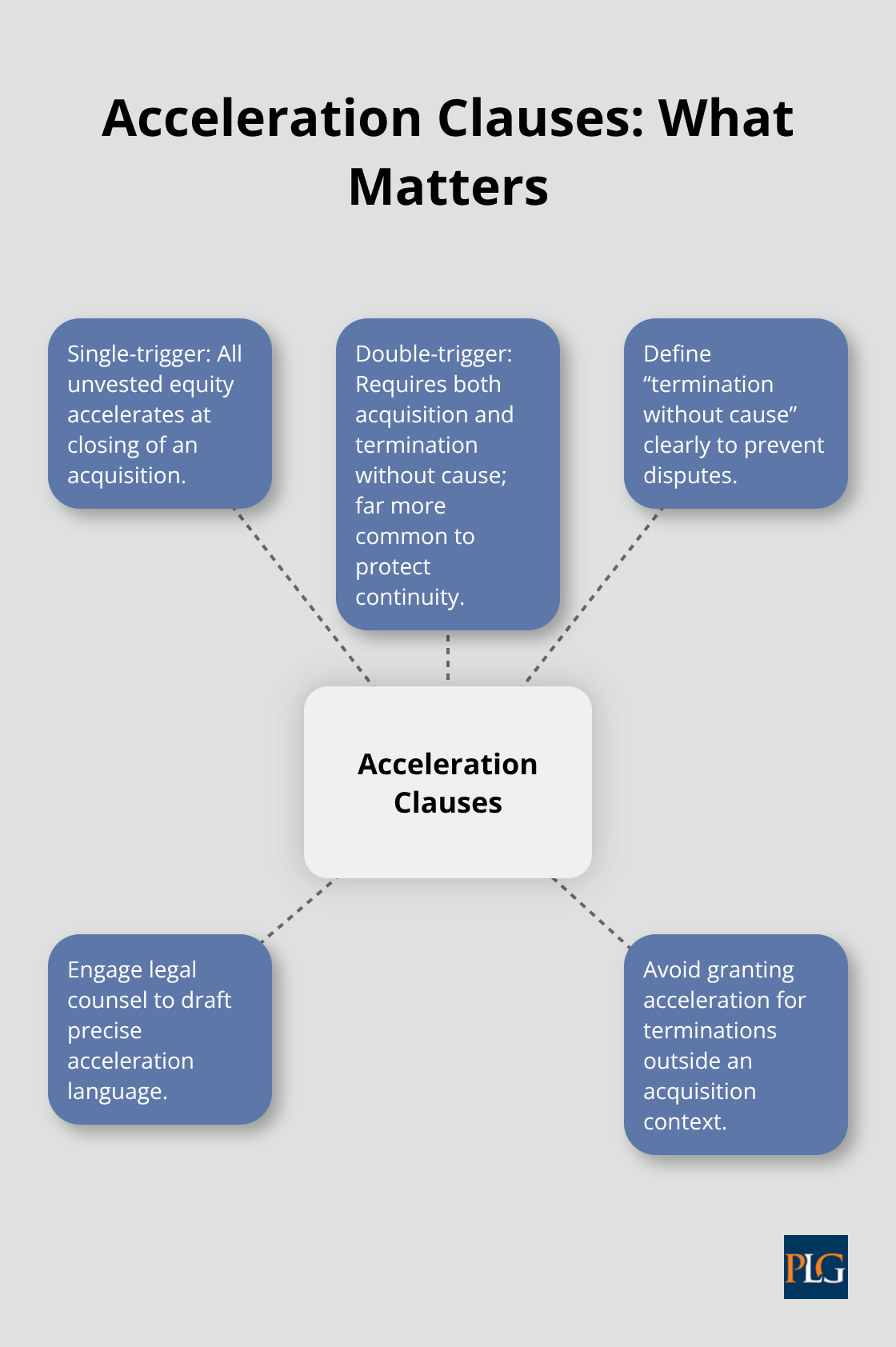
Write your acceleration provisions with legal counsel to avoid this. Also, never grant acceleration for termination without cause outside an acquisition context-that’s a gift to employees who leave voluntarily and wastes equity.
IPO Lock-Ups and Liquidity Timing
IPO acceleration matters less in early-stage planning, but it shapes founder expectations later. When an IPO does happen, a 180-day lock-up agreement typically restricts founder and employee share sales. This means acceleration alone doesn’t immediately create liquidity. Founders who understand this timing avoid the mistake of treating acceleration as a path to quick cash. The lock-up period protects market stability and gives insiders time to plan their tax strategy before selling shares. Your vesting structure and acceleration clauses set the foundation for how equity flows through your company, but they only work if your team actually understands what they’ve received and what it means for their financial future.
Where Founders Go Wrong with Vesting
Most founders treat vesting as a checkbox task rather than a decision that shapes your entire cap table and employee relationships. The mistakes happen fast and cost real money. You skip legal review because you assume the standard four-year schedule with a one-year cliff handles everything, then discover mid-negotiation with your first investor that your vesting terms don’t match what venture capitalists actually expect. You hand out grants with verbal explanations instead of written documents, creating disputes months later when an employee leaves and claims they were promised different terms. You fail to think through secondary liquidity, leaving employees trapped with underwater options they cannot exercise profitably because the strike price sits above any reasonable exit value. These problems occur in 60% of early-stage companies that skip proper planning.
Legal Review Catches Real Problems Before They Compound
Founders often think vesting language is standardized enough to skip legal counsel. It isn’t. The difference between a single-trigger and double-trigger acceleration clause determines whether your acquiring company keeps your employees or watches them leave with massive payouts. A vague definition of cause termination creates litigation risk when you need to lay off someone and they argue they should receive acceleration. California’s sourcing rules for multi-state work mean an employee who worked partly in San Francisco and partly remote owes taxes on equity income calculated using a specific workday ratio-if your grant documents don’t reference this, you’ve created a compliance gap. A lawyer reviewing your vesting schedule identifies whether your cliff length actually matches your retention goals or whether you’ve built in a perverse incentive that pushes high performers away. The cost of legal review at grant time runs roughly $500 to $1,500 per document depending on complexity, a fraction of the equity disputes that arise from skipping it.
Communication Failures Create Resentment and Turnover
Employees who don’t understand their vesting terms make poor decisions about staying or leaving. You tell someone they have a four-year schedule with monthly vesting, but you never explain that the one-year cliff means zero equity if they depart before month 13. They leave after 14 months, expecting a meaningful payout, then discover they receive almost nothing because the cliff just passed. Resentment follows, and they tell other candidates your equity package is a trap. Written grant documents eliminate this problem. A one-page summary explaining the vesting schedule, the cliff, the exercise window, and the tax implications prevents misunderstandings. Include the specific dates: grant date, cliff date, final vesting date, and post-termination exercise window. Many founders skip this because they assume equity is self-explanatory. It isn’t. Employees need to know whether they have incentive stock options or nonstatutory options because the tax treatment differs significantly. They need to understand that vesting stops immediately if they leave employment, even if they retain the right to exercise vested shares.
Liquidity Planning Prevents Equity from Becoming Worthless
Founders grant equity without thinking about whether employees can actually turn it into money. An employee receives options with a $10 strike price when the company is worth $5 million. The company never raises funding and never exits. The equity remains illiquid forever. No secondary market exists for the shares, the employee cannot exercise without cash they don’t have, and the options expire worthless. This happens routinely because founders focus on the grant size and forget that equity only matters if it can eventually convert to cash. Secondary markets for private company stock have grown-platforms like Forge and EquityZen now facilitate sales-but your employees still need a realistic path to liquidity. If your company is bootstrapped with no clear path to acquisition or IPO within five years, offer cash bonuses instead of equity or combine small equity grants with regular cash compensation. If you do grant equity, discuss the liquidity timeline upfront. Tell employees whether you expect an exit in three years, five years, or beyond. Set expectations about post-termination exercise windows. The default 90-day window means an employee who leaves must decide whether to exercise within three months or lose the shares. Longer windows, now offered by roughly 20% of startups, give employees time to raise capital or wait for secondary market opportunities.
Final Thoughts
Getting employee equity vesting basics right separates founders who build sustainable companies from those who create cap table disasters. The decisions you make now about vesting schedules, cliff periods, and acceleration clauses ripple through your entire hiring strategy and investor relationships. A four-year schedule with a one-year cliff works as a starting point, but only if you’ve thought through whether that cliff actually serves your retention goals or pushes away the talent you need most.
Daily vesting from day one costs nothing to implement and signals trust to early hires who drive real impact during months three through twelve. Acceleration clauses matter less at seed stage but become critical once acquisition conversations begin, so define single-trigger versus double-trigger language now rather than negotiating it under pressure later. Your vesting structure lives in grant documents, not in conversations or emails.
We at Primum Law Group help founders navigate these decisions with counsel that actually understands startup economics. Our team provides startup counseling and corporate governance guidance tailored to your specific cap table and hiring stage. Legal review of your vesting documents costs far less than fixing disputes later.