
Startups live or die by their ability to attract talented people. Yet many founders rush through employment contracts, missing critical details that protect both the company and new hires.
We at Primum Law Group have seen how poorly drafted agreements create friction, legal exposure, and lost talent. The right employment contract terms become your competitive advantage in a tight labor market.
What Makes an Employment Contract Actually Work for Startups
Compensation and Equity: Get It in Writing
A solid employment contract does three things: it clarifies what each party owes the other, it protects your company’s assets, and it keeps your best people from walking out the door. Most startups get this wrong because they either copy a template from the internet or skip the contract entirely. Both approaches cost you money and talent.
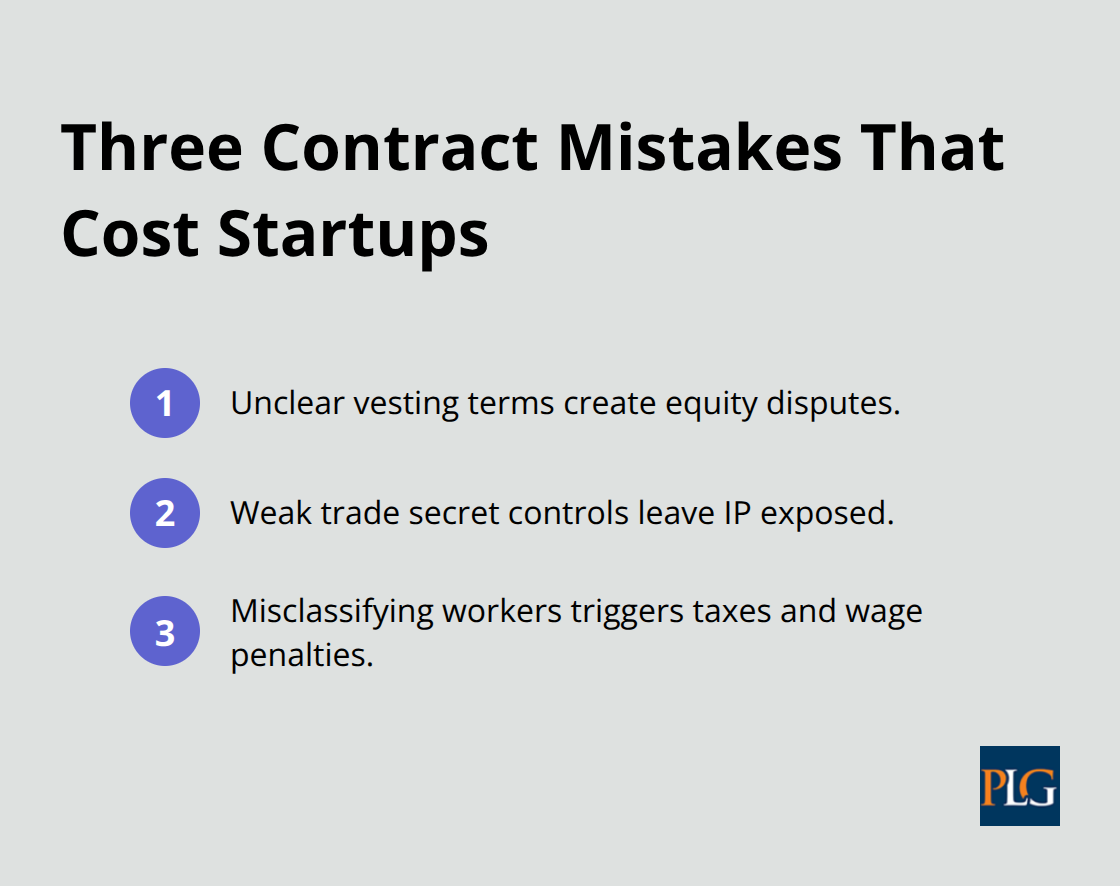
Compensation structure is where most startups stumble. You need to spell out base salary, any bonus structure, and equity grants with exact vesting schedules. Don’t use handshake agreements on equity. A written stock option plan with board approval prevents misunderstandings that blow up during fundraising or acquisition conversations. If you’re offering equity to your first full-time employee, be specific about the cliff period. Most early-stage companies use a four-year vesting schedule with a one-year cliff, meaning the employee gets nothing if they leave before year one, then starts earning equity monthly after that. This protects your company from early departures while still rewarding commitment.
Define what happens to unvested equity if someone leaves. Do they lose it entirely, or can the company buy it back at a discount? This distinction matters for retention. If you’re in Ontario and your payroll exceeds C$2.5 million with an employee who has more than five years of service, severance obligations can jump significantly under provincial employment standards. That’s why clarity upfront prevents expensive surprises later. For roles involving specialized knowledge or access to sensitive information, tie equity to milestones or performance triggers. This reduces your risk if the hire doesn’t work out as expected.
Intellectual Property and Job Responsibilities
Job responsibilities and intellectual property protection go hand in hand. Write down what the person actually does. Be specific about whether they’re exempt or non-exempt from overtime rules. Misclassifying someone as exempt when they’re actually non-exempt triggers wage and hour penalties that compound quickly.
In your contract, include an IP assignment clause stating that anything the employee creates during employment belongs to the company. This protects your core product and prevents disputes later. Add a confidentiality clause covering trade secrets and proprietary information. Non-compete and non-solicitation provisions must be reasonable in duration and geography to be enforceable. A five-year worldwide non-compete will get thrown out by a court; six months to two years in your specific market is more likely to hold up.
Tailor these covenants to the actual role. An entry-level designer doesn’t need the same restrictions as your VP of Engineering. This shows fairness and improves your chances of enforcement if someone does leave and tries to poach clients or employees. The next section covers the mistakes that derail most startup contracts-and how to avoid them.
Common Mistakes Startups Make in Employment Contracts
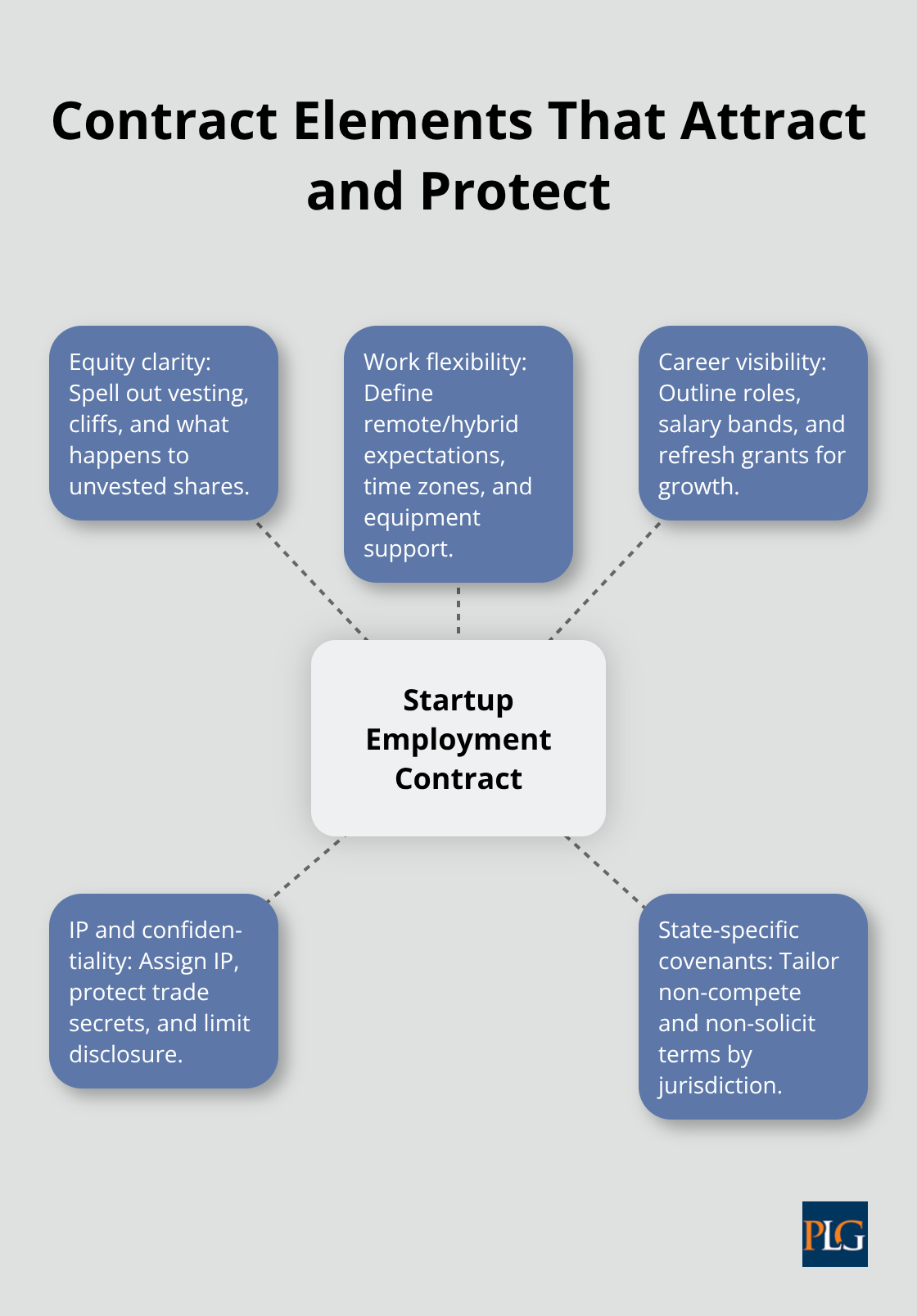
Most startup founders assume that once they write down the vesting schedule, assign IP rights, and add a non-compete clause, they’re protected. They’re not. Startups make three avoidable errors that undermine everything else in their contracts, and these mistakes surface during fundraising or acquisition when it’s too late to fix them cheaply.
Vesting Schedules That Lack Clarity
The first mistake is vesting schedules that sound good on paper but fall apart in practice. You write a four-year vest with a one-year cliff, but then you never document what happens if the employee is fired without cause before the cliff ends, or what the buyback price is for unvested shares. Courts and investors hate ambiguity here. When a founder departs early and claims they’re owed equity, or when a seed investor asks to see your cap table and finds handwritten notes instead of a formal stock option plan, you lose credibility and negotiating power.
The IRS Section 409A compliance documentation matters too, especially if you’re issuing options at a discount or with performance triggers. Without proper board-approved documentation, the IRS can recharacterize the grant and hit the employee with unexpected tax bills. That destroys morale and your reputation for fair dealing.
Trade Secret Protection That Doesn’t Actually Protect
The second trap is underestimating trade secret protection. You add a confidentiality clause to your contract, but you don’t actually control who sees your proprietary information or how it’s stored. A developer leaves and takes your source code architecture in their head, or worse, in a GitHub fork. Your non-compete clause sits unenforceable because you wrote it too broadly or your state doesn’t enforce non-competes at all.
California doesn’t enforce non-competes, period, which means your San Francisco startup’s restrictive covenant is worthless. You need state-specific language and you need to limit access to sensitive information from day one. Document what counts as a trade secret, require NDAs before sharing technical details, and audit who has access to your core systems.
Worker Misclassification and Its Real Costs
The third mistake is worker misclassification, and this one costs real money fast. You hire someone as a contractor to save on payroll taxes and benefits, but the person works full-time, uses your equipment, takes direction from you, and can’t work for competitors. That’s an employee under the IRS ABC test and most state laws. If an audit happens, you owe back payroll taxes, overtime penalties, and potentially wage and hour damages.
California penalties for improper meal and rest break violations alone can exceed thousands per violation per pay period. The safest approach is defaulting to W-2 employment unless you have solid documentation proving independent contractor status, including a signed agreement that clearly defines the relationship and limits your control over how the work gets done. Getting these three elements right-vesting clarity, trade secret controls, and proper classification-sets the foundation for the next critical piece: using contract terms to actually attract and keep the talent you need.
Using Contract Terms to Win the Talent Race
Your employment contract is a negotiation tool, not just legal paperwork. Startups that treat it as a selling document-not a defensive one-attract better people faster. The contract signals whether you value fairness or just protect yourself. Candidates notice the difference, and the best ones walk away from one-sided agreements.
Equity That Reflects Real Value
If you’re bringing on your first full-time engineer to build core product, that person isn’t worth 0.1% when they’re taking market-rate risk. Most pre-seed startups offer 0.5% to 1.5% for early engineering hires, depending on stage and location. Healthcare startups specifically tend to offer higher equity percentages because the work is more specialized.
For your first full-time hire, publish your offer in writing with the vesting schedule, cliff period, exercise price, and pro-rata rights for future rounds. Pro-rata rights matter: they let the employee maintain their ownership percentage if you raise future funding. This single clause signals long-term thinking and reduces the sting of dilution.
Remote Work and Flexibility as Table Stakes
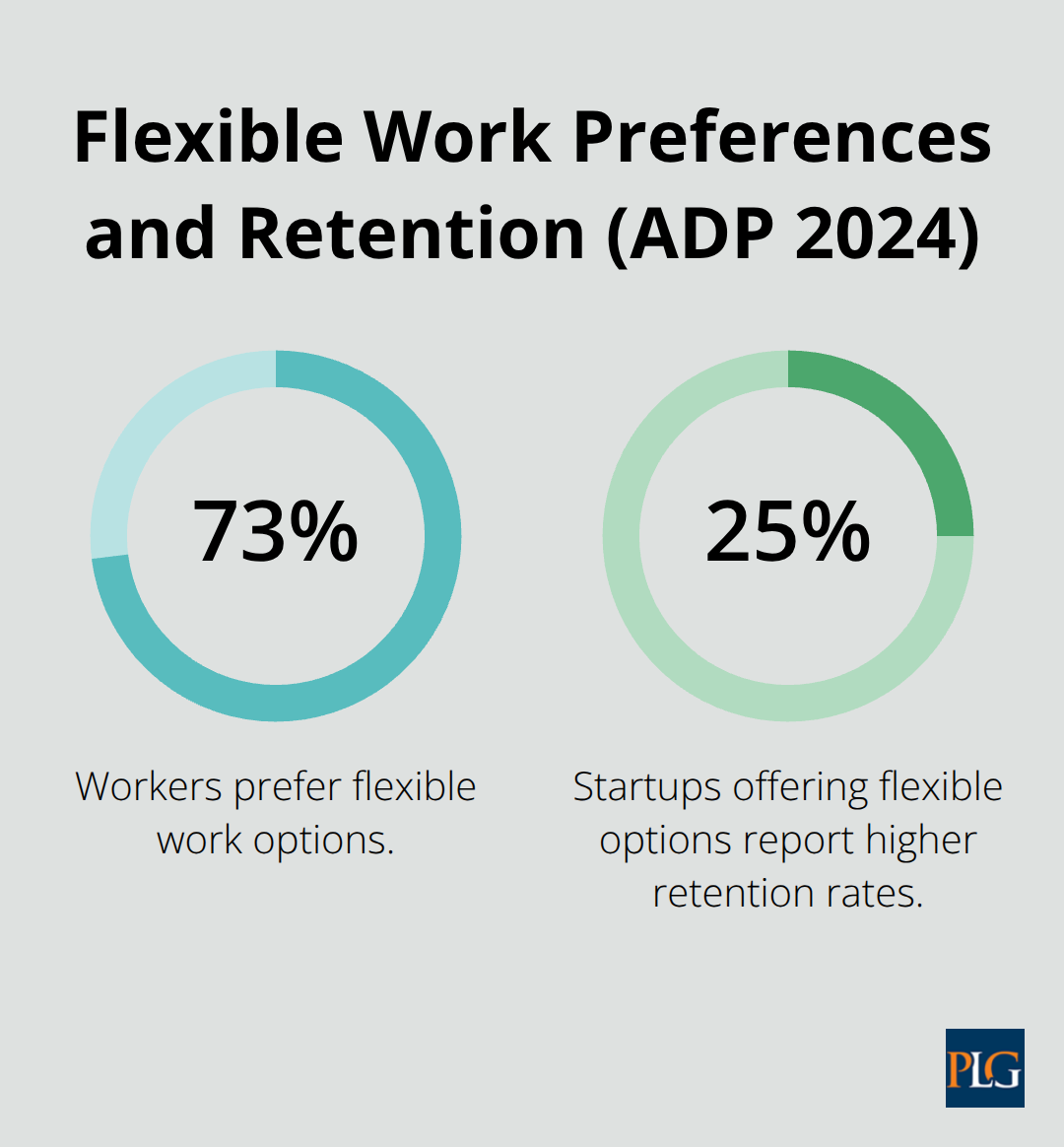
Add flexibility into how the work actually gets done. Remote-first or hybrid arrangements aren’t perks anymore-they’re table stakes for attracting talent outside expensive coastal metros. A 2024 survey by ADP found that 73% of workers prefer flexible work options, and startups that offer them report 25% higher retention rates.
Don’t just say remote is allowed; specify whether the role requires office days, which timezone matters, and whether you’ll cover equipment or internet. Vague flexibility creates friction later. The contract should spell out these details so both sides know what to expect.
Visible Career Paths and Compensation Transparency
Build a visible career path into the contract or a companion document. An early hire needs to understand what senior engineer, tech lead, or manager looks like at your company. Salary bands matter too: if your first engineer is paid 120k and you hire a second engineer at 140k, you’ve created a retention problem.
Document how you handle equity refresh grants, bonuses tied to milestones, and skill-based raises. This removes guesswork and shows the person isn’t just filling a role-they’re building something with room to grow. The contract becomes a promise about what’s possible, not just what’s prohibited.
When you structure these three elements well (equity clarity, work flexibility, and career visibility), you transform the employment contract from a legal shield into a talent magnet. Candidates see a company that thinks ahead and treats people fairly.
Final Thoughts
Employment contracts for startups aren’t just legal documents-they’re your first promise to the people building your company. When you structure compensation, vesting schedules, IP assignment, and restrictive covenants correctly, you solve three problems at once: you protect your intellectual property and company assets, you reduce legal exposure during fundraising or acquisition, and you signal to candidates that you’re serious about fair dealing. A startup that documents equity grants with board approval, specifies remote work flexibility, and publishes career paths attracts better talent faster than one that treats the contract as purely defensive.
Fair terms benefit both sides. Your employees know exactly what they’re earning, when they’ll vest, and what happens if they leave, while you avoid misclassification penalties, cap table disputes, and the morale damage that comes from vague or one-sided agreements. When a seed round closes or an acquisition conversation starts, a clean employment contract becomes proof that you’ve built a professional operation from day one. The cost of getting this wrong is steep-misclassified workers trigger payroll audits, unclear vesting schedules derail fundraising conversations, and unenforceable non-competes leave your trade secrets exposed.
We at Primum Law Group help startups structure employment contracts that attract talent and protect your company. Start by reviewing your current agreements against the framework in this post, and reach out if you’re missing written agreements, vesting documentation, or state-specific restrictive covenants.