

Picking the wrong venture capital platform can cost you months of wasted time and missed opportunities. We at Primum Law Group have seen founders struggle because they didn’t evaluate their VC platform options carefully enough.
The right platform connects you with quality investors, streamlines your deal process, and scales with your growth. This guide walks you through exactly what to look for and what mistakes to avoid.
What Makes a Venture Capital Platform Worth Your Time in San Francisco
Investor Network Quality Beats Sheer Size
A quality venture capital platform lives or dies by three things: who you can reach, what deal flow moves through it, and whether you can actually track what’s happening. The San Francisco VC ecosystem has hundreds of active investors spread across mega funds, mid-market shops, and seed-stage platforms, but access matters more than sheer numbers. Accel Partners holds $17.06 billion in total capital, Andreessen Horowitz manages $4.35 billion, and Sequoia Capital controls $4.12 billion according to industry data, yet many founders never get in front of these firms because they use the wrong platform. The platform you choose should surface investors who have already funded companies in your sector and stage. If you’re a fintech startup raising Series A, a platform that shows you Sequoia’s PayPal investment or a16z’s Coinbase backing tells you immediately whether these firms care about your market. Look for platforms that let you filter by fund size, stage focus, and portfolio themes. Y Combinator’s $700 million fund and 500 Startups’ $300.14 million reserve signal where early-stage capital flows, and platforms should make this visible without forcing you to dig through websites.
Deal Flow Velocity and Conversion Metrics Matter Most
The deal flow you see matters more than the total number of companies listed. A platform with 500 companies but weak filtering is useless; one with 100 vetted, stage-aligned companies is gold. Check whether the platform shows inbound deal velocity, conversion rates from pitch to meeting, and stage-by-stage drop-offs. These metrics reveal whether the platform actually moves deals or just sits there.
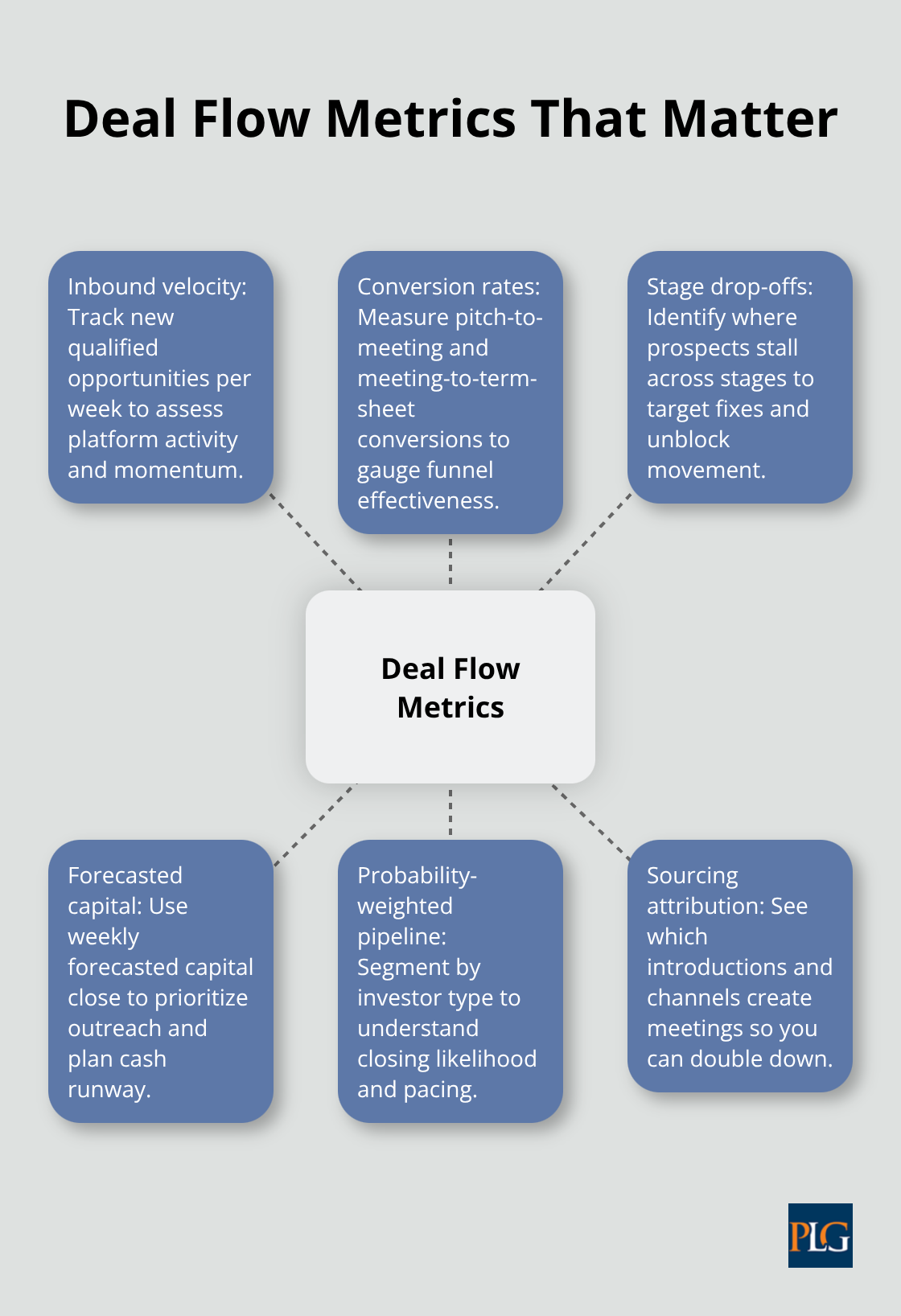
Analytics tools should give you weekly forecasted capital close, probability-weighted pipelines by investor type, and sourcing attribution so you know which introductions actually convert to meetings. Platforms track investor updates, data rooms, and pipeline stages, letting you see exactly where each conversation stands. Without this visibility, you’re flying blind through months of outreach.
Portfolio Outcomes and Partner Focus Signal Real Value
The right platform also shows you how funds support companies after the check clears. Look at portfolio company outcomes: did founders get board-level involvement, strategic introductions to customers, or just capital? Accel’s portfolio includes Spotify, Etsy, and Deliveroo, showing a track record of backing scaled outcomes. Assess whether the platform surfaces partner focus-some investors lead deals in AI, others in healthcare or developer tools-so you can target people who actually care about your wedge. This alignment between your business and a fund’s investment thesis determines whether you get real support or just money.
Security and Compliance Protect Your Sensitive Information
Security and compliance matter because you’ll be sharing cap tables, financial projections, and founder information. The platform should encrypt data, limit access to invited parties, and comply with SOC 2 standards or equivalent. If the platform doesn’t clearly state its security posture, that’s a red flag. You need confidence that your information stays protected while you navigate investor conversations. With the right platform in place, you’re ready to evaluate which specific options actually fit your fundraising stage and timeline.
What Actually Costs Money When You Compare VC Platforms in San Francisco
The Real Cost Isn’t the Monthly Fee
Most founders focus on the wrong pricing metric when comparing platforms. You’ll see subscription tiers ranging from $500 to $5,000 monthly, but the real cost isn’t the platform fee-it’s the time you waste on a platform that doesn’t connect you with investors who fund your stage. A platform charging $2,000 monthly that surfaces fifty irrelevant funds wastes more money than a $5,000 platform that shows you exactly which twenty investors actively deploy capital in your sector. When evaluating pricing, ask what’s included: does the fee cover data room access, investor updates, and pipeline tracking, or do you pay separately for each feature? Platforms like Visible bundle fundraising funnels, investor dashboards, and cap table management into their subscription, while others charge per-feature, turning a cheap entry price into an expensive operation.
Calculate Your Cost Per Investor Meeting
Calculate your actual cost per investor meeting to compare platforms fairly. If a platform costs $3,000 monthly and generates five qualified investor meetings per month, you’re paying $600 per meeting. If another platform costs $5,000 but generates fifteen meetings, you’re at $333 per meeting-the cheaper platform just became more expensive. Demand transparency on what metrics the platform tracks and whether you get real-time reporting or monthly summaries.
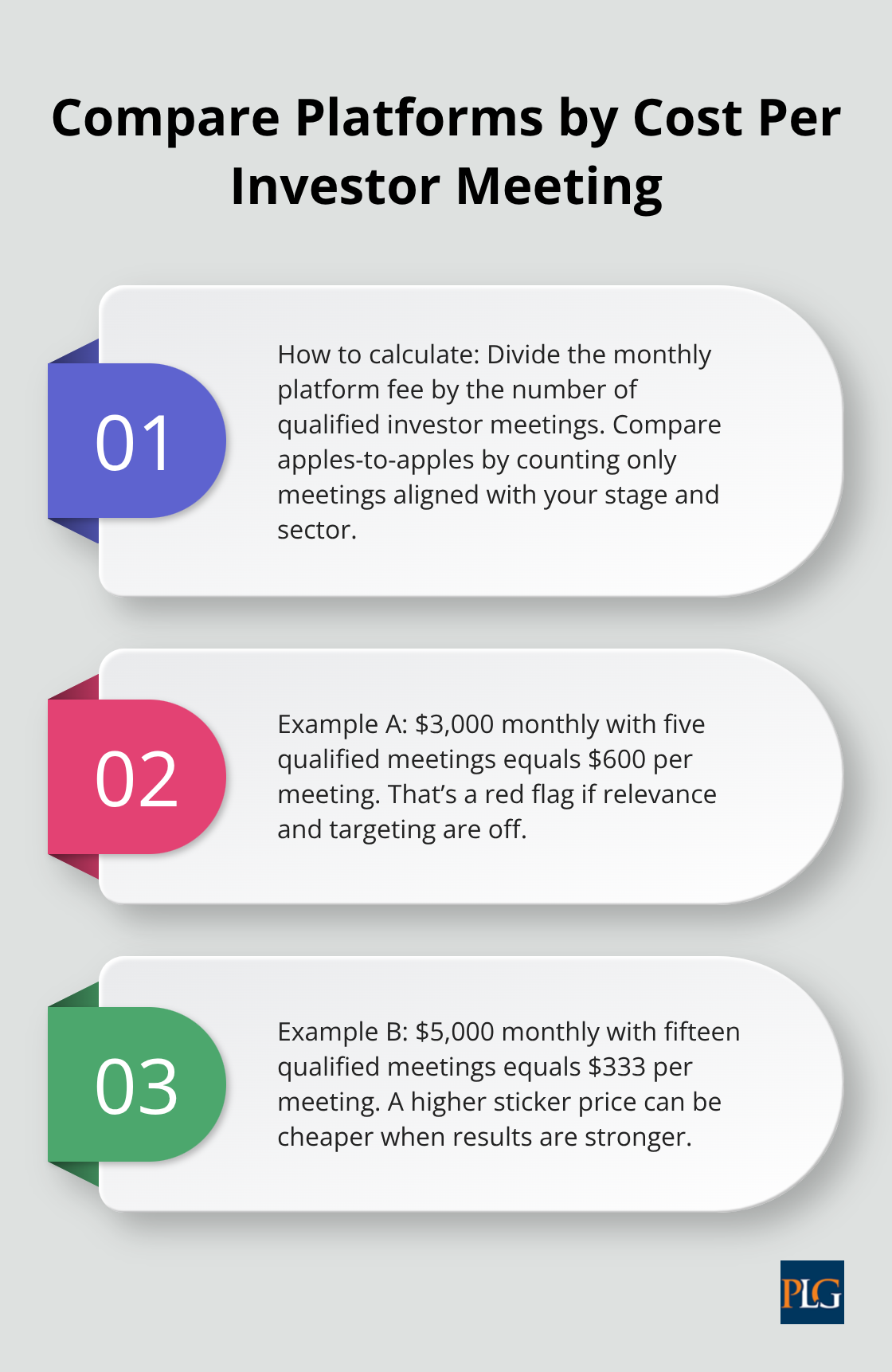
Real-time data matters because fundraising moves fast; a platform showing you last month’s deal flow is already obsolete.
Customer Support Quality Separates Winners From the Rest
Customer support quality separates platforms that actually help you from platforms that just host data. When you’re in the middle of a Series A round and your investor list isn’t syncing correctly or your data room access breaks, you need someone answering the phone within hours, not days. Check whether the platform offers dedicated account management for your tier, response-time guarantees, and whether support staff understand VC fundraising or just handle generic technical issues.
Security and Compliance Protect Your Sensitive Information
Security and compliance requirements vary by platform, and this directly impacts your legal exposure. Platforms handling cap tables and investor information must comply with SOC 2 Type II certification, which means they’ve undergone third-party audits of their security controls. Ask whether the platform encrypts data in transit and at rest, enforces multi-factor authentication, and maintains audit logs showing who accessed your information and when. Some platforms store data on US servers only, while others use distributed cloud infrastructure-understand where your sensitive information lives and whether that matches your compliance requirements. If you’re fundraising from international investors or planning to operate globally, confirm the platform complies with GDPR, CCPA, and other regional data protection laws. Request the platform’s security documentation before signing; legitimate platforms provide SOC 2 reports, penetration testing results, and incident response procedures without hesitation. A platform that refuses to share security details isn’t mature enough to handle your fundraising process.
What Happens When You Pick the Wrong Platform
The mistakes founders make when selecting a VC platform often stem from incomplete evaluation. You might choose based on brand recognition alone, ignore integration capabilities with your existing systems, or overlook scalability for future growth. These oversights compound quickly-a platform that works for your seed round may collapse under the weight of a Series A pipeline, forcing you to migrate data and restart your investor relationships mid-fundraise. The next section walks you through the specific mistakes that cost founders the most time and capital.
Three Platform Mistakes That Derail Fundraising in San Francisco
Reputation Doesn’t Replace Sector Fit
Founders pick the wrong VC platform for three concrete reasons, and each one costs differently. The first mistake is selecting based on platform reputation rather than fit. Platforms with recognizable names attract founders because they feel safer, but a well-known platform that doesn’t connect you with investors in your sector is worthless. You might select a platform because TechCrunch mentioned it or because competitors use it, but what matters is whether that platform’s investor network actually funds companies like yours. A platform that surfaces fifty investors, thirty of whom focus on hardware when you’re building SaaS, wastes your time faster than a smaller platform showing you ten SaaS-focused funds. Check what percentage of each platform’s investor base actively deploys capital in your specific stage and sector. If a platform won’t tell you this, move on.
Integration Failures Damage Credibility
The second mistake is ignoring how the platform integrates with your existing tools. You’re already using a cap table manager, probably Carta or Pulley. You’re tracking financial metrics in Stripe and Brex. Your fundraising platform must sync with these systems automatically, not force you to manually export and import data between tools. When platforms don’t integrate, you maintain the same information in three different places, which means your investor data gets stale, your financial metrics fall out of sync, and you send outdated numbers to investors. Integration failures don’t just waste time-they damage credibility. Platforms like Visible integrate with cap table managers and accounting software, letting you pull live data into your investor updates. If a platform requires manual data entry or one-way exports, it’s built for a different era of fundraising.
Scalability Breaks Under Series A Pressure
The third mistake is underestimating how much your platform needs to scale. A platform that works smoothly when you’re managing thirty investor conversations breaks when you’re managing three hundred. This happens because platforms designed for individual founders struggle with multi-stakeholder workflows. Your CFO needs to update financial data, your CEO needs to manage investor relationships, your head of operations needs to track meeting logistics. If the platform doesn’t support role-based access, concurrent editing, or audit trails showing who changed what and when, you’ll hit a ceiling fast.
Series A rounds involve more investors, longer due diligence, more data requests, and faster deal cycles than seed rounds. A platform that stores your data in a simple folder structure becomes unmanageable when you’re managing hundreds of documents across multiple investor conversations happening simultaneously. Test the platform’s performance with realistic data volumes before committing. Ask the vendor how many concurrent users the platform supports, what happens when you upload thousands of documents to your data room, and whether the system slows down under heavy use.
Platforms optimized for scale include user permission controls, version history, search functionality across all documents, and real-time activity logs. These features matter more in Series A and beyond than they do in seed rounds, so your choice now should anticipate where you’ll be in eighteen months.
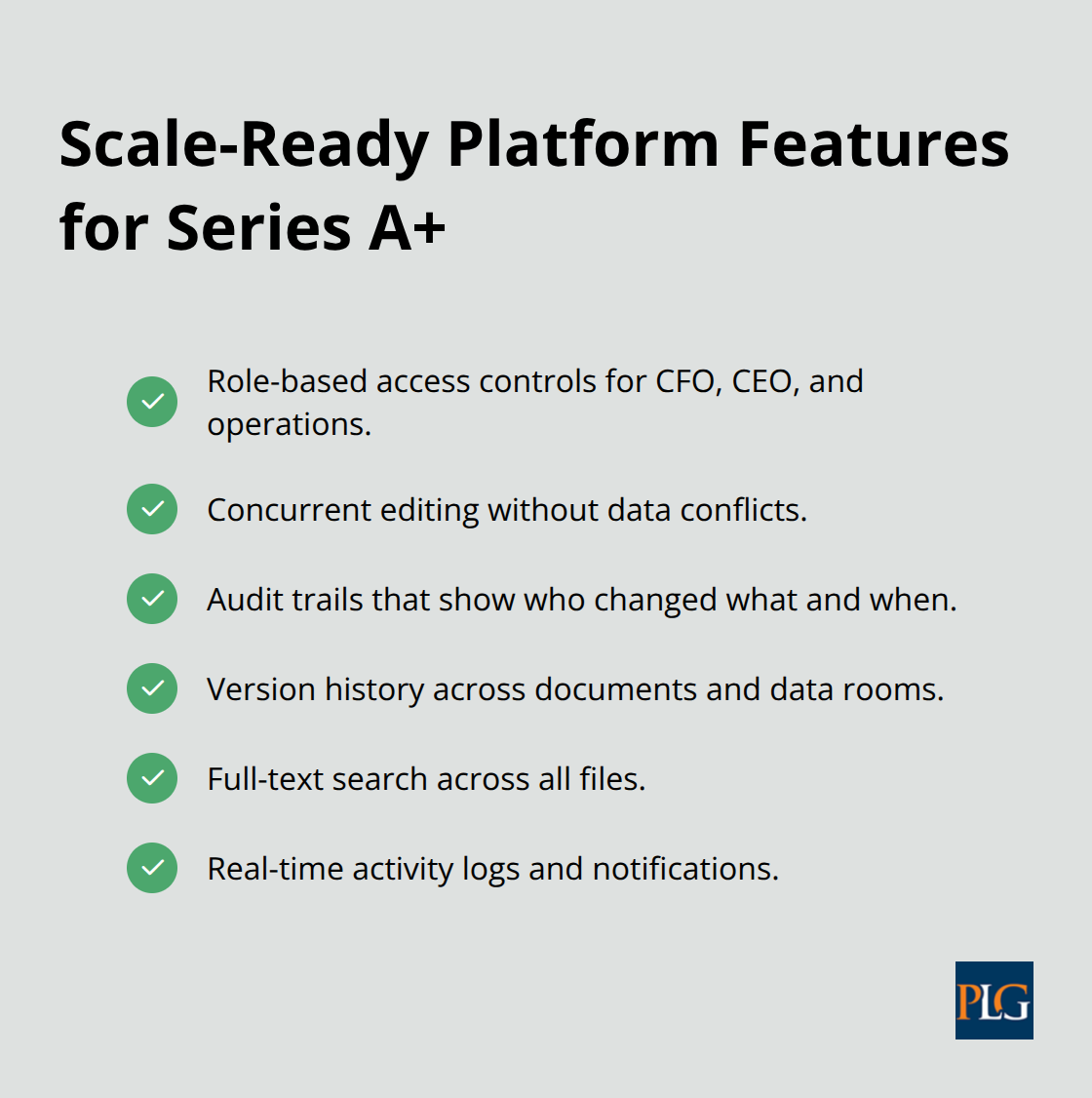
The right platform grows with your fundraising process instead of forcing you to switch vendors mid-round.
Final Thoughts
Your venture capital platform choice directly impacts your fundraising timeline and success rate. When the platform integrates with your cap table manager and accounting software, your investor data stays current and credible. When it provides real-time pipeline visibility and conversion metrics, you know which outreach strategies actually work. When it enforces security standards and role-based access controls, you protect sensitive information while enabling your team to collaborate efficiently.
Aligning your platform choice with your business goals means matching the tool to your specific stage, sector, and team structure. A seed-stage fintech founder has different needs than a Series B enterprise software company. A solo founder managing thirty conversations needs different features than a CFO coordinating investor updates across multiple stakeholders. Test the platform with realistic data volumes and concurrent users before committing to any vendor.
We at Primum Law Group help founders structure their fundraising process and navigate investor negotiations, ensuring your legal and financial foundation is solid before you deploy capital. Contact our team for guidance on venture capital transactions and startup structuring as you move forward with your fundraising strategy.