

San Francisco businesses expanding globally face complex regulatory landscapes and cultural barriers. A well-structured international business plan becomes the foundation for successful market entry.
We at Primum Law Group see companies struggle with compliance requirements across multiple jurisdictions. This guide breaks down the legal framework and strategic components needed for international expansion.
Understanding International Market Entry Strategies
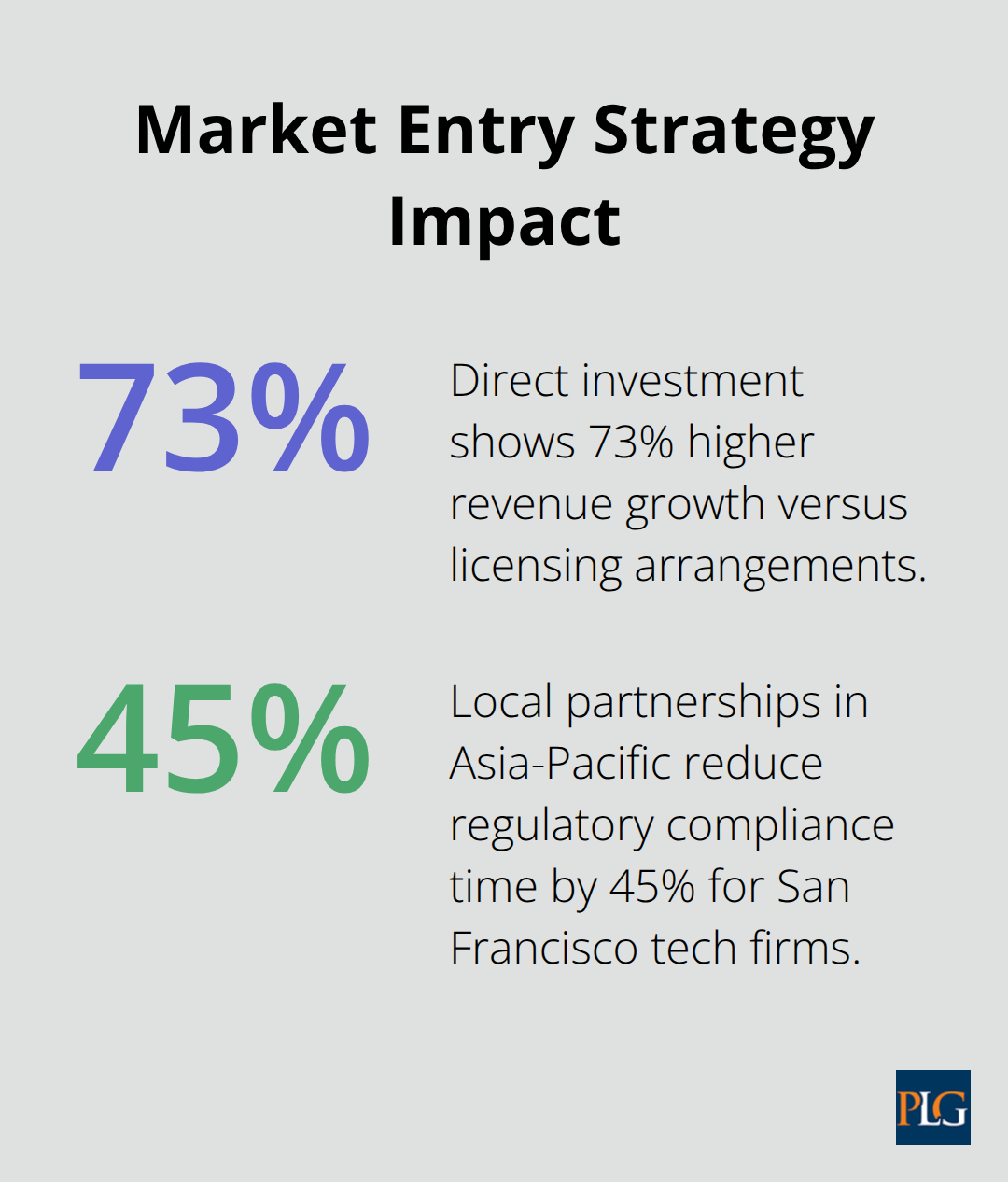
Market entry strategy selection determines international expansion success rates. Companies that choose direct investment show 73% higher revenue growth compared to licensing arrangements according to McKinsey Global Institute research. San Francisco technology firms particularly benefit from joint ventures in Asia-Pacific markets, where local partnerships reduce regulatory compliance time by 45%.
Research Requirements That Drive Success
Comprehensive market analysis must include consumer purchasing power data, competitive landscape maps, and regulatory timeline projections. The U.S. Commercial Service reports that businesses that conduct 12-month pre-entry research achieve 60% faster market penetration. Focus on quantifiable metrics: market size calculations, price sensitivity studies, and distribution channel analysis. Companies that skip demographic research face 40% higher failure rates within two years of market entry.
Regulatory Compliance Framework Navigation
Regulatory compliance varies dramatically across jurisdictions and directly impacts operational costs. European Union markets require GDPR compliance with penalties that reach 4% of global revenue. China’s Cybersecurity Law mandates local data storage for technology companies. We recommend that you establish compliance timelines 18 months before market entry. Companies that underestimate regulatory requirements experience average delays of 8 months and cost overruns that exceed 200% of initial projections.
Cultural Adaptation Strategies That Work
Business practice adaptation goes beyond language translation. Japanese markets prioritize relationship development with 6-month decision cycles, while German markets emphasize technical documentation and precision. Nordic countries expect environmental sustainability metrics in all business proposals. Successful adaptation requires local talent acquisition (companies with 70% local management teams achieve 85% higher customer satisfaction scores compared to expatriate-led operations).
Legal Structure Considerations for Market Entry
Corporate structure decisions impact tax obligations and operational flexibility across multiple jurisdictions. Delaware C-corporations provide advantages for U.S.-based companies that expand internationally, while subsidiary formation in target markets offers local compliance benefits. International tax treaties between the U.S. and 68 countries can reduce withholding tax rates from 30% to as low as 5%. These legal frameworks directly influence how companies structure their international operations and allocate resources for market expansion strategies.
Key Components of an International Business Plan
Financial projections for international expansion require currency hedging strategies that protect against exchange rate volatility. Companies that expand from San Francisco to European markets face average currency fluctuations of 12-15% annually according to Federal Reserve data. Forward contracts lock in exchange rates 6-12 months ahead, while currency swaps provide protection for longer-term commitments.
Technology companies that implement comprehensive hedges reduce revenue volatility by 40% compared to unhedged operations. Cash flow projections must account for local tax obligations, transfer pricing regulations, and repatriation costs that can reach 25% of overseas profits in certain jurisdictions.
Financial Projections and Currency Risk Management
Currency risk management forms the backbone of international financial planning. Companies must calculate potential losses from exchange rate movements and implement protective measures accordingly. Options contracts provide flexibility for businesses with uncertain transaction volumes, while natural hedging through local revenue generation reduces exposure without additional costs.
Financial models should incorporate multiple currency scenarios with stress testing for extreme market conditions. Businesses that prepare for 20% currency swings maintain operational stability during economic turbulence (compared to companies that plan for only 5% fluctuations).
Supply Chain and Logistics Planning
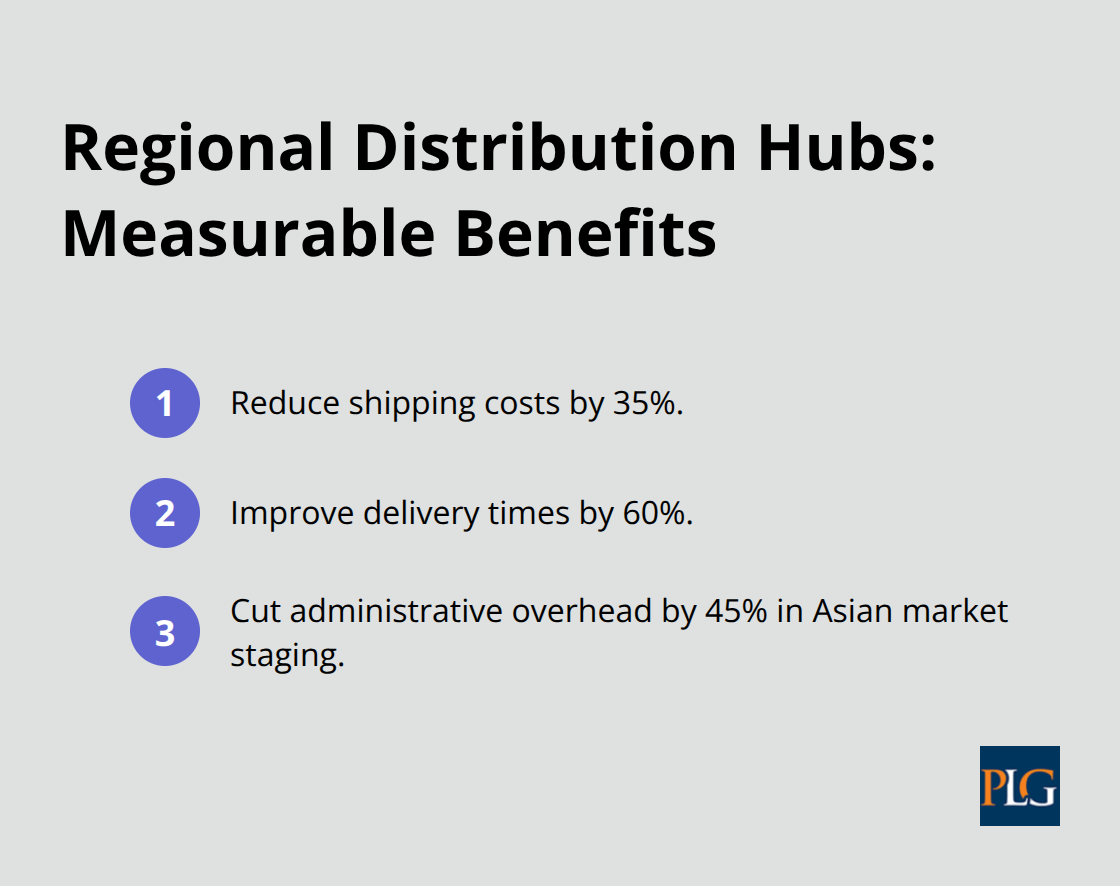
Supply chain optimization directly impacts profit margins and operational efficiency in international markets. Companies that establish regional distribution hubs reduce shipping costs by 35% while improving delivery times by 60% according to Supply Chain Management Review research. San Francisco businesses that enter Asian markets benefit from Hong Kong or Singapore staging operations, which cut administrative overhead by 45%.
Inventory management systems must track regulatory compliance across multiple jurisdictions, with pharmaceutical and technology companies facing the strictest requirements. Local sourcing reduces transportation costs but requires vendor qualification processes that average 4-6 months for full compliance certification.
International Partnership and Distribution Strategies
Distribution partnerships accelerate market entry but require careful vetting of local capabilities and market reach. Joint ventures with established local companies provide immediate market access and regulatory compliance support, though they typically require 51% local ownership in restricted sectors like telecommunications and financial services.
Revenue-sharing agreements that favor performance metrics over fixed fees align partner incentives with expansion goals. Companies that select partners based on existing customer relationships achieve 70% faster market penetration than those that choose partners solely on distribution capacity. Due diligence processes should verify financial stability, regulatory standing, and competitive positioning within target markets.
These financial and operational frameworks set the foundation for legal compliance structures that govern international business operations.
Legal and Regulatory Framework for International Expansion
Corporate structure optimization determines tax efficiency and operational flexibility across international markets. Delaware C-corporations remain the preferred choice for San Francisco companies that expand globally, as they provide access to 68 U.S. tax treaties that reduce withholding rates from 30% to 5%. Companies that establish holding companies in Ireland or Netherlands reduce effective tax rates by 12-18% through European Union directives.
Singapore subsidiary structures offer 5% corporate tax rates for activities that qualify and serve as optimal Asian headquarters for technology companies. Transfer pricing documentation becomes mandatory when intercompany transactions exceed $50 million annually (this requires detailed economic analysis that costs $150,000-300,000 per jurisdiction).
Intellectual Property Protection Across Multiple Markets
Intellectual property protection requires jurisdiction-specific strategies that account for local enforcement capabilities. Patent Cooperation Treaty applications provide 18-month priority periods for filings in 156 countries, but prosecution costs average $25,000 per major market.
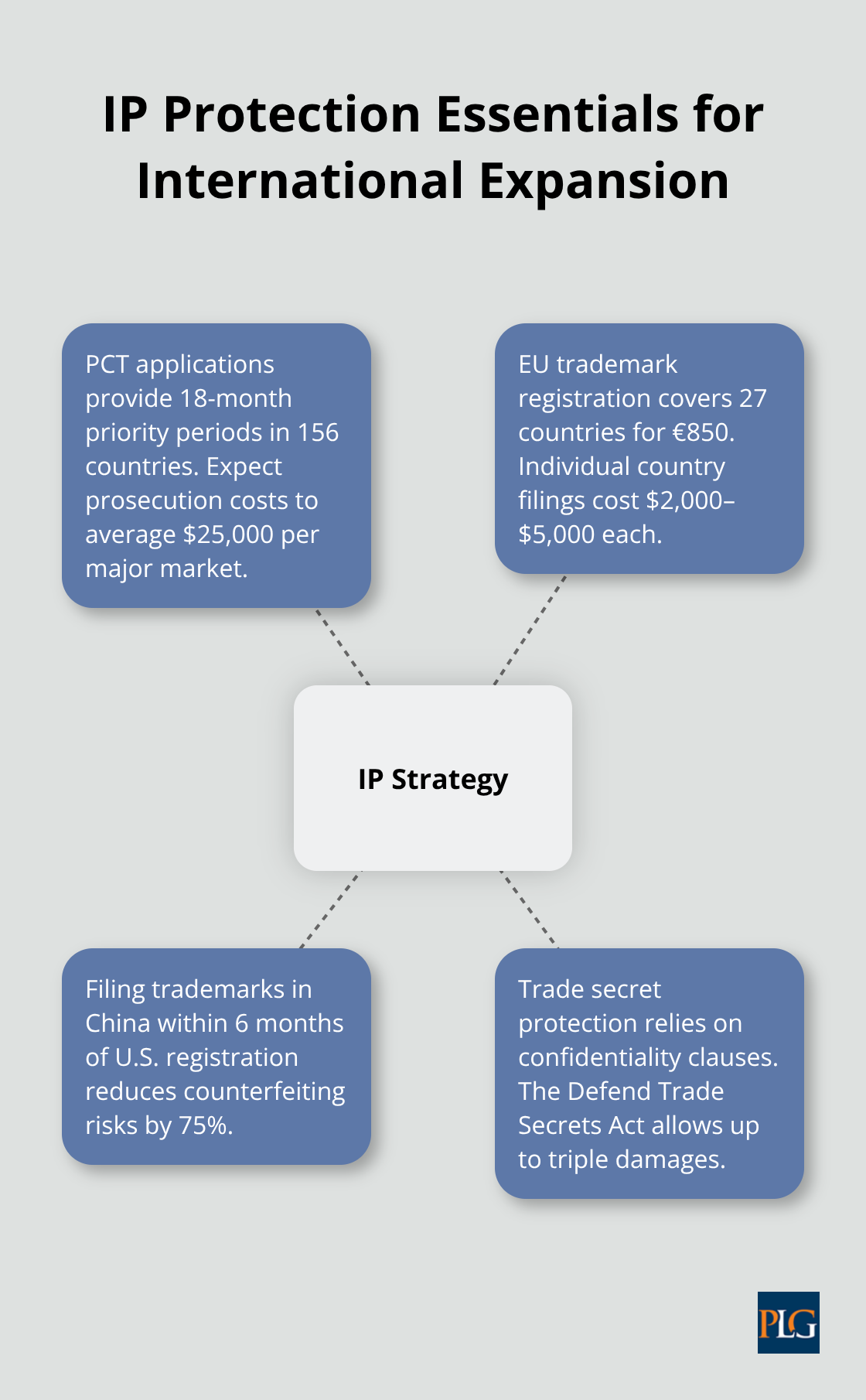
Trademark protection varies significantly: European Union registration covers 27 countries for €850, while individual country filings cost $2,000-5,000 each. Companies that file trademarks in China within 6 months of U.S. registration reduce counterfeiting risks by 75% according to International Trade Commission data.
Trade secret protection demands employment contracts with specific confidentiality provisions, as California’s Defend Trade Secrets Act provides federal remedies with damages that reach three times actual losses.
Employment Law Compliance That Prevents Costly Violations
Employment law compliance requires understanding of local termination procedures and benefits obligations that vary dramatically across jurisdictions. France mandates 35-hour work weeks with overtime penalties of 25-50% above standard rates, while Germany requires works councils for companies with more than five employees.
Severance obligations reach 12 months of salary in Italy compared to zero mandatory severance in most U.S. states. Companies that establish compliant employment structures before they hire avoid penalty costs that average $75,000 per violation in European Union markets (stock option plans require local securities law compliance with vesting acceleration triggers that must align with employment termination procedures in each jurisdiction).
Final Thoughts
International expansion from San Francisco demands meticulous preparation and legal compliance across multiple jurisdictions. Companies that develop comprehensive international business plans reduce market entry failures by 60% while they achieve faster revenue growth through strategic partnerships and proper regulatory frameworks. The most expensive mistakes include underestimation of regulatory timelines, inadequate currency protection, and insufficient intellectual property safeguards.
Companies that rush market entry without 12-month preparation periods face average cost overruns of 200% and operational delays that exceed 8 months. San Francisco businesses must prioritize corporate structure optimization, employment law compliance, and transfer pricing documentation before international operations begin. Technology companies particularly benefit from Singapore subsidiaries and European structures that reduce effective tax rates by 12-18% (these arrangements require careful legal structuring to maintain compliance).
We at Primum Law Group provide international corporate structuring services that help San Francisco startups and established companies navigate complex global expansion requirements. Our business lawyers work with companies to establish compliant structures, protect intellectual property across jurisdictions, and optimize tax efficiency through proper entity formation and intercompany agreements. Proper legal guidance transforms complex international expansion challenges into manageable strategic advantages for San Francisco businesses.