

Your board faces mounting pressure to demonstrate solid governance practices. Corporate governance compliance isn’t optional-it’s the foundation that separates well-run companies from those facing regulatory trouble and shareholder distrust.
At Primum Law Group, we’ve seen firsthand how the right framework transforms board confidence and operational stability. This post walks you through building governance systems that actually work.
What Your Board Must Know About Governance Compliance
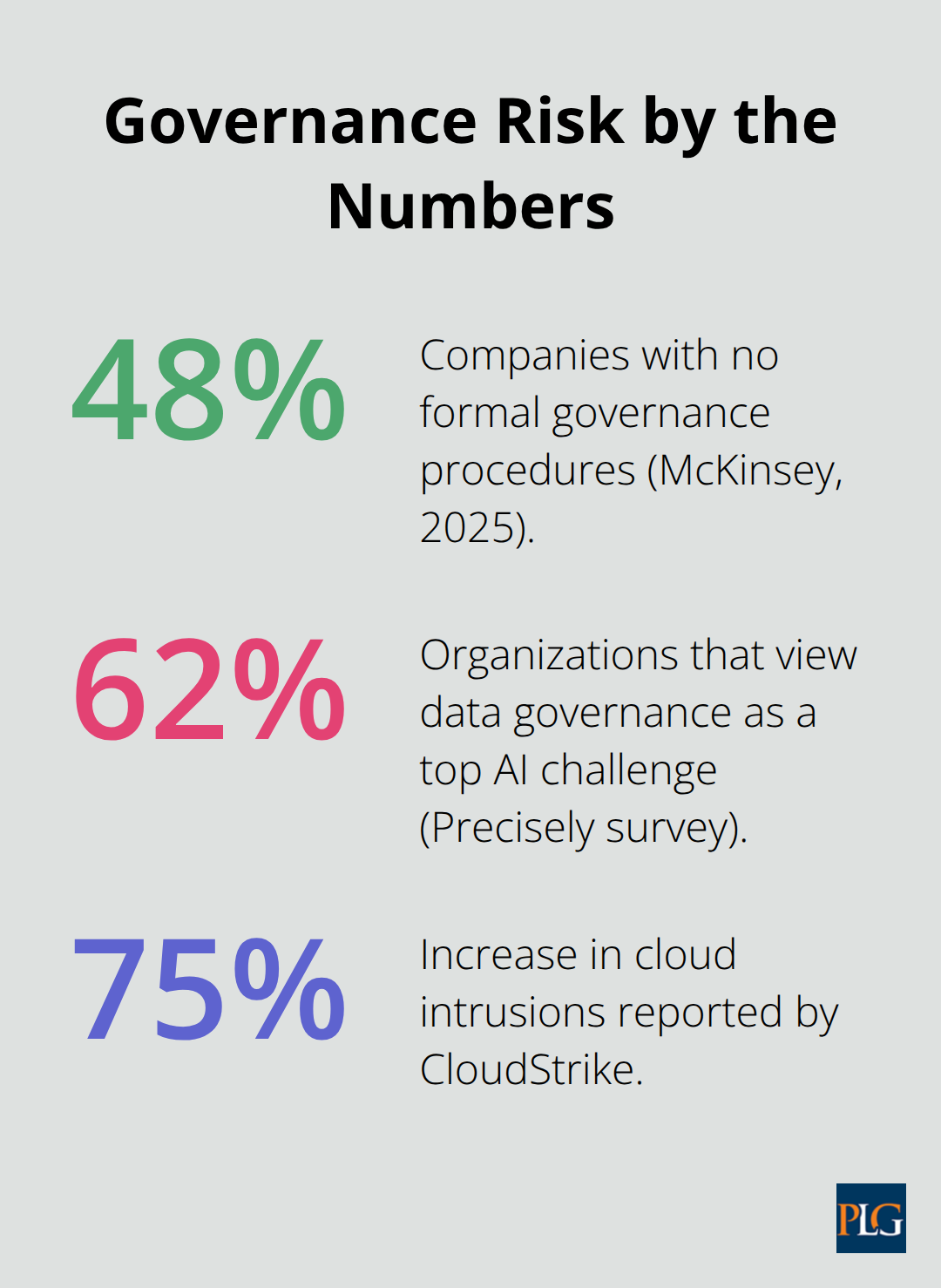
Corporate governance compliance isn’t a checkbox exercise. A 2025 McKinsey study found that 48% of companies have no formal governance procedures at all, which explains why boards struggle when regulators arrive. Compliance means meeting the legal and regulatory requirements defined by your industry, jurisdiction, and activities.
Governance is the principled framework that guides how your board and management operate-it’s the operating system that ties strategy, risk management, and reporting together. The distinction matters because compliance addresses immediate regulatory requirements to avoid penalties, while governance adopts a long-term view to protect shareholder interests and improve future performance.
Regulatory Obligations Vary by Jurisdiction
Your board faces different obligations depending on where you operate. If you’re listed on a US exchange, the Securities Exchange Act and SOX compliance requirements demand insider trading policies, transparent financial reporting, and documented board decision-making. European companies face the EU Corporate Sustainability Reporting Directive and regional codes that emphasize stakeholder value alongside shareholder returns. Japan’s governance codes push for more independent directors, while Canada and Mexico increasingly expect private and family-owned companies to formalize succession and recruitment practices. One-size-fits-all governance doesn’t work. You need to map your regulatory landscape by jurisdiction and industry, then build controls that address your specific exposure.
Where Governance Fails Most Boards
Inadequate board oversight tops the failure list. Boards that don’t establish clear decision-making processes or fail to maintain proper documentation end up unable to demonstrate they acted with due diligence when problems arise. Conflicts of interest go unaddressed because no formal policy exists to identify and manage them. Financial reporting remains opaque because boards never require monthly statements that are readable and capable of deeper detail on request.
We recommend boards adopt a practical foundation: clearly define who decides what, require documented board and shareholder meeting minutes, maintain stock transaction records and governance resolutions, establish codes of ethical conduct with a documented tone at the top, and implement conflict of interest policies with real teeth. Your board should also maintain comprehensive tax records and keep lists of service providers. These aren’t bureaucratic burdens-they’re the evidence that your board managed risk and acted in good faith. Without them, regulators and shareholders assume negligence.
Building Your Compliance Infrastructure
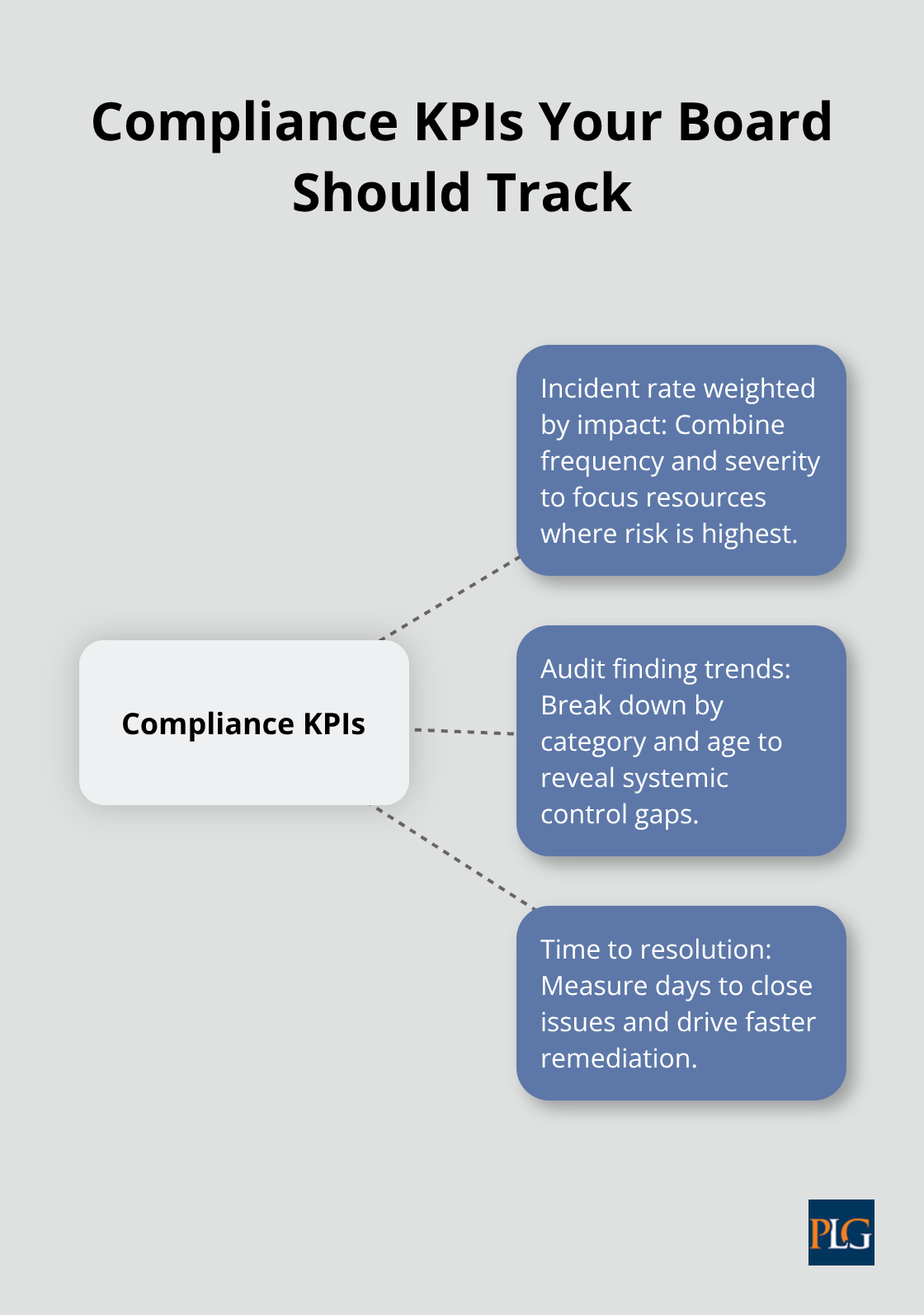
Start by identifying which regulations actually apply to your organization. This requires input from qualified professionals because tax and regulatory complexity varies widely. Outsourcing specialized areas like tax reporting and financial compliance to qualified professionals reduces gaps. Next, establish an internal audit function or engage external auditors to test whether policies work. Track compliance KPIs like incident rates weighted by impact, audit finding trends broken down by category and age, and time-to-resolution for identified issues. These metrics tell your board whether compliance improves or deteriorates.
Ensure your governance framework includes regular board evaluation processes to identify gaps early. Annual self-evaluations help directors and the board understand where oversight is weak. This cycle of clear policies, consistent monitoring, documented decision-making, and periodic evaluation creates the infrastructure that separates boards regulators trust from those facing heightened scrutiny. With your compliance foundation in place, the next step involves addressing the specific governance failures that most commonly undermine board confidence.
How to Build Governance Systems That Actually Function
Your board needs governance infrastructure that works in practice, not just on paper. The gap between written policies and actual execution is where most boards fail. Start by mapping your current state: where do decisions actually get made today, who makes them, and what documentation exists? This honest assessment reveals whether your board operates on habit and informal consensus or follows defined processes. Most boards discover they lack written decision protocols for material matters, have no standardized approach to approvals, and maintain inconsistent records across committees.
A Fortune Business Insights report projects the global data governance market will grow from USD 5.38 billion in 2025 to USD 18.07 billion by 2032, driven largely by regulatory pressure and organizations finally recognizing that governance requires real infrastructure. This growth reflects a hard truth: boards can no longer rely on informal practices.
Define Decision Rights and Documentation Standards
Your governance framework must include written policies that specify who decides what, documented approval chains for financial commitments above certain thresholds, meeting minutes that capture decisions and dissenting views, and a centralized repository where board members access governance resolutions, stock transaction records, and compliance documentation. Implement a quarterly compliance calendar that flags filing deadlines, audit schedules, and regulatory updates by jurisdiction. Assign clear accountability: designate someone responsible for maintaining records, someone who owns policy updates when regulations change, and someone who tracks whether controls actually prevent problems.
Establish Data Governance Foundations
Your board should establish a data governance foundation because 62% of organizations view data governance as a top challenge for AI initiatives due to the need for stronger governance around data quality and security, according to a Precisely survey. This means defining who owns data quality, establishing protocols for data access and classification, maintaining audit trails that show who accessed what information, and conducting regular data quality checks to catch duplicates and missing values before they distort reporting and decision-making.
Deploy Internal Audit Functions That Catch Problems Early
Internal audit functions separate boards that catch problems early from those that face regulatory surprise. If you lack an internal audit department, engage external auditors quarterly rather than annually to test whether policies work as written. Specifically, auditors should verify that conflict of interest disclosures are collected annually and conflicts are actually managed, that financial approvals follow documented thresholds, that board minutes capture decisions and rationales, and that tax records and compliance documentation are maintained and accessible.
Track three compliance KPIs monthly: the number of audit findings weighted by severity, the time elapsed from when an issue is identified to when it’s resolved, and repeat findings that indicate your controls didn’t work the first time. Rising repeat findings signal that your board isn’t learning from mistakes. Establish a whistleblower policy that protects employees who report governance violations and ensures reports reach the audit committee, not just HR.
Strengthen Cybersecurity and Third-Party Oversight
CloudStrike reports a 75% increase in cloud intrusions, highlighting why cybersecurity deserves board-level oversight with regular incident response drills and third-party penetration testing. Your audit function should also monitor third-party risk because vendors and contractors create compliance exposure your board might not see. Automated vendor screening and risk triage reduce the manual burden of assessing hundreds of third-party relationships.
Close the Loop With Annual Board Evaluation
Conduct an annual board self-evaluation that asks directors whether they understand the company’s risk profile, whether meetings provide time for substantive discussion rather than information dumps, and whether the board identified and addressed governance gaps. This evaluation cycle closes the loop: policies define what should happen, audits test whether it happens, and evaluation identifies whether the board itself functions effectively. Once your systems detect problems, your board needs clear protocols for addressing ethical challenges and managing the ethical tone that prevents governance failures before they occur.
Where Boards Actually Fail
Boards fail not because they lack good intentions but because they operate without clear protocols for detecting problems before regulators arrive. The three most damaging failures-inadequate oversight, missing documentation, and unmanaged conflicts of interest-share a common root: boards treat governance as something that happens in the boardroom rather than as an operating system that shapes daily decisions across the organization. Inadequate oversight means your board lacks visibility into where decisions get made, who makes them, and whether those decisions align with board-approved policies. This creates blind spots that regulators exploit. When auditors or investigators arrive, they discover that the board never established thresholds for financial approvals, never required quarterly compliance reporting, and never conducted spot checks to verify that policies work as written. Documentation failures compound the problem because boards that don’t maintain meeting minutes capturing decisions and dissenting views cannot later demonstrate they acted with due diligence. Tax records disappear into filing cabinets, stock transaction documentation sits scattered across email, and governance resolutions exist only in memory. Conflicts of interest go unaddressed because most boards never implement a formal annual disclosure process, never define what constitutes a conflict requiring recusal, and never establish consequences for conflicts that go undisclosed.
The Visibility Problem That Hides Risk
Most boards operate with fragmented information about where decisions actually happen. The CFO approves vendor contracts above a certain threshold, but the board never sees the approval matrix or learns whether staff follow it. The CEO makes hiring decisions for senior positions without documented board input on qualifications or conflicts. Accounts payable staff process invoices without anyone verifying that vendors passed conflict screening. This fragmentation creates what regulators call tone-at-the-top problems-the board establishes policies that nobody implements consistently because no one tracks compliance.
Your board should require quarterly compliance reporting that shows how many conflicts were disclosed, how many were managed, how many audit findings remain open, and what repeat findings indicate about control failures. Assign someone on the audit committee to own this reporting and escalate trends immediately. Conduct an annual control testing exercise where external auditors or internal staff verify that three to five material policies actually work as written. Test whether financial approvals follow documented thresholds, whether conflict disclosures reach the board, and whether whistleblower reports get investigated. Most boards discover that controls exist on paper but break down in execution.
Establish a compliance calendar that flags regulatory filing deadlines, audit schedules, and policy review dates by jurisdiction. This prevents the common failure where boards miss filing deadlines because responsibility was never formally assigned. Assign one person ownership and establish a backup; make both accountable to the audit committee. Without this visibility infrastructure, your board operates blind to the compliance failures that will eventually surface during regulatory examinations or shareholder disputes.
Documentation as Your Defense
Documentation failures create catastrophic liability because they prevent your board from demonstrating it acted in good faith. When regulators investigate, they ask for board minutes that show directors understood the risks, discussed material decisions, and considered alternatives. They request stock transaction records to verify that insiders complied with trading windows and blackout periods. They demand tax records and compliance documentation to confirm the company followed applicable laws. Boards that maintained these records contemporaneously survive scrutiny; those that scramble to reconstruct them afterward face presumptions of negligence.
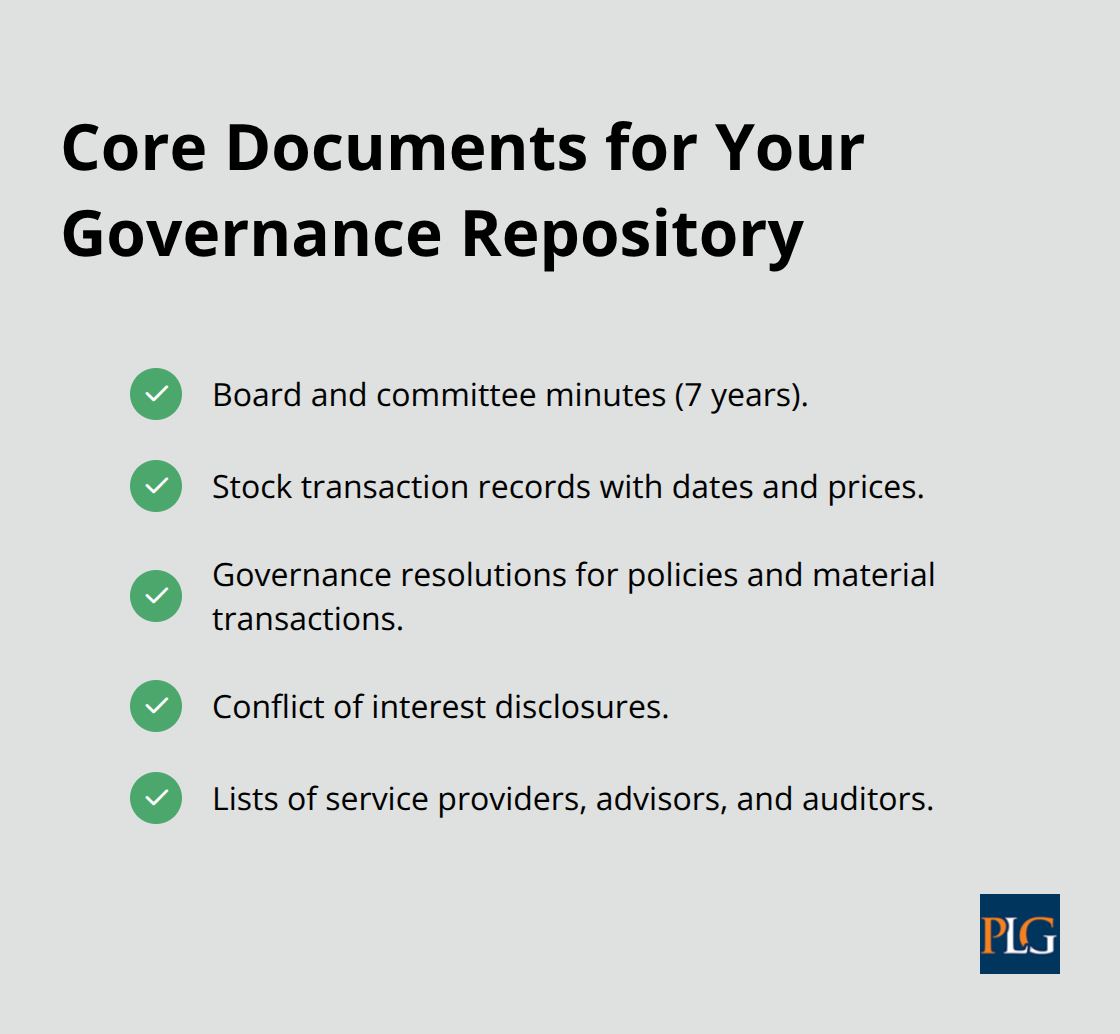
Your governance framework must require that board and committee meetings produce minutes capturing three elements: what decision was made, what information the board reviewed, and whether any director expressed dissent or concerns. This doesn’t require verbatim transcripts-it requires enough detail that a regulator or future board member understands the board’s thought process. Establish a centralized repository, either physical or digital, where all governance documents live: meeting minutes from the past seven years, all stock transaction records with dates and prices, governance resolutions that establish policies or approve material transactions, conflict of interest disclosures, and lists of service providers including advisors and auditors. Assign one person to maintain this repository and conduct annual audits to verify completeness.
Most boards fail this test because documentation responsibility shifts between people, records get filed inconsistently, and nobody verifies that the system actually works.
Establish a policy that all material approvals above certain thresholds require written documentation, not email threads or verbal discussions. Define thresholds for hiring decisions above a certain salary level, vendor relationships above a spending threshold, and capital expenditures above a defined amount. This forces discipline into decision-making and creates the audit trail that protects your board later.
Conflict Management as a Governance Discipline
Conflicts of interest don’t disappear because boards ignore them-they metastasize into regulatory violations and shareholder litigation. Your board should implement an annual conflict disclosure process that requires every director and senior executive to complete a written form identifying any relationships with vendors, competitors, or other parties the company does business with. Make completion a condition of board service.
When conflicts are disclosed, the board must document how it managed them: did the conflicted person recuse from discussions, did the board approve the transaction at arm’s length terms, did independent board members review the transaction? This documentation protects your board if the conflict later becomes contentious. Boards that never conducted conflict disclosures or never documented how conflicts were managed face the presumption that they failed to manage conflicts at all.
Establish a policy that defines what constitutes a conflict requiring disclosure and what requires recusal. This prevents the common failure where directors minimize conflicts because no definition exists. A director with a family member employed at the company, a director who is a customer of the company, or a director with a financial interest in a vendor all create conflicts requiring disclosure and potential recusal from specific decisions. Your board should also establish that the audit committee, not the CEO or general counsel, reviews conflict disclosures and makes recusal recommendations. This prevents conflicts of interest in managing conflicts themselves.
Establish that whistleblower reports of undisclosed conflicts reach the audit committee directly and trigger investigation. Most boards fail because they allow HR or the general counsel to handle conflict complaints, which delays board visibility and allows problems to fester. Make the audit committee the final authority on conflict management and require quarterly reporting on disclosures and how the board managed them.
Final Thoughts
Your board now understands that corporate governance compliance requires three interconnected elements working together. First, establish clear decision rights and documentation standards that define who decides what and require written approvals above material thresholds. Second, implement quarterly compliance reporting that tracks audit findings, conflict disclosures, and repeat issues so your board sees problems before regulators do. Third, conduct annual board evaluations that test whether your governance framework actually functions in practice rather than existing only on paper.
The boards that regulators trust share a common pattern: they treat governance as an operating system that shapes daily decisions, not as a boardroom exercise. They require documented conflict disclosures annually, maintain meeting minutes that capture decisions and dissenting views, and assign clear accountability for compliance. They conduct spot checks to verify that policies work as written and escalate repeat findings immediately because they recognize that recurring problems signal control failures.
Strengthening board confidence starts with one concrete action: map your current compliance gaps by jurisdiction and industry, then prioritize the three to five highest-impact improvements rather than attempting a complete overhaul. We at Primum Law Group help boards build governance frameworks that actually work and reduce regulatory risk.