

San Francisco startup transactions move fast, and one wrong step can cost you millions. Valuation disputes, conflicting stakeholder demands, and regulatory hurdles create real obstacles that most founders aren’t prepared to handle.
At Primum Law Group, we’ve guided countless startups through these complex deals. This guide breaks down the key challenges, transaction structures, and due diligence steps you need to know.
What Makes San Francisco Startup Valuations So Difficult to Agree On
Valuation disagreements derail more San Francisco startup transactions than any other single issue. Founders anchor their expectations to recent funding rounds or comparable exits, while buyers apply discounts for market risk, customer concentration, and technical debt. The gap between these positions widens when founders lack comparable transaction data.
The Valuation Math Doesn’t Add Up
San Francisco’s venture market generated over $63 billion in Bay Area funding during 2023, but that capital concentration creates wildly inconsistent valuations across sectors and stages. AI startups posted median valuations around $40 million in Q1 2024, while fintech companies raising across roughly 1,500 firms face entirely different multiples depending on revenue stage and unit economics. SaaS valuations commonly trade at 8–15x annual recurring revenue, but a startup missing growth targets or facing customer churn sees that multiple compress fast.
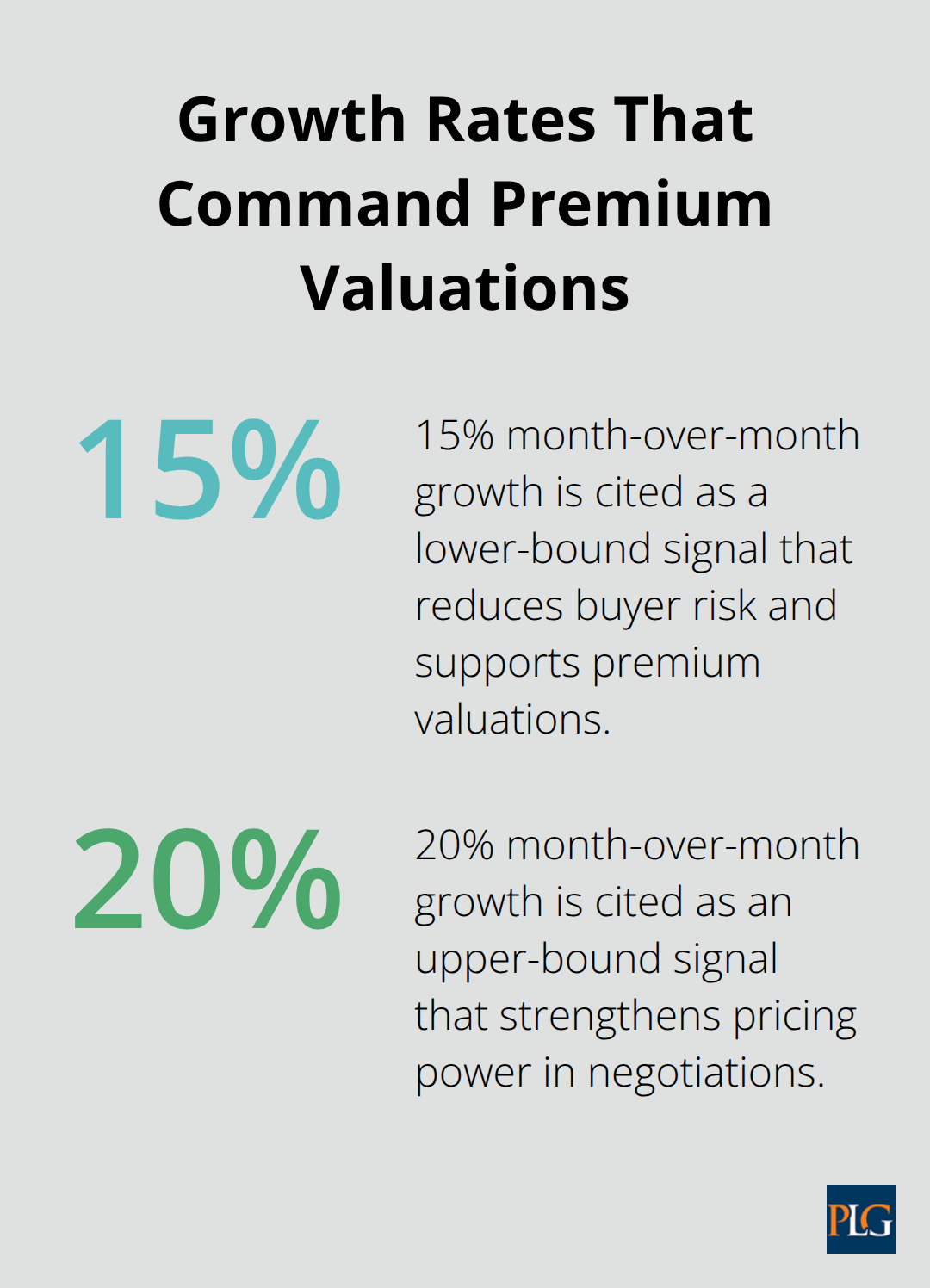
The real problem surfaces when founders treat valuation as the deal’s core negotiation point instead of understanding that buyers care far more about revenue quality, customer retention, and technical IP ownership. Startups with 15–20% month-over-month growth and documented customer acquisition cost and lifetime value metrics command premium valuations because those metrics reduce buyer risk. Founders without clean financial models, accurate cap tables, or verified customer contracts struggle to defend their asking price.
How Multiple Stakeholders Create Friction
Multiple stakeholder interests compound this friction. Your investors hold pro-rata rights and information rights that affect deal terms, your employees expect equity protection during a sale or merger, and your board may include investor directors whose interests diverge from yours. A Series A investor focused on maximizing return may push for a higher sale price, while employee shareholders worry about vesting acceleration and tax consequences.
Why Tight Timelines Force Bad Decisions
San Francisco deals with tight timelines amplify these conflicts because founders cannot spend weeks building consensus. Market windows close fast when competitors raise capital or when strategic buyers shift priorities. The pressure to close quickly pushes founders toward accepting unfavorable terms rather than holding out for better conditions. Transaction counsel helps you map stakeholder interests early, identify where conflicts exist, and structure deals that satisfy multiple parties without sacrificing founder value-a critical advantage when time works against you.
Transaction Structures That Match Your Deal Reality
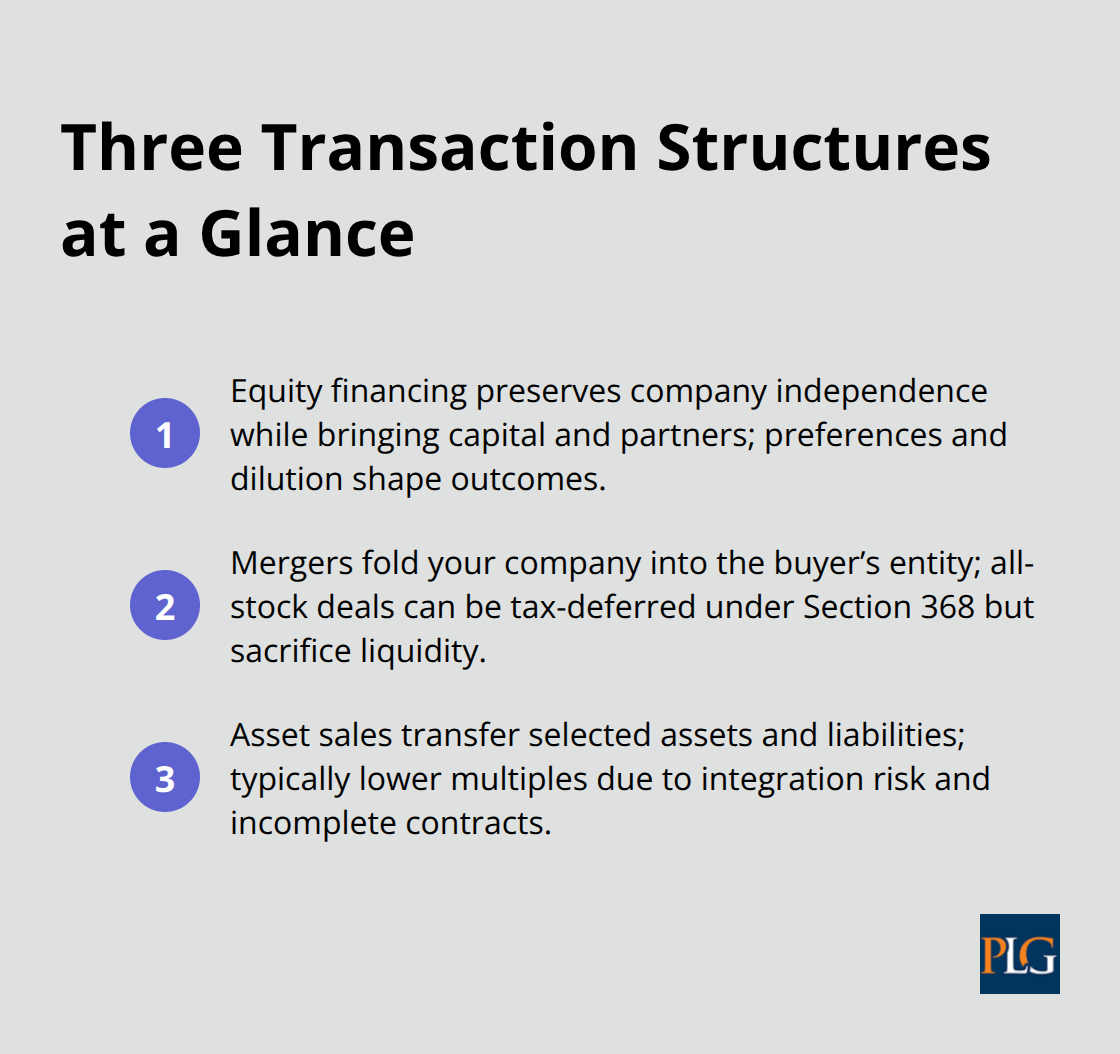
San Francisco startups pursue three fundamentally different transaction paths, and picking the wrong one costs founders millions in tax liability, dilution, or lost control. Equity financing rounds feel familiar because you’ve lived through them, but mergers and asset sales operate under entirely different rules with opposite consequences for founders and employees.
The structure you choose determines who controls the process, how stakeholders get paid, and whether your company survives the transaction intact.
Equity Financing and Cap Table Consequences
Equity financing remains the most common path for growing startups because it preserves your company’s legal independence while bringing in capital and strategic partners. Stock option grants to employees create retention incentives, though most founders misunderstand how options affect cap table dynamics during a subsequent sale. When you issue Series A preferred stock, investors receive liquidation preferences that pay them first if the company sells below their valuation, meaning a $50 million acquisition might leave founders with nearly nothing if Series A investors hold 1x non-participating preferences.
SaaS companies raising at 8–15x annual recurring revenue multiples can sustain aggressive equity dilution because revenue growth justifies higher valuations in subsequent rounds. Biotech startups in South San Francisco’s biotech corridor face entirely different math where a single failed clinical trial erases valuation progress. The practical reality is that equity financing works only if your revenue growth trajectory supports future rounds at higher valuations. If growth stalls, your cap table becomes a liability that scares away acquirers because they inherit your investor obligations.
Merger Structures and Tax Implications
Merger structures bypass cap table complications entirely by transferring your company’s legal existence into a buyer’s entity, eliminating separate cap table obligations and streamlining post-close integration. An all-stock merger funded by buyer shares avoids cash outlay and creates tax-deferred transactions under Section 368 of the Internal Revenue Code, though founders sacrifice liquidity until the buyer’s stock becomes tradeable or the acquirer exits.
Cash mergers require buyer financing and move faster because payment happens at close, but you lose upside if the buyer’s stock appreciates post-transaction. The speed advantage matters in competitive markets where delays allow competitors to move first.
Asset Sales and Earnout Trade-Offs
Asset sales operate completely differently by transferring only specific assets and liabilities you choose, leaving behind employee liabilities, old contracts, and regulatory baggage that buyers don’t want. Asset deals make sense when your technology or customer list has value but your company structure creates tax or legal complications. The trade-off is that asset buyers typically pay lower multiples because they assume integration risk and inherit incomplete contracts.
Earnout arrangements attach contingent payments to post-close performance metrics, supposedly aligning buyer and seller incentives but actually creating friction because buyers control the metrics and can manipulate results. An earnout paying 20 percent of purchase price over two years sounds attractive until your buyer cuts marketing spend to hit profitability targets that trigger earnout conditions. This dynamic shifts power to the buyer after close, when you have limited leverage to challenge their interpretation of performance metrics.
Matching Structure to Your Situation
The right transaction type depends on your revenue stage, cap table complexity, and whether you want ongoing involvement post-close. Transaction counsel helps you evaluate which structure minimizes tax consequences, protects employee interests, and aligns with your exit timeline. Understanding these three paths before you enter negotiations prevents costly mistakes that lock you into unfavorable terms.
What Buyers Actually Scrutinize During Due Diligence
Buyers ignore your pitch deck and vision during due diligence. They focus on whether your cap table matches your stock ledger, whether your founders actually own the code they claim to own, and whether hidden contracts will explode the deal after close.
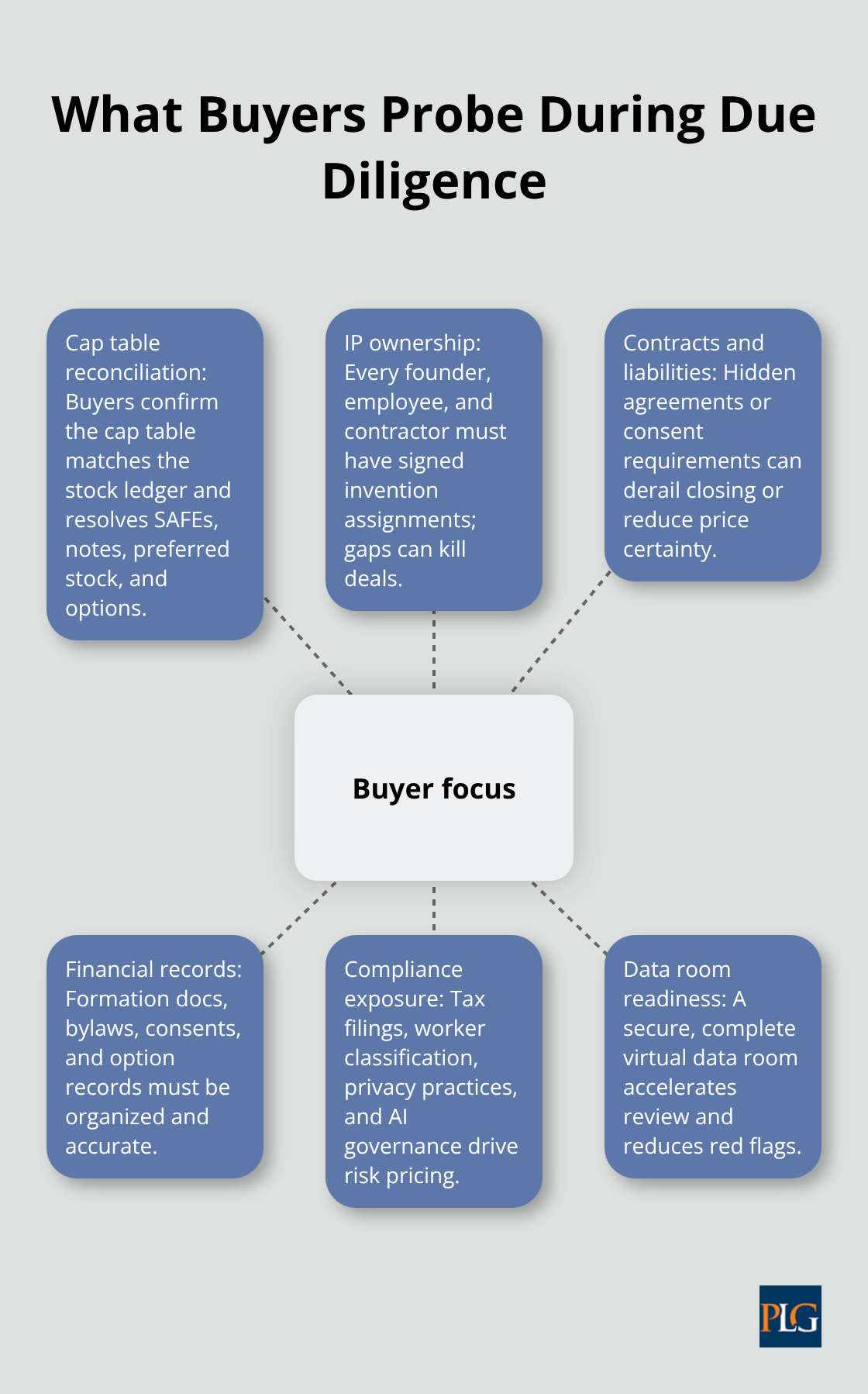
San Francisco startup due diligence typically runs several weeks, with IP ownership receiving the most scrutiny because technology value hinges on clean ownership chains. Missing founder or contractor IP assignments can jeopardize the entire transaction, forcing renegotiations or killing deals outright. Your financial documentation must reconcile SAFEs, convertible notes, preferred stock financings, and equity grants into a single coherent cap table that matches what your cap table management system shows. Discrepancies trigger valuation concerns and post-close disputes that buyers will use to reduce price or walk away entirely. Most San Francisco startups operate with incomplete corporate records, missing board approvals, and vague option grant documentation that would horrify any institutional buyer.
Financial Records That Hold Up Under Scrutiny
Buyers request formation documents, bylaws, board consents, and stockholder approvals within the first week of diligence. Missing incorporation documents, unsigned board resolutions authorizing equity grants, or improper option vesting schedules create immediate red flags that signal operational dysfunction. Your cap table must show valid formation, accurate preferred stock issuances with signed term sheets, and complete option pool allocation with 83(b) election filings within 30 days of each grant. Employment records need offer letters, confidentiality agreements, and accurate stock option records that match your equity ledger exactly. If your cap table shows 1,000 options granted but your option pool reserve only accounts for 800, that 200-option discrepancy becomes a closing condition that delays funding or reduces valuation. Organize these records in a secure virtual data room before buyer requests arrive, and confirm good standing with California Secretary of State because dissolved entities or administrative suspensions kill deals immediately. A pre-transaction legal audit mirrors what buyers will demand, allowing you to correct weaknesses before negotiations begin and strengthening your position when price discussions happen.
IP Ownership Verification That Prevents Deal Collapse
Intellectual property assessment reveals whether your company actually owns the technology you’re selling. Signed invention assignment agreements from every founder, employee, and contractor must exist and explicitly transfer ownership to your company. Missing assignments from a founder who built the core algorithm or a contractor who developed critical infrastructure create title defects that buyers cannot accept. Open-source licensing conflicts appear frequently in technical due diligence when engineers incorporated GPL-licensed code into proprietary products without proper isolation, contaminating your entire codebase. Data privacy practices require documented compliance with California Consumer Privacy Act standards and contractual data-use restrictions with customers, especially for AI training datasets where ownership of training data directly impacts valuation. Verify that all material contracts include proper assignment provisions allowing transfer to a buyer without triggering termination clauses. Contracts requiring third-party consent for assignment create hidden liabilities that slow closing and reduce deal certainty. Software development agreements with external vendors must clearly state that work product ownership transfers to your company, not remaining with the contractor. This documentation takes weeks to compile correctly, so starting early prevents last-minute scrambling that gives buyers negotiating leverage.
Compliance and Regulatory Exposure Assessment
Regulatory compliance verification identifies exposure that buyers will price into their offer. Tax filings must be complete and accurate because IRS disputes or missing returns create liability that transfers to the buyer post-close. Contractor misclassification appears frequently in San Francisco tech startups where engineers labeled as independent contractors should have been employees, triggering payroll tax exposure and employment law liability. Pending disputes, litigation, or regulatory investigations must be disclosed because buyers will demand escrow holdbacks or price reductions to cover potential settlements. Privacy compliance requires audit of how customer data flows through your systems, whether you have proper data processing agreements with vendors, and whether your practices align with your published privacy policy. AI governance is a rising risk area where ownership of AI outputs, training-data rights, and liability for model errors remain poorly documented in most startups. A compliance assessment checklist covering privacy practices, tax filings, regulatory obligations, and pending disputes identifies exposure before buyers demand answers during diligence. Early identification allows you to resolve or disclose issues on your terms rather than having buyers weaponize discovered problems during price negotiations.
Final Thoughts
San Francisco startup transactions succeed when founders address valuation disputes, stakeholder conflicts, and due diligence gaps before buyers arrive. The three transaction structures-equity financing, mergers, and asset sales-each carry different tax consequences and control implications that shape your outcome. Choosing the wrong structure costs millions, while selecting the right one aligns incentives and accelerates closing.
Due diligence determines deal success or failure because buyers scrutinize your cap table reconciliation, IP ownership chains, and regulatory compliance with surgical precision. Missing founder assignments, incomplete board approvals, or contractor misclassification create red flags that kill deals or trigger massive price reductions. Financial records must be organized, accurate, and verifiable because discrepancies signal operational dysfunction that buyers exploit during negotiations, while intellectual property assessment reveals whether your company actually owns the technology you claim to own.
Most San Francisco startup transactions fail because founders enter unprepared with incomplete corporate records, vague option documentation, and undisclosed regulatory exposure that creates unnecessary friction. Starting a pre-transaction legal audit months before buyer conversations begin allows you to correct weaknesses, organize documentation, and strengthen your leverage when price discussions happen. Primum Law Group provides outsourced general counsel and transaction services that help startups navigate complex deals from initial structuring through closing, keeping deals moving efficiently while protecting your interests.