

Data privacy compliance for startups isn’t optional anymore. Regulators worldwide are tightening rules, and customers expect their information to be protected.
We at Primum Law Group help startups navigate this landscape. This guide walks you through the frameworks, tools, and strategies that actually work in San Francisco and beyond.
Understanding Data Privacy Regulations in San Francisco and Beyond
What Regulations Actually Apply to Your Startup
GDPR and CCPA dominate headlines, but they’re not the only rules that matter. As of January 1, 2026, 20 states have comprehensive privacy laws in effect, with Indiana, Kentucky, and Rhode Island joining the list. California remains the most stringent, requiring privacy risk assessments, cybersecurity audits, and governance of automated decision-making.
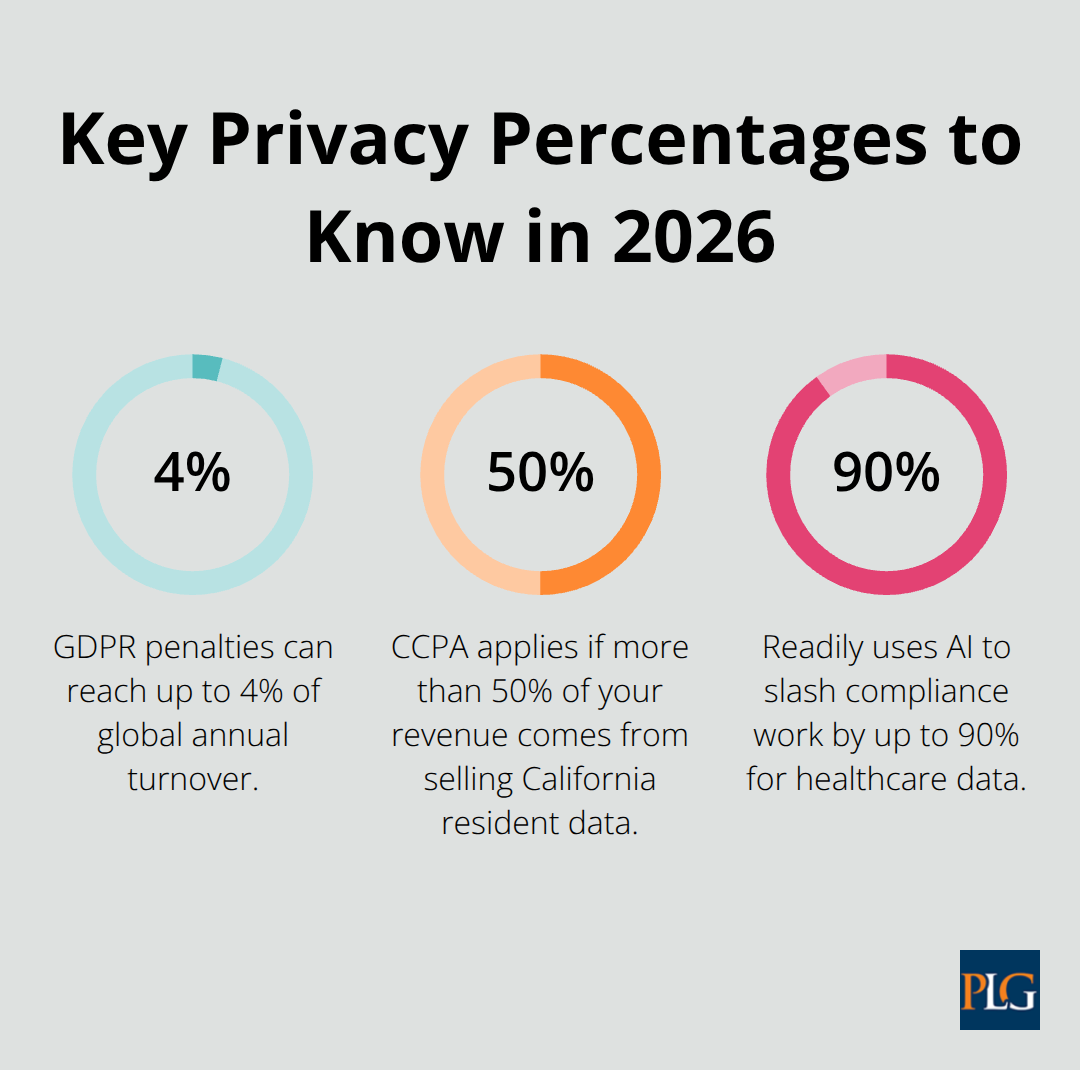
If your startup collects data from California residents and generates over $25 million in gross annual revenue, buys or sells personal information from more than 50,000 Californians, or earns more than 50% of revenue from selling California resident data, CCPA applies to you whether you like it or not. GDPR penalties reach up to 4% of global annual turnover or €20 million, while CCPA violations cost up to $7,500 per intentional violation or $2,500 per unintentional violation.
The real damage comes from civil suits for breaches due to insufficient cybersecurity. California’s framework expands further: a centralized deletion mechanism for data brokers launches by August 2026, which means more entities will face obligations to handle deletion requests at scale. Enforcement momentum accelerates with a multi-state privacy regulators consortium coordinating investigations. Startups should expect coordinated inquiries across states, especially around opt-out signals like the Global Privacy Control.
Why Minors’ Privacy Has Become a Battleground
The FTC’s amended COPPA Rule imposes heightened parental notices, requires written security programs for children’s data, and demands separate verifiable parental consent for most third-party data sharing. New York’s Child Data Protection Act restricts data collection from minors, limits certain design features, and prohibits targeted ads to minors. Utah, Arkansas, and Louisiana pursue age-gating and parental-consent regimes.
If your product touches users under 13, compliance here is non-negotiable. The FTC actively pursues enforcement actions against child-directed platforms, signaling that this area will only tighten. Your startup cannot afford to overlook this exposure.
AI Governance Moves Into the Regulatory Spotlight
Colorado’s Consumer Protection for Artificial Intelligence Act requires bias assessments, transparency notices, and monitoring for discriminatory effects. Connecticut and California add explicit automated-decision-making rights. With no federal AI framework yet, state frameworks increasingly intersect existing privacy laws.
Treat AI as regulated technology with required impact assessments, audit documentation, transparency practices, and vendor diligence. Data stored or processed in the cloud triggers CCPA obligations; your startup must know every cloud data store containing California data and respond to access and deletion requests. The enforcement and litigation landscape grows more aggressive. Data breach class actions survive early dismissals at higher rates, and biometric privacy litigation under Illinois’s BIPA remains a major exposure.
These regulatory pressures create both risk and opportunity. Startups that build compliance into their operations from day one gain competitive advantage and customer trust. The next section shows how to translate these regulations into practical action within your organization.
How to Make Privacy Stick Inside Your Organization
Privacy compliance fails when it stays in a spreadsheet. Startups that implement tools, check boxes, and then watch their teams ignore the whole system never achieve real protection. The difference between startups that actually protect data and those that merely claim to comes down to whether privacy becomes part of how people work, not something done to them.
Assign Clear Data Ownership
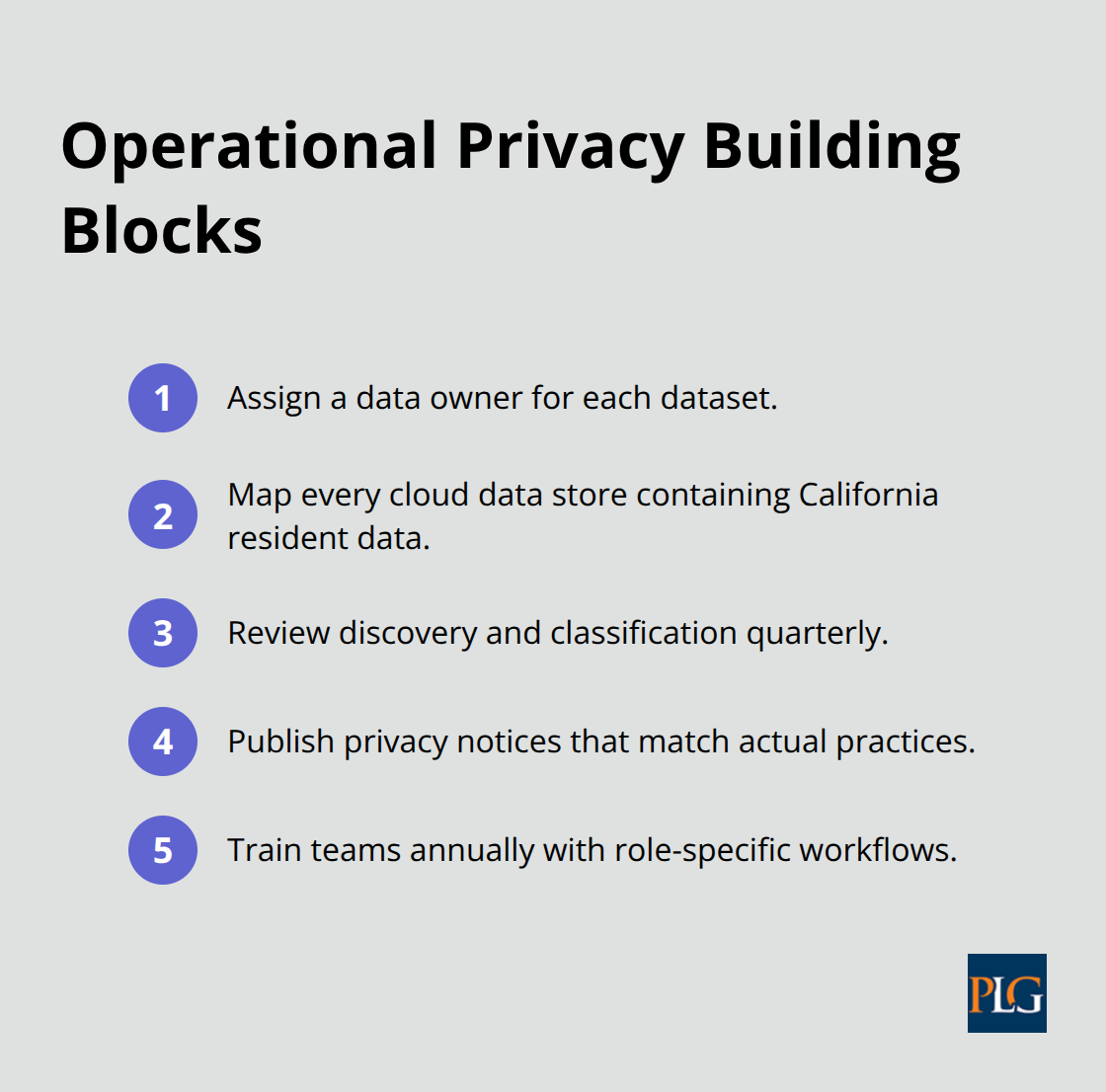
One person needs to own each dataset, responsible for classification, protection, and quality. This prevents the situation where everyone assumes someone else is handling deletion requests or security updates. Without this accountability structure, CCPA obligations pile up unanswered. Data owners drive policy enforcement and avoid redundancies in data management. When someone owns the data, deletion requests get answered. When no one owns it, they get lost.
Map Your Data Flows and Cloud Stores
Know every cloud store holding California resident data. Know where backups live. Know what third parties touch your data. Most startups cannot answer these questions without weeks of investigation. Data Security Posture Management systems automate this discovery across cloud environments, but only if someone owns the output and maintains it quarterly. Tools like these assess your data security posture and identify which data stores hold personal information. This mapping becomes your foundation for responding to access and deletion requests under CCPA.
Write Privacy Notices That Actually Work
Your policy must explain what data you collect, how you use it, retention timelines, sharing practices, and protection measures. Include a Do Not Sell option if you collect data from California. If your product touches users under 13, add specific parental consent flows and security commitments that satisfy the FTC’s amended COPPA Rule. Update these notices when your practices change, not years later. A privacy notice that reflects your actual operations builds customer trust and reduces regulatory exposure.
Train Teams on Real Privacy Work
Most privacy training is forgettable compliance theater. Instead, show engineers how data deletion works in your systems. Show product teams what automated decision-making rights mean for their features. Show customer support how to handle data subject access requests without creating chaos. Make this training annual and tied to specific jobs, not generic. When your team understands why privacy matters to their work, they stop treating it as overhead.
Manage AI Systems and Vendor Risk
If you use AI, conduct bias assessments before deployment and document the logic your systems use to make decisions. Colorado’s Consumer Protection for Artificial Intelligence Act and Connecticut law now require this. Vendors matter enormously. If a third party processes your data, your contract must reflect CCPA and GDPR obligations. Require them to demonstrate security controls aligned with frameworks like NIST or ISO 27001. Audit them periodically. Many startups inherit vendor risk because legal never reviewed the agreement.
These internal structures transform privacy from a compliance checkbox into operational reality. Once your organization owns data properly, knows where it lives, and trains people on handling it, you’re ready to select the tools and partners that support this foundation.
Tools and Partners That Actually Protect Your Data
Startups waste money on privacy software that sits unused because it doesn’t fit how the business actually operates. The right corporate structure, combined with tools selected for your specific data flows, prevents this waste and builds compliance that scales. Your choice of partners determines whether compliance becomes a competitive advantage or an ongoing burden.
Structure Your Company for Data Protection
Your corporate structure affects how you handle data across jurisdictions and whether regulators view you as accountable. Delaware C-corporations dominate the startup world for tax and liability reasons, but if you process significant California resident data, you need governance structures that satisfy CCPA audit requirements. California’s evolving framework now requires privacy risk assessments and cybersecurity audits as part of your governance obligations.
If you operate across multiple states with different privacy laws, your corporate structure should support centralized privacy program management and cross-state consent handling. This means documented data ownership, clear responsibility for deletion requests, and audit trails that prove compliance. Many startups add a dedicated privacy officer or data protection role once they cross $25 million in revenue or touch data from more than 50,000 Californians. This person owns the relationship between legal obligations and operational reality. Without this role, privacy policies drift from actual practices and regulators notice.
Select Software That Matches Your Data Architecture
Privacy management software varies wildly in what it actually does. Some tools focus on consent and opt-out management for customer-facing privacy. Others handle data discovery and deletion workflows. A few attempt both and do neither well.
Relyance AI provides an integrated platform for privacy, data governance, and compliance across global organizations, combining consent management with data mapping capabilities. Transcend focuses on consent, data transparency, and regulatory readiness to improve customer trust. Skyflow provides a data privacy vault API to handle sensitive personal data securely, enabling privacy-by-design data flows where personal information never touches your main systems. If your startup handles healthcare data, Readily uses AI to slash compliance work by up to 90% across regulatory analysis, policy drafting, and audits.
The San Francisco Bay Area hosts 38 of the top compliance startups as of June 2026, signaling a thriving ecosystem of tools built for regulated industries. Before purchasing any tool, map your actual data flows first. Know whether you need consent management, data discovery, deletion automation, or all three. Tools that solve one problem elegantly beat bloated platforms that solve three problems poorly.
Your vendor contract must include CCPA and GDPR obligations, require SOC 2 Type II certification or equivalent security controls aligned with NIST frameworks, and allow you to audit their data handling practices annually. Many startups inherit vendor risk because they never reviewed these provisions.
Partner with Lawyers Who Understand Startup Operations
General counsel from large corporations often fail at startups because they impose enterprise-scale processes on teams of ten people. You need advisors who understand startup constraints and regulatory realities. Primum Law Group works with startups on compliance structures that scale from early stage through Series B without requiring a complete rebuild.
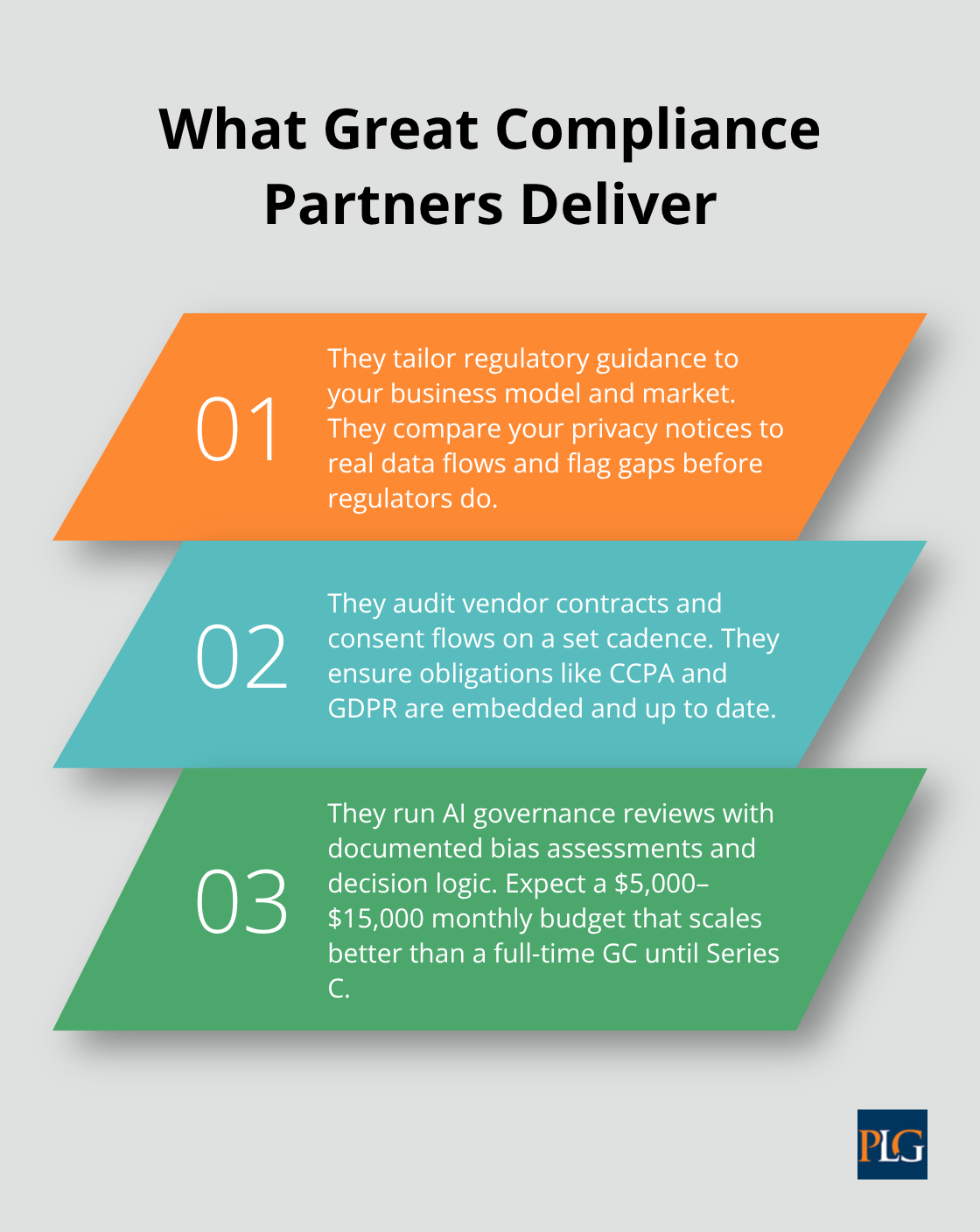
Your compliance partners should help you interpret which regulations actually apply to your business model, not provide generic checklists. They should review your privacy notices against your actual data practices and flag mismatches before regulators do. They should audit your vendor contracts and consent flows quarterly as your product changes. They should conduct AI governance reviews if you deploy machine learning systems, documenting bias assessments and decision logic that satisfy Colorado and Connecticut requirements. Expect to pay between $5,000 and $15,000 monthly for quality outside counsel that stays current on the regulatory shifts happening across 20 states in 2026. This cost scales better than hiring a full-time general counsel until you reach Series C funding.
Final Thoughts
Data privacy compliance startups succeed when they treat regulation as a foundation for growth, not an obstacle to overcome. Start with the essentials: assign clear data ownership, map your cloud stores, write privacy notices that match your actual practices, and train your team on real privacy work. These steps cost far less than fixing compliance failures after regulators investigate, and California’s tightening requirements, the FTC’s aggressive enforcement on minors’ data, and state-level AI governance rules mean that startups moving fast without privacy controls now face real penalties and litigation exposure.
The competitive advantage belongs to startups that build privacy into their operations from day one. When you handle data responsibly, respond to deletion requests promptly, and document your AI systems’ decision logic, you gain customer trust and regulatory credibility. This trust translates into faster customer acquisition in regulated industries, larger deal sizes, and reduced friction with enterprise buyers who conduct security audits before signing contracts.
Moving forward requires staying current on regulatory shifts across the 20 states with comprehensive privacy laws and monitoring how Colorado and Connecticut AI rules evolve. Your compliance partners should track these changes and flag what applies to your business model, and Primum Law Group provides outsourced general counsel and compliance guidance tailored to startup constraints, helping you interpret regulations without the overhead of a full-time legal team.