
Starting a company means handling legal requirements from day one. We at Primum Law Group know that founders often overlook critical paperwork that protects their business and personal interests.
This startup legal checklist covers the documents, compliance steps, and investment preparations you need to build a solid legal foundation. Getting these right early saves time, money, and headaches later.
The Documents That Protect Your Business
Your Articles of Incorporation or Organization form the legal skeleton of your company. File these with your state immediately-Delaware remains the dominant choice for startups because its corporate law is predictable and well-tested by courts. This document establishes your entity, defines share structure, and creates the liability shield that separates your personal assets from business debts. Without it, you have no legal protection if your company faces a lawsuit or creditor claims. The filing itself costs between $100 and $800 depending on your state and whether you use a service, but the liability protection is worth far more than that investment.
Founder agreements stop disputes before they start
Founder disputes destroy startups. Co-founder conflicts rank among the top reasons companies collapse. Your Founder Agreement must address equity allocation, vesting schedules, and what happens if someone leaves. Avoid splitting equity equally-this creates resentment when contributions diverge. Instead, tie equity to specific roles and value. Implement four-year vesting with a one-year cliff, meaning founders forfeit unvested shares if they depart early. This structure aligns long-term commitment with ownership. Your agreement should also cover decision-making rights, buy-sell provisions, and drag-along or tag-along rights that govern how shares transfer during exits.
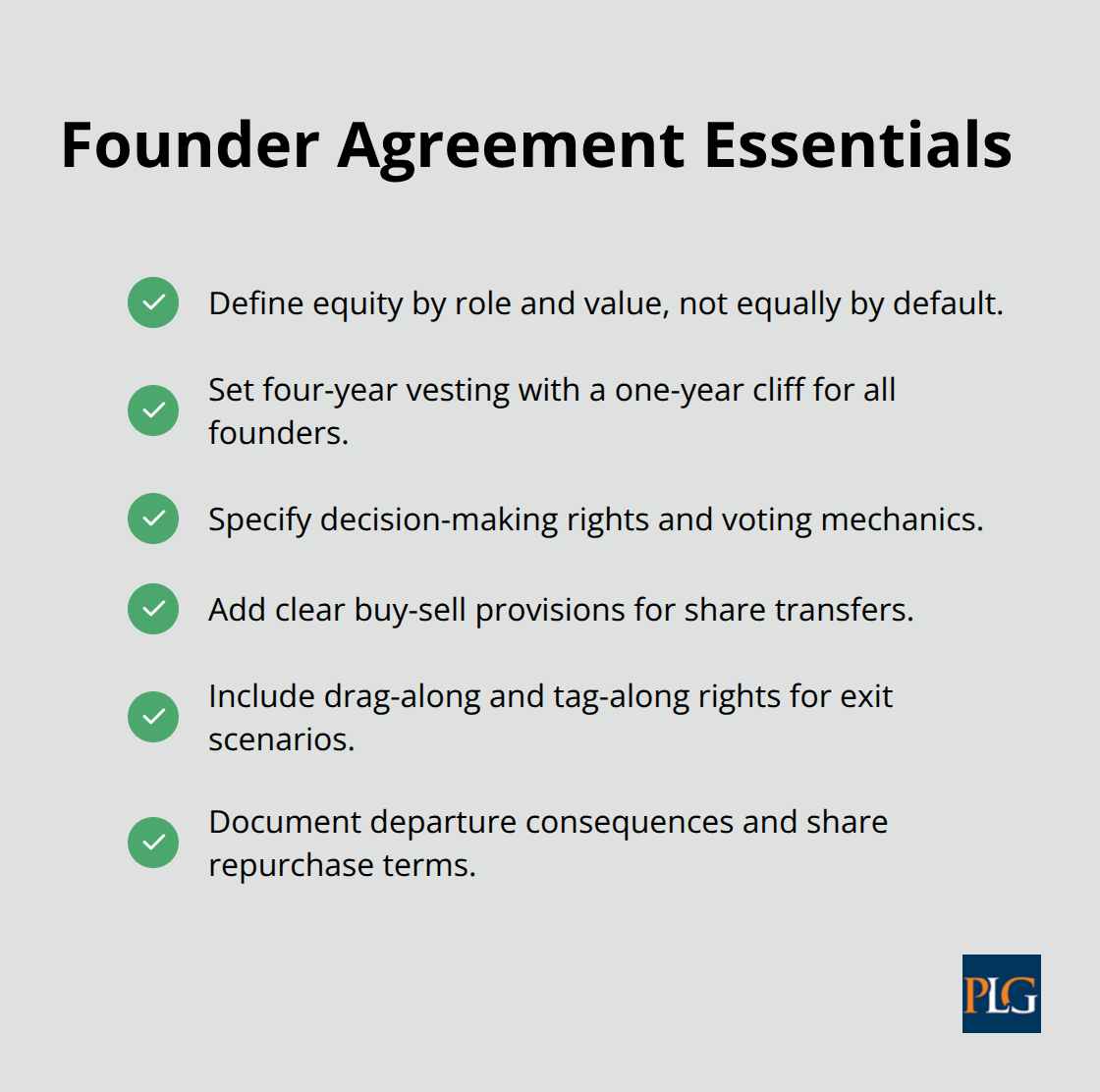
Without written founder agreements, state default rules apply-and those rules rarely match what founders actually intended.
Protect confidential information and IP ownership
Your Confidentiality and Non-Disclosure Agreements serve two purposes: they protect your trade secrets from employees and contractors, and they ensure your company owns all intellectual property created during employment. Include work-for-hire language that assigns patents, copyrights, and inventions to the company, not the individual. This prevents a departing engineer from claiming ownership of code they wrote on company time. Additionally, require invention disclosure agreements from all founders, employees, and contractors. Track who owns what in writing from day one. Many startups discover IP ownership disputes years later during fundraising when investors demand clean title to all technology. These agreements take hours to draft properly but prevent disputes worth hundreds of thousands in legal fees.
Your legal foundation now rests on solid ground. The next step involves ensuring your startup meets the tax, employment, and regulatory obligations that govern how you operate day-to-day.
Compliance and Regulatory Requirements
Register for taxes immediately after incorporation
Compliance isn’t optional-it’s the infrastructure that keeps your startup operating legally and protects you from penalties, fines, and operational shutdowns. The moment you file your Articles of Incorporation, you trigger tax obligations, employment responsibilities, and regulatory requirements that vary by state and industry. The IRS imposes penalties for missed tax deadlines, and state employment agencies levy fines for misclassified workers. A single worker classification error can trigger back taxes, penalties, and interest that accumulate quickly.
Start by obtaining your Employer Identification Number from the IRS immediately after incorporation-this takes 15 minutes online and costs nothing. Open a dedicated business bank account using your EIN to separate personal and business finances. This separation protects your liability shield if a creditor or plaintiff sues.
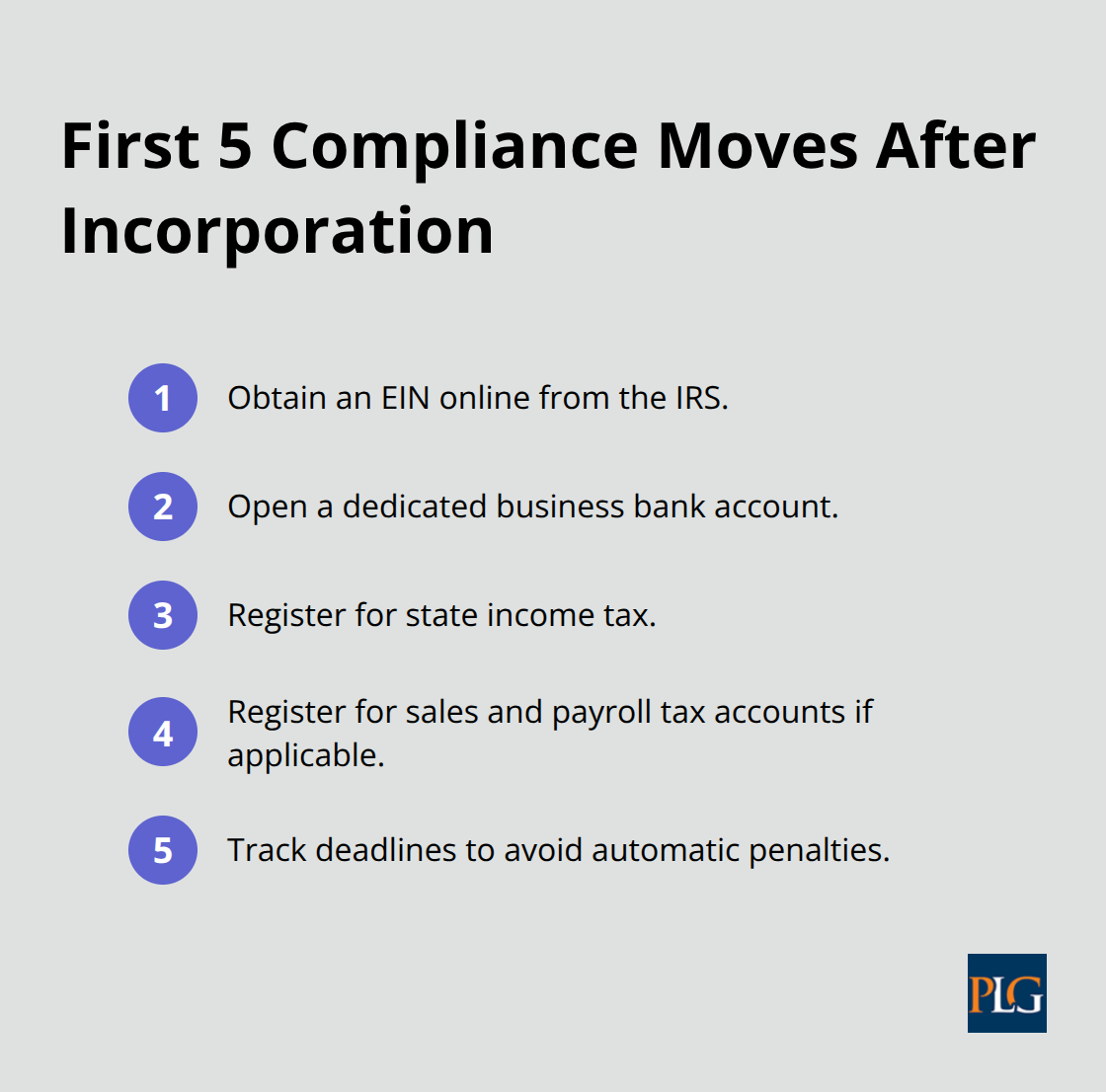
Next, register for state income tax, sales tax if applicable, and payroll tax accounts. Most states require registration within 30 days of hiring your first employee. Missing these deadlines triggers automatic penalties even if you owe no tax.
Classify workers correctly to avoid massive liability
Worker classification determines whether someone is an employee or independent contractor, and the IRS scrutinizes this decision heavily. Misclassifying an employee as a contractor saves payroll taxes upfront but creates massive liability when audited. The IRS uses the ABC test in many states, examining control, business integration, and profit opportunity. If you control how someone works, provide tools, and integrate them into your business operations, they qualify as an employee regardless of what your contract says.
Hire a payroll provider like Guidepoint or ADP to handle tax withholding and filings-the $50 to $200 monthly cost prevents costly errors. These services manage compliance automatically and reduce your exposure to misclassification penalties.
Protect your brand and core innovations
Register your trademark with the USPTO immediately if you have a unique brand name. Trademark registration costs $250 to $350 per class and takes four to six months, but it prevents competitors from using similar marks and provides legal grounds to stop infringement. Don’t wait until someone else registers your mark first.
Patent protection is more expensive and time-consuming-expect $5,000 to $15,000 for a utility patent application-so prioritize only your core innovations. Copyright protection is automatic for original works, but register copyrights for software or creative content if you anticipate disputes. Finally, implement a trade secrets policy documenting what information qualifies as confidential and how employees must handle it. This policy, combined with your confidentiality agreements, strengthens your legal position if someone steals proprietary information and you pursue litigation.
Document your compliance obligations in writing
You now have the tax registrations, worker classifications, and IP protections in place. The next phase involves structuring your funding strategy and preparing the investment documents that attract capital while protecting your ownership and control.
Funding and Investment Considerations
Venture investors negotiate term sheets aggressively with founders who lack preparation. A term sheet outlines the price, liquidation preferences, board composition, and control provisions that define what you actually own after funding closes. Most founders accept these documents passively, allowing terms that later create problems during exits or subsequent rounds. The pre-money valuation determines how much equity you surrender-a $5 million pre-money valuation with a $2 million investment gives the investor 28.6% ownership, while a $3 million pre-money hands over 40%.
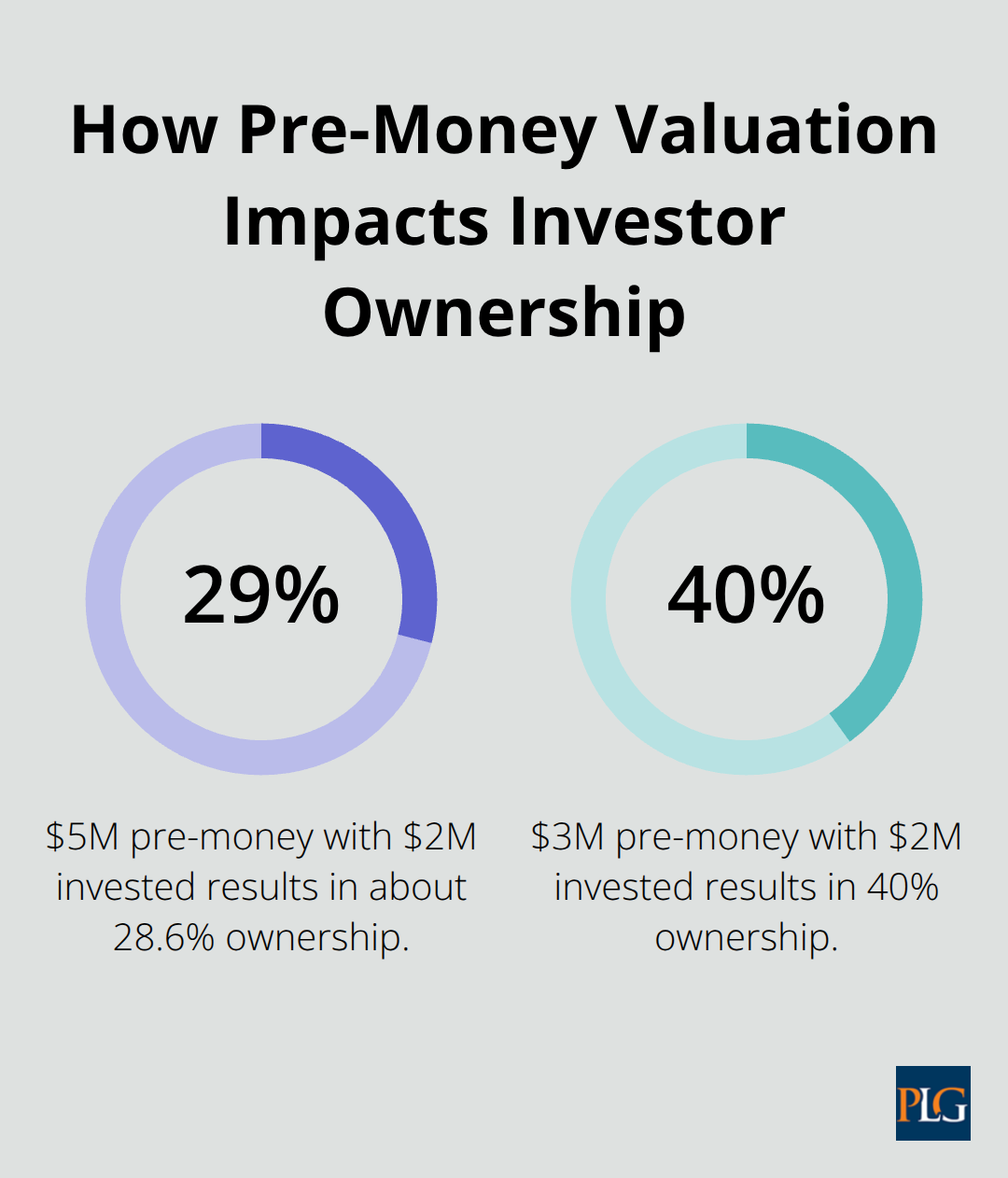
That 11.4% difference compounds across future rounds and directly impacts your final payout.
Negotiate valuations based on real milestones
Negotiate pre-money valuations based on concrete milestones you’ve achieved: revenue traction, user growth, product launches, or hiring key personnel. Avoid inflated valuations that set expectations you can’t meet, because missing those expectations triggers down rounds where future investors pay less per share, diluting everyone and destroying founder morale. Down rounds force painful renegotiations and signal weakness to the market.
Maintain a clean capitalization table
Track your capitalization table obsessively-it should list every equity holder, the number of shares they own, vesting schedules, and fully diluted ownership percentages (including option pools and convertible notes). A messy cap table signals poor governance to investors and creates legal nightmares during due diligence. Update it after every equity grant, option issuance, and funding round.
Many founders make the mistake of granting founder equity without vesting, meaning co-founders own their shares immediately. This creates liability if a founder departs after three months with full ownership intact. Implement four-year vesting with a one-year cliff as your standard-this applies to founders and early employees equally. When someone leaves before the one-year mark, all their equity returns to the company. After year one, they vest 25% and continue vesting monthly thereafter.
Prepare your data room before due diligence begins
Investors conduct due diligence by reviewing your cap table, board minutes, founder agreements, IP assignments, and employment contracts. They want proof that your company owns all its intellectual property, that founder equity is properly documented with vesting, and that no hidden claims exist against the company. Prepare a data room with organized folders containing your articles of incorporation, bylaws, cap table, all equity grants and option agreements, founder and employment agreements with invention assignments, board resolutions, and any contracts with material customers or suppliers. Having these documents clean and organized before investors request them accelerates the process by weeks.
Many startups discover missing IP assignments or conflicting equity grants during due diligence, forcing renegotiation or delayed closings. Hire counsel experienced in venture transactions to review your term sheet before signing-this typically costs $2,000 to $5,000 but prevents mistakes worth millions. Experienced startup counsel negotiates provisions that protect your control, minimize dilution, and preserve your ability to hire and compensate employees without investor approval. They also identify red flags like overly broad information rights, excessive board observation seats, or liquidation preferences that pay investors before founders.
Focus your fundraising efforts strategically
If you’re raising from multiple investors, secure your lead investor’s commitment to capital before you spend time negotiating with followers-chasing ten investors for small checks wastes months when one serious lead accelerates the entire process.
Final Thoughts
Building a solid legal foundation separates startups that survive from those that collapse under preventable mistakes. The startup legal checklist we’ve covered-from Articles of Incorporation through funding preparation-protects your business, your personal assets, and your ability to raise capital when you need it. Each document and compliance step matters because mistakes made early compound over time and become exponentially harder to fix.
File your Articles of Incorporation in your chosen state, establish founder agreements with proper vesting, and secure IP ownership through written assignments immediately. Register for taxes and obtain your EIN within days of incorporation, classify your workers correctly, and implement confidentiality agreements before hiring. Register your trademark if you have a distinctive brand, because these steps take weeks rather than months and cost far less than fixing problems after they develop.
We at Primum Law Group help founders navigate these requirements through outsourced general counsel and startup counseling services. Whether you need help structuring founder equity, preparing for due diligence, or negotiating investment terms, experienced counsel on your side prevents costly mistakes and keeps your company moving forward.