

San Francisco businesses expanding internationally face complex legal challenges that require deep understanding of multiple regulatory systems. An international corporate law course provides the foundation needed to navigate these waters successfully.
We at Primum Law Group see companies struggle daily with cross-border compliance, tax implications, and contract negotiations. This comprehensive overview covers the practical knowledge your business needs to operate globally while staying compliant across jurisdictions.
What Makes International Corporate Law Different
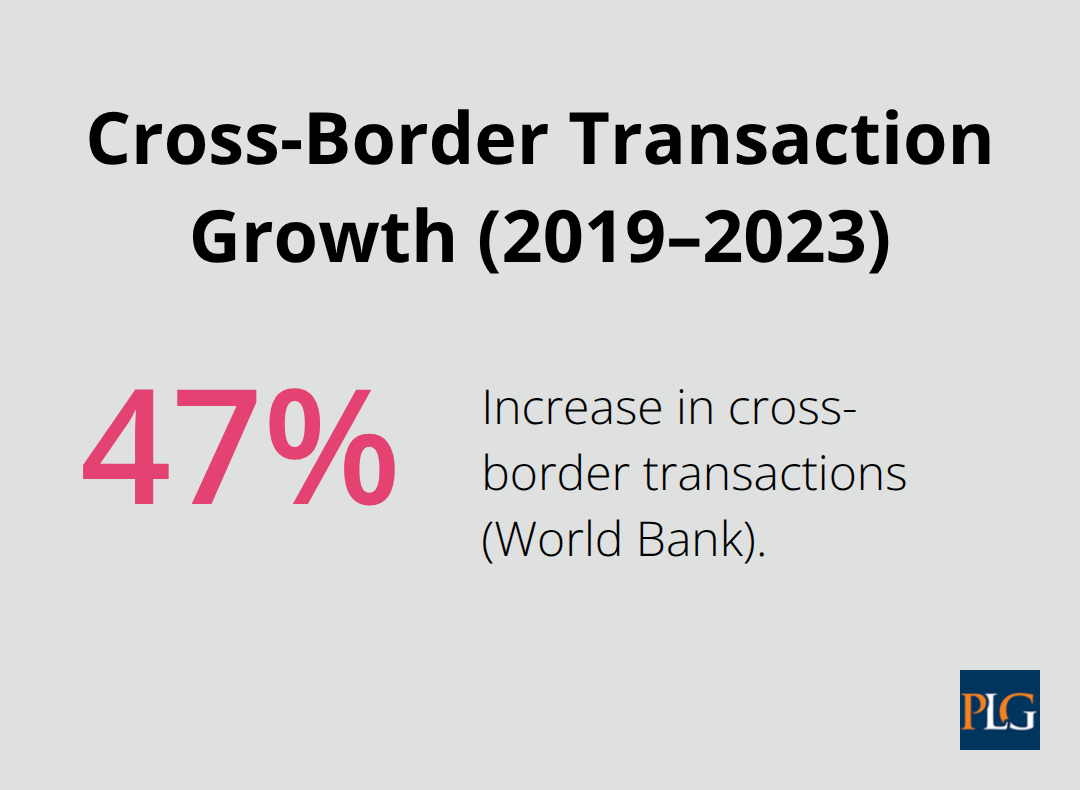
International corporate law operates under fundamentally different principles than domestic business law. The primary distinction lies in jurisdictional complexity – companies must simultaneously comply with multiple legal systems that often conflict with each other. According to the World Bank, cross-border transactions increased by 47% between 2019 and 2023, which makes jurisdictional navigation more critical than ever for businesses that want to grow.
Regulatory Framework Navigation
The most difficult aspect involves how different countries structure their corporate regulations. The European Union requires companies to comply with GDPR data protection rules that carry fines up to 4% of annual revenue, while China mandates local data storage for certain business operations. Singapore offers favorable tax structures with corporate rates as low as 17%, but requires specific compliance documentation that differs significantly from US requirements. Companies that operate across these jurisdictions must maintain separate legal structures and report mechanisms for each region.
Strategic Entity Structure
Smart businesses choose their international corporate structures based on tax efficiency and operational flexibility rather than convenience. Delaware corporations remain popular for US operations, but Luxembourg companies provide better access to European markets through double taxation treaties with over 80 countries. Netherlands BV structures offer favorable intellectual property benefits (particularly for tech companies), while Irish companies provide EU market access with competitive 12.5% corporate tax rates. The key lies in structures that minimize global tax burden while businesses maintain operational control across all jurisdictions where they operate.
Cross-Border Transaction Complexity
International deals require businesses to navigate multiple legal systems simultaneously. A single acquisition might involve US securities laws, European competition regulations, and Asian employment statutes (each with different compliance timelines). Companies must coordinate legal teams across time zones and reconcile conflicting legal requirements that can delay transactions by months. This complexity extends beyond compliance requirements – businesses must also understand how different courts interpret contracts and resolve disputes across various legal traditions.
Navigating Cross-Border Compliance Requirements
International businesses face three major compliance traps that can destroy profitability overnight. Securities reporting requirements vary dramatically between jurisdictions, with the SEC demanding quarterly 10-K filings while European markets require different disclosure standards under MiFID II regulations. Companies that trade on multiple exchanges must file separate reports in each jurisdiction, often with conflicting accounting standards that require expensive reconciliation processes. The London Stock Exchange requires interim management statements within 40 days of quarter-end, while NASDAQ allows 40 days for 10-Q filings but demands real-time disclosure of material events.
Securities Laws Across Multiple Markets
Public companies must navigate different disclosure timelines and content requirements across global markets. The European Securities and Markets Authority mandates annual reports within four months of year-end, while the SEC requires 10-K filings within 60-90 days (depending on company size). Japanese markets demand quarterly securities reports within 45 days, and these reports must include different financial metrics than US GAAP standards require. Companies often spend $2-3 million annually on compliance teams just to manage these reporting differences across major exchanges.
Tax Structure Optimization Reduces Global Burden
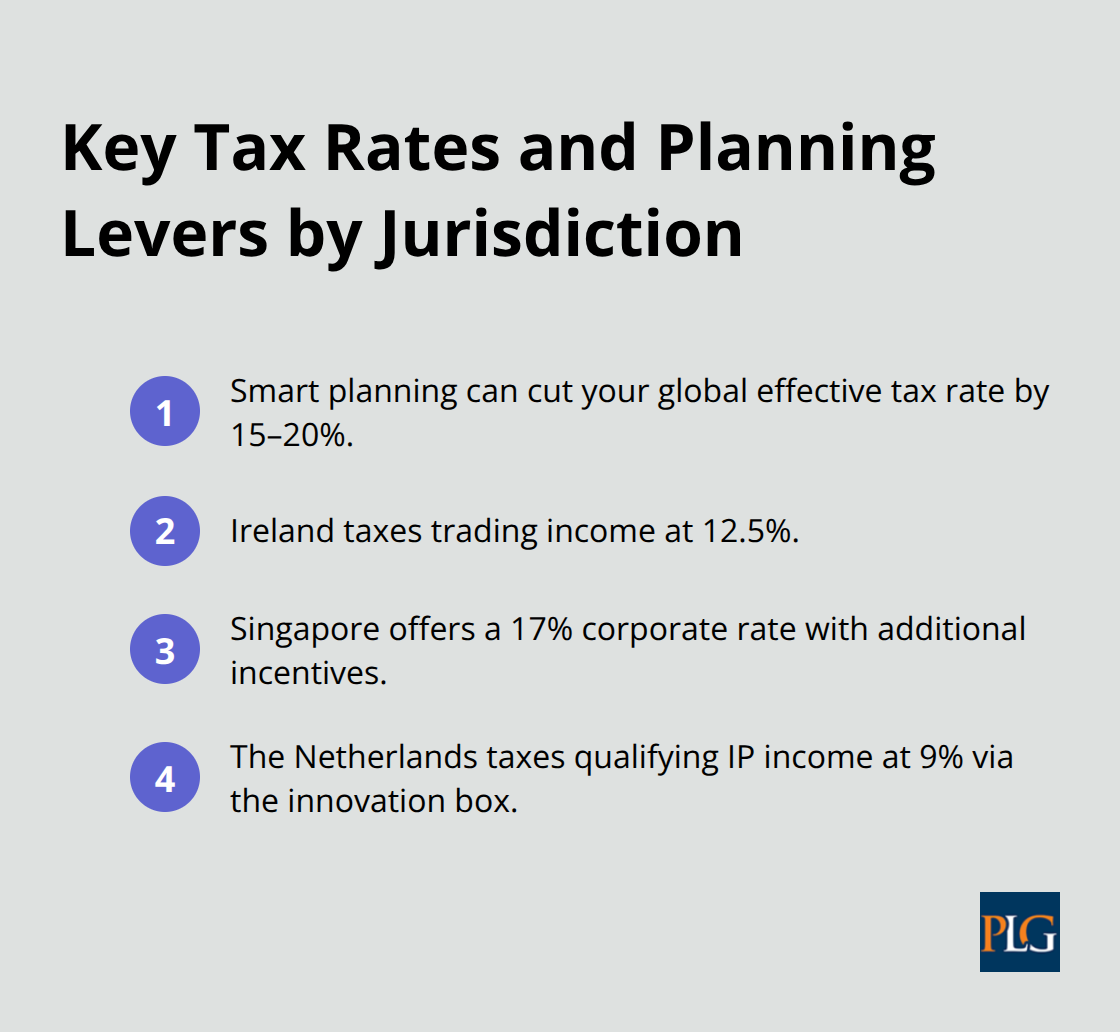
Smart tax planning can reduce your global effective rate by 15-20% through proper jurisdiction selection and transfer pricing strategies. Ireland offers 12.5% corporate rates for trading income, while Singapore provides 17% rates with additional incentives for qualifying activities. The Netherlands grants favorable treatment for intellectual property income through its innovation box regime (taxing qualifying IP income at just 9%). Companies must establish substance in each jurisdiction through local employees and decision-making processes.
Transfer pricing documentation becomes critical when companies move profits between entities – the OECD requires master files and local files for companies with revenue exceeding 750 million euros.
Employment Law Creates Massive Hidden Costs
European employment laws create termination costs that American companies consistently underestimate. France requires severance payments equal to 25% of annual salary after two years of employment, while Germany mandates consultation periods that can extend layoffs by six months. China requires approval from labor bureaus before companies terminate employees, and violations can result in reinstatement orders plus compensation equal to double the intended severance. Companies that expand internationally must budget 30-40% more for employee costs than domestic equivalents due to mandatory benefits, longer notice periods, and complex termination procedures.
These compliance challenges become even more complex when San Francisco businesses structure their international operations and investment strategies.
How Do San Francisco Companies Structure International Deals
San Francisco companies that structure international investments properly save 25-35% on global tax obligations while they maintain operational control across jurisdictions. The most effective approach combines Delaware holding companies with Irish subsidiaries for intellectual property and Singapore entities for Asian operations. Apple reduced its global tax rate to 14.7% in 2020 through this multi-jurisdictional structure, while Google’s Alphabet maintains similar arrangements that generated $13.7 billion in tax savings between 2019-2021 according to their SEC filings.

Joint Venture Structures That Actually Work
Smart joint ventures require separate legal entities in each jurisdiction rather than simple partnership agreements. Netherlands BV companies provide the best structure for European joint ventures because they offer participation exemptions that eliminate withholding taxes on dividends between EU countries. Singapore companies work best for Asian partnerships since they maintain double taxation treaties with 84 countries and allow 100% foreign ownership without local partner requirements.
The critical mistake most San Francisco companies make involves attempts to manage international joint ventures through single US entities, which creates massive tax inefficiencies and compliance burdens. Successful structures separate intellectual property ownership from operational activities and place IP in low-tax jurisdictions like Ireland or Luxembourg while they maintain operational subsidiaries in market countries.
Intellectual Property Protection Requires Aggressive Registration Strategies
Companies must file trademark and patent applications in every jurisdiction where they plan to operate within 12 months of their first application to maintain priority dates under international treaties. China requires separate applications for simplified and traditional Chinese characters, while the European Patent Office covers 38 countries through a single application that costs €4,000 compared to individual country applications that total over €50,000.
The Madrid Protocol allows trademark registration in 124 countries through one application, but companies still need local counsel in major markets like Brazil and India that remain outside the system. Contract negotiations become aggressive when companies fail to secure proper IP registrations first – competitors regularly challenge weak IP positions during acquisition discussions to reduce purchase prices by 15-20%.
Cross-Border Investment Vehicles
Delaware corporations remain the preferred choice for US operations, but Luxembourg companies provide better access to European markets through double taxation treaties with over 80 countries. Netherlands BV structures offer favorable intellectual property benefits (particularly for tech companies), while Irish companies provide EU market access with competitive 12.5% corporate tax rates on trading income.
Companies must establish substance in each jurisdiction through local employees and decision-making processes to avoid challenges from tax authorities. The OECD requires master files and local files for companies with revenue exceeding 750 million euros, which makes transfer pricing documentation critical when companies move profits between entities across different tax jurisdictions.
Final Thoughts
International corporate law presents complex challenges that require strategic planning and professional guidance. San Francisco businesses that expand globally must understand jurisdictional differences, compliance requirements, and tax optimization strategies to succeed in international markets. The most successful companies establish proper legal structures before they enter new markets rather than attempt to retrofit compliance systems afterward.
This proactive approach prevents costly mistakes and reduces global tax burdens by 15-20% through proper jurisdiction selection and transfer pricing strategies. An international corporate law course provides the foundation needed to navigate these complexities, but practical implementation requires ongoing legal support. Companies must maintain separate compliance systems for each jurisdiction while they coordinate operations across multiple legal frameworks.
We at Primum Law Group help San Francisco businesses structure their international operations effectively. Our team provides tailored legal advice that addresses the specific challenges of global expansion while maintaining cost-effective strategies for competitive markets. Professional guidance becomes essential when companies face the intricate requirements of cross-border transactions and multi-jurisdictional compliance (particularly in today’s rapidly evolving regulatory environment).