

Running a business in San Francisco means navigating complex legal territory. Corporate and commercial law governs everything from how you structure your company to how you handle contracts, investments, and disputes.
At Primum Law Group, we see firsthand how businesses that understand these legal foundations grow stronger and avoid costly mistakes. This guide breaks down what corporate and commercial law actually covers and how it applies to your business.
The Core Activities That Drive Business Law
Contracts Form the Foundation of Every Transaction
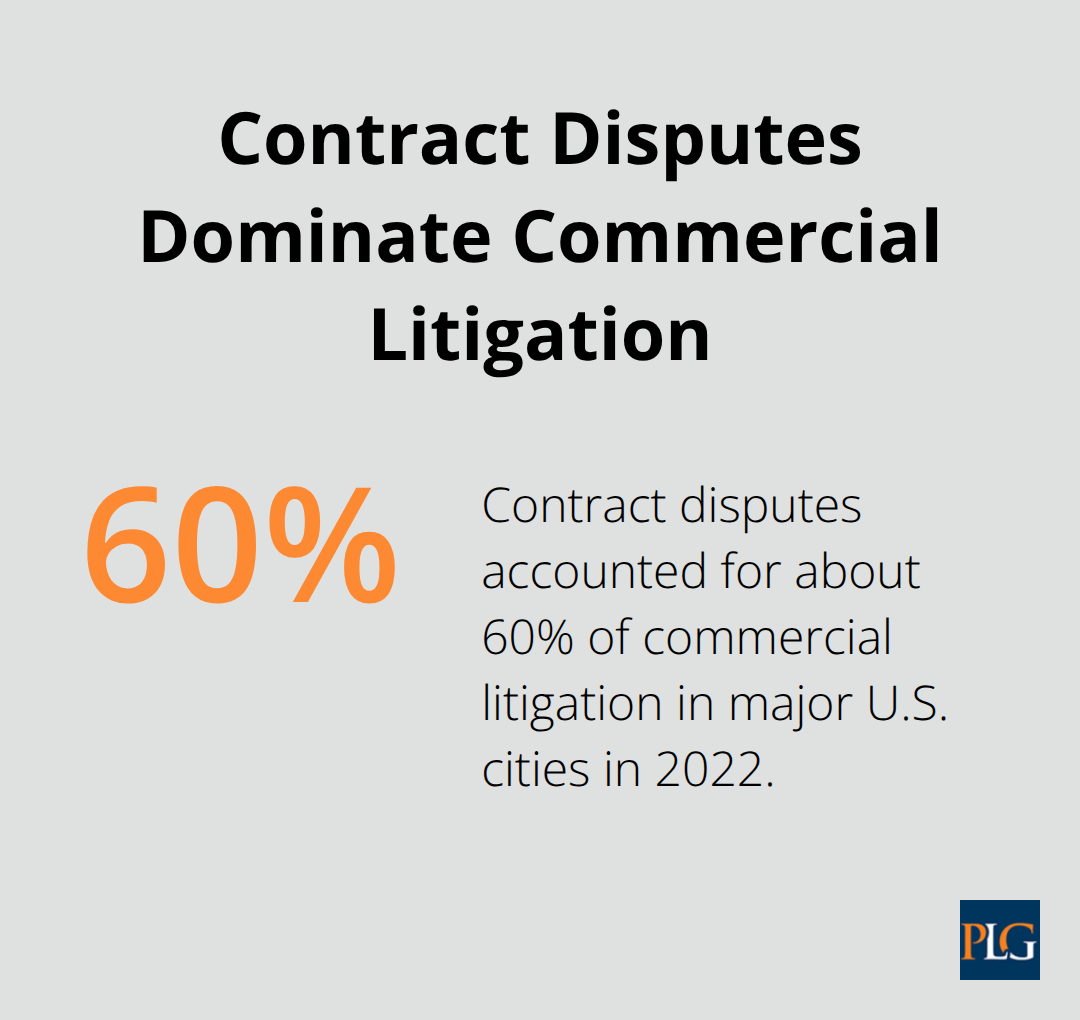
Contracts form the backbone of every business transaction, whether you’re buying supplies, hiring employees, or licensing software. The American Bar Association found that contract disputes accounted for about 60% of commercial litigation in major U.S. cities in 2022, which means poorly drafted or misunderstood agreements create real problems. When you draft contracts, define key terms clearly to avoid ambiguity.
Vague language like “sole discretion” gets interpreted against whoever wrote it, so specificity matters. Include an Entire Agreement clause to prevent side letters or prior conversations from overriding your written terms. A written contract is always better than a verbal one, even though courts recognize oral agreements in some cases.
Common commercial contracts include shareholder agreements, commercial leases, supply contracts, indemnity agreements, security agreements, asset or share purchase agreements, confidentiality agreements, and partnership agreements. Each type serves a specific purpose, and using the wrong structure creates unnecessary risk.

Mergers and Acquisitions Require Strategic Alignment
Mergers, acquisitions, and other business transactions represent where corporate law becomes strategic. These deals require alignment between your internal governance structure and the external terms you negotiate. Due diligence for acquisitions or fundraising forces you to clean up your corporate governance, bylaws, and share structures before anyone invests.
San Francisco businesses handle roughly 150 commercial transactions per month on average, according to the San Francisco Chamber of Commerce, highlighting how pervasive transaction work becomes as you scale. This volume underscores why you need solid legal foundations before you attempt major deals.
Regulatory Compliance Keeps Your Business Operating Legally
Regulatory compliance runs parallel to everything else, and it’s non-negotiable. San Francisco requires every business to register within 30 days of starting and renew annually by the last day of February. Registration fees are tiered based on gross receipts, ranging from minimal amounts for small businesses to thousands for larger operations.
California’s Consumer Privacy Act, effective since 2020, compels San Francisco businesses to be transparent about data collection and give consumers control over their information. If you operate a short-term rental, you must register separately and file transient occupancy tax. Cannabis businesses face a 1% to 5% gross receipts tax on top of standard registration, effective January 1, 2026.
Staying compliant with these requirements prevents penalties and keeps your business operating legally. However, compliance alone isn’t enough-you also need to structure your business entity correctly from the start to maximize tax efficiency and protect your personal assets, which becomes especially important when you’re preparing to raise capital or scale operations.
Building the Right Legal Foundation for San Francisco Startups
Startups in San Francisco face a unique challenge: you need to make fast decisions while protecting yourself legally. The choices you make in your first 90 days-how you structure your entity, how you draft your investment documents, and how you protect your IP-determine whether you’re positioned for growth or walking into liability. Most founders prioritize speed over structure, then scramble to fix problems when investors arrive. This pattern costs founders significant equity and time.
Choose the Right Entity Structure
Your entity structure determines your tax burden, personal liability exposure, and ability to raise capital. A sole proprietorship or general partnership exposes your personal assets to business liabilities, which means a single lawsuit can wipe out your savings. A limited liability company or C-corporation protects your personal assets and creates a separate legal entity that investors actually want to fund.
If you’re in San Francisco and planning to raise venture capital, you must form a C-corporation-no exceptions. LLCs work for consulting businesses or real estate, but venture firms won’t invest in them because the tax structure and equity mechanics don’t align with their funds. Company formation in San Francisco takes 30 days, and the First Year Free program may waive your initial registration fees if you qualify as a new business, so there’s no reason to delay.
Establish Governance Documents Before Taking Investment
Your bylaws, board structure, and shareholder agreements need to be in place before you take any investment money, because investors will require them during due diligence. If your governance documents are sloppy or missing, you’ll lose negotiating power and face demands to restructure at unfavorable terms.
Venture capital agreements in San Francisco typically include preferred stock issuances, anti-dilution provisions, liquidation preferences, and board seat rights-each of these has real economic consequences for your ownership stake. The San Francisco Chamber of Commerce reports that San Francisco businesses handle roughly 150 commercial transactions per month on average, and most of those involve funding rounds or equity adjustments. You need to understand what each term means before you sign, not after.
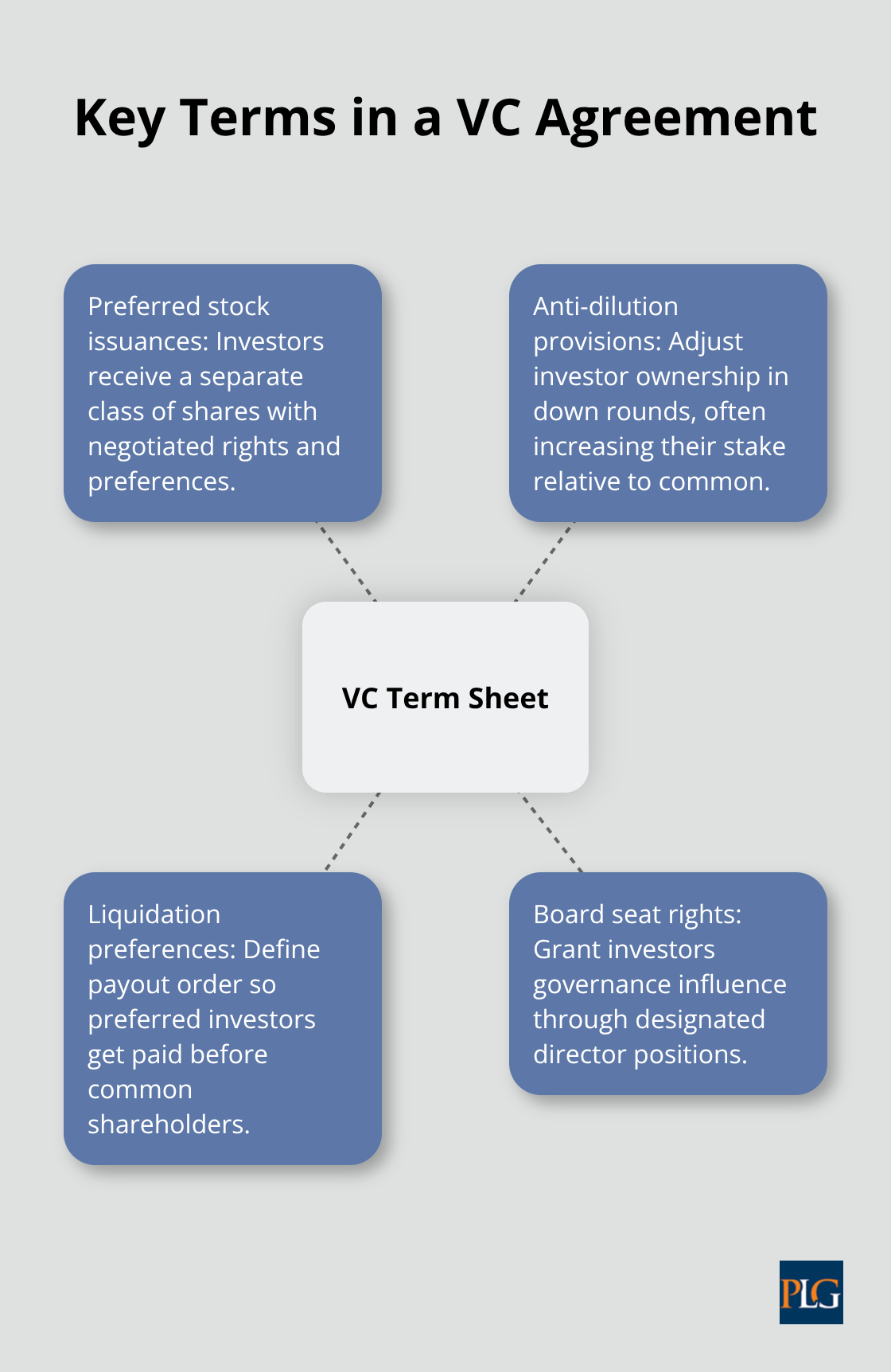
Anti-dilution protection sounds good until you realize it reduces your future dilution but increases the investor’s stake. Participating preferred stock means the investor gets their money back plus a share of remaining proceeds in a liquidation event. Don’t sign a term sheet without legal counsel reviewing it, because the fine print determines whether you maintain meaningful control or become a figurehead in your own company.
Protect Your Intellectual Property from Day One
Intellectual property protection separates valuable startups from commodities. Your source code, algorithms, product design, and customer lists are your actual assets, yet most founders leave them unprotected. You need a clear assignment of IP from each founder and employee to the company, documented in writing before they start working.
If someone leaves and disputes who owns the code they wrote, you face years of litigation and potential loss of your core product. Trade secret protection requires you to actually treat information as confidential-limiting access, requiring NDAs from employees and contractors, and controlling who can view sensitive documents.
Comply with California Data Privacy Laws
California’s CCPA, effective since 2020, adds another layer: if you collect customer data, you must have clear policies about what data you collect, how you use it, and how customers can request deletion. Violating CCPA exposes you to statutory damages of $100 to $750 per consumer per violation, which scales quickly with user base. Document your IP ownership now, before it becomes a problem during fundraising or acquisition discussions, and establish data handling procedures that align with state requirements before your customer base grows.
Common Legal Issues Businesses Face
Contract Disputes Create the Biggest Litigation Risk
Contract disputes rank as the top legal headache for San Francisco businesses, and the numbers prove it. The American Bar Association reported that contract disputes accounted for roughly 60% of commercial litigation in major U.S. cities in 2022, which means most legal conflicts stem from misaligned expectations between parties. The problem isn’t that contracts exist-it’s that they’re either poorly drafted, missing critical terms, or interpreted differently when something goes wrong.
When you skip the step of defining payment terms precisely, specifying delivery dates, or clarifying what happens if one party fails to perform, you’re essentially gambling with your business. A supplier who delivers late might claim the contract allowed reasonable delays, while you’re waiting for materials to fulfill customer orders. The fix is straightforward: draft contracts that specify exactly what performance looks like, when it happens, and what remedies exist if someone falls short.
Include termination triggers so both parties understand when the relationship ends and under what conditions. Proofread for precision because punctuation errors can change meaning-courts have ruled that a misplaced comma altered contract obligations in ways neither party intended. Get legal review before you sign anything that involves significant money or ongoing relationships, because fixing problems after the fact costs far more than prevention.
Employment and Labor Disputes Expose Hidden Vulnerabilities
Employment and labor disputes create a different category of risk that many founders underestimate. When you hire your first employees, you need written agreements that address equity vesting, confidentiality obligations, and what happens if someone leaves to join a competitor. California law restricts non-compete agreements severely, but non-solicitation and non-disclosure agreements remain enforceable if reasonably drafted.
Without these protections, a departing engineer can take your customer list, and California courts will side with the employee because the restrictions were too vague. Establish clear policies around data handling, customer communications, and internal decision-making so you can demonstrate reasonable care if something goes wrong.
Liability and Risk Management Require Proactive Planning
Liability and risk management come down to having the right insurance and governance structures in place before problems occur. General liability insurance covers third-party bodily injury or property damage claims, but it won’t cover employment disputes, contract breaches, or IP infringement. You need directors and officers liability insurance if you have a board, and errors and omissions coverage if you provide professional services.
Document board meetings and major decisions so you have evidence of oversight if someone later claims negligence. This documentation protects you far more effectively than insurance alone, because it demonstrates that your company acted with reasonable care and followed proper procedures.
Final Thoughts
Corporate and commercial law operates as the infrastructure that keeps your business functioning, and understanding what corporate and commercial law covers directly impacts your survival through funding rounds, contract enforcement, and personal asset protection. Founders who treat legal structure as an afterthought pay the price later through lost equity, litigation costs, and missed opportunities. A lawyer reviewing your venture capital term sheet catches anti-dilution provisions that would otherwise dilute your ownership, while another lawyer drafting employment agreements prevents departing employees from taking customer lists or source code.
We at Primum Law Group work with startups and growing businesses in San Francisco to build the legal foundations that most founders overlook until crisis strikes. We handle venture capital and private equity transactions, draft commercial contracts that protect your business, and provide outsourced general counsel services that transform how you approach business decisions. Rather than reacting to problems, you build protections into your agreements, governance documents, and operational procedures from the start.
Schedule a conversation with legal counsel who understands San Francisco’s regulatory landscape and the venture capital ecosystem. Bring your current agreements, your cap table, and your questions about what you should have in place before your next funding round. The cost of getting it right upfront remains minimal compared to the cost of fixing problems after they’ve already damaged your business.