

San Francisco’s venture capital landscape drives innovation across the tech industry. Understanding venture capital fund meaning becomes essential for entrepreneurs seeking funding and investors looking to participate in high-growth opportunities.
We at Primum Law Group see firsthand how proper fund structure impacts investment success. This guide breaks down the legal framework, operational processes, and compliance requirements that shape VC fund operations in today’s market.
How Do VC Funds Actually Work
Venture capital funds operate as limited partnerships where fund managers raise capital from institutional investors and deploy it into high-growth startups. The typical San Francisco VC fund targets $50 million to $500 million in commitments, with larger funds like Sequoia Capital raising over $2 billion per fund. Limited partners include pension funds, university endowments, and family offices that commit capital but remain passive investors.
Fund Structure and Capital Deployment
General partners manage the fund and make investment decisions while they charge a 2% annual management fee plus 20% carried interest on profits. Most VC funds operate on a 10-year timeline with possible extensions. Fund managers typically deploy 60-80% of committed capital within the first four years and reserve the rest for follow-on investments in portfolio companies. San Francisco funds focus heavily on Series A and B rounds, where they write initial checks between $5 million and $25 million per investment.
Investment Cycles and Portfolio Management
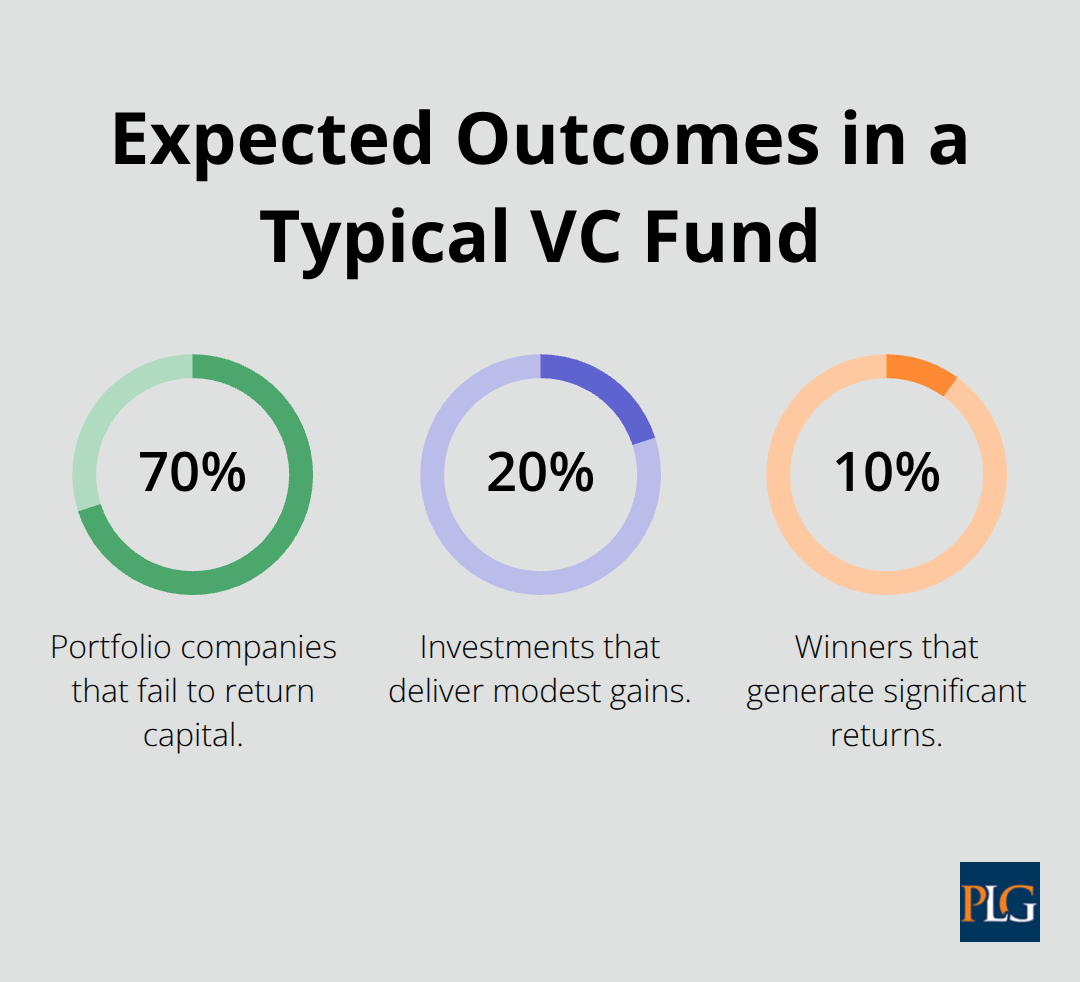
The average VC fund makes 20-30 investments per fund cycle and expects 70% to fail, 20% to return modest gains, and 10% to generate significant returns. Fund managers spend 2-3 years as they raise capital, 4-5 years while they actively invest, and 3-5 years as they manage exits through IPOs or acquisitions. Silicon Valley funds historically achieve 15-20% annual returns (though recent market conditions have pressured these figures downward).
Due Diligence Process
Fund managers conduct extensive due diligence before they make investment decisions. This process typically takes 6-12 weeks and involves financial analysis, market research, and management team evaluation. Most funds require board seats and protective provisions that give them significant ownership over major company decisions. The legal documentation for these investments requires careful attention to regulatory compliance and investor protection measures.
How Do VC Funds Make Investment Decisions
Investment Committee Process
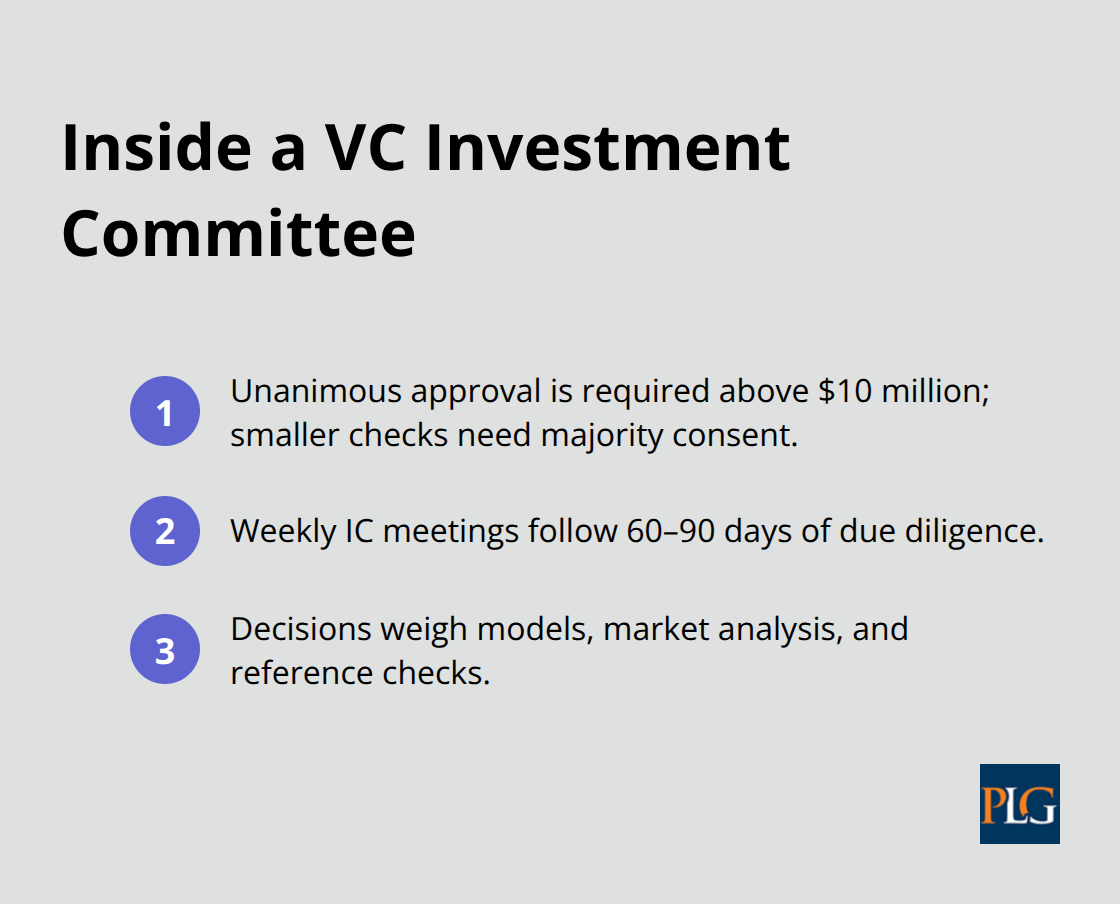
San Francisco VC funds follow rigid investment committee structures where partners vote on deals worth millions. Most funds require unanimous partner approval for investments above $10 million, while smaller checks need majority consent. Sequoia Capital and Andreessen Horowitz conduct weekly investment committee meetings where partners present deals after they complete 60-90 days of due diligence. The process involves financial models, market analysis, and reference calls with previous employers and customers. Partners typically review 1,000 companies annually but invest in only 2-3% of them.
Portfolio Company Value Creation
Fund managers actively shape portfolio companies through board participation and strategic guidance rather than passive investment. Top-tier funds like Kleiner Perkins place partners on 8-12 portfolio company boards simultaneously. These board members drive decisions about staff, product strategy, and follow-on rounds. Portfolio companies receive operational support through the fund’s platform teams that provide recruitment, promotion, and business development assistance. Studies show that portfolio companies with active VC involvement achieve 35% higher growth rates compared to those with passive investors.
Exit Strategy Execution
VC funds target exits within 5-7 years through IPOs or acquisitions to generate returns for limited partners. San Francisco funds achieved median exit multiples of 3.2x invested capital in 2023, though top-quartile funds reached 8.5x returns according to PitchBook data. Fund managers begin exit plans 18 months before target dates and often hire investment banks to manage sale processes. The typical VC fund distributes 80% of returns to limited partners and retains 20% as carried interest. Successful exits from companies like Airbnb and Uber generated billions in returns for early-stage San Francisco funds. These breakthrough investments demonstrate the outsized impact on overall fund performance, particularly when founders maintain strategic ownership throughout multiple funding rounds.
These investment decisions and portfolio management strategies operate within strict legal frameworks that govern fund formation and compliance requirements.
What Legal Requirements Govern VC Fund Formation
Venture capital funds must navigate complex SEC regulations and state securities laws that govern fund formation and operations. The Investment Advisers Act of 1940 requires fund managers with over $150 million in assets under management to register with the SEC and file Form ADV within 90 days of threshold breach. Smaller funds register at the state level but face similar disclosure requirements. Fund formation documents include the Limited Partnership Agreement, Private Placement Memorandum, and subscription agreements that must comply with Rule 506(b) or 506(c) under Regulation D. These documents typically cost $75,000 to $150,000 in legal fees for a standard $50 million fund (according to National Venture Capital Association industry data).
SEC Registration and Documentation Standards
Fund managers must file quarterly Form PF reports within 60 days of quarter-end if they manage over $150 million in private fund assets. Large fund advisors who manage over $1.5 billion must file these reports within 15 days and include detailed risk metrics and portfolio concentration data. The SEC conducts examinations of registered investment advisors every 4-6 years on average and focuses on compliance with fiduciary duties, fee calculations, and portfolio valuation practices. Violations result in enforcement actions that averaged $2.8 million in penalties during 2023 according to SEC enforcement statistics.
Compliance Programs and Risk Management
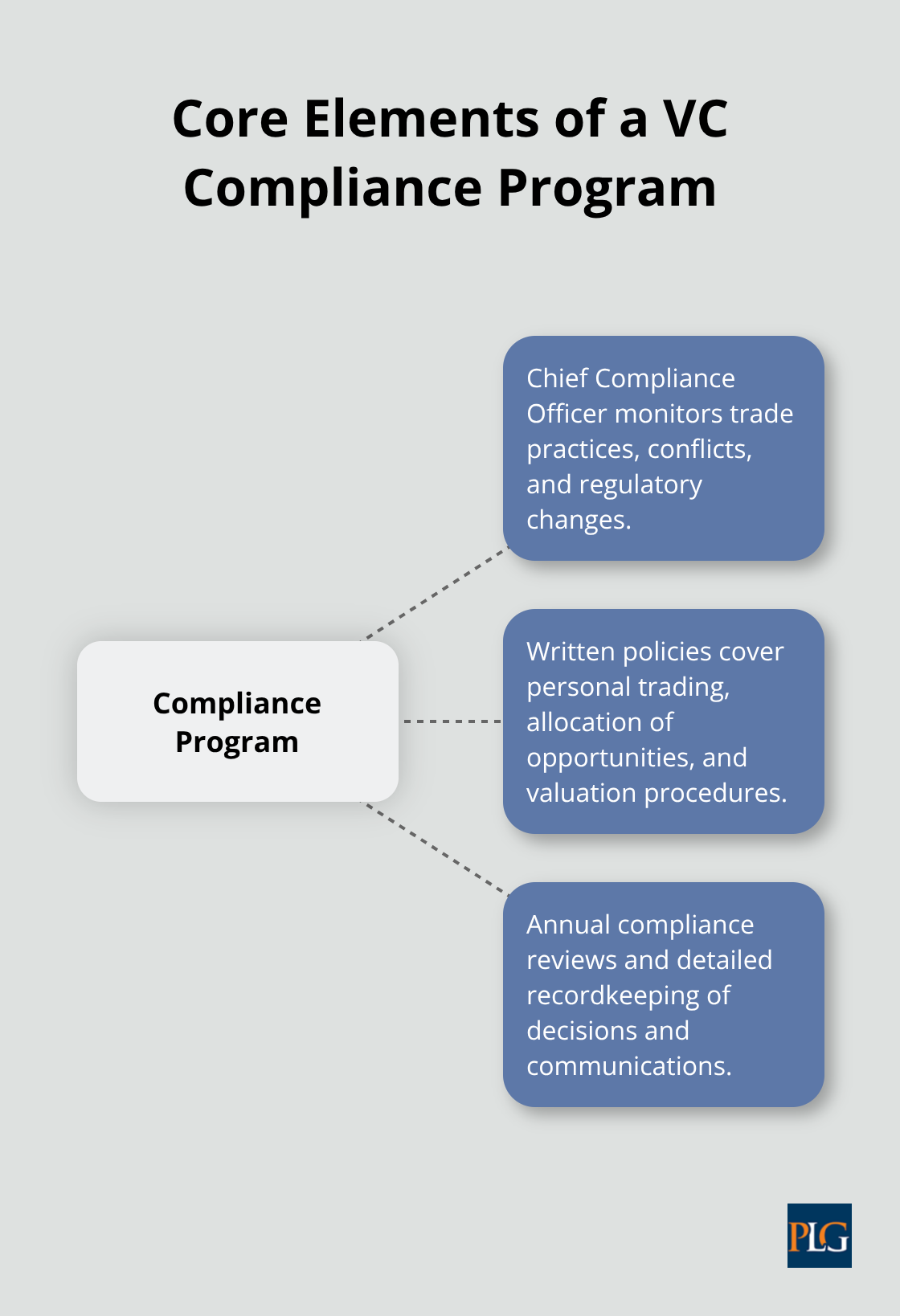
Fund managers must establish compliance programs with designated chief compliance officers who monitor trade practices, conflicts of interest, and regulatory changes. These programs require written policies that address personal securities transactions, allocation of investment opportunities, and valuation procedures. The SEC mandates annual compliance reviews and requires funds to maintain detailed records of all investment decisions and communications with portfolio companies.
Investor Disclosure and Financial Reporting
Fund managers must provide annual audited financial statements and quarterly investor reports that detail portfolio performance, fee calculations, and material developments. Most San Francisco funds spend $200,000 to $500,000 annually on compliance costs including legal counsel, audit fees, and regulatory filings. Fund managers face personal liability for compliance failures, which makes proper legal structure and oversight essential for successful fund operations.
Final Thoughts
Venture capital fund meaning encompasses both operational mechanics and legal complexities that govern fund formation and investment processes. San Francisco’s VC ecosystem demonstrates how proper legal structure directly impacts fund performance and investor protection. Entrepreneurs who seek VC funding must recognize that fund managers operate under strict SEC regulations and fiduciary duties that shape investment decisions.
These compliance requirements protect limited partners but create operational constraints that affect deal timing and structure. Investors who consider VC fund participation face substantial minimum commitments typically starting at $1 million for institutional funds. The 10-year investment timeline and illiquid nature of these investments demand careful consideration of portfolio allocation and risk tolerance.
Legal counsel plays an indispensable role throughout the fund lifecycle from formation documents to exit transactions. We at Primum Law Group provide comprehensive legal services for startups, investors, and fund managers who navigate these complex regulatory requirements. Fund formation requires immediate attention to SEC registration thresholds, compliance program establishment, and investor documentation standards (particularly for funds exceeding $150 million in assets under management).