

Venture capital investment structuring determines whether a deal creates wealth or destroys it. The difference between a tax-efficient structure and a poorly planned one can cost founders and investors hundreds of thousands of dollars.
At Primum Law Group, we’ve seen countless deals in San Francisco where the right structure would have changed everything. This guide walks you through the tax strategies, investor protections, and common mistakes that shape successful VC transactions.
How Preferred Stock and Pass-Through Entities Shape Your VC Deal in San Francisco
Preferred Stock Classification Determines Your Tax Bill
The structure you select for preferred stock determines who captures value and how much tax you pay. Most founders treat preferred stock as a checkbox item, but the classification between Series A, Series B, and later rounds directly impacts your tax bill. Convertible preferred stock held by investors triggers different tax treatment than common stock, and the timing of conversion decisions shifts thousands in tax liability. Founders miss significant optimization opportunities because they don’t understand that liquidation preferences create phantom income during down rounds. When your company raises a Series B at a lower valuation than Series A, the difference between the two round prices gets allocated to earlier investors through anti-dilution mechanics, and this creates unexpected tax consequences for everyone involved.
Alignment With Your Exit Timeline Matters
The key move is structuring your preferred stock classes to align with your actual exit timeline. A 7-10 year horizon produces dramatically different tax treatment than a 3-5 year exit scenario. Your preferred stock structure should reflect when you actually plan to exit, not when you hope to exit. This alignment prevents you from paying taxes on a timeline that doesn’t match your business reality.
Carried Interest Faces Stricter IRS Scrutiny
Carried interest in VC funds typically gets taxed as ordinary income rather than capital gains, which means federal rates up to 37 percent instead of 20 percent for long-term capital gains. The IRS has tightened scrutiny on how funds structure carried interest, particularly around holding periods and management involvement. Many GPs assume they’ll automatically qualify for favorable long-term capital gains treatment, but the IRS now requires genuine three-year holding periods and active management participation.
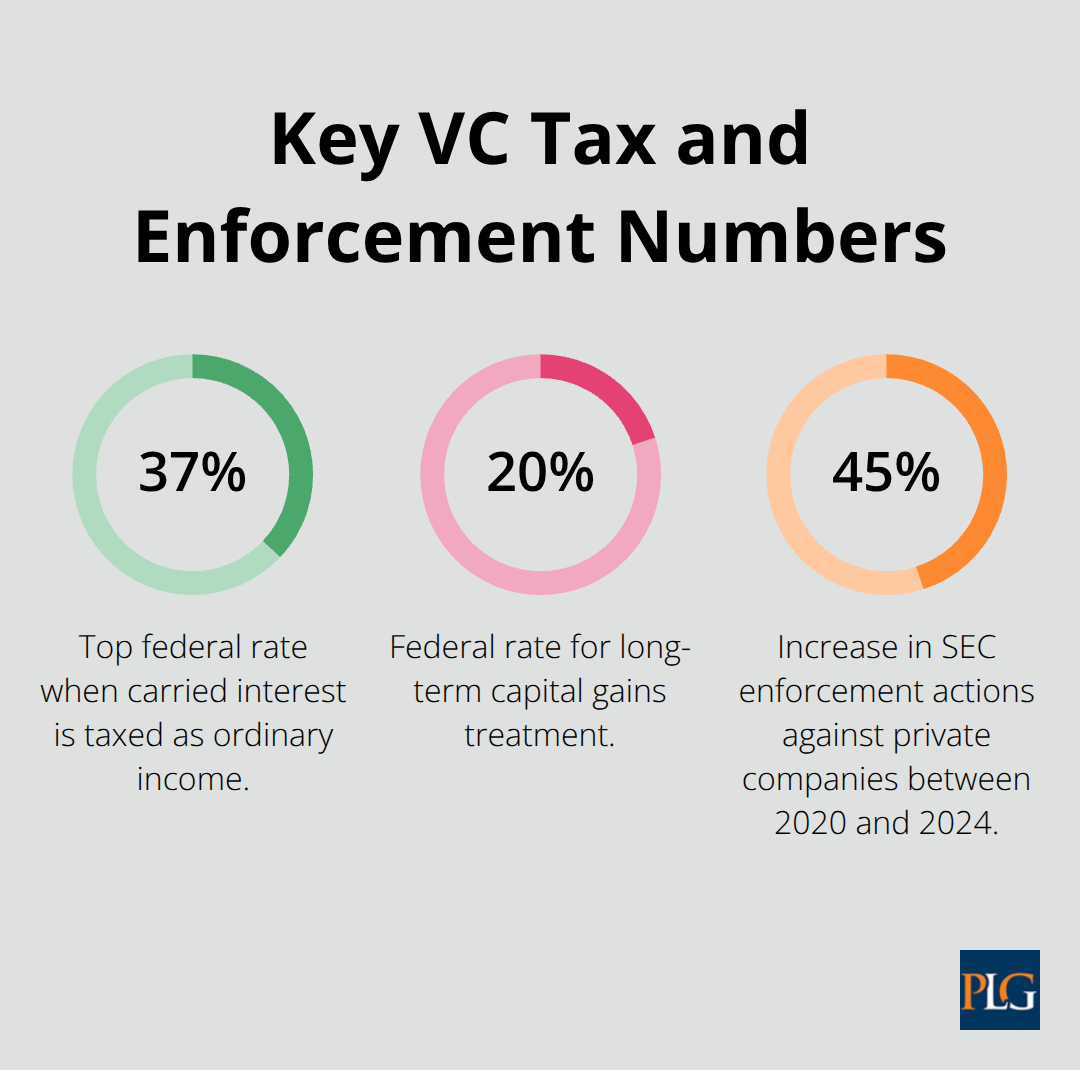
Your best protection is documenting management decisions and portfolio company involvement contemporaneously, not retroactively.
Pass-Through Entities Reduce Your Tax Burden
Pass-through entities like LLCs and S-corps for portfolio companies offer clearer tax treatment than C-corp structures when you plan eventual exits. An S-corp election allows you to split income between wages and distributions, potentially reducing self-employment taxes by 15-25 percent depending on your overall income level. Pass-through structures also avoid double taxation that hammers C-corps at both the company and shareholder levels (a particularly expensive problem during liquidity events). This tax advantage compounds significantly as your portfolio companies mature and generate substantial income.
The tax mechanics of your deal structure set the foundation for what comes next-investor protections that safeguard both sides of the transaction.
Investor Protections and Deal Structure in San Francisco
Liquidation Preferences Shape Your Exit Outcome
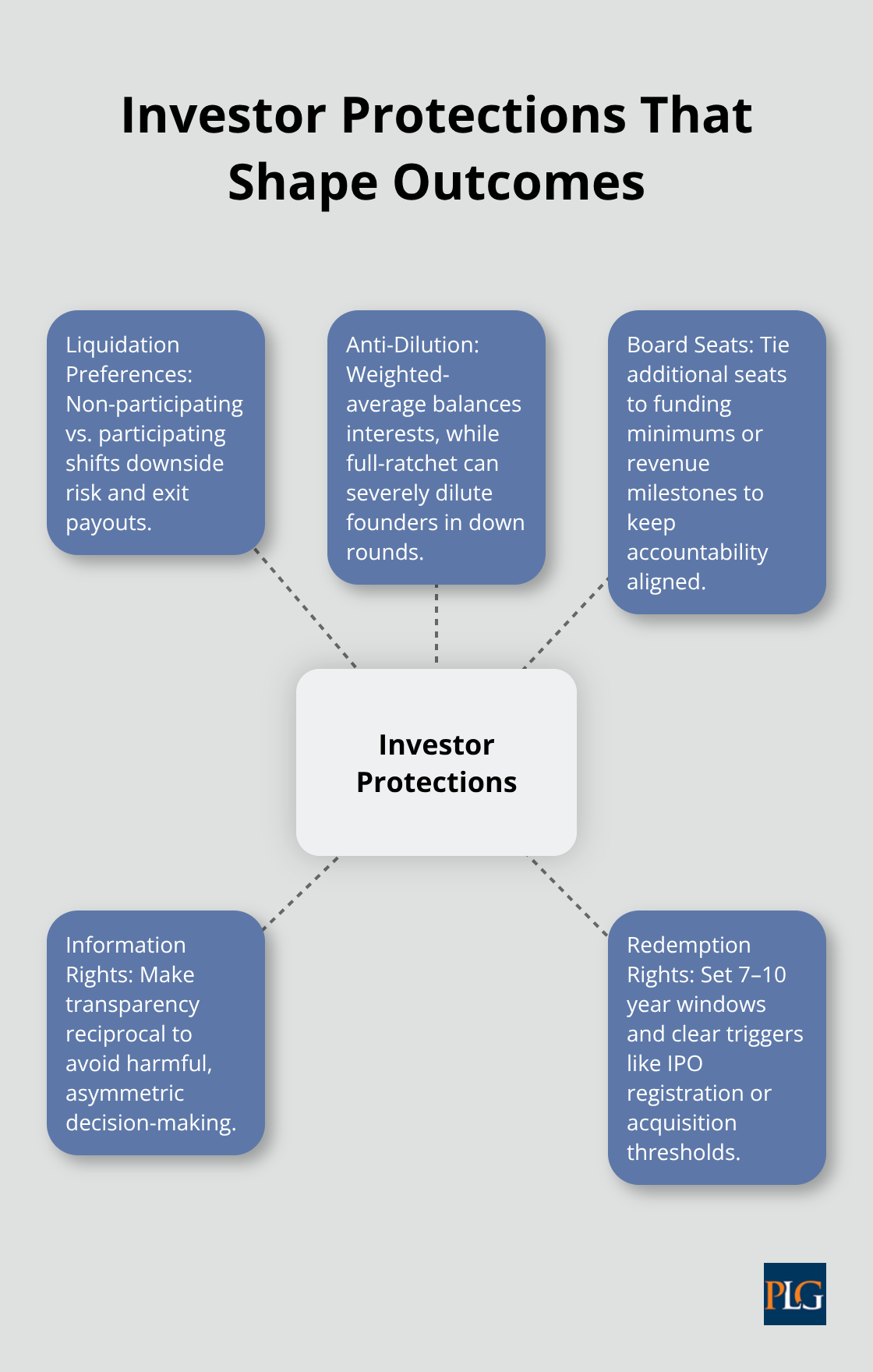
Liquidation preferences and anti-dilution protections separate investors who control their exits from those trapped in down rounds. Non-participating preferred stock gives investors a choice between converting to common stock and claiming their liquidation preference, while participating preferred forces them into whatever outcome benefits management most. Most founders accept participating preferred without recognizing that this transfers downside risk entirely to common shareholders. In a Series A round, insisting on non-participating preferred saves your team millions during a 2x-3x exit that would otherwise go entirely to early investors.
Anti-dilution mechanics matter equally. Weighted-average anti-dilution protects both sides reasonably well, while full-ratchet anti-dilution punishes founders brutally by resetting earlier investment prices to match down rounds. A company that raised Series A at $10 per share then Series B at $5 per share faces massive dilution under full-ratchet terms, where Series A investors get reset to $5 per share pricing. Weighted-average splits the difference more fairly and represents your best negotiating position with institutional investors.
Board Seats and Information Rights Create Accountability
Board representation and information rights determine whether investors actually monitor their portfolio or simply collect distributions. Standard investor rights include quarterly financial statements, annual budgets, and monthly cap tables, but founders often miss that investors gain leverage through information asymmetry. Negotiate specific thresholds before investors gain board seats: most Series A rounds grant one board seat, Series B adds another, but you can contractually require specific funding minimums or revenue milestones before additional seats transfer.
Information rights should flow both directions, meaning you get visibility into investor fund performance and portfolio company benchmarking data. This reciprocal transparency prevents investors from making decisions that harm your company while protecting their other portfolio holdings.
Redemption Rights and Exit Timelines Need Alignment
Redemption provisions and exit strategies belong in your term sheet from day one because founders and investors have fundamentally different exit preferences. Investors typically want 7-10 year exit windows with redemption rights if no liquidity occurs, while founders prefer staying independent longer. Carve out specific redemption triggers like IPO registration rights or acquisition thresholds, and nail down whether redemptions happen pro-rata or separately. Founders can maintain operational control for 12+ years while investors hold redemption rights after year seven, satisfying both parties without creating exit pressure that destroys company value.
These investor protections establish the framework for successful deals, but many transactions fail because founders and investors overlook the structural mistakes that create conflict later.
Common Pitfalls in VC Investment Structuring in San Francisco
Misalignment Between Founders and Investors Triggers Exit Conflicts
Founders and investors enter deals with fundamentally different priorities, and most structures fail because they don’t account for this reality. Founders want operational control and long-term company building, while investors want liquidity within 7-10 years and downside protection. When you structure a deal without explicitly addressing these conflicting timelines, friction emerges during Series B fundraising or acquisition discussions. The National Venture Capital Association reports that roughly 30 percent of VC-backed companies fail to reach their projected exit timelines, and misaligned governance structures accelerate these failures.
A founder who retained 40 percent equity through common stock while accepting a board seat for the lead investor discovers too late that the investor’s redemption rights trigger after year seven, forcing an exit conversation the founder isn’t ready for. Many founders accept vague language around decision rights, only to discover during a down round that their investor controls dilution mechanics through anti-dilution provisions they didn’t fully understand. The fix requires writing explicit governance thresholds into your term sheet: specify which decisions require founder approval regardless of investor board seats, establish clear equity retention targets, and nail down exit windows with actual dates rather than vague timelines.
Tax Surprises Destroy Deal Value Faster Than Structural Failures
Founders often structure their companies as C-corps without understanding that they’ll face double taxation on exit, or they accept carried interest arrangements that don’t qualify for long-term capital gains treatment under current IRS rules. The IRS audits VC fund structures at roughly three times the rate of other investment vehicles according to recent Treasury data, meaning inadequate documentation exposes both founders and investors to unexpected liability years after closing.
A Series A investor who structures their fund as a partnership without proper three-year holding period documentation faces reclassification of carried interest as ordinary income, triggering federal rates up to 37 percent instead of 20 percent on their gains. Founders encounter similar problems when they fail to plan for Section 409A valuations or when they accept stock option grants without understanding repurchase rights that create tax complications during secondary sales. The practical answer is conducting a tax structure review before you sign any term sheet, modeling exit scenarios at multiple valuations, and documenting your holding period intentions contemporaneously. This prevents the situation where your accountant discovers six months before acquisition that your structure creates $400,000 in unexpected tax liability.
Regulatory Compliance Oversights Create Persistent Liability
Founders frequently miss securities law requirements around proper valuations for option grants, state-specific blue sky compliance for investor notifications, or SAFE agreement documentation that fails to specify discount rates or valuation caps. The SEC increased enforcement actions against private companies by 45 percent between 2020 and 2024, focusing heavily on compliance failures in equity issuance and investor communications.
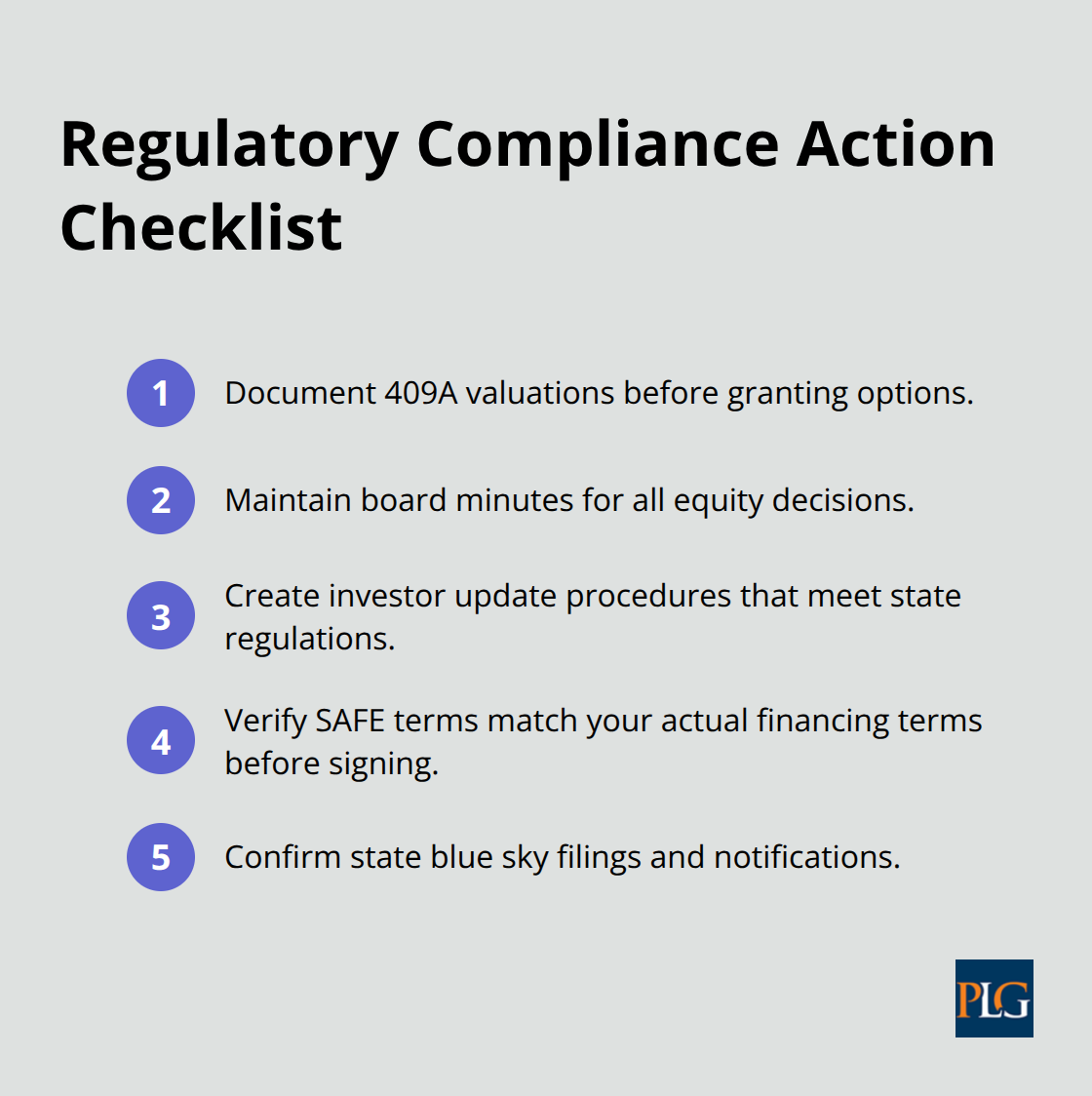
A company that raises a Series A without conducting proper 409A valuations faces potential penalties and back taxes if the IRS determines options were granted at below fair market value. Similarly, founders who don’t maintain proper stock ledgers or cap tables create title defects that surface during acquisition diligence, sometimes killing deals entirely. International investors introduce additional complexity around CFIUS reporting requirements and tax treaty compliance that most founders handle incorrectly without proper legal guidance. Treat regulatory compliance as a structural requirement, not an afterthought. Document your 409A valuations, maintain board minutes for all equity decisions, create investor update procedures that comply with state regulations, and verify SAFE terms match your actual financing terms before signing.
Final Thoughts
Venture capital investment structuring determines whether your deal survives contact with reality or collapses under its own contradictions. The tax implications, investor protections, and compliance requirements we’ve covered aren’t optional considerations-they’re the difference between building sustainable wealth and watching it evaporate through preventable mistakes. Structure your deal around actual business timelines and exit scenarios, not theoretical ones, because preferred stock classes, pass-through entities, and liquidation preferences only work when they align with what you’re actually building.
Regulatory compliance protects your transaction at every stage. Proper 409A valuations, documented board decisions, and accurate cap tables prevent title defects that kill acquisitions months into diligence, and the SEC’s 45 percent increase in enforcement actions against private companies between 2020 and 2024 shows that regulators actively scrutinize the structures founders and investors treat casually. A founder who structures for a 10-year independent company while accepting investor redemption rights after year seven creates conflict that no amount of good faith can resolve, and a VC fund that fails to document carried interest treatment contemporaneously faces IRS reclassification that costs millions in unexpected taxes.
Before you sign any term sheet, contact someone who understands both the tax mechanics and investor protections your specific deal requires. We at Primum Law Group work with founders and investors throughout San Francisco and Silicon Valley to structure deals that actually work, handling venture capital transactions, corporate governance, tax structuring, and compliance issues that determine your financial outcomes permanently. Visit our website to discuss your venture capital investment structuring needs with our team.