

Technology licensing for startups can make or break your growth trajectory. Most founders either accept unfavorable terms without question or spend months in negotiations without clear direction.
At Primum Law Group, we’ve seen countless startups in San Francisco sign deals that constrain their future options. This guide walks you through the strategies and red flags that matter most.
What Technology Licensing Actually Means for Startups in San Francisco
Technology licensing isn’t about acquiring ownership. It’s about getting permission to use someone else’s intellectual property under specific terms. When your startup licenses technology, you’re paying for the right to use patents, software, trademarks, or proprietary processes without owning them outright. The licensor retains ownership and control. This matters because it shapes everything from how you can modify the technology to whether you can sell products built on it.
Many founders treat licensing agreements like standard contracts to sign quickly, but these deals define your operational boundaries for years. The terms determine if you can pivot your business model, expand into new markets, or integrate the licensed technology into your products. Getting this wrong early means expensive renegotiations or legal disputes later.
The Core License Types You’ll Encounter
Exclusive licenses give you sole rights to use the technology in a defined territory or market. This sounds powerful, but exclusive deals typically come with higher fees and stricter performance requirements. Non-exclusive licenses let multiple parties use the same technology, which reduces your costs but eliminates competitive advantage from that specific technology.
Sole licenses sit in the middle, allowing you to use the technology while the licensor retains the right to use it internally but cannot license it to direct competitors. Patent licenses cover inventions and often include field-of-use restrictions that limit which industries or applications you can serve. Software licenses vary wildly, from permissive open-source licenses that let you modify and distribute freely to proprietary commercial licenses with strict usage limitations and audit rights.
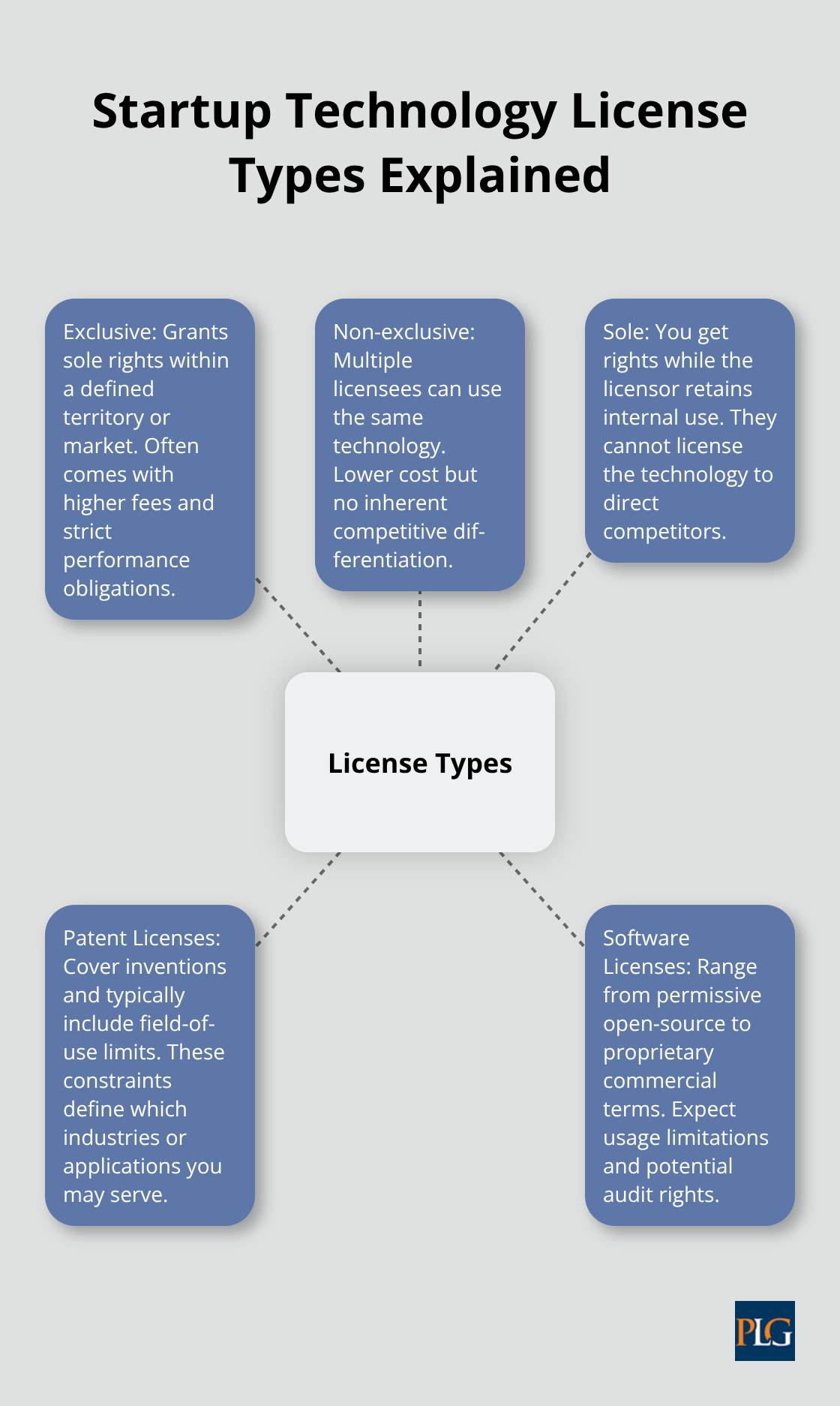
A startup that signs an exclusive patent license for a particular industry cannot pivot into that industry later without renegotiating or finding alternative technology. Conversely, a non-exclusive software license might expose you to competitors using identical underlying technology, eliminating any meaningful differentiation.
Why Vague Agreements Create Real Problems
Clear licensing agreements protect both parties, but startups often skip this step to save legal costs upfront. The consequence is predictable: ambiguity becomes leverage during disputes. When terms around usage rights, royalty calculations, or termination conditions remain fuzzy, licensors can interpret them favorably to themselves.
Startups operating under vague agreements face sudden demands for additional payments, restrictions on product features, or threats of license termination. Revenue-sharing arrangements without precise definitions of what counts as revenue can trigger unexpected bills. A startup might calculate royalties on net revenue after deductions, while the licensor expects royalties on gross revenue before any costs. That gap compounds quickly.
Similarly, undefined territory restrictions create liability. A startup licensing technology for North America might later discover the licensor interprets that narrowly, preventing expansion into Canada. The startup either renegotiates from a weakened position or stops serving those markets. The investment in clear terms upfront is minimal compared to resolving disputes later.
Moving Into Negotiation Strategy
These foundational concepts set the stage for what comes next. Understanding what you’re actually licensing and which type of agreement you need positions you to negotiate from a place of knowledge rather than desperation. The real power emerges when you identify your leverage points and benchmark your deal against market standards.
Key Negotiation Strategies for Favorable Terms
Identifying Your Leverage Points
Startups enter licensing negotiations with an inherent disadvantage: they need the technology more than licensors need their business. This imbalance disappears the moment you identify what the licensor actually needs from you. If your startup represents a significant market opportunity, expansion pathway, or integration that enhances the licensor’s product ecosystem, that holds real negotiating power. A San Francisco startup building enterprise software that integrates a specialized API possesses genuine leverage if that integration drives adoption of the licensor’s platform. Conversely, if you rank as one of hundreds of potential licensees, your leverage shrinks considerably.
Before negotiating, assess whether your business model, market size, or strategic value justifies better terms. If the licensor can easily replace you with another startup, accept standard terms and focus on flexibility clauses instead. If your success materially benefits the licensor’s business, push for reduced royalty rates, shorter exclusivity periods, or broader field-of-use rights. Document this value proposition clearly during early discussions so licensors understand what they gain from favorable terms.
Benchmarking Market Rates and Standard Clauses
Market benchmarking separates startups that overpay from those that secure competitive rates. Software-as-a-Service licensing typically ranges from 3 to 7 percent of revenue for non-exclusive agreements, while exclusive patent licenses in specialized fields can reach 8 to 15 percent depending on the technology’s competitive advantage. Search the US Patent and Trademark Office database and review SEC filings from public companies in your industry-these documents often disclose royalty rates in their financial statements. Tech startups frequently overlook this resource.
Comparable deals in your sector establish the ceiling for what you should accept. If comparable licensing rates for similar technology average 5 percent of revenue and a licensor demands 12 percent, that becomes your negotiating starting point, not an ending position. Push back with data.
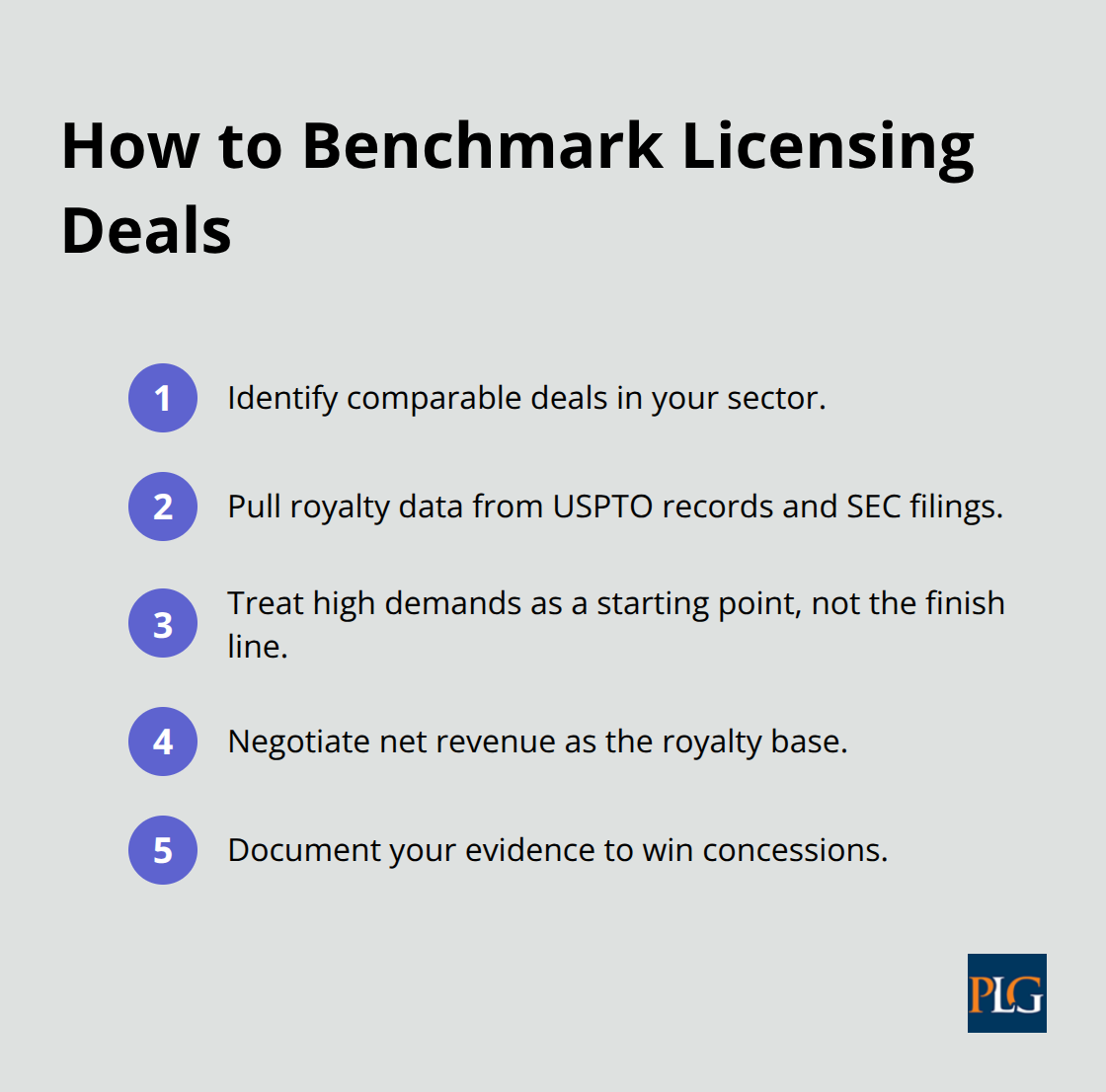
Licensors respect founders who arrive armed with evidence rather than emotions. Additionally, restrict royalty calculations to net revenue after customer refunds and direct sales costs, not gross revenue. This single clause typically saves 20 to 40 percent on actual royalty payments over time.
Building Flexibility into Long-Term Agreements
Build termination flexibility into every contract. A 90-day termination clause with 60-day notice gives your startup an exit if the licensed technology underperforms or your business direction shifts. Longer notice periods lock you into underperforming partnerships. Similarly, include performance milestones that trigger renegotiation. If the licensor projects your startup will generate 50 million dollars in annual revenue within three years but that fails to materialize, milestone-based reviews allow you to renegotiate rates downward without disputing the original agreement.
These negotiation strategies position you to move forward with confidence. Yet even armed with leverage and market data, startups often miss critical red flags buried in standard contract language-the restrictions and hidden costs that transform favorable-looking deals into operational nightmares.
Common Pitfalls and Red Flags in License Deals
Exclusivity Clauses That Trap Your Growth
Exclusivity clauses destroy more startup growth trajectories than any other licensing trap. A San Francisco startup negotiated an exclusive license for AI-powered analytics in the financial services sector and discovered two years later that the exclusivity clause prevented them from serving adjacent markets like insurance or healthcare. The licensor interpreted the exclusivity narrowly, and the startup had locked themselves out of 60 percent of their addressable market. Exclusivity sounds attractive because it promises competitive advantage, but startups rarely need it.
Non-exclusive licenses cost 40 to 60 percent less in royalty rates, and the market advantage comes from execution, not legal restrictions. If a licensor pushes hard for exclusivity, they signal that your business model threatens their other licensees or their own product roadmap. That’s a red flag. Push back aggressively. Negotiate for exclusivity limited to a specific geographic region, customer segment, or use case rather than blanket exclusivity.
A startup in San Francisco licensing payment processing technology should restrict exclusivity to B2B SaaS companies in North America, not accept exclusivity across all potential applications. The difference in future optionality is enormous.
Hidden Royalty Structures and Revenue Definitions
Hidden royalty structures drain cash faster than most founders anticipate. Licensors define revenue differently than startups do, and that gap costs money. Some licensors calculate royalties on gross revenue before refunds, chargebacks, and payment processing fees. Others include revenue from ancillary services bundled with the licensed technology.
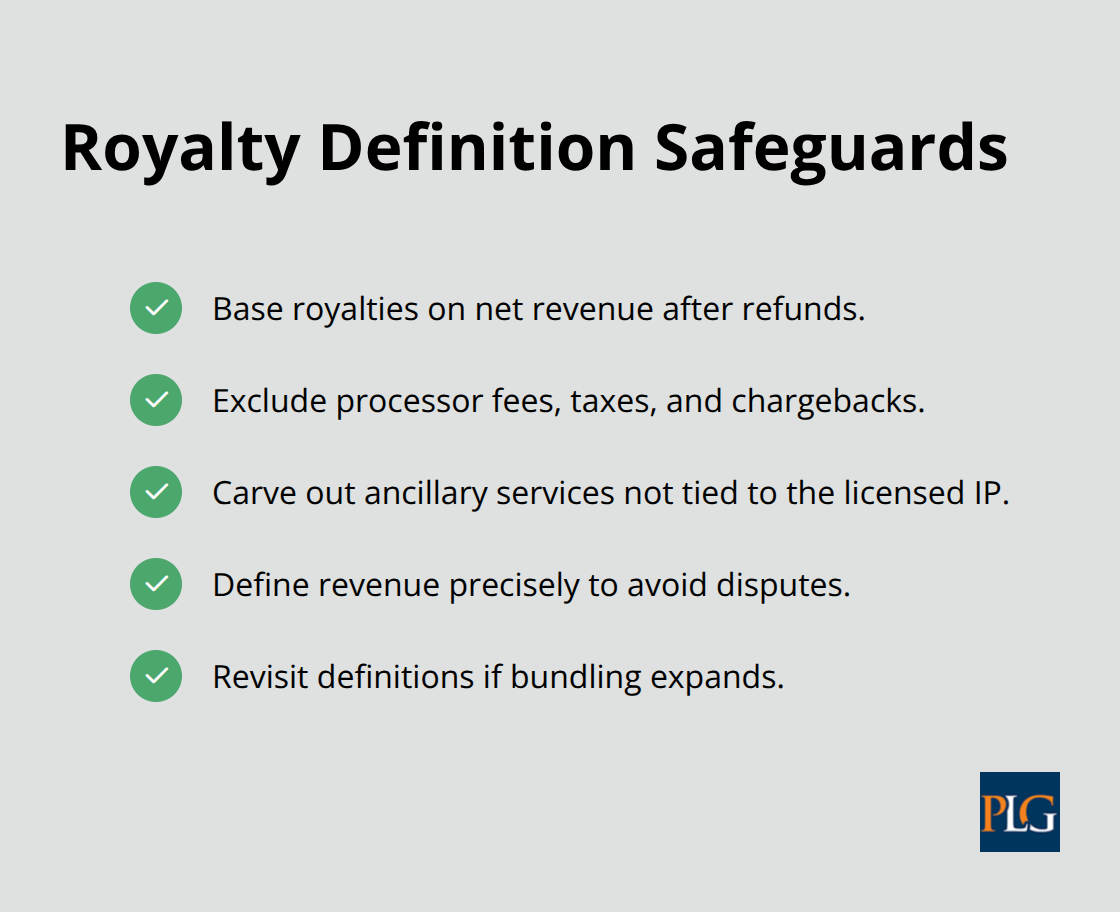
A software startup paying 5 percent royalties on gross revenue versus net revenue can lose 15 to 25 percent more cash annually depending on churn and service bundling. Demand that royalties calculate against net revenue after customer refunds, payment processor fees, and taxes. This single change protects your cash flow significantly.
Termination Clauses That Create Ongoing Obligations
Termination clauses with long wind-down periods create ongoing royalty obligations even after you stop using the technology. Many agreements require 180 to 365 days of notice before termination, during which royalties continue accruing. Some licenses include post-termination royalty obligations for products already in the market.
A startup that licensed a manufacturing process and built hardware inventory must often pay royalties on that inventory for months or years after termination. Negotiate termination to take effect immediately upon notice, or within 30 days maximum. Require that post-termination royalties apply only to new products launched after the termination date, not existing inventory or services. This protects you from paying for technology you no longer use.
Final Thoughts
Technology licensing for startups demands clarity, benchmarking, and strategic negotiation from day one. The three core principles that separate successful deals from costly mistakes are straightforward: understand what you’re actually licensing and which type of agreement fits your business, identify your leverage points before entering discussions, and ruthlessly eliminate vague language around royalty calculations, termination conditions, and usage rights. Most founders regret licensing decisions not because the technology failed, but because the agreement constrained their growth or drained cash through hidden costs.
The startups that avoid this trap share one trait: they treat licensing negotiations as business strategy, not legal paperwork to rush through. Benchmarking your deal against market rates, restricting exclusivity to specific segments rather than accepting blanket restrictions, and building termination flexibility into every contract transforms licensing from a liability into a competitive advantage. When you evaluate technology licensing for startups, the moment to seek legal guidance is before you sign, not after disputes emerge.
We at Primum Law Group work with San Francisco startups to structure licensing agreements that protect growth optionality while securing favorable rates. Our team handles business and technology transactions specifically designed for startup needs, ensuring your agreements reflect market standards and your actual business requirements rather than the licensor’s preferred terms. Reach out to Primum Law Group when you need guidance on structuring deals that work for your startup’s future.