

Most startups focus on product and growth, leaving tax planning for later. That’s a costly mistake.
We at Primum Law Group have seen early-stage companies waste thousands in taxes they could have avoided through smart structure selection, proper deductions, and basic compliance. The right moves now-before your business scales-can save you significantly.
Picking Your Business Structure Matters More Than You Think
The C-Corp Reality for Venture-Backed Startups
Your choice of business structure is the single biggest tax decision you’ll make as a startup founder. Get this wrong, and you’ll overpay taxes for years. Get it right, and you’ll save thousands annually while positioning yourself for investor interest and a clean exit.
A C-Corporation is taxed as a separate entity, meaning the company pays federal income tax on profits, and shareholders pay tax again on dividends-creating what’s called double taxation. However, C-Corps are the standard structure for venture-backed startups because investors expect it, and the structure works cleanly for equity compensation and future fundraising. If you’re raising venture capital, you need a C-Corp. Investors know this structure inside and out, and they’ll move faster with it.
Why S-Corps and LLCs Fall Short for Growth-Stage Companies
S-Corporations avoid double taxation by passing income to owners’ personal tax returns, but they come with strict requirements: no more than 100 shareholders, all U.S. citizens or residents, and complex compliance rules that make them unsuitable for most early-stage companies planning to raise institutional capital. LLCs offer flexibility and pass-through taxation like S-Corps, but they lack the clean investor appeal of C-Corps and can create complications if you later need to raise venture funding, since VCs typically require conversion to C-Corp status as a condition of investment.
If you’re bootstrapping and want to minimize taxes while maintaining simplicity, an LLC taxed as an S-Corp can work-but only after you’ve grown enough to justify the additional accounting complexity and state-level compliance costs, which typically run $1,000 to $2,500 annually in states like California.
How Structure Locks In Your Exit Path
The structure you choose also locks in your exit strategy. A C-Corp founder selling to a strategic buyer or going public has predictable tax treatment. An LLC founder selling has more uncertainty around capital gains treatment depending on state law and deal structure. Investors also evaluate exit potential differently based on structure-they know C-Corps inside and out, but they’ll ask harder questions about LLC tax consequences.
Most founders choose their structure based on what they read online or what their friend’s startup used, then spend the next five years fighting tax complications they could have avoided with one hour of planning upfront. Make this decision with a tax professional before you incorporate, not after. The structure you pick today determines not just your immediate tax bill, but your ability to raise capital and your options when it’s time to exit.
With your entity structure locked in, the next step is identifying which tax credits and deductions actually apply to your situation-and which ones most startups miss entirely.
Tax Credits and Deductions You’re Probably Missing
The R&D Tax Credit Most Startups Overlook
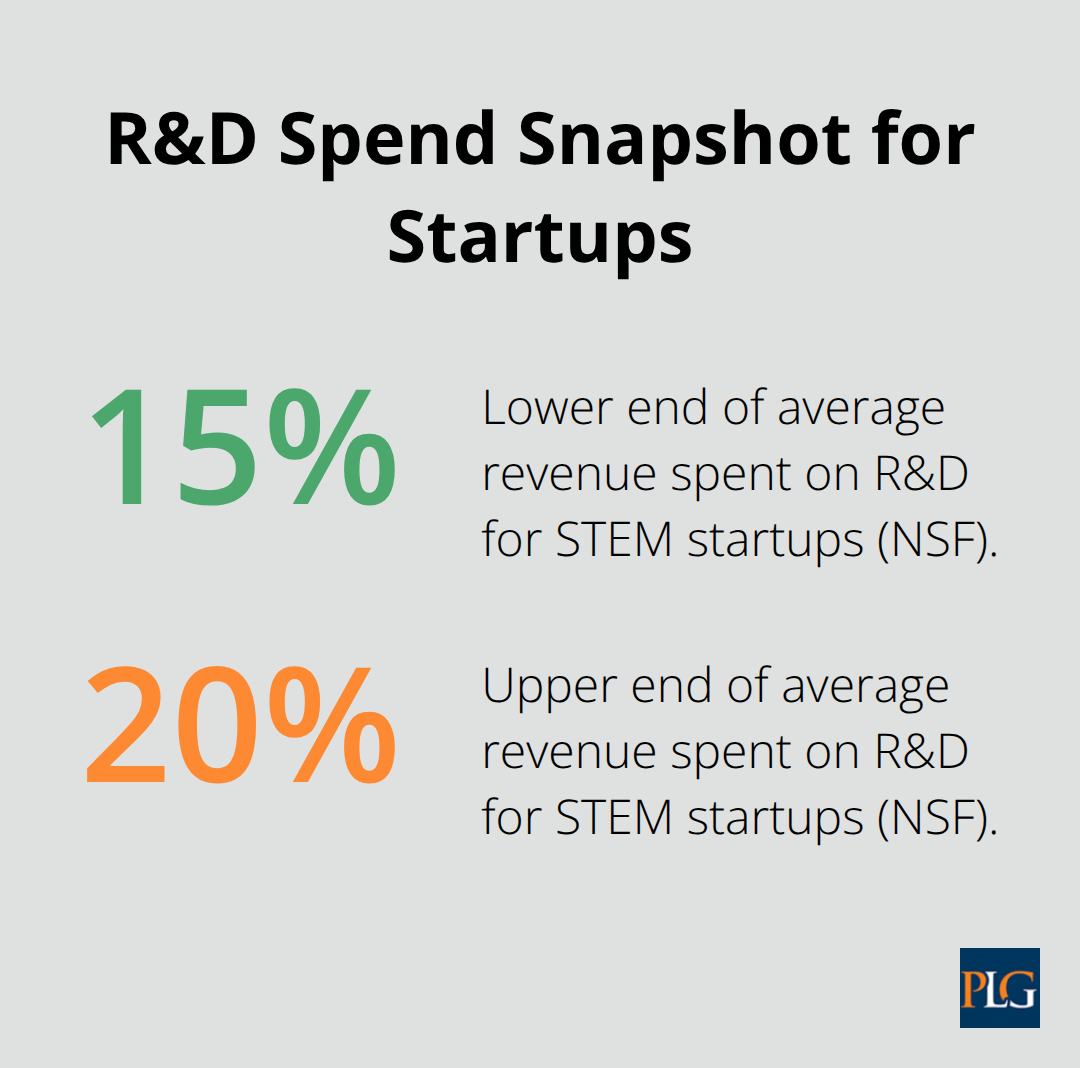
Most startups leave money on the table because they don’t know which tax credits and deductions actually apply to them. The IRS allows startups to claim the Research and Development Tax Credit if you develop new products, processes, or software-and this isn’t limited to tech companies. Manufacturing, biotech, and even some service businesses qualify. The credit ranges from 10% to 30% of qualified research expenses, and the National Science Foundation estimates that startups in STEM fields spend an average of 15% to 20% of revenue on R&D activities. If you’re one of them, you’re looking at real money.
You must document every hour your team spends on development, testing, and failed experiments-the IRS looks for evidence that you tried multiple approaches to solve a technical problem. Many startups miss this credit entirely because they think it only applies to companies with dedicated R&D departments, but that’s wrong. If you iterate on your product and solve technical challenges, you qualify. The key is tracking time and expenses separately so you can substantiate the claim if audited.
Qualified Small Business Stock Exemptions and Long-Term Planning
Qualified Small Business Stock exemptions deserve attention if you raise capital or plan an exit. When you sell shares in a C-Corporation that meets specific requirements, you can exclude up to 10 times your basis (or $10 million in gains) from federal taxes-this is a permanent exclusion, not a deferral. The requirements are strict: the company must have gross assets under $50 million when you acquire the stock, and you must hold it for at least five years.
Most founders don’t realize this applies to them until after they’ve sold, which means they’ve already missed the planning window. You should track your stock basis and acquisition date carefully from day one. This single decision can save you hundreds of thousands in taxes on a successful exit, but only if you plan for it upfront.
Home Office and Equipment Deductions That Add Up
Home office deductions and equipment purchases are straightforward but often overlooked. The IRS allows you to deduct either the simplified method at $5 per square foot (up to 300 square feet) or actual expenses like rent, utilities, and internet proportional to your office space. Equipment purchases under $2,500 can be expensed immediately under Section 179, while larger purchases get depreciated over time.
If you buy computers, furniture, or software as a startup, you should expense what you can in the year of purchase rather than depreciate it-the timing of deductions matters when your business is in early-stage losses. This approach accelerates your tax benefits when you need them most.
With the major credits and deductions identified, the real challenge emerges: most startups claim these benefits incorrectly or miss them entirely because they don’t track the right information. The next section covers the mistakes that cost startups the most money and how to avoid them.
Common Tax Mistakes Startups Make and How to Avoid Them
Misclassifying Workers Costs You Thousands
The IRS takes worker classification seriously because it directly affects payroll tax collection. If you classify an employee as an independent contractor to save money, the IRS will reclassify them if audited, and you’ll owe back payroll taxes, penalties, and interest on the full amount. The penalty for misclassification ranges from 20% to 40% of unpaid employment taxes, according to the Department of Labor. A startup with five employees misclassified could face penalties exceeding $50,000 for a single audit year.
The IRS uses a control test to determine worker status: if you dictate how work gets done, provide tools and training, and set schedules, that person is an employee. Contractors work independently, set their own hours, and serve multiple clients. Most startups get this wrong because they want flexibility and lower costs, but the math doesn’t work when penalties hit.
Document your contractor relationships clearly from the start. Have them sign agreements stating they’re independent, they invoice you, and they work for other clients. This creates the paper trail you need if audited.
Quarterly Estimated Tax Payments Prevent Penalties
Startups often reinvest profits and assume they owe nothing until filing their annual return, but the IRS requires quarterly estimated payments if you expect to owe $1,000 or more. Miss these payments and you’ll face underpayment penalties that compound quarterly-the rate for 2026 is 8% annually. A startup that owes $40,000 in annual taxes but pays nothing quarterly could face $3,200 in penalties alone.
Calculate your estimated taxes quarterly based on actual profits, not guesses, and pay on April 15, June 15, September 15, and January 15. Use IRS Form 1040-ES to determine what you owe. This simple discipline eliminates surprise tax bills and keeps the IRS from adding penalties on top of what you already owe.
Organized Records Protect You During Audits
Expense documentation separates founders who survive audits from those who don’t. The IRS requires you to prove business purpose for every deduction you claim. Track mileage, meals with clients, equipment purchases, and software subscriptions as you spend the money, not months later when memory fades.
Keep receipts, invoices, and a simple log connecting expenses to business activities. Software like QuickBooks or Expensify automates this, costing $15 to $40 monthly but saving you hundreds in audit defense costs. A founder who produces organized records for an audit typically pays nothing additional; one without documentation loses deductions and faces penalties even when the expenses were legitimate.
Final Thoughts
Startup tax planning isn’t something you handle after your business runs-you build it before you incorporate. The three decisions that matter most are your entity structure, which tax credits and deductions you claim, and whether you track expenses and worker classifications correctly from day one. Get these right and you’ll save thousands annually while positioning yourself for investor interest and a successful exit.
Most founders delay tax decisions because they focus on product and revenue, but that approach costs money. A C-Corp structure takes one hour to decide yet affects your entire financial future, R&D tax credits require documentation from the moment you start development, and quarterly estimated payments prevent penalties that compound every three months. These aren’t complex tasks-they’re habits you establish early (and they pay for themselves many times over).
The right time to bring in professional guidance is now, before you make structural decisions or accumulate years of messy records. Primum Law Group works with early-stage companies to structure their businesses correctly, identify available tax benefits, and build compliance systems that scale with growth. Your startup’s tax foundation determines not just your immediate tax bill, but your ability to raise capital and your options when it’s time to exit.