

Startup NDA agreements are your first line of defense when sharing ideas with investors, partners, or potential hires. Early-stage conversations often involve revealing sensitive information, and without proper protection, your innovations could end up in the wrong hands.
At Primum Law Group, we’ve seen too many founders skip this step or use inadequate agreements. The cost of that mistake can be devastating.
What an NDA Actually Guards
An NDA protects three distinct categories of information, and understanding the difference matters because it shapes how you draft the agreement and what you can realistically enforce. Trade secrets like your algorithm, manufacturing process, or customer acquisition method sit at the highest protection level because courts recognize them as having independent economic value. Business information-your pitch deck details, market research findings, or vendor relationships-ranks below trade secrets legally but remains commercially sensitive. Financial data including revenue projections, unit economics, or funding runway deserves specific mention because investors will scrutinize these numbers during due diligence, and you need clear boundaries around their use.
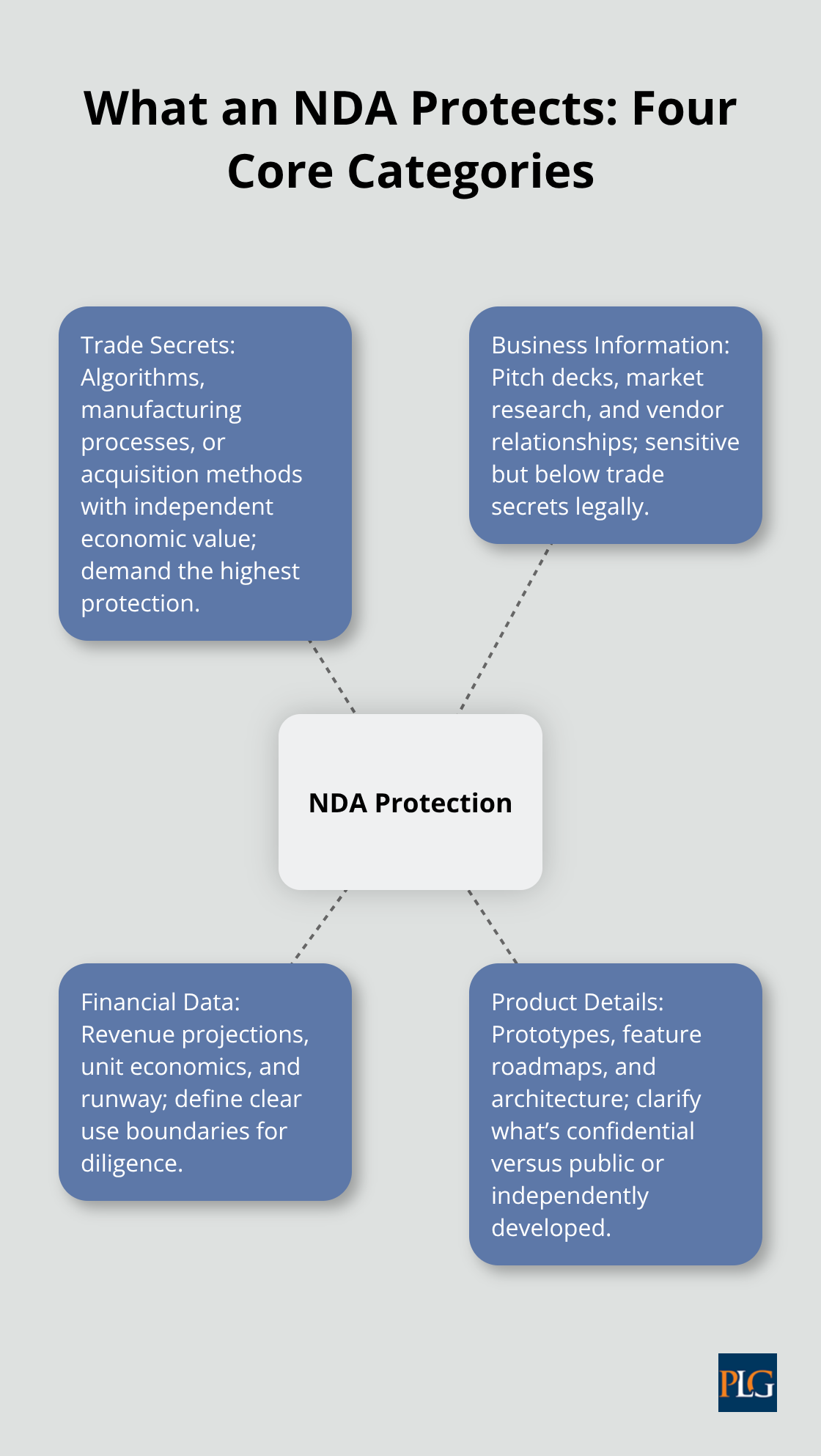
Product details, whether a prototype, feature roadmap, or technical architecture, fall into this category and require explicit definition so both parties understand what counts as confidential versus what’s already public knowledge or independently developed.
Defining what actually needs protection
The biggest mistake startups make is treating all information as equally confidential. You might disclose your go-to-market strategy to a potential hire but want to keep your financial projections restricted to investors alone. An effective NDA lets you segment information by sensitivity level. For instance, California law recognizes trade secrets under the Uniform Trade Secrets Act only if you take reasonable steps to maintain their secrecy, which means vague language in your NDA won’t cut it. Instead, specify exactly which documents, conversations, or data sets qualify as confidential. A venture capital firm like Sequoia or Andreessen Horowitz will push back on overly broad confidentiality terms because they want flexibility to discuss your opportunity internally and with their portfolio companies. This tension is real: you need protection, but overreach kills deal momentum.
Precision beats breadth
The solution is precision. You should define confidential information by category, include clear exclusions for publicly available information, and set reasonable access limits tied to business need. Overly broad language creates friction with investors and partners who fear they cannot operate freely. When you narrow your scope to what truly matters-your proprietary technology, customer lists, or financial metrics-you make the agreement enforceable and palatable to the other side. Your NDA must address how confidential information flows between parties and include survival periods that extend beyond the agreement term, ensuring protection remains intact even after discussions end. Courts in California scrutinize NDAs that cast too wide a net, so tight definitions protect you legally while also keeping conversations moving forward. The next section covers the common mistakes that undermine even well-intentioned NDAs and how to avoid them.
Where Startups Go Wrong With NDAs
Most founders grab a template from the internet, change the company name, and call it done. This approach fails spectacularly because off-the-shelf NDAs don’t account for your specific situation, your state’s legal requirements, or the particular information you’re protecting. A generic template might include overly broad language that investors will reject outright, or it might miss critical gaps that leave your actual trade secrets unprotected. ContractsCounsel data shows California NDA drafting projects receive multiple proposals ranging from roughly $250 to $499, which suggests many startups attempt cheap fixes rather than investing in proper protection. The real cost emerges later when you discover your agreement is either unenforceable or so restrictive that no serious investor will sign it. California courts scrutinize NDAs carefully under the Uniform Trade Secrets Act, meaning vague language won’t hold up if you need to enforce it. Your NDA must align with California law specifically, not some generic national standard, and it must reflect what you actually want to protect versus what you’re willing to discuss openly.
Confidentiality scope creep kills momentum
Startups often fail to define what information is confidential, instead treating every conversation as equally sensitive. This creates chaos: your potential hire thinks they can discuss your product roadmap with their spouse, your investor assumes they can share your financial projections with their portfolio companies, and your vendor believes they can use your customer list as a reference. Without explicit definitions tied to business need, these assumptions clash with your expectations and trigger disputes. The solution isn’t longer agreements but sharper ones. Specify which documents, data sets, and conversations count as confidential, identify who can access that information, and list clear exclusions for publicly available material or information independently developed. When both parties understand exactly what’s protected and why, enforcement becomes straightforward and disputes become rare.
Time limits matter more than you think
Startups frequently omit confidentiality duration or set indefinite terms that create unnecessary friction. An indefinite confidentiality obligation feels safer but actually backfires: investors worry they’ll be bound forever, partners hesitate to sign, and you lose negotiating leverage. Standard practice runs one to three years depending on the sensitivity of the information. Trade secrets like proprietary algorithms warrant longer protection, often three years or more, while market research or pitch deck details typically need only one year since their competitive advantage fades quickly. Set survival periods that extend beyond your agreement term so confidentiality obligations persist even after discussions end, but make these periods realistic and tied to actual business cycles. Unreasonable time limits make your agreement look amateur and invite rejection or renegotiation that costs you time and momentum.
Why precision over breadth wins every time
Overly broad language creates friction with investors and partners who fear they cannot operate freely. When you narrow your scope to what truly matters-your proprietary technology, customer lists, or financial metrics-you make the agreement enforceable and palatable to the other side. Your NDA must address how confidential information flows between parties and include survival periods that extend beyond the agreement term, ensuring protection remains intact even after discussions end. Courts in California scrutinize NDAs that cast too wide a net, so tight definitions protect you legally while also keeping conversations moving forward. The next section covers how to identify which stakeholders need access to your sensitive information and which details warrant the strongest protection.
Making NDAs Work in Real Negotiations
Effective NDA enforcement starts before you send the agreement. Map which stakeholders actually need access to your sensitive information and which details require the strongest protection. Most startups hand their entire pitch deck to every potential partner, then wonder why their market strategy leaked. Instead, segment your information by recipient and sensitivity. Investors reviewing your financial metrics don’t need your technical architecture. Potential hires don’t need your cap table or revenue figures.
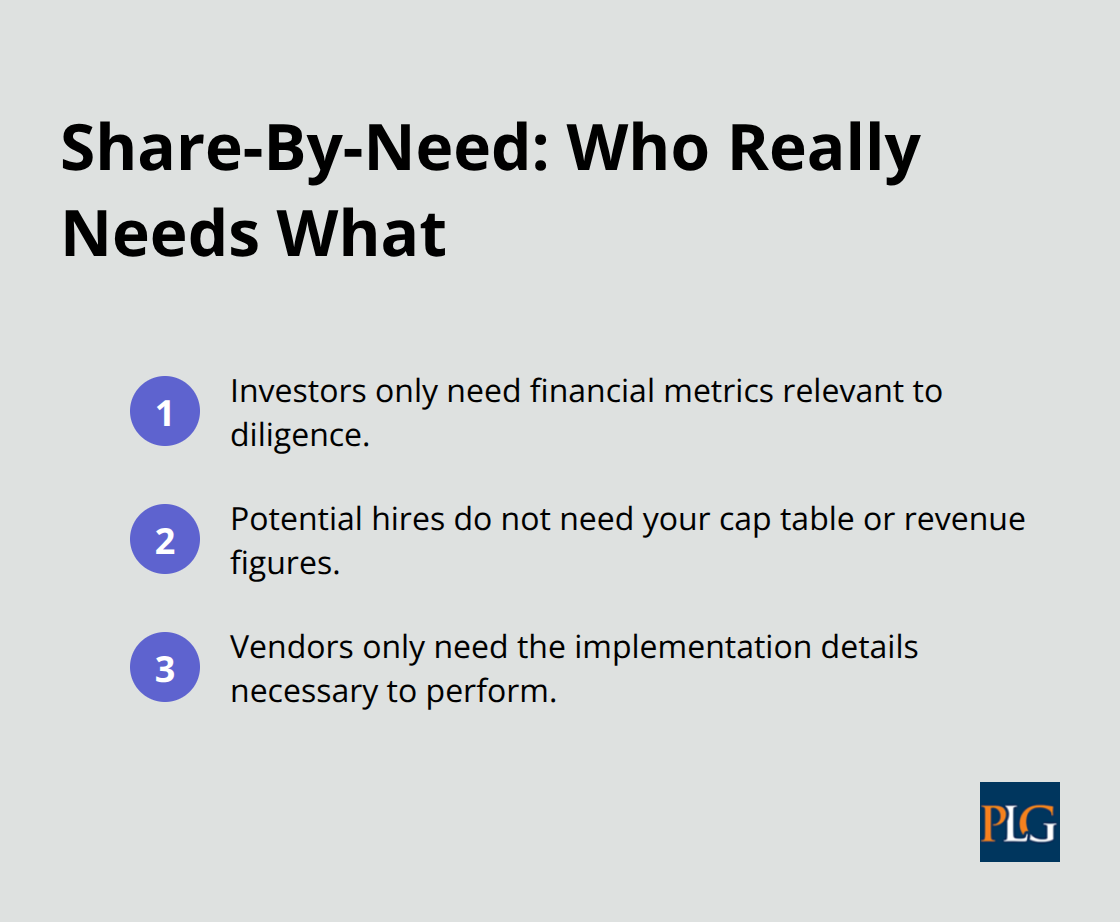
Vendors implementing your solution don’t need your customer list. This segmentation prevents unnecessary exposure and makes your NDA easier to enforce because you protect what actually matters to each conversation.
Control Access Through Documentation
California courts under the Uniform Trade Secrets Act recognize that reasonable protection measures are mandatory, which means you must demonstrate that you controlled access to the information. Document who received what, when they received it, and under what conditions. If you cannot prove you took precautions to limit access, courts will reject your trade secret claims even if you have a signed NDA. Create a disclosure matrix that lists each stakeholder type, the specific information they need, and the confidentiality obligations attached to that disclosure. This approach also prevents the common mistake of sending sensitive documents via email without explicit confidentiality notices or requiring signed NDAs before sharing anything substantive.
Build Reasonable Exceptions Into Your Agreement
Investors will reject agreements that claim their employees cannot discuss your opportunity internally or with portfolio companies, so carve out reasonable exceptions for necessary business operations. Specify that recipients can disclose confidential information to their employees, advisors, and contractors on a need-to-know basis, provided those individuals are also bound by confidentiality. This flexibility makes your NDA palatable while maintaining protection. Set clear time limits tied to the actual business cycle of your information, not indefinite terms that create permanent friction. Trade secrets warrant three to five year confidentiality periods because their competitive value persists longer, while market research or pitch deck details need only one year.
Include Survival Clauses and Enforcement Language
Include explicit survival clauses stating that confidentiality obligations continue for the specified duration even after discussions end, conversations terminate, or deals fall through. This prevents recipients from claiming that ending talks releases them from their obligations. For enforcement mechanisms, focus on practical monitoring rather than legal threats that you cannot realistically execute.
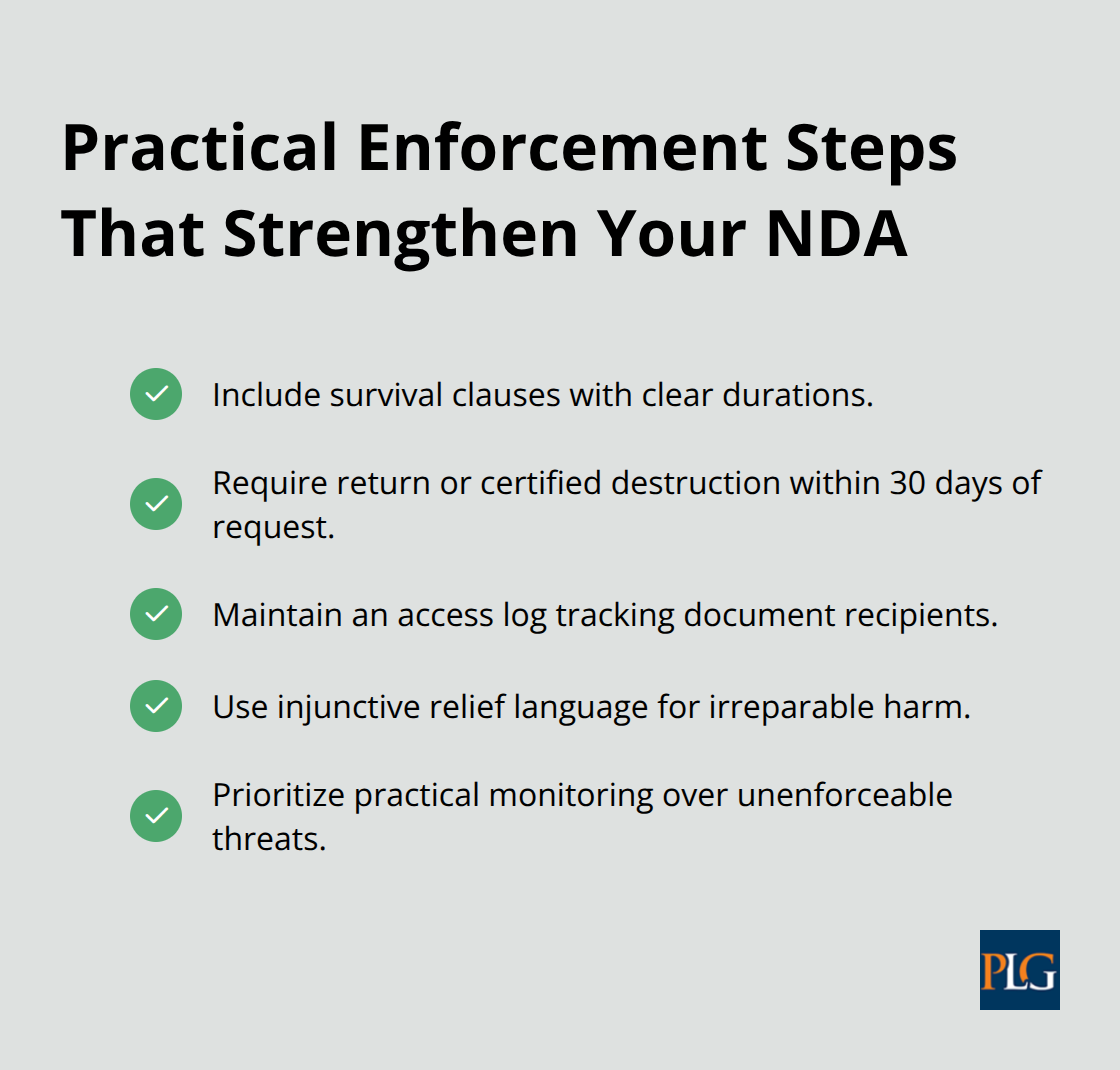
Require confidential materials to be returned or certified destroyed within thirty days of request, and maintain a log of who accessed which documents. Include injunctive relief language stating that breach causes irreparable harm and that you’re entitled to seek court orders preventing further disclosure, since monetary damages alone rarely compensate for leaked trade secrets.
Structure a Graduated Response Protocol
Avoid language threatening criminal prosecution or excessive penalties, which California courts scrutinize heavily and may render unenforceable. The most effective NDAs include a graduated response protocol: first, a written notice giving the recipient a reasonable cure period to stop the breach; second, a cease-and-desist if the breach continues; and third, litigation if necessary. This approach demonstrates good faith to courts and often resolves breaches without expensive litigation. A well-structured protocol shows that you took reasonable steps to protect your information while remaining fair to the other party, which strengthens your position if enforcement becomes necessary.
Final Thoughts
Startup NDA agreements form the backbone of confidential discussions with investors, partners, and potential hires. Without them, your competitive advantages evaporate the moment sensitive information leaves your control. The stakes are real: a leaked algorithm, exposed financial metrics, or disclosed customer list can undermine your fundraising efforts or hand your market strategy to competitors.
The path forward requires three concrete actions. First, stop using generic templates and instead tailor your NDA to the specific information you’re protecting and the California legal environment where your startup operates. Define what counts as confidential with surgical precision, set reasonable time limits tied to actual business cycles, and include survival clauses that extend protection beyond discussions. Second, segment your disclosures by recipient and sensitivity level (your investor doesn’t need your technical architecture, and your vendor doesn’t need your cap table). Third, build graduated response protocols into your agreements rather than threatening litigation immediately. A written notice, cure period, and cease-and-desist often resolve breaches without expensive court battles.
California courts scrutinize NDAs carefully, and vague language won’t hold up when you need enforcement. Overly broad agreements kill deal momentum with serious investors who reject terms that restrict their internal operations. If you’re navigating startup NDA agreements for the first time or renegotiating terms with investors, Primum Law Group provides startup counseling tailored to your specific situation and California’s legal requirements.