

Most startups in San Francisco lose valuable intellectual property not because they lack innovation, but because they fail to document and protect what they’ve built.
Unclear contracts, missing founder agreements, and improper IP assignments create legal gaps that competitors and investors will exploit. We at Primum Law Group have seen countless founders discover these problems too late, when their core assets are already at risk.
This guide walks you through the startup IP and contracts framework you need to secure your competitive advantage from day one.
How San Francisco Startups Lose Control of Their IP
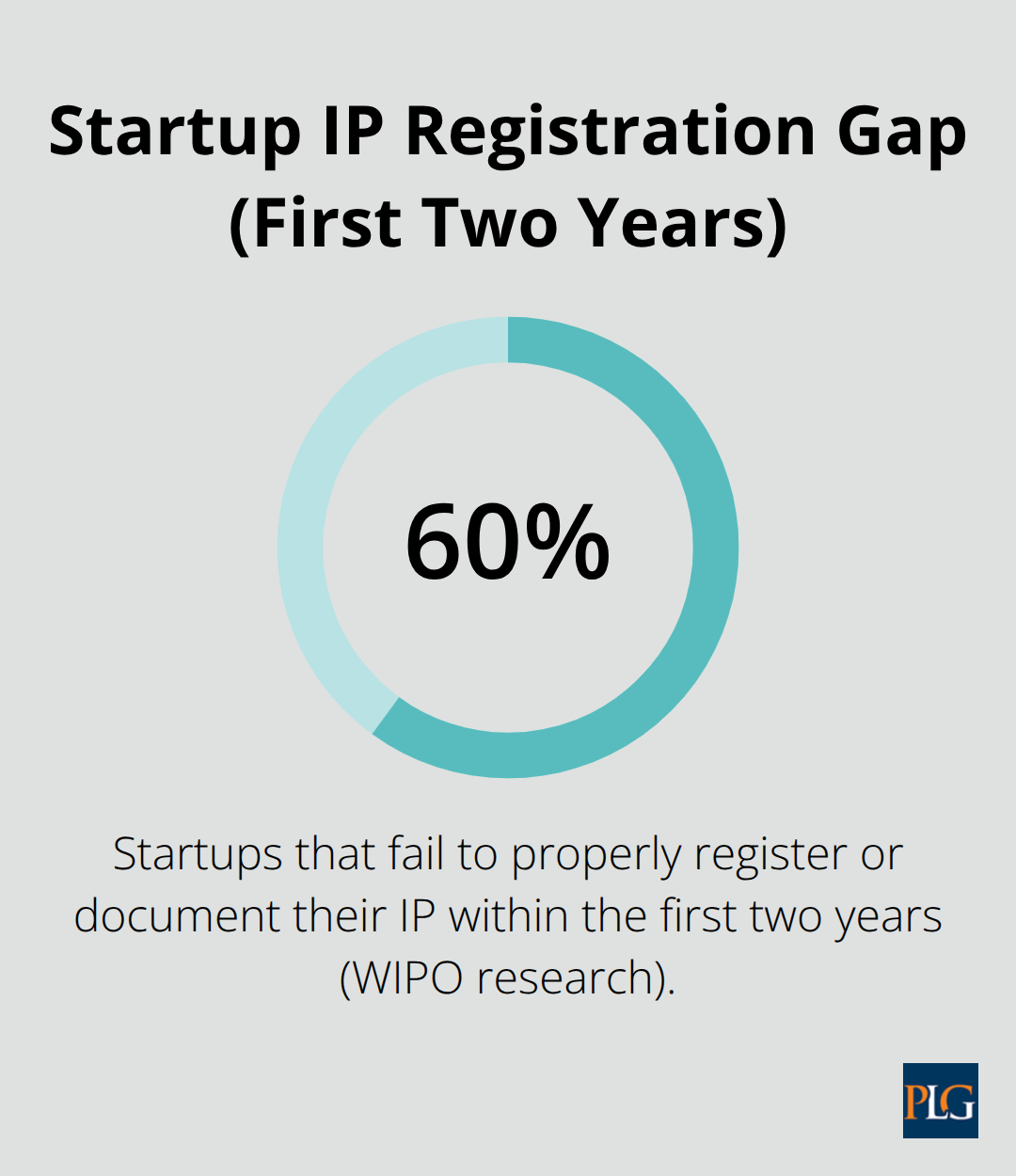
San Francisco startups routinely hand over ownership of their most valuable assets without realizing it. The problem isn’t malice-it’s carelessness. Founders skip the paperwork, employees work on projects without signed agreements, and nobody documents who actually owns what. According to research from the World Intellectual Property Organization, over 60% of startups fail to properly register or document their IP within the first two years. That gap between creation and documentation becomes a legal minefield. When you can’t prove you own your code, your designs, or your trade secrets, investors won’t touch your company.
Acquirers will walk away. And competitors will copy your work without consequence. The damage isn’t theoretical-it costs real money. A startup that loses IP rights often faces a 30-40% valuation reduction during fundraising, according to venture capital firms tracking deal-breakers.
Missing Documentation Destroys Your Ownership Claims
Most San Francisco startups operate without a clear paper trail showing who created what and when. A developer codes a feature on a Friday night. A designer mocks up a logo between meetings. A founder sketches an algorithm on a napkin. None of it gets documented. Months later, when you need to prove ownership-whether for a patent filing, investor due diligence, or a legal dispute-you have nothing. Courts won’t accept your word. They want contemporaneous records: git commits with dates, design files with metadata, lab notebooks, emails confirming assignments. Without these, you lose the ability to claim ownership even if you funded the work and paid the person who created it.
Start maintaining an invention log today. Record what was created, who created it, when it happened, and what resources your company provided. This single document transforms vague claims into legal facts. The difference between having documentation and not having it determines whether your IP remains defensible.
Founder and Employee Agreements Require Written Terms
Many San Francisco startups operate without written founder agreements, assuming handshake deals are sufficient. They’re not. When disputes arise-and they always do-you’ll discover that one co-founder thinks they own 40% while another claims 50%. Without a written agreement spelling out vesting schedules, IP ownership, and buyout terms, you face catastrophic conflicts. If a founder leaves and you haven’t assigned their IP in writing, they may retain rights to work they created while employed.
Your employee agreements must explicitly state that any IP created during employment belongs to the company. The assignment must cover not just inventions related to company business, but also work created using company resources or on company time (including side projects). Without this language, employees can claim ownership of their code or argue that their work is personal property. This gap between what you think you own and what you actually own creates the exact vulnerability that investors scrutinize during due diligence.
How to Audit and Protect Your IP Right Now
Catalog Your Assets and Identify Ownership Gaps
Most San Francisco startups skip the IP audit entirely, assuming they’ll handle it when they raise funding. That’s a mistake that costs them millions. An IP audit forces you to identify exactly what you own, what you don’t own, and where your legal exposure lies. Start by cataloging every asset your company has created: source code, designs, databases, documentation, brand materials, processes, and algorithms.
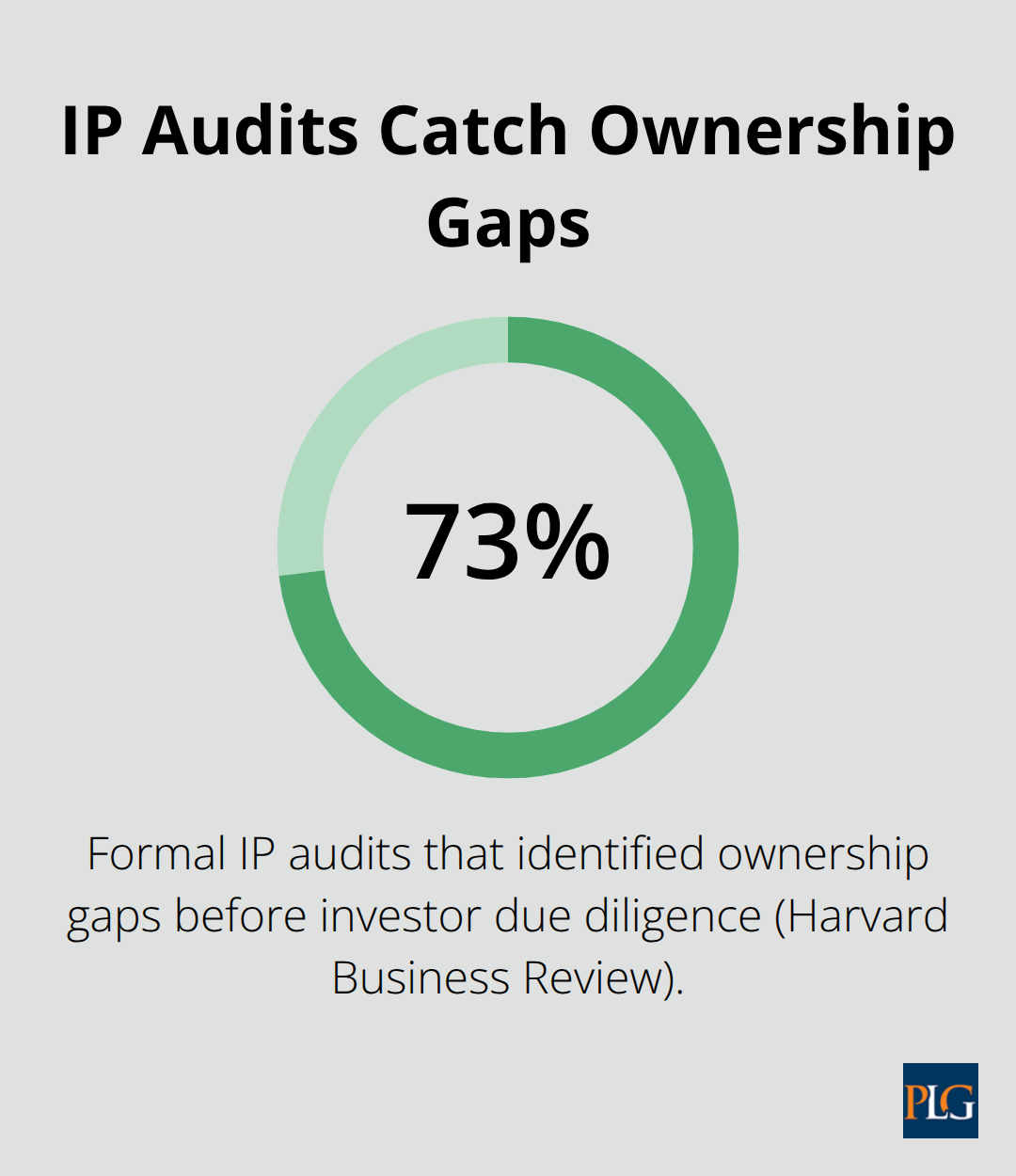
For each item, answer three questions: Do you have contemporaneous records proving creation? Do you have signed agreements assigning ownership to the company? Can you trace the chain of ownership from creation to today? If you answer no to any of these, you have a problem. The Harvard Business Review found that startups conducting formal IP audits caught ownership gaps in 73% of cases before investor due diligence exposed them.
Those gaps typically involve code written before formal employment agreements existed, contractor work without assignment clauses, or co-founder contributions lacking documentation. The cost of fixing these issues during due diligence runs three to five times higher than fixing them proactively.
Craft Specific Assignment Agreements for Your Business Type
Your invention assignment agreements must go beyond standard boilerplate language. Many San Francisco startups copy templates from the internet that fail to cover the specific types of IP their business generates. A software company needs language addressing code repositories, algorithms, and technical documentation. A hardware startup needs clauses covering design files, prototypes, and manufacturing specifications. A SaaS company needs provisions for customer-facing features and backend infrastructure.
Each agreement should explicitly assign all IP created during employment, whether or not it relates to company business, as long as you create it using company resources or time. Include language covering moral rights, waiving any claims to attribution or integrity. Require employees to disclose any prior IP they bring into the company. Set clear expectations about what happens to side projects: either they become automatic company property, or they require written pre-approval. Without this specificity, you’ll face disputes later.
Protect Trade Secrets and Restrict Post-Employment Competition
Confidentiality and non-compete clauses protect different interests and require different approaches. Confidentiality agreements define what information qualifies as a trade secret and restrict how employees can use or share that information. They survive employment indefinitely, protecting your proprietary information long after someone leaves.
Non-compete clauses prevent former employees from working for competitors or starting competing businesses for a defined period. Courts in California are extremely hostile to non-competes, making them largely unenforceable. Instead of relying on non-competes, focus on robust confidentiality provisions and non-solicitation clauses that prevent former employees from recruiting your team or contacting your customers. These survive legal challenge in California far more reliably.
Define your trade secrets concretely: customer lists, pricing models, technical specifications, business strategies, financial information. Generic language claiming everything is confidential gets struck down in court. Specific, detailed definitions survive scrutiny. Require employees to return or destroy all company information upon termination and have them sign acknowledgments confirming this. This documentation matters when you later pursue a breach claim.
The difference between startups that implement these protections from day one and those that scramble to fix them later becomes painfully obvious during investor due diligence. The ones that get it right from the start avoid the emergency legal fees, the valuation haircuts, and the deal-killing compliance failures that plague unprepared companies.
Critical Contracts That Determine Your San Francisco Startup’s Legal Foundation
Your Founder Agreement Sets the Terms for Everything
Your founder agreement is the single most important contract your San Francisco startup will ever sign, yet most founders treat it as an afterthought. This document dictates vesting schedules, equity splits, IP ownership, dissolution terms, and dispute resolution. Without it, you face catastrophic problems when co-founders disagree on direction, one founder wants to leave, or investor due diligence begins.
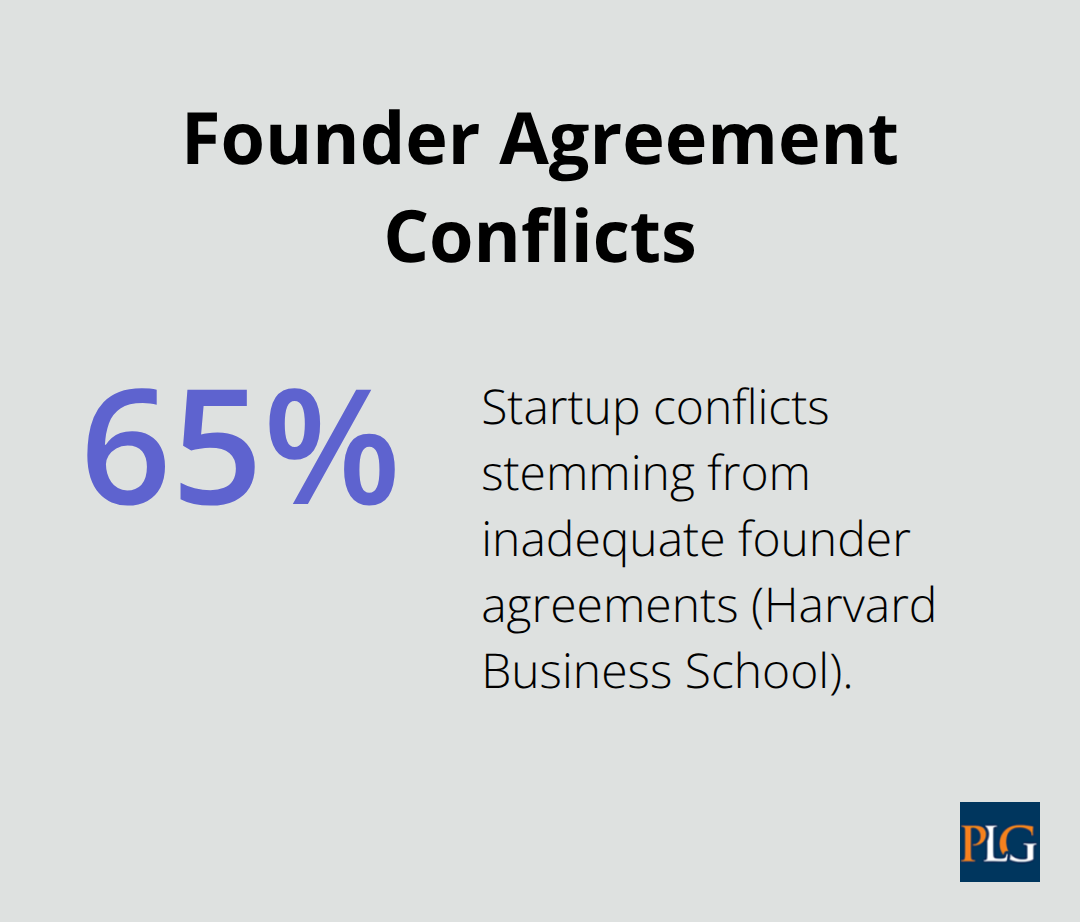
A study by Harvard Business School found that 65% of startup conflicts stem from inadequate founder agreements, and these disputes cost an average of $250,000 in legal fees to resolve. Your cap table must reflect the actual equity ownership and vesting terms spelled out in your founder agreement, and you should reconcile it quarterly.
If your cap table contradicts your founder agreement, investors will halt due diligence immediately.
Vendor Contracts Determine Who Actually Owns Your Work Product
Vendors and service providers create hidden IP risks that most San Francisco startups ignore entirely. When you hire a contractor to build your website, design your logo, or develop custom software, you must have a written agreement that explicitly assigns all work product to your company. Without this language, the contractor retains ownership of their work.
The U.S. Copyright Office confirms that contractors own their work by default unless a written contract transfers ownership to you. Many startups discover this problem too late, after a contractor leaves and refuses to transfer code or design files. Your vendor contracts must also include indemnification clauses protecting you if the vendor’s work infringes on third-party IP rights, and confidentiality provisions preventing vendors from disclosing your proprietary information to competitors.
Customer Agreements Define What Rights Your Clients Actually Have
Customer agreements and licensing terms require equal attention because they define what rights customers actually have to your product and what happens if they misuse it. Your terms of service must clarify that customers receive a limited license to use your software, not ownership of it. Without this distinction, customers may argue they own copies of your code or data they generated using your platform.
Include clear restrictions on reverse engineering, competitive use, and resale. Your service level agreements should specify uptime guarantees, support response times, and liability caps. These are operational documents that prevent disputes when service failures occur. Your licensing agreements must also address data ownership, specifying that customer data belongs to the customer but your algorithms, analytics, and aggregated insights remain your property.
Investor Due Diligence Focuses Heavily on Your Customer Contracts
Most San Francisco startups underestimate how much customer contracts matter during investor due diligence. Investors examine your customer agreements to confirm you’ve protected your IP, limited your liability exposure, and established sustainable unit economics. Weak customer terms signal operational immaturity and create valuation risk.
Final Thoughts
The most common IP mistake San Francisco startups make is treating legal protection as something to handle later. Founders focus on product and fundraising, assuming they will sort out ownership and contracts when investors ask for due diligence. Missing documentation, unsigned agreements, and unclear IP assignments create valuation reductions of 30-40% during funding rounds, and the cost of fixing these problems after the fact runs three to five times higher than preventing them upfront.
We at Primum Law Group work with San Francisco startups to build startup IP and contracts frameworks that protect your core assets from day one. Our approach starts with a comprehensive IP audit that identifies ownership gaps before investors find them, then we draft founder agreements that prevent co-founder disputes, create invention assignment agreements tailored to your business type, and establish vendor and customer contracts that keep your IP secure. We handle outsourced general counsel, startup counseling, and business transactions that keep your legal foundation solid as you scale.
Your next step is straightforward: conduct an IP audit of your current assets and identify where your documentation gaps exist, review your founder agreement and cap table to confirm they align, and audit your employee and contractor agreements to verify they include explicit IP assignments. If you find gaps, address them now rather than during investor due diligence. Contact Primum Law Group to discuss how we can help you build the legal infrastructure your startup needs to protect what you’ve built and maximize your valuation when you raise capital.