

Silicon Valley’s regulatory environment moves faster than most legal frameworks can handle. Tech companies operating here face a unique mix of incentives designed to fuel innovation alongside strict compliance requirements that can derail growth if mishandled.
At Primum Law Group, we’ve seen firsthand how the right legal strategy separates thriving startups from those caught in regulatory traps. This guide walks you through the tax benefits, IP protections, and compliance challenges that define Silicon Valley corporate law today.
How Silicon Valley’s Tax and IP Framework Accelerates Growth
Federal and State R&D Tax Credits
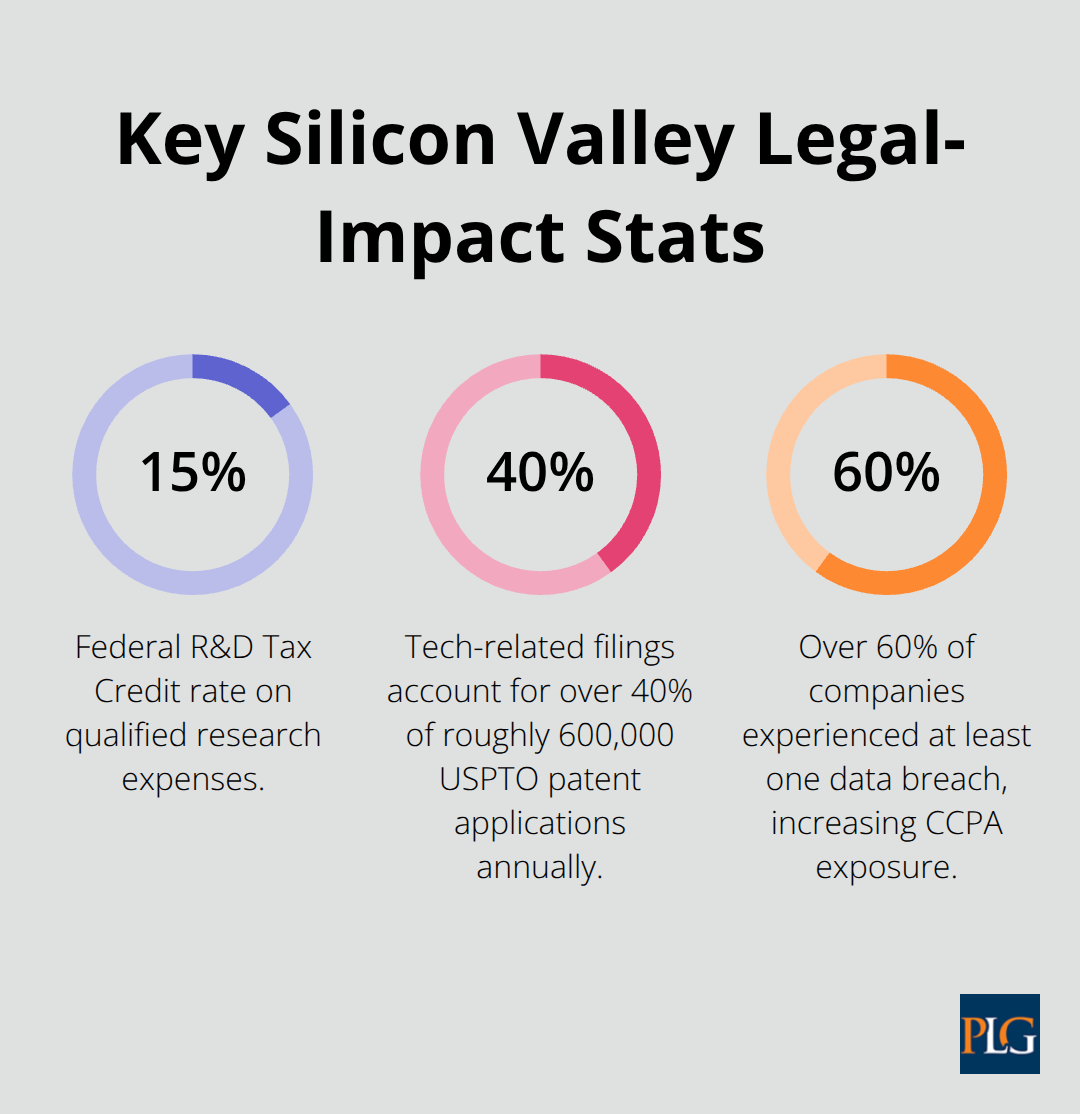
Silicon Valley’s tax structure creates tangible financial advantages that directly reduce the cost of innovation. The federal Research and Development Tax Credit allows companies to claim 15% of eligible spending on qualified research activities, which includes software development, hardware prototyping, and algorithm design. For a mid-stage startup spending $500,000 annually on R&D, this translates to $75,000 in annual tax relief. California adds its own R&D credit at a lower rate, though it applies to a broader definition of qualifying activities.
The critical move involves documenting every development expense meticulously-code commits, testing iterations, failed prototypes-because the IRS scrutinizes these claims heavily. Most startups leave money on the table simply because they fail to track expenses in ways that satisfy federal standards.
Equity Structuring and Capital Gains Treatment
Section 1202 gains treatment offers significant advantages: founders who hold qualified small business stock for more than five years can exclude up to $10 million in capital gains from federal taxation. A founder with a $50 million exit who structured their equity correctly saves approximately $10 million in federal taxes on that transaction.
Stock option grants to employees also benefit from favorable tax treatment under Section 83(b), allowing employees to defer taxation until the equity vests rather than paying taxes on the grant date. This structure attracts talent while preserving cash flow during early growth phases.
Building a Coordinated IP Portfolio
Intellectual property protection in Silicon Valley goes beyond filing patents. The US Patent and Trademark Office processes roughly 600,000 patent applications annually, with tech-related filings representing over 40% of that volume. Software patents face heightened scrutiny post-Alice Corp v. CLS Bank, making the difference between a defensible patent and a rejected application often a matter of precise claim drafting.
Trade secrets offer faster protection than patents and require no government filing-they simply demand reasonable security measures. A technology company’s source code, algorithms, and customer lists qualify as trade secrets if the company implements access controls, encryption, and employee confidentiality agreements. Non-compete agreements in California are largely unenforceable, but non-solicitation and non-disclosure agreements remain powerful tools for protecting competitive advantage.
Trademark registration through the federal system provides nationwide protection and creates a foundation for brand enforcement. The real advantage comes from building an IP portfolio that coordinates patents, trademarks, and trade secrets around core business assets rather than pursuing protection piecemeal.
Regulatory Sandboxes and Supervised Testing
Regulatory sandboxes represent the newest frontier for product launches in regulated sectors. The EU established its first sandbox framework for distributed ledger technology trading platforms, and several US states now operate similar programs for fintech and autonomous vehicles. California’s Department of Motor Vehicles oversees a testing program for autonomous vehicles that allows companies to deploy test fleets without the full compliance burden of production vehicles.
A company participating in this program gathers real-world data, refines safety systems, and demonstrates viability to future regulators-all while operating under supervised conditions rather than facing immediate enforcement risk. The sandbox model shifts regulation from a binary approve-or-block approach to an iterative testing framework. This matters because traditional regulatory approval takes years, while a sandbox pilot typically runs 12 to 24 months.
Companies operating in emerging fields like decentralized finance, digital health, or advanced manufacturing benefit from proposing sandbox participation to regulators rather than waiting for formal rules to crystallize. Understanding how to structure these proposals and navigate sandbox requirements demands legal counsel familiar with both the technology and the regulatory landscape-something that becomes increasingly important as you face employment classification disputes and data privacy obligations that can threaten your operational foundation.
Key Legal Challenges Tech Companies Face in Silicon Valley
Employment Misclassification: The Most Expensive Mistake
Employment misclassification stands as the most expensive mistake Silicon Valley startups make, yet it remains shockingly common. California’s ABC test, established through the 2019 Dynamex Operations West Inc. v. Superior Court decision and codified in Assembly Bill 5, presumes that workers are employees unless a company proves three conditions: the worker operates independently, performs work outside the company’s usual business, and maintains an independent business. A startup classifying a software engineer as a contractor when they work full-time on core product development fails this test immediately.
The California Department of Industrial Relations has recovered millions in back wages, payroll taxes, and penalties from tech companies that misclassified workers, with some settlements exceeding $5 million. The financial exposure extends beyond penalties-employers owe overtime, benefits, and workers’ compensation retroactively. Gig economy companies operating in California learned this the hard way; Uber and Lyft spent hundreds of millions fighting and ultimately accepting employment classifications for their drivers.
The practical solution involves documenting actual work arrangements: if someone works 40 hours weekly on your primary product, they’re an employee, period. This principle applies across all tech roles. Misclassification exposes your company to enforcement action that can cripple cash flow and distract leadership from growth.
Data Privacy Compliance Under the CCPA
The California Consumer Privacy Act creates a different category of risk. The CCPA grants consumers rights to access personal data, request deletion, and opt out of sales, with enforcement penalties reaching $7,500 per violation or $2,500 per unintentional violation. The law applies to any company collecting California residents’ data-which means nearly every tech company.
A 2023 report from the International Association of Privacy Professionals showed that over 60% of companies experienced at least one data breach, and those handling California resident data face CCPA liability regardless of where the company operates. The compliance framework demands specific technical controls: encryption for data in transit and at rest, access logs showing who accessed what information, and documented procedures for responding to consumer requests within 45 days.
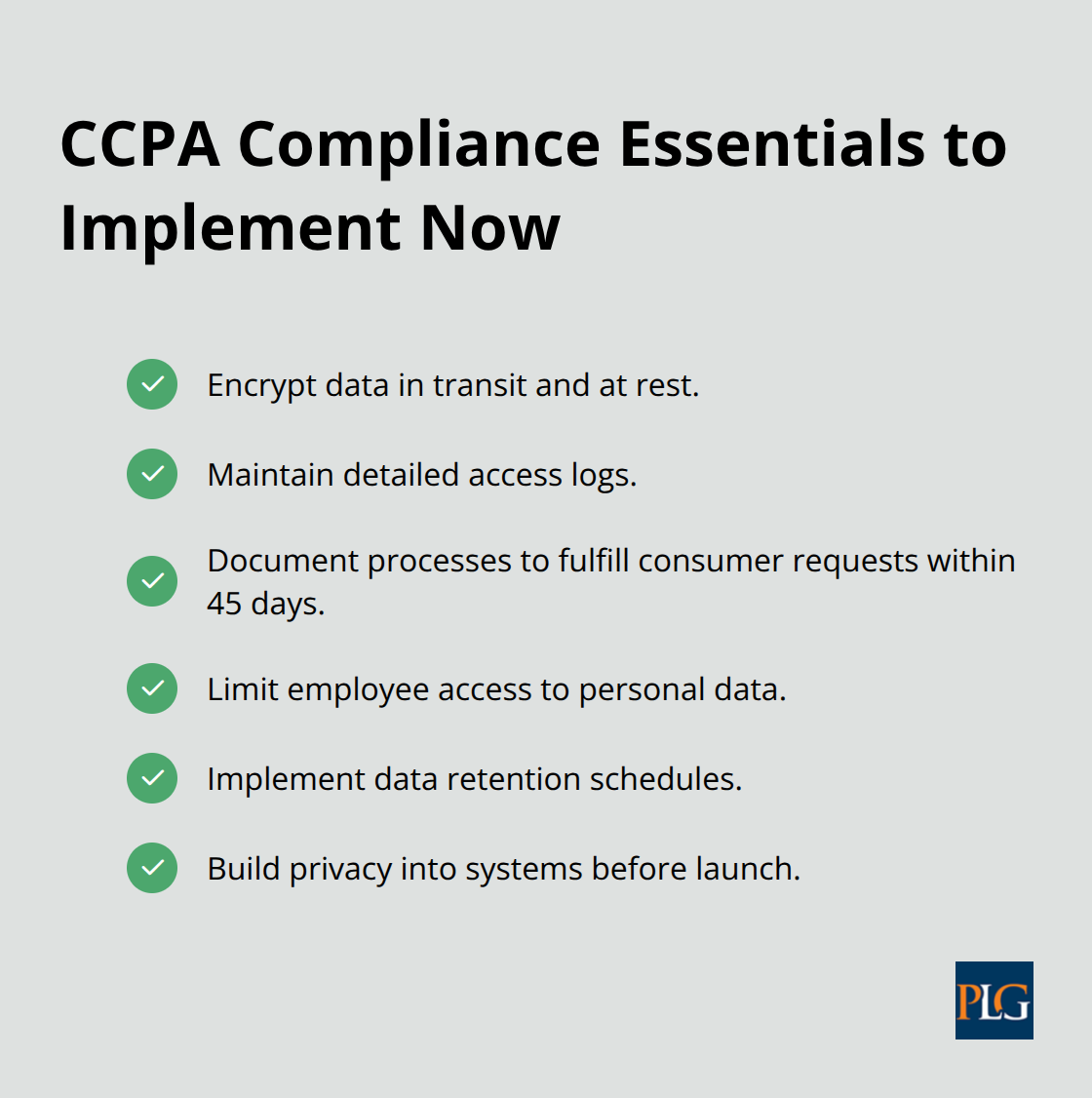
Many startups treat privacy as an afterthought, adding compliance measures after launch. That approach courts enforcement action from the California Attorney General, who has brought multiple cases against companies with inadequate privacy practices. Building privacy into your data architecture from day one-encrypting customer information, limiting employee access, implementing retention schedules-costs far less than retrofitting systems or paying settlements.
Securities Regulations and Venture Funding Obligations
Securities regulations for venture-backed companies create obligations that founders often underestimate until they’re deep in fundraising. The Securities Act of 1933 requires that equity offerings either register with the SEC or qualify for an exemption. Most startups rely on Regulation D exemptions, specifically Rule 506(c), which allows unlimited capital raises from accredited investors without registration.
However, the compliance burden remains substantial: companies must verify accredited status, file Form D with the SEC within 15 days of the first sale, maintain detailed records of all offerings, and ensure offering documents contain accurate financial information. Misrepresentations in pitch decks or investor agreements trigger personal liability for founders under Section 12(b) of the Securities Act.
The shift toward convertible notes and SAFEs has created a false sense of simplicity-many founders treat these instruments as casual borrowing when they’re actually securities requiring careful documentation. Convertible instruments must specify valuation caps, discount rates, and conversion triggers with precision; ambiguity invites disputes during future funding rounds. A Series A investor discovering that conversion terms were unclear in earlier SAFEs can block the round or demand renegotiation, delaying capital deployment by months.
Multi-State Compliance and Ongoing Obligations
Tech companies operating across multiple states face additional complexity: each state maintains its own blue sky laws regulating securities offerings. A company raising from investors in New York, Texas, and Massachusetts must comply with each state’s registration or exemption requirements.
Federal securities law also imposes ongoing obligations once you’ve raised capital-quarterly financial reporting to investors, restricted securities agreements preventing insider trading, and disclosure obligations if material information changes. Establishing proper securities documentation from your seed round forward prevents costly remediation efforts later and protects founders from personal liability. These employment, privacy, and securities challenges form the foundation of your legal risk profile, but they’re only the beginning. Strategic legal planning separates companies that navigate these obstacles from those that stumble repeatedly.
Strategic Legal Planning for Tech Companies Operating in Silicon Valley
Equity Compensation: Timing and Structure Matter
Tech companies in Silicon Valley treat legal planning like insurance-something to buy only after a problem emerges. This approach costs millions. The companies that grow fastest and exit cleanly handle legal strategy as a competitive advantage, not a compliance burden.
Equity compensation structures offer the clearest example of how proactive planning pays dividends. Section 83(b) elections allow employees to recognize income on the grant date rather than the vesting date, shifting tax liability forward but locking in a lower valuation for tax purposes. A startup granting 50,000 options at a $0.50 strike price when the company is worth $5 million pays taxes based on that $0.50 valuation. If the company reaches a $100 million valuation before vesting completes, the employee avoids paying taxes on that $99.50 appreciation. But this election requires filing within 30 days of the grant-miss that window and the opportunity vanishes permanently. Most startups never explain Section 83(b) to employees, leaving thousands of dollars in tax savings unclaimed.
The second layer involves incentive stock options versus non-qualified stock options. ISOs receive preferential tax treatment under Section 422, allowing employees to defer taxation until sale and potentially qualify for long-term capital gains rates, but ISOs carry strict rules: the exercise price must equal fair market value on grant date, the employee must hold shares for two years after grant and one year after exercise, and the program can only grant options at or above current valuation. Non-qualified options offer flexibility but trigger ordinary income taxation on the spread between exercise price and fair market value at exercise. A well-designed equity plan uses both instrument types strategically, with ISOs for key technical talent and non-qualified options for advisors and contractors where ISO restrictions prove impractical.
Compliance Audits: Prevention Over Remediation
Compliance frameworks fail when companies wait until enforcement action looms. The smarter path involves conducting a gap analysis against California’s ABC test before you hire your first contractor, documenting data security practices before launching your product, and mapping securities obligations before you accept your first investor check. A mid-stage startup spending three weeks on a compliance audit costs roughly $15,000 to $30,000 depending on complexity, but that same startup facing a Department of Industrial Relations investigation pays $200,000 to $500,000 in legal fees plus settlement costs.
The gap analysis identifies which workers genuinely qualify as independent contractors-perhaps a marketing consultant who serves multiple clients and maintains their own office-versus those who should be employees. Once identified, you formalize the relationship with proper agreements, implement the required controls, and document everything. Data security compliance follows a similar pattern: encrypt databases containing personal information, implement access logs, establish retention schedules for old data, and create a documented incident response procedure before any breach occurs.
When the California Attorney General’s office investigates a company without these foundational controls, enforcement becomes inevitable. When the same office audits a company with documented security measures and incident response procedures, the investigation often closes without penalties.
Regulatory Engagement: Propose Rather Than Wait
Negotiating with regulators on emerging technology standards requires understanding that regulators themselves move slowly and often lack technical depth. A fintech startup proposing participation in a regulatory sandbox doesn’t wait for the regulator to define requirements-instead, the company proposes a testing framework that demonstrates safety while gathering real-world performance data. This proposal should include specific metrics for monitoring (transaction success rates, fraud detection, system uptime), a timeline for reporting results (quarterly is standard), and a clear exit strategy if performance falls below thresholds. The regulator almost always prefers a company-proposed framework to writing regulations from scratch.
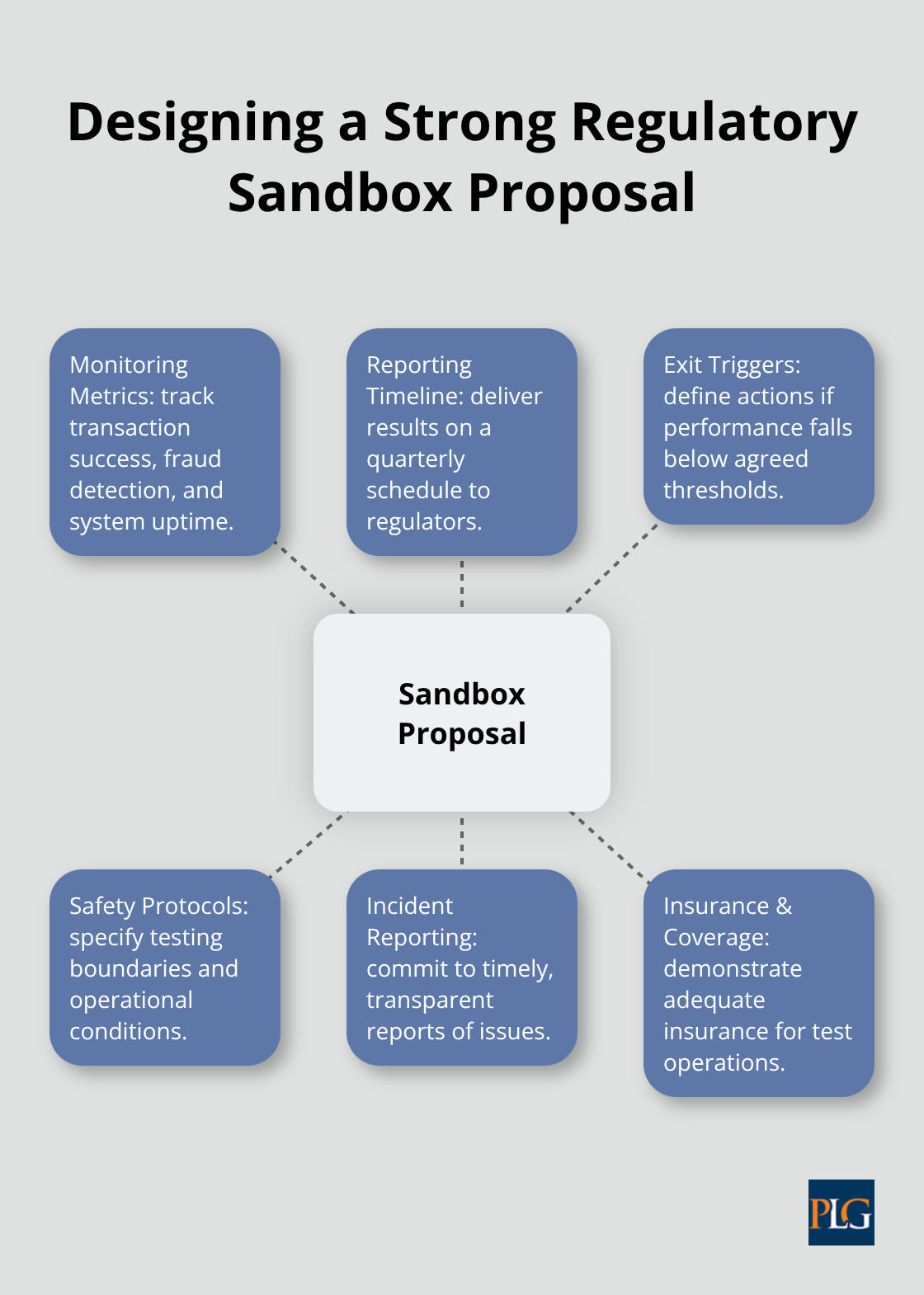
Autonomous vehicle companies operating in California work with the Department of Motor Vehicles using this exact approach: they propose testing protocols, specify geographic boundaries and operational conditions, commit to incident reporting, and demonstrate insurance coverage. The DMV rarely rejects well-structured proposals because the alternative-waiting years for formal regulations-serves nobody. A startup in emerging sectors like decentralized finance or advanced manufacturing should allocate legal budget for regulatory engagement starting 12 to 18 months before product launch, not waiting until launch day. This timeline allows for multiple rounds of discussion, proposal refinement, and relationship building with the actual regulators who’ll oversee your operations. Companies that skip this step often discover they’ve built products that violate regulations nobody told them existed, requiring expensive pivots or market exits.
Final Thoughts
Silicon Valley corporate law operates at the intersection of rapid innovation and regulatory complexity. The companies that thrive in this environment treat legal strategy as a competitive advantage, not a reactive cost center. Tax credits, IP portfolios, employment structures, and compliance frameworks become powerful tools when you handle them correctly from the start.
We at Primum Law Group work with startups and executives across Silicon Valley to translate legal requirements into actionable business strategy. A three-week compliance audit before you hire your first contractor costs far less than defending against misclassification claims later. Documenting your data security practices before launch prevents enforcement action from the California Attorney General, and proposing regulatory sandbox participation 18 months before product launch gives you time to refine your approach rather than scrambling to comply with unanticipated regulations.
Proactive legal strategy isn’t a burden on growth-it’s the foundation that makes growth sustainable. Contact Primum Law Group to discuss how outsourced general counsel, venture capital transactions, and compliance frameworks can support your innovation roadmap and help you navigate Silicon Valley’s regulatory landscape with confidence.