

Starting a company in San Francisco means navigating complex legal terrain from day one. A San Francisco startup lawyer handles everything from founding documents to equity structures, protecting your business when it matters most.
At Primum Law Group, we’ve seen founders who waited too long to get legal support-and paid the price. Getting ahead of legal issues now prevents costly problems later.
What Your Startup Lawyer Actually Handles
Founding Documents Form Your Legal Foundation
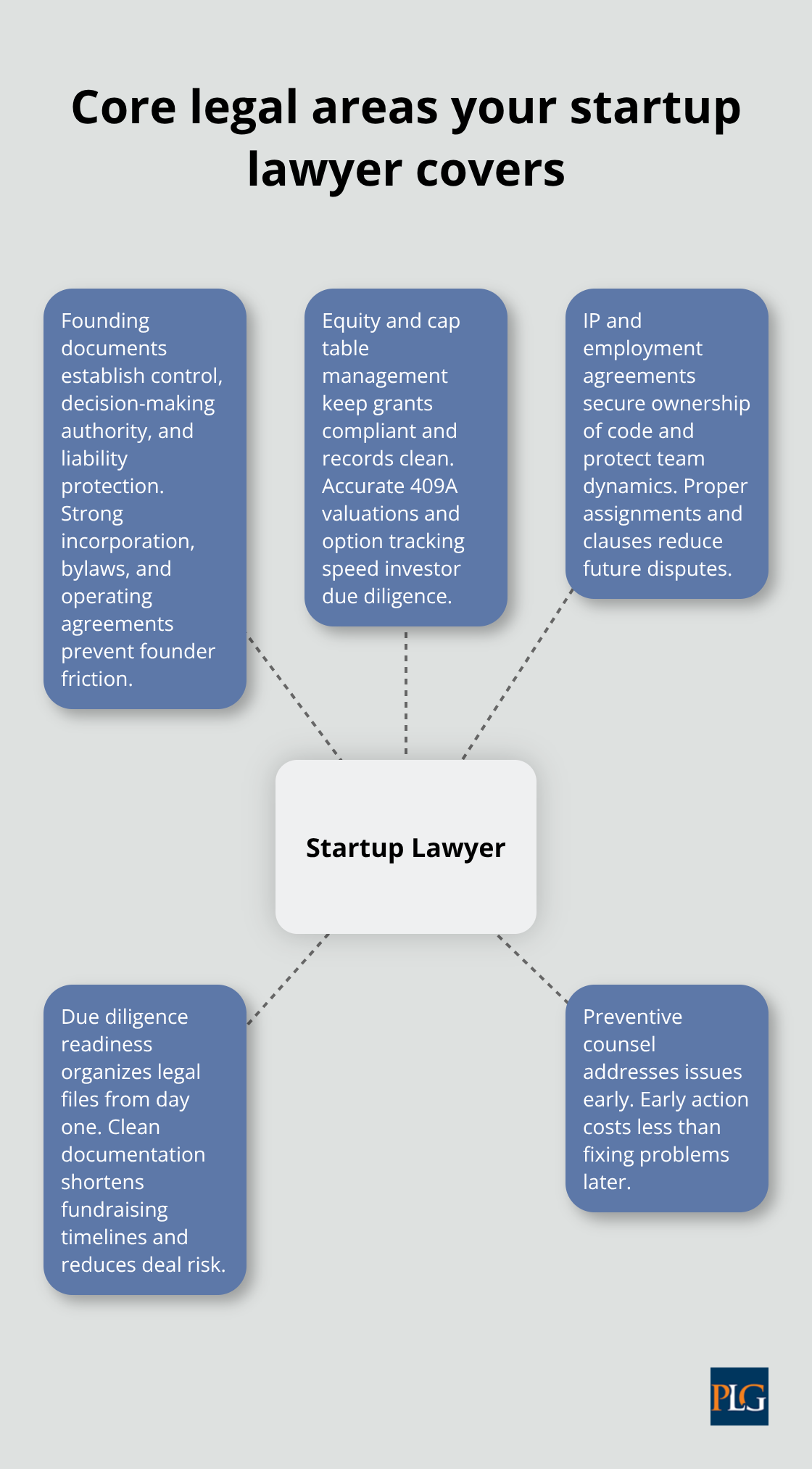
A startup lawyer in San Francisco does far more than file paperwork. Founders often underestimate how many moving parts require legal attention in the first year alone. Founding documents-articles of incorporation, bylaws, and operating agreements-set your company’s legal foundation and aren’t just formalities. These documents determine voting rights, decision-making authority, and liability protection. A poorly drafted operating agreement creates friction between founders that surfaces when money gets tight or disagreements arise.
Startups waste months resolving disputes that proper documentation would have prevented.
Equity and Cap Table Management Demands Precision
Equity and cap table management requires precision from day one. Every stock grant, option pool adjustment, and investment round changes your cap table. Cap table errors affect 1 in 3 startups during fundraising. Mistakes here can kill a Series A because investors demand clean cap tables before committing capital. A startup lawyer keeps your 409A valuations current, your option grants compliant with tax law, and your cap table accurate. Venture firms spend weeks on legal due diligence, and clean cap table documentation accelerates that process dramatically.
Intellectual Property and Employment Agreements Protect Your Company
Employment agreements and intellectual property protection separate founders who build defensible companies from those who don’t. California law presumes that work created by employees belongs to the company, but only if documented correctly. Without proper IP assignment agreements in writing, an engineer who leaves can claim ownership of code they wrote. Employment agreements also lock down non-compete and non-solicitation clauses-critical in San Francisco’s talent market where people jump between companies constantly. These three areas connect directly to what investors scrutinize during due diligence.
A startup lawyer handles the preventive work that stops problems from becoming deal-breakers later. The cost of getting this right upfront is a fraction of what you’ll spend fixing issues after they surface. With your legal foundation solid, the next challenge becomes identifying which legal issues your specific startup will face.
Legal Obstacles That Derail San Francisco Startups
Regulatory Compliance Catches Founders Off Guard
Regulatory compliance blindsides founders more often than you’d think. San Francisco operates under state regulations, local ordinances, and industry-specific licensing requirements that shift dramatically based on your business model. A fintech startup needs money transmitter licenses. A healthcare company needs HIPAA compliance and potentially FDA approval. A cannabis business navigates one of the most restrictive regulatory environments in the country. Many founders build their product first, then discover these requirements exist, forcing expensive pivots or legal remediation. Map regulatory obligations in your first month, not your first year. Getting this wrong costs time and capital you can’t afford to waste.
Founder Disputes Destroy More Startups Than Market Downturns
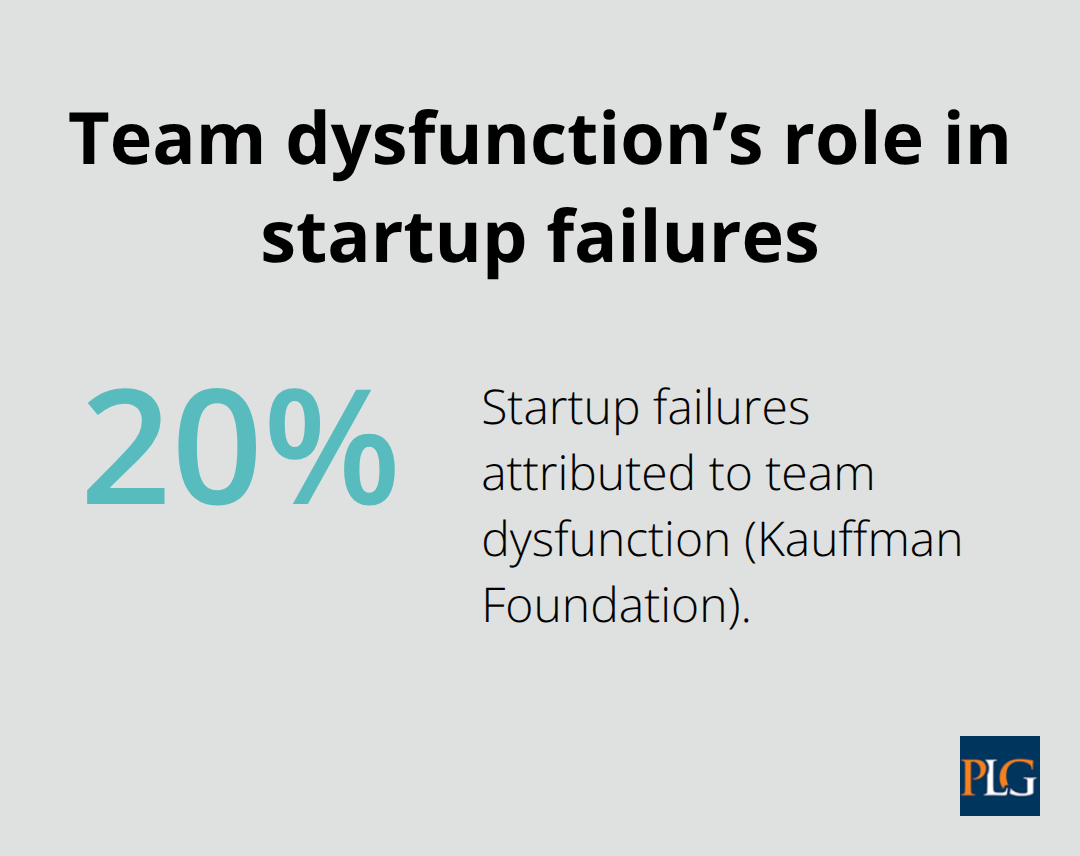
Founder disputes and shareholder conflicts wreck more startups than market downturns. Research from the Kauffman Foundation shows that approximately 20 percent of startup failures stem from team dysfunction. When founders haven’t documented their equity splits, vesting schedules, and decision-making authority in writing, disagreements escalate quickly.
One founder wants to pivot, another wants to raise capital aggressively, a third wants to bootstrap. Without a shareholder agreement spelling out voting rights and dispute resolution mechanisms, you hit deadlock. These conflicts poison the company culture and drain founder energy that should go toward building the business. Understanding what happens to co-founder equity when someone leaves before you raise money prevents these disputes from derailing your fundraising efforts.
Venture Capital Due Diligence Exposes Every Legal Gap
Venture capital due diligence amplifies legal problems that founders ignored. Investors conduct legal audits before committing capital, and they scrutinize every document with intensity. Missing founder agreements, unclear equity allocations, or unresolved shareholder disputes become deal killers. Investors won’t write a check into legal uncertainty. Cap table inconsistencies, improper option grants, or undocumented intellectual property ownership create friction during due diligence that extends fundraising timelines by months. San Francisco investors expect clean legal documentation because they’ve seen what happens when startups skip this work. The founders who close funding rounds quickly are the ones with organized legal files from day one.
Identifying these obstacles early matters, but knowing how to select the right legal partner matters more. The lawyer you choose shapes how smoothly you navigate these challenges and how prepared you stand when investors arrive.
Finding the Right Startup Lawyer for Your San Francisco Company
Track Record Matters More Than Reputation Alone
Choosing a startup lawyer in San Francisco requires looking past credentials and focusing on what actually matters for your stage. Many founders hire based on reputation alone, then discover the lawyer doesn’t understand their specific industry or communication style. This mismatch costs founders months of wasted time and money. The lawyer who excels at seed-stage companies often struggles with Series A complexity. The attorney who handles fintech brilliantly may know nothing about healthcare regulation. Your first filter should be track record with companies at your exact stage and in your exact industry. Ask potential lawyers about three recent clients they’ve worked with during comparable fundraising rounds, then contact those founders directly. Ask whether the lawyer flagged issues before they became problems, whether they met deadlines, and whether they charged what they quoted. A lawyer with five years of San Francisco startup experience beats one with twenty years of general corporate work.
Fee Structures Determine Your Access to Legal Support
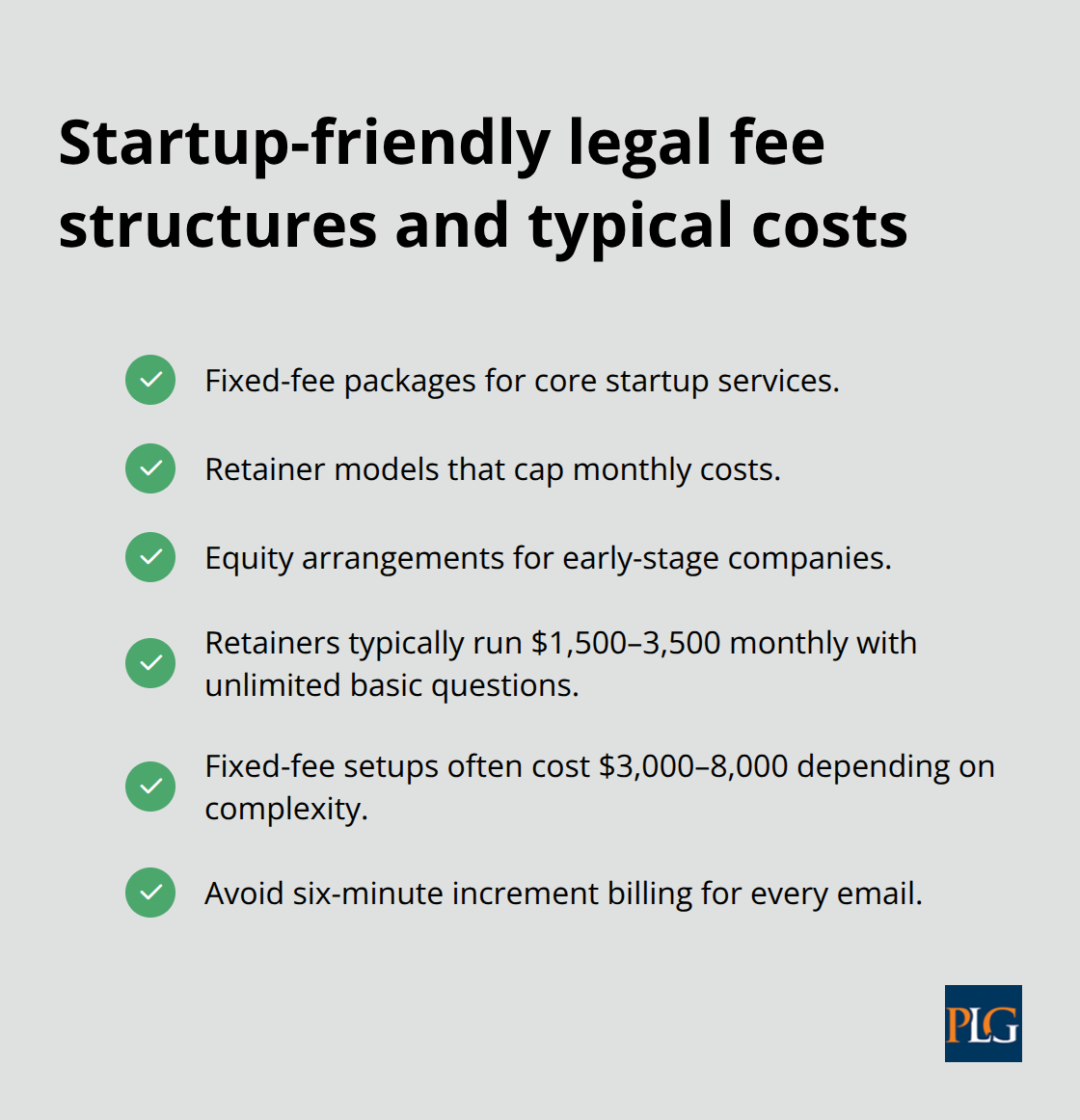
Fee structure determines whether you can afford legal support when you need it most. Many San Francisco startups operate on limited runway, and hourly billing at $300-500 per hour creates financial anxiety that prevents founders from asking questions. Look for lawyers who offer fixed-fee packages for core startup services, retainer models that cap monthly costs, or equity arrangements for early-stage companies. Retainer models typically run $1,500-3,500 monthly and give you predictable costs plus unlimited access to basic questions. Fixed-fee arrangements for incorporation, operating agreements, and option pool setup usually cost $3,000-8,000 total depending on complexity. Avoid lawyers who bill in six-minute increments for every email response, because you’ll hesitate to reach out with questions that could prevent expensive problems later.
Communication Style and Availability Shape Your Experience
Communication style matters as much as fees. Your lawyer should respond to emails within 24 hours, explain legal concepts in plain language without jargon, and make time for monthly check-ins during critical periods. A lawyer who disappears for weeks between fundraising events creates unnecessary stress. Ask potential lawyers about their availability during due diligence periods and how they handle urgent matters. Some firms assign you a junior attorney for routine work then escalate to partners only for complex issues, which keeps costs down while maintaining quality. Others require you to work only with senior attorneys at premium rates. Understand this structure upfront so you’re not surprised by bills later.
Final Thoughts
Working with a San Francisco startup lawyer early prevents the expensive legal problems that derail founders later. The three areas we covered-founding documents, equity management, and intellectual property protection-form the backbone of every successful startup. Founders who address these issues in month one avoid the disputes, compliance failures, and due diligence delays that consume months of energy and capital down the road.
Early legal planning saves money because prevention costs far less than remediation. A $5,000 investment in proper founding documents and equity setup prevents $50,000 in legal disputes or failed fundraising rounds. Cap table errors discovered during investor due diligence can kill a Series A entirely, and regulatory compliance oversights force expensive pivots that derail your timeline.
Your next step is identifying a lawyer who understands your specific stage and industry, offers a fee structure that fits your runway, and communicates in plain language. We at Primum Law Group work with San Francisco startups from incorporation through Series A and beyond, and we structure our services around what founders actually need at each stage.