

Multinational startups face a maze of tax rules across different countries, and getting it wrong costs money and creates legal headaches. International tax planning isn’t optional-it’s the difference between thriving and struggling under unnecessary tax burdens.
At Primum Law Group, we’ve seen startups leave millions on the table by ignoring tax structure decisions early on. The strategies in this post show you how to build a tax-efficient operation from day one.
Building the Right Tax Structure Across Borders
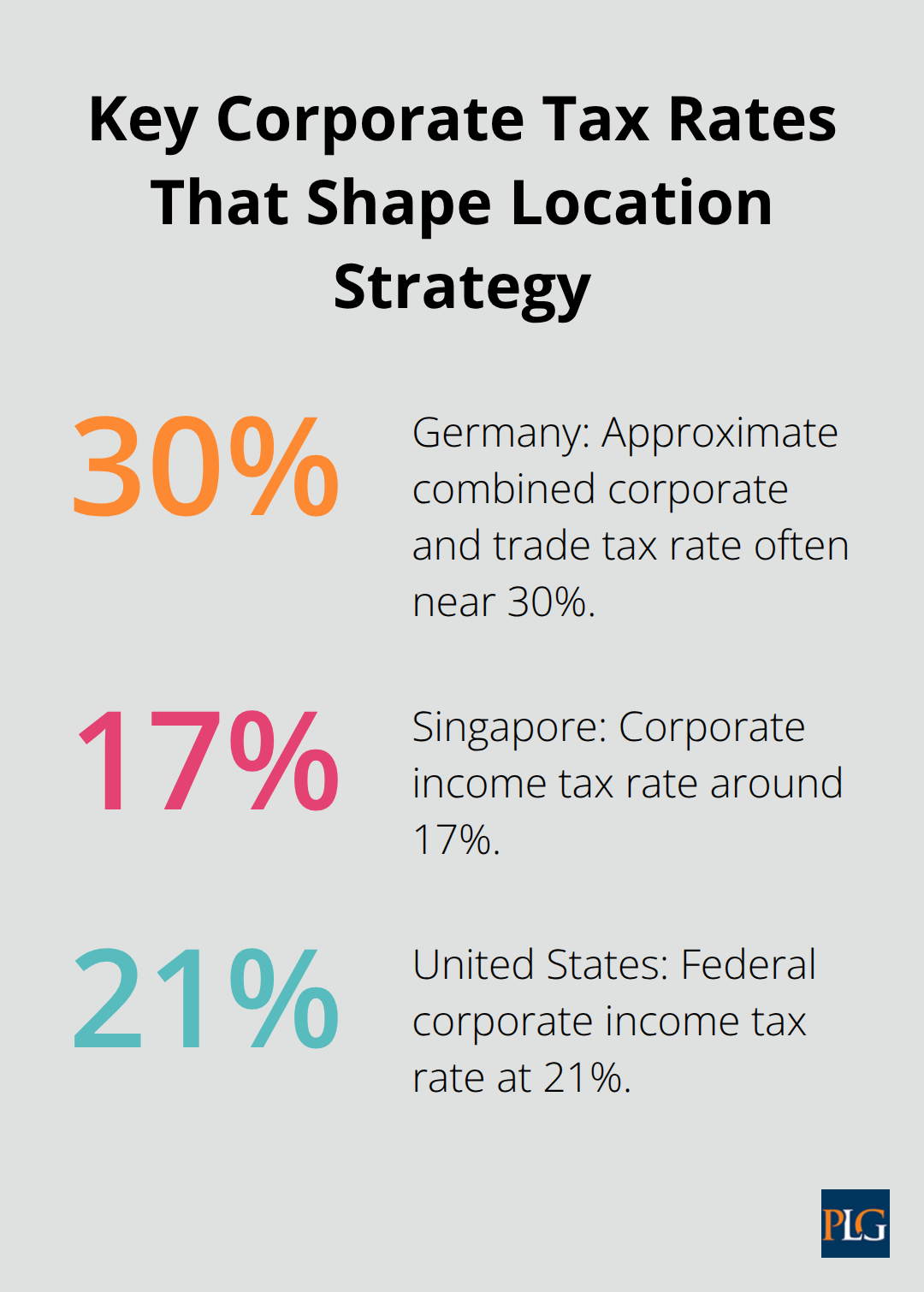
Your choice of entity type determines how much tax you pay across multiple jurisdictions, and most multinational startups get this wrong. A US C-corporation operating through a foreign subsidiary differs fundamentally from a US LLC with a disregarded entity abroad, yet many founders treat them identically. The difference compounds fast: one structure might trigger permanent establishment in a country where you have employees, while another avoids it entirely. The US tax system is quasi-worldwide for corporations, meaning you pay federal tax on worldwide income, but foreign subsidiaries can defer US taxation on their earnings if structured correctly. This matters immediately: if you’re hiring in Canada or the UK, the entity holding those employees must comply with local tax rules, and the parent company’s structure determines whether you get credit for foreign taxes paid or face double taxation. Germany taxes corporate income at roughly 30 percent when combined federal and trade taxes apply, while Singapore sits around 17 percent, so your subsidiary’s location directly impacts your effective rate. Choosing between a foreign branch and a subsidiary changes everything-a branch’s income flows through to the parent’s US return, while a subsidiary’s earnings stay offshore until repatriated, but branches create immediate permanent establishment risk in high-tax countries.
Pricing Between Your Entities
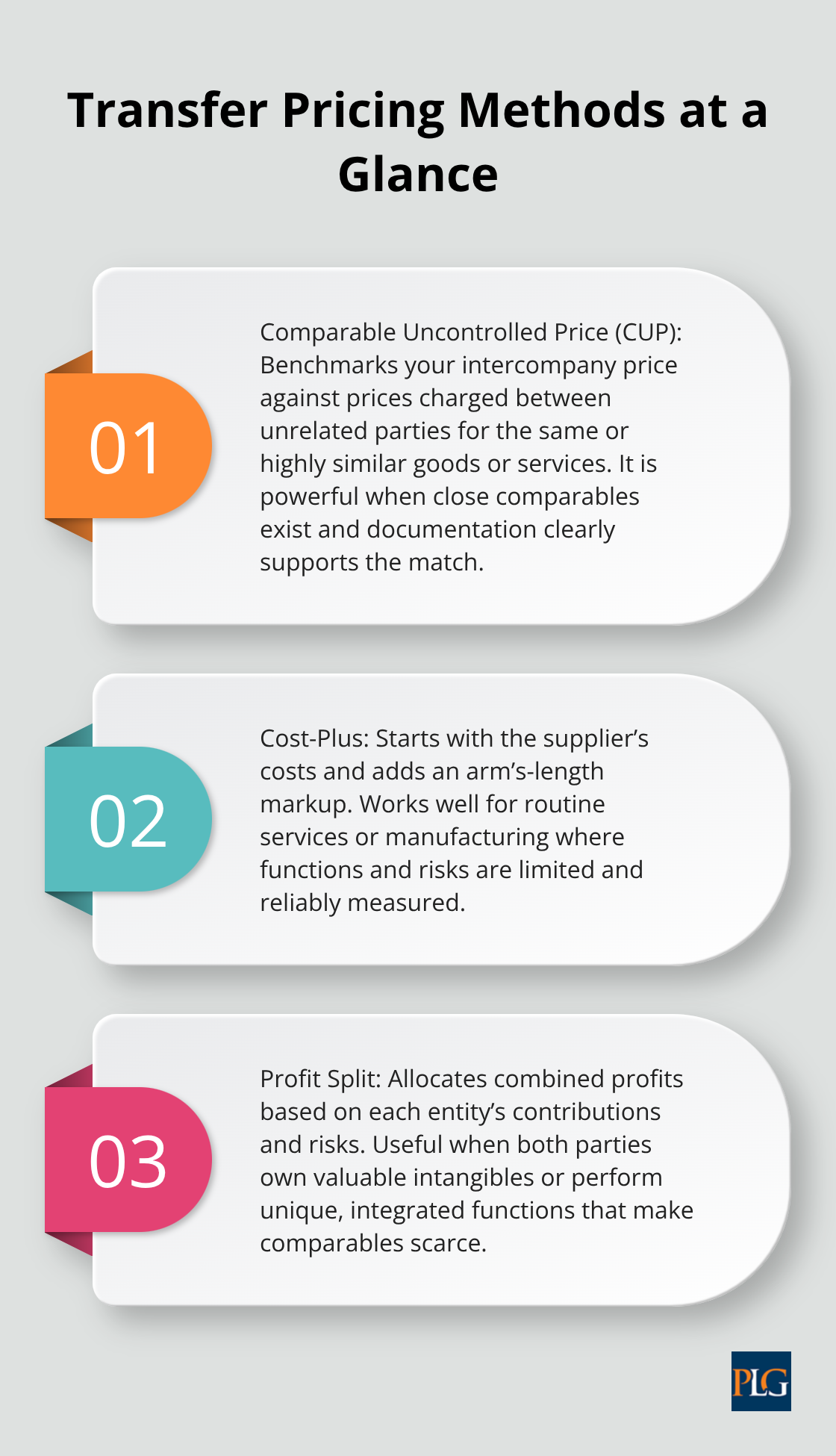
Transfer pricing is where the IRS catches aggressive international planners. When your US parent buys software from your Irish subsidiary or your Singapore office provides management services to your US operations, the IRS requires you to price these transactions as if unrelated parties negotiated them. Comparable uncontrolled prices, cost-plus methods, and profit-split approaches each apply to different situations, and the documentation must be bulletproof. The OECD’s transfer pricing guidelines influence how countries audit these transactions, and penalties for underpricing intercompany transactions can exceed 40 percent of the adjustment.
If your US company pays your subsidiary in Bermuda $5 million for IP licensing, but an unrelated company would pay only $2 million, the IRS will challenge the $3 million difference and tax it in the US. You need functional analyses showing what each entity contributes, market data proving your pricing is defensible, and contemporaneous records. Many startups skip this work and face audits years later when they’re trying to raise Series B funding. Your cross-border tax strategy should reflect actual value creation-where your engineers sit, where your servers run, which entity owns the intellectual property-not just tax optimization. Countries increasingly share audit information, so aggressive transfer pricing in one jurisdiction gets flagged in another within months.
When to Bring Money Home
Repatriating earnings from foreign subsidiaries triggers withholding taxes and potentially US tax on previously deferred income. A dividend from your Singapore subsidiary to your US parent might face 5 to 10 percent withholding tax under treaty provisions, plus US federal tax at 21 percent on the dividend income. Some countries impose additional taxes on repatriated profits, making the total cost substantial. Timing matters: if you’re planning an acquisition or IPO within three years, repatriating early locks in the tax hit before your valuation increases. Conversely, if you’re holding for long-term growth, deferral strategies like intercompany loans keep cash offshore and reduce current US tax. The IRS’s GILTI and Subpart F rules limit deferral for certain types of foreign income, so passive income like interest or dividends from foreign subsidiaries gets taxed to the US parent immediately, while active business income can defer. Your repatriation plan should align with your funding timeline and exit strategy, not just minimize taxes in any single year. If you’re raising Series A funding, investors will ask about your tax structure and whether repatriation costs will impact returns, so having a clear answer demonstrates that you’ve thought through the long game.
These structural decisions set the foundation for everything that follows. The next section examines the specific compliance and reporting obligations that multinational startups must navigate to stay audit-ready across jurisdictions.
Common International Tax Challenges Multinational Startups Face
BEPS compliance, permanent establishment exposure, and double taxation represent the three most expensive mistakes we see multinational startups make. The OECD’s Base Erosion and Profit Shifting initiative fundamentally changed how countries audit cross-border transactions, and most startups don’t realize they’re exposed until an audit notice arrives.
BEPS Compliance and Reporting Requirements
BEPS Action Items 4, 8, and 13 require contemporaneous transfer pricing documentation, country-by-country reporting for groups exceeding 750 million euros in revenue, and detailed substance-over-form analysis of your operations. If you’re a US startup with a subsidiary in Ireland and another in Singapore, you must file Country-by-Country Reports with the IRS if your consolidated revenue crosses that threshold, and those reports get shared with foreign tax authorities automatically.
The documentation standards are strict: the IRS expects functional analyses showing what each entity contributes, economic analyses proving your pricing matches market rates, and contemporaneous records proving you had this analysis before filing your return. Startups that skip this work face penalties starting at 40 percent of any adjustment the IRS proposes, and those penalties apply in both the US and the foreign jurisdiction. A Series B startup with 50 million dollars in revenue across three countries should have transfer pricing documentation prepared before filing its first return, not years later when an audit triggers a rush to reconstruct what happened.
Permanent Establishment Risks
Permanent establishment creates tax liability in countries where you never intended to operate. Many startups believe that having contractors or remote employees abroad doesn’t trigger PE, but tax authorities disagree aggressively. The OECD Model Tax Convention defines PE as a fixed place of business where you carry on business activity, and courts have found PE exists when a startup maintains a server, leases office space, or has employees with authority to sign contracts on the company’s behalf.
If your VP of Engineering in London has the power to commit your US company to contracts, that’s PE in the UK, and you owe UK tax on your worldwide profits attributable to that PE. Germany, France, and the UK have expanded PE definitions to catch digital businesses hosting servers or maintaining customer support operations, so a startup providing SaaS to European customers while running support from Berlin faces immediate tax exposure.
Double Taxation Issues
Double taxation compounds when one country taxes your income and another country taxes the same income again without relief. The US tax treaty with the UK reduces withholding on dividends to 5 percent and provides foreign tax credits to prevent double taxation, but only if you’ve properly structured your entities and filed the right forms. A startup that repatriates profits from a UK subsidiary without claiming foreign tax credits ends up paying both UK corporate tax at roughly 25 percent and US federal tax at 21 percent on the same dollar, effectively a 46 percent combined rate.
Startups with employees in Canada, Australia, or the Netherlands face similar stacking unless they proactively plan repatriation timing and use available treaty benefits. The practical solution is aggressive documentation: maintain detailed records of where your employees work, what functions they perform, and which entity employs them, then align your transfer pricing and tax filings with that reality.
These compliance exposures demand attention before they become audit problems. The next section shows you how to optimize your tax position across jurisdictions while staying audit-ready.
Practical Tax Optimization Strategies for San Francisco Startups
Intellectual Property Ownership Determines Your Tax Rate
Intellectual property structuring separates multinational startups that pay 40 percent effective tax rates from those paying 15 percent. The location where you own patents, trademarks, software code, and customer lists determines which subsidiaries generate income and which ones deduct royalty payments, directly shifting profits to low-tax jurisdictions. A US startup that owns its core software in Ireland and licenses it to its US operations for a 15 percent royalty moves significant profits offshore while the US parent deducts the royalty expense. The Irish subsidiary then pays corporate tax at 12.5 percent instead of the US rate at 21 percent, creating an 8.5 percent spread on every dollar of licensing revenue. Transfer pricing documentation must prove the 15 percent rate reflects what unrelated companies would charge, using comparable license agreements in your industry. The OECD transfer pricing guidelines require functional analysis showing what the Irish entity contributes: does it own the IP outright, maintain it, defend it in litigation, or simply hold it passively. If the Irish subsidiary holds IP passively while the US parent does all the development work, tax authorities will recharacterize the ownership and move profits back to the US.
Establish IP ownership before launch, not after you’ve generated revenue, because retroactive restructuring triggers immediate audit risk and penalties. Singapore and Luxembourg also offer favorable IP taxation through innovation box regimes that tax qualifying IP income at reduced rates, so multinational startups with substantial R&D should evaluate whether IP ownership in Singapore or Luxembourg reduces your global rate below Ireland alone.
Where You Perform Work Determines Where You Pay Tax
Strategic location of operations and funds works differently than IP structuring because it focuses on where you perform services and where you hold cash. A startup with engineers in San Francisco, customer support in Manila, and finance operations in Bangalore must allocate income to each location based on which entity performs the work, not where the customer sits. If your San Francisco engineers build the product, they generate service income that the US parent claims, but if your Manila team provides customer support, that entity earns service income taxed in the Philippines at roughly 30 percent. Most startups don’t realize that splitting operations across multiple countries without proper transfer pricing documentation creates audit exposure in every jurisdiction.
Document which entity performs each function with contemporaneous records showing hours worked, project assignments, and deliverables. Recognize product development revenue when engineers complete code, recognize support revenue when support staff resolves tickets, and align income recognition with actual value creation. This approach prevents the IRS and foreign tax authorities from challenging where your income originated.
Intercompany Loans and Interest Deductions
Repatriation timing matters because deferring funds in low-tax countries while the US parent borrows money creates interest deductions in the US and deferred income abroad, but only if you structure intercompany loans with proper documentation. If your Singapore subsidiary loans $5 million to your US parent, you need a written promissory note specifying the interest rate, payment schedule, and consequences of default. The IRS scrutinizes related-party loans heavily, so market interest rates and formal documentation protect you from audit challenges.
Deductions for interest paid to foreign subsidiaries face limitations under the Base Erosion and Profit Shifting rules, which cap net interest deductions at 30 percent of tax adjusted earnings for groups exceeding $25 million in revenue. Aggressive debt-equity strategies now face strict ceilings, so evaluate whether holding excess cash in a low-tax subsidiary while the US parent operates on thin margins actually reduces tax after accounting for interest limitations, foreign tax credits, and repatriation costs.
Timing Income Recognition to Minimize Tax
Income recognition timing directly impacts your global tax bill across multiple jurisdictions. Accelerating deductions in high-tax countries while deferring income in low-tax countries reduces your effective rate, but only if you document the timing with contemporaneous records. The OECD transfer pricing guidelines and IRS regulations require that your timing reflect actual business operations, not tax optimization alone.
A multinational startup should evaluate whether holding excess cash in a low-tax subsidiary while the US parent operates on thin margins actually reduces tax after accounting for interest limitations, foreign tax credits, and repatriation costs. This analysis requires detailed modeling of multiple scenarios across your jurisdictions, comparing the tax cost of different timing strategies against your funding timeline and exit plans.
Final Thoughts
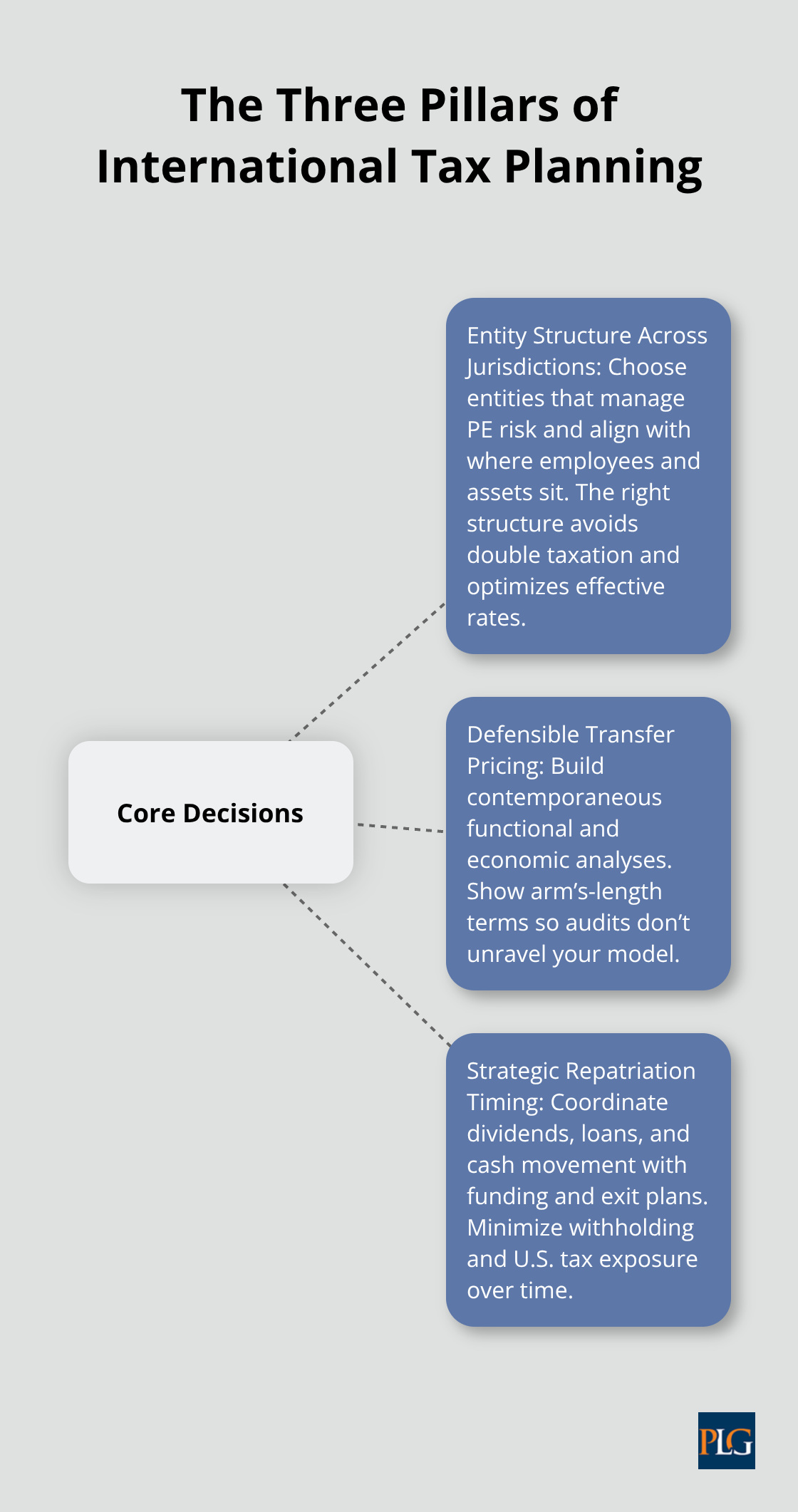
International tax planning for multinational startups requires three core decisions: choosing the right entity structure across jurisdictions, documenting transfer pricing defensibly, and timing repatriation strategically. Get these right from day one, and you reduce your effective tax rate by 10 to 15 percent while staying audit-ready. Get them wrong, and you face penalties, double taxation, and restructuring costs that drain cash when you need it most.
Tax optimization isn’t about aggressive schemes or hiding income-it’s about aligning your actual business operations with your tax filings so that the IRS and foreign tax authorities see the same story. Document which entity performs each function, prove your transfer pricing reflects market rates, and plan repatriation timing around your funding and exit timeline. These steps cost money upfront but save multiples of that amount when audits don’t happen and investors see a clean cap table.
Professional guidance reduces risk and cost because tax law changes constantly and penalties compound fast. We at Primum Law Group help multinational startups structure their operations for tax efficiency while maintaining audit readiness across all jurisdictions through international corporate structuring and tax law services tailored to your specific business model and funding timeline. Schedule a consultation with us to review your international tax position and identify where restructuring creates the most value.