

Companies operating across multiple countries face a complex puzzle: how to structure their operations for tax efficiency while staying compliant with local laws. International corporate structuring isn’t optional-it’s the foundation that determines whether your business thrives or gets caught in regulatory conflicts.
At Primum Law Group, we’ve seen firsthand how the right structure can save millions in unnecessary taxes while the wrong one creates legal exposure. This guide walks you through the models, strategies, and compliance frameworks that global companies actually use.
Building a Foundation That Works Across Borders
Global tax transparency requirements have fundamentally changed how companies structure operations. The OECD’s BEPS framework, adopted by over 140 jurisdictions as of 2026, mandates Country-by-Country Reporting, Master Files, and Local Files for most multinationals. Your tax department must document transfer pricing decisions with rigorous arm’s length analysis, proving that intercompany transactions reflect market rates.
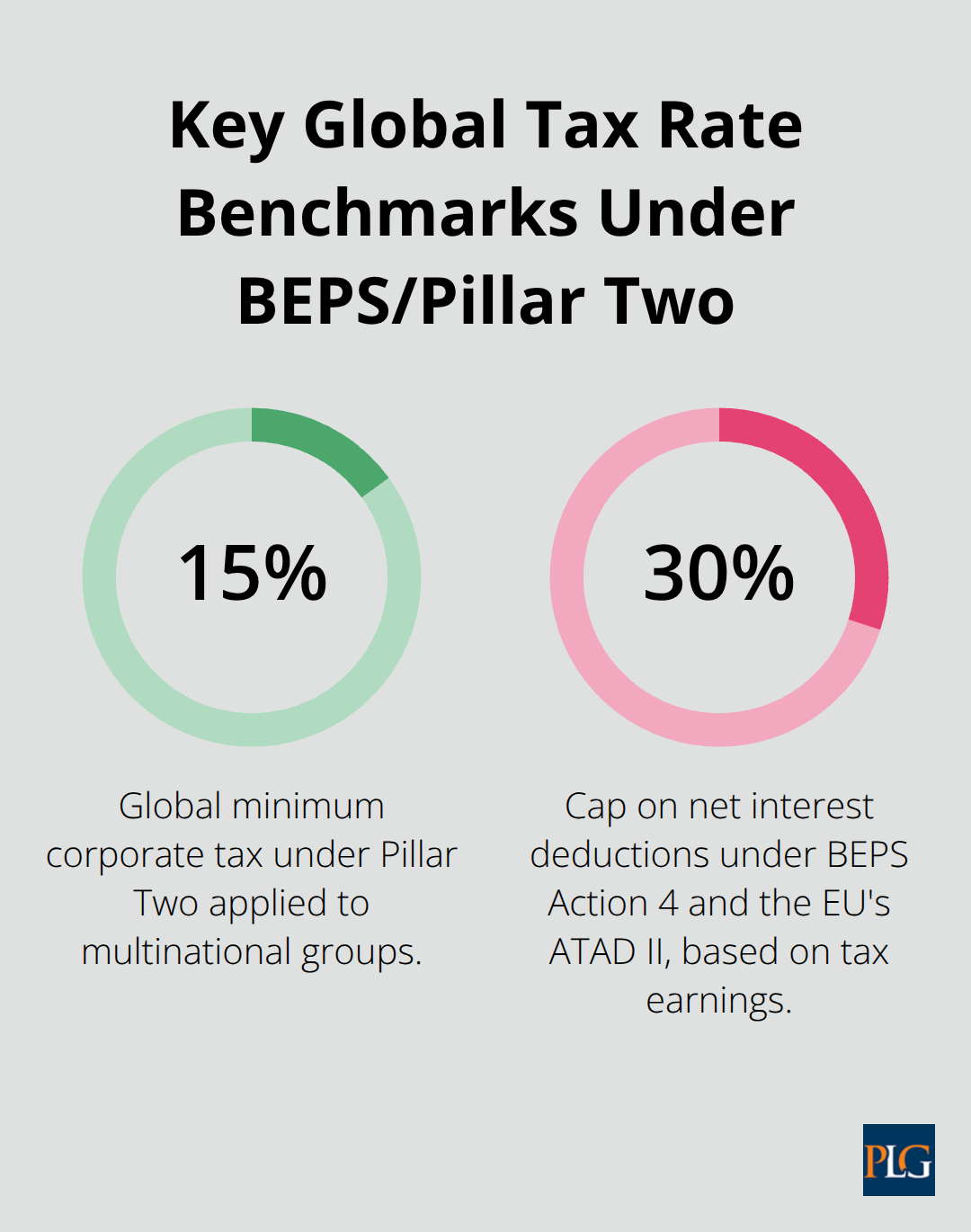
Pillar Two introduced a global minimum corporate tax of 15%, which eliminates the advantage of booking profits in ultra-low-tax jurisdictions. If your subsidiary in a country taxing at 5% generates income, the parent company’s jurisdiction can now impose a top-up tax to reach 15%. This fundamentally changes where you should locate intellectual property, manufacturing operations, and service centers.
Economic Substance Now Determines Survival
Tax authorities across the EU, Australia, and North America aggressively challenge structures that lack genuine business operations. A holding company in the Netherlands only works if it performs real functions-managing intellectual property, providing financing decisions, or coordinating group operations. Passive entities that exist purely for tax benefits face denial of tax benefits and substantial penalties.
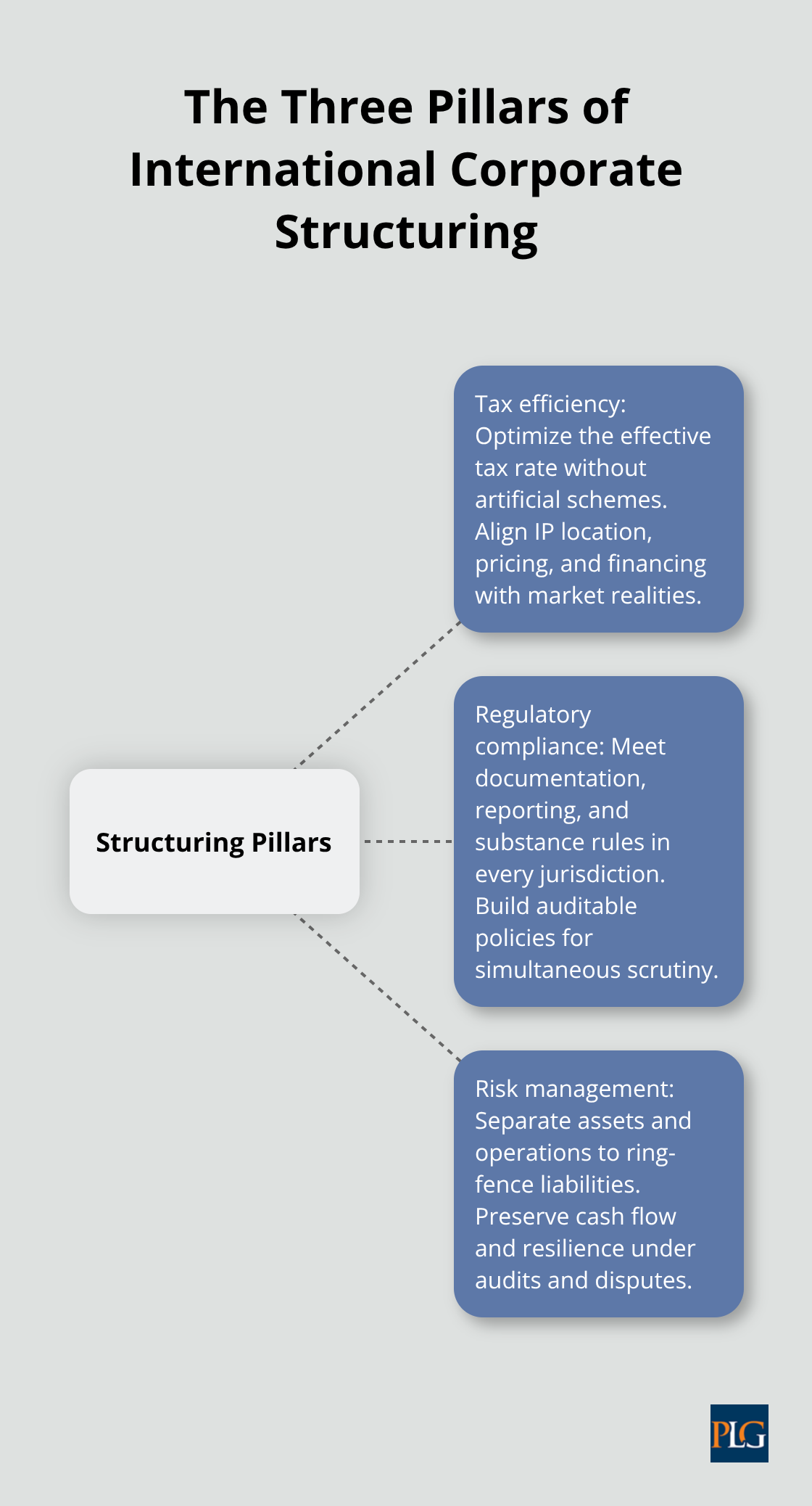
The three pillars of international corporate structuring-tax efficiency, regulatory compliance, and risk management-intersect constantly. Decisions made to optimize taxes often create compliance obligations or expose assets to legal risk. Balancing these three pressures simultaneously without compromising any of them requires careful planning and ongoing monitoring.
Withholding Taxes and Treaty Networks Shape Your Cash Flow
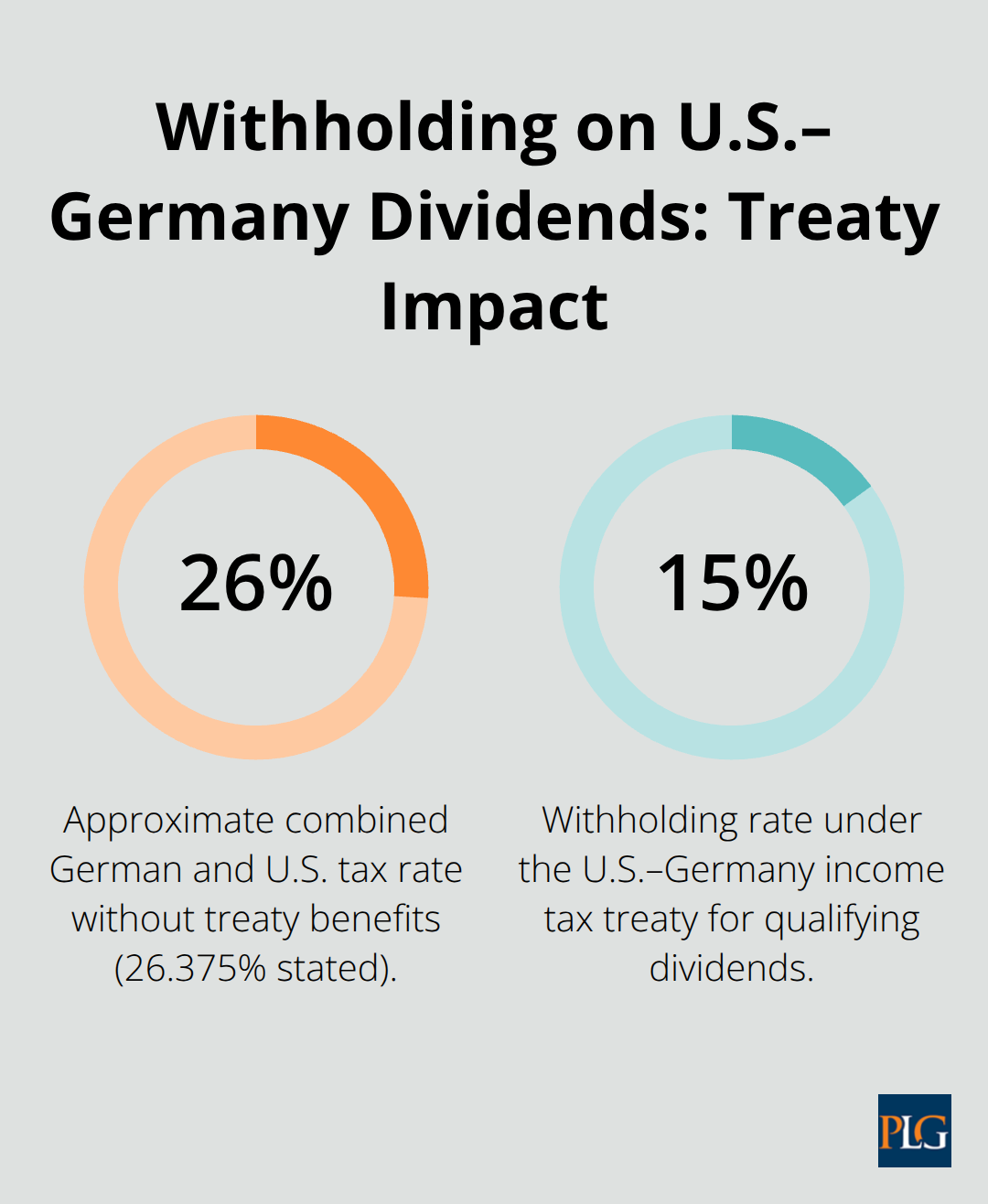
Withholding taxes on dividends, interest, and royalties can consume 15–35% of cross-border payments unless you structure correctly. Treaty networks matter enormously here. A U.S. parent company receiving dividends from a German subsidiary faces a 26.375% combined German and U.S. tax rate without treaty benefits, but the U.S.–Germany income tax treaty reduces the withholding to 15%.
However, the OECD’s Multilateral Instrument now includes anti-abuse provisions that deny treaty benefits if arrangements lack genuine business purpose. You cannot simply route payments through treaty-favored jurisdictions without substance. Interest deductions face similar pressure. BEPS Action 4 and the EU’s ATAD II framework limit net interest deductions to 30% of tax earnings. If your holding company finances subsidiaries with excessive debt, interest deductions get disallowed, and you lose the tax advantage entirely.
Separating Entities Protects Group Assets
Risk mitigation demands that you separate legal entities by function and geography. A subsidiary operating in a high-litigation jurisdiction should not hold valuable intellectual property or cash reserves. Instead, intellectual property sits in a stable, well-governed jurisdiction with strong treaty networks, while operating companies remain lean and focused on revenue generation. This structure protects group assets if one subsidiary faces lawsuits or regulatory action.
Automation Reduces Compliance Risk
Compliance automation and real-time reporting are accelerating globally. E-invoicing requirements, digital tax reporting, and automatic exchange of information mean that tax authorities now see transactions in real time across borders. Manual spreadsheet-based compliance creates audit risk and penalties. Companies need systems that automatically calculate transfer pricing, track withholding obligations, and generate required filings across jurisdictions.
The right structure combines reasonable leverage with genuine economic substance in each jurisdiction. As you move forward with implementation, the specific models you choose-holding companies, transfer pricing strategies, and entity selection by geography-will determine whether your international operations generate sustainable tax efficiency or create regulatory exposure.
Three Structuring Models That Actually Generate Tax Savings
Holding Companies Require Real Economic Substance
Holding companies sit at the top of most multinational structures, but they only work if they perform genuine functions. A holding company in Ireland or the Netherlands that merely owns subsidiaries and collects dividends faces challenge from tax authorities worldwide. Instead, the holding company must actively manage group financing, coordinate transfer pricing policies, and make real strategic decisions about capital allocation. The OECD’s economic substance requirements demand that the company maintains staff, office space, and documented decision-making authority in that jurisdiction. Many multinationals fail here by creating a shell entity with no substance, then watching tax authorities deny the intended benefits.
A holding company earning 2–3% management fees from subsidiaries for legitimate services like treasury management or IP licensing survives scrutiny. One that sits idle and merely passes through dividends gets dismantled by regulators.
Transfer Pricing Strategy Determines Where Profits Flow
Transfer pricing strategy determines whether profits stay in high-tax jurisdictions or shift to lower-tax locations legally. The OECD Transfer Pricing Guidelines require that intercompany charges for goods, services, and IP licensing reflect what independent parties would charge. A U.S. parent company cannot sell technology to a subsidiary in Singapore at 50% below market rates just to shift profits. Tax authorities use comparable company analysis and profit margin studies to challenge aggressive pricing.
Documentation burden matters enormously here. BEPS Action 13 mandates that multinationals with global revenue exceeding €750 million maintain Master Files documenting group-wide transfer pricing policies and Local Files detailing transaction-specific analysis for each jurisdiction. Missing or weak documentation triggers automatic penalties of 5–10% of adjustment amounts in many countries, sometimes higher. The pricing must withstand scrutiny from multiple tax authorities simultaneously. A software licensing agreement between a U.S. parent and German subsidiary must satisfy both IRS and German tax authority standards using the same arm’s length methodology.
Entity Location Shapes Tax and Legal Outcomes
Entity selection by geography requires understanding that not all jurisdictions offer equal tax or legal advantages. The Netherlands attracts holding companies because of favorable dividend exemptions and extensive treaty networks, but only if substance requirements are met. Ireland’s low corporate tax rate benefits IP holding companies and software operations, but the EU now scrutinizes whether Irish entities generate real economic activity. Luxembourg works well for financing and treasury operations due to interest deduction rules that have survived BEPS scrutiny so far, though ATAD II continues tightening limits.
Singapore offers low tax rates for regional headquarters managing supply chains and IP across Asia. However, each jurisdiction imposes compliance costs, reporting obligations, and substance requirements that offset tax savings if the company lacks genuine operations there. A manufacturing company with real factories, local employees, and decision-making authority in Mexico can justify a Mexican subsidiary. Creating a Mexican entity merely to shift profits from U.S. operations generates audit risk that outweighs any tax benefit.
The right structure matches entity location to actual business function. Operating companies where revenue is generated should exist in markets where customers sit, even if tax rates are higher. This satisfies permanent establishment rules and economic substance tests. IP holding companies and financing entities sit in stable, well-governed jurisdictions with strong treaty networks. Service centers and back-office operations locate where labor costs and regulatory compliance align. This functional separation prevents a single jurisdiction from capturing all group profits while satisfying tax authorities that each entity performs real work justifying its location.
Once you align your entities with genuine business functions across geographies, the next challenge emerges: managing the compliance obligations that each jurisdiction imposes simultaneously.
Turning BEPS Compliance Into Operational Advantage
Documentation Transforms Transfer Pricing Into Strategic Defense
The OECD’s BEPS framework forces you to document every cross-border transaction with precision that most companies underestimate. Over 140 jurisdictions adopted BEPS rules as of 2026, meaning your transfer pricing policies face scrutiny from multiple tax authorities simultaneously. Country-by-Country Reporting requires you to disclose profits, revenues, and taxes paid in each jurisdiction where you operate. A single weak documentation file invites audits across your entire global structure. You need a centralized transfer pricing function that maintains Master Files documenting your group-wide policies and Local Files justifying each transaction. This isn’t optional bureaucracy-it’s your defense against penalties that typically run 5–10% of adjustment amounts, sometimes higher.
Transfer pricing functions as a strategic business decision that determines where profits legally reside, not merely an accounting task. Your transfer pricing methodology must withstand challenge from the IRS, German tax authority, and Singapore tax authority using identical arm’s length standards. Weak documentation gets demolished in audits. Strong documentation backed by comparable company analysis and profit margin studies survives challenge. The difference between robust and weak documentation often means millions in tax exposure.
Treaty Networks Protect Withholding Tax Exposure
Withholding taxes consume 15–35% of cross-border payments unless treaty networks protect you. A U.S. parent receiving dividends from a German subsidiary faces 26.375% combined tax without treaty benefits, but the U.S.–Germany income tax treaty cuts withholding to 15%. However, the OECD’s Multilateral Instrument now denies treaty benefits for arrangements lacking genuine business purpose, so routing payments through treaty-favored jurisdictions without substance generates audit risk rather than tax savings.
Interest deductions face similar pressure under BEPS Action 4 and the EU’s ATAD II, which limit net interest deductions to 30% of tax earnings. A holding company financing subsidiaries with excessive debt loses interest deductions, eliminating the tax advantage. Your debt-to-equity ratio must align with industry standards and reflect what independent lenders would accept.
Real-Time Reporting Systems Replace Manual Compliance
Compliance automation has become mandatory because tax authorities now see transactions in real time across borders through automatic exchange of information. Manual spreadsheet-based compliance creates audit risk that outweighs any tax savings. Real-time reporting systems, e-invoicing requirements, and digital tax filing mean that discrepancies between what you report locally and what tax authorities see internationally trigger immediate investigation.
Companies operating across multiple jurisdictions need systems that automatically calculate withholding obligations, track treaty eligibility, and generate compliant filings simultaneously across all locations. The companies winning at international structuring treat compliance as infrastructure, not an afterthought. These systems eliminate manual errors, reduce audit exposure, and free your team to focus on strategic tax planning rather than administrative tasks.
Final Thoughts
International corporate structuring succeeds when tax optimization, regulatory compliance, and risk management align rather than conflict. Your holding companies need genuine economic substance, your transfer pricing documentation must withstand simultaneous scrutiny from multiple tax authorities, and your entity locations must match real business functions. Compliance systems that operate in real time across all jurisdictions eliminate manual errors and reduce audit exposure significantly.
The practical path forward starts with mapping your current global footprint and identifying where BEPS exposure exists. Run a transfer pricing risk assessment across your intercompany transactions, evaluate whether your holding companies perform legitimate functions, and stress-test your withholding tax positions against treaty networks and anti-abuse rules. Build compliance automation into your systems so that real-time reporting becomes standard practice rather than a scramble before filing deadlines.
We at Primum Law Group work with multinational companies on international corporate structuring, transfer pricing strategies, and cross-border compliance frameworks. Our team helps you align tax and legal structures with genuine business operations while minimizing audit exposure and regulatory risk. Contact us at Primum Law Group to discuss how we support your global operations.