

San Francisco’s venture capital scene offers some of the most competitive internship opportunities in the world. Landing a position as a venture capital intern requires strategic preparation and insider knowledge.
We at Primum Law Group work with countless startups and VC firms throughout the Bay Area. This guide breaks down exactly what you need to stand out in this highly selective field.
What Makes San Francisco’s VC Scene Different
San Francisco houses the world’s most concentrated venture capital ecosystem, with over 400 active VC firms that manage approximately $200 billion in assets according to PitchBook data. The city’s top-tier firms like Sequoia Capital, Andreessen Horenz, and Kleiner Perkins offer two distinct internship tracks that most applicants misunderstand completely.
The Two-Track System Most People Miss
Summer camp internships target early-university students and career changers. These positions focus on basic market research and pitch deck reviews without real investment responsibility. Real internships go to candidates with finance experience and involve actual deal evaluation, due diligence work, and investment committee participation.
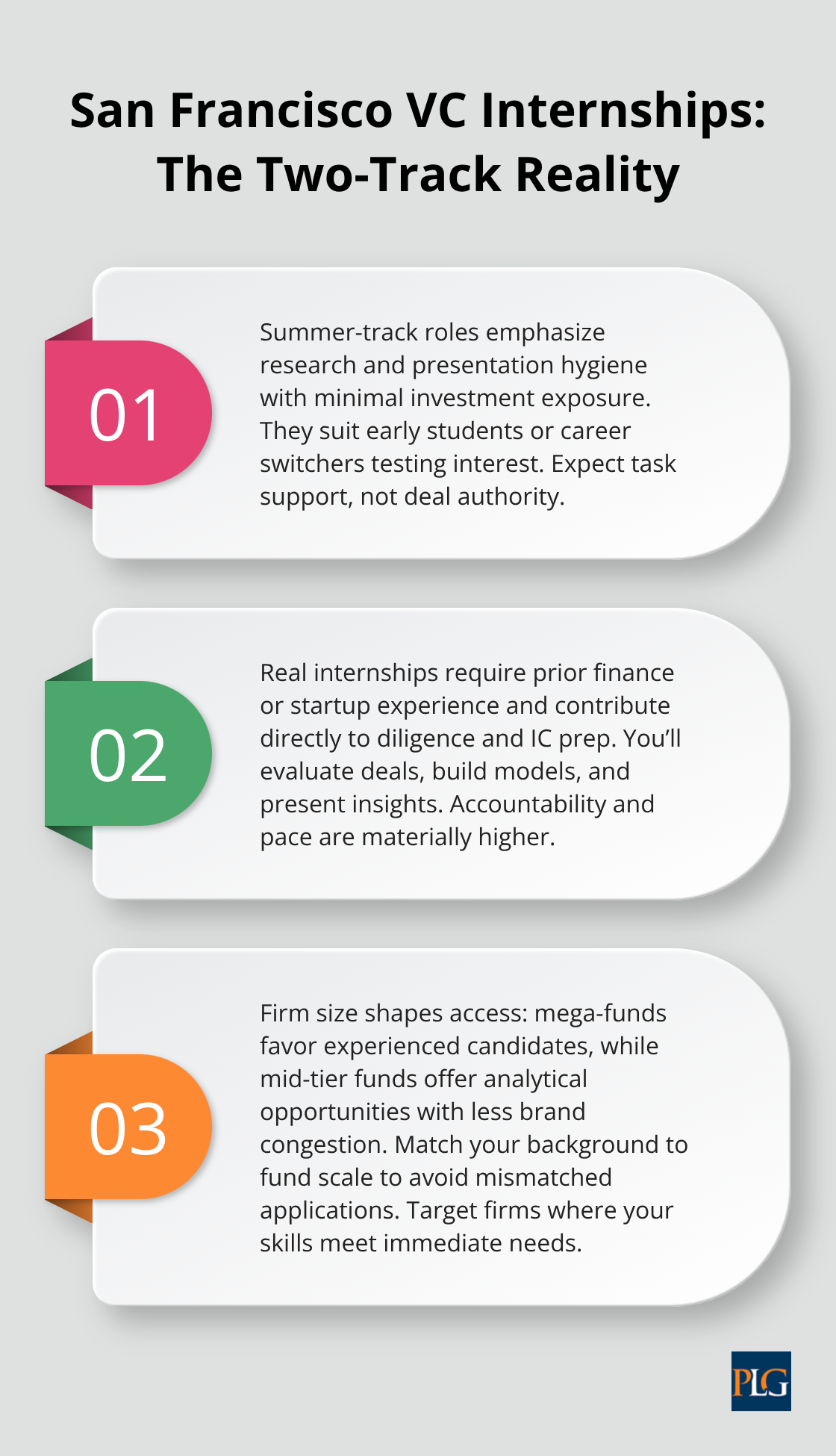
Large firms with over $500 million in assets under management typically offer real internships that convert to full-time offers for 70% of top performers (according to Harvard Business School research). These positions pay $4,000-6,000 monthly and require financial modeling skills, startup experience, and degrees from target universities like Stanford, UC Berkeley, or top East Coast schools.
Why Firm Size Determines Your Opportunities
Smaller seed-stage firms under $100 million rarely hire interns due to limited resources and deal flow. Mid-tier growth funds between $100-500 million provide your best entry point because they need analytical support but lack the prestige competition of mega-funds. These firms often overlook strong candidates who focus exclusively on brand-name firms.
Skills That Actually Matter in 2025
VC firms prioritize three specific capabilities over generic business knowledge. First, you need demonstrated ability to build unit economics models and perform market analysis with bottom-up methodologies. Second, you must show pattern recognition through previous startup exposure or technology trend analysis. Third, you need proof of deal evaluation experience through student investment funds, startup competitions, or prior finance internships.
Firms like Global Founders Capital specifically seek candidates who combine analytical rigor with entrepreneurial intuition. They reject purely academic profiles that lack real-world startup exposure, making hands-on experience more valuable than perfect GPAs.
The next step involves crafting application materials that highlight these specific skills rather than generic achievements.
How Do You Build Application Materials That Get Noticed?
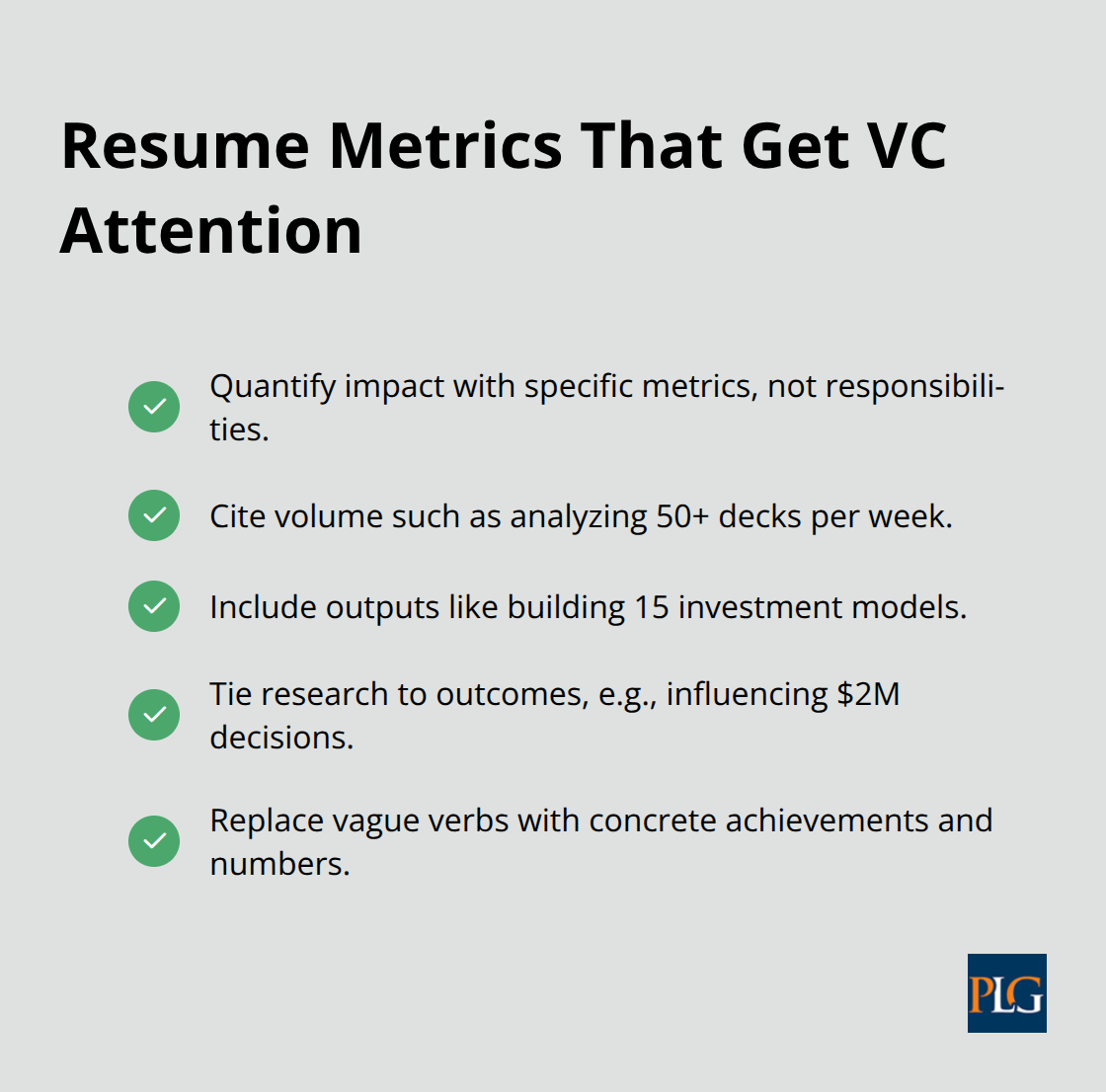
Your resume must demonstrate quantifiable impact rather than list generic responsibilities. Include specific metrics like “analyzed 50+ pitch decks weekly,” “built financial models for 15 potential investments,” or “conducted market research that influenced $2M investment decisions.” Replace vague descriptions like “managed projects” with concrete achievements such as “identified three market opportunities that generated 25% portfolio returns.” VC firms receive 200-400 applications per internship (according to PitchBook data), which makes measurable accomplishments your only differentiation strategy.
Transform Academic Projects Into Investment Experience
Convert coursework into relevant VC experience through strategic reframing. That economics thesis becomes comprehensive market analysis of fintech disruption trends. Your business plan competition entry transforms into early-stage startup evaluation with unit economics models. Student investment club participation should highlight deal sourcing, due diligence processes, and investment committee presentations. Create a dedicated section that showcases transaction experience, even from academic settings, because 56% of VC professionals hold advanced degrees according to PitchBook surveys. Include specific startup names, funding stages you analyzed, and methodologies you used to evaluate investment opportunities.
Cover Letters Must Address Firm-Specific Investment Thesis
Generic cover letters receive immediate rejection from San Francisco VC firms. Research each firm’s recent investments, portfolio companies, and stated investment philosophy through Crunchbase and firm websites. Reference specific portfolio companies and explain how your background aligns with their investment focus areas. Mention recent funding announcements or portfolio exits to demonstrate active industry engagement. Keep cover letters under 250 words with concrete examples of relevant experience rather than passion statements. Address specific partners and reference their published content or recent interviews to show genuine research effort.
Highlight Technology Exposure and Startup Experience
VC firms prioritize candidates who understand technology trends and startup operations. Document any internships at tech companies, freelance work for startups, or personal projects that involved technology development. Include specific technologies you worked with, growth metrics you tracked, or product launches you supported. Even part-time roles at early-stage companies provide valuable context for investment evaluation. Quantify your startup exposure with metrics like “supported 3 product launches that achieved 40% user growth” or “analyzed customer acquisition costs across 5 different channels.”
This foundation sets you up for the networking phase, where personal connections often matter more than perfect application materials.
How Do You Actually Get Your Foot in the Door?
Leverage Alumni Networks for Direct Access
Alumni connections provide the most reliable path to VC internships, with Stanford and UC Berkeley graduates placing 65% more interns than other universities according to National Venture Capital Association data. Contact alumni who work at target firms through LinkedIn and request 15-minute informational interviews rather than ask directly for internships. Most alumni respond within 72 hours when you reference specific classes, professors, or campus organizations you both experienced.

Schedule these conversations during their commute hours or lunch breaks, and prepare three specific questions about their transition into venture capital and current market trends they find most compelling.
Target Strategic Industry Events for Maximum Impact
San Francisco hosts over 200 venture capital events annually, but only specific gatherings generate internship opportunities. Startup pitch competitions like UC Berkeley’s Big Ideas Contest and Stanford’s BASES Challenge attract junior VC professionals who evaluate student presentations and scout potential interns. TechCrunch Disrupt and Y Combinator Demo Day provide direct access to emerging fund managers who need analytical support but lack extensive recruiting budgets (avoid large conferences like Venture Summit that attract senior partners who rarely make internship decisions). Focus on smaller gatherings like First Round Capital’s Dorm Room Fund events where you can have substantive conversations with decision-makers. Prepare elevator pitches that highlight specific startup experience and quantifiable analytical accomplishments rather than generic passion statements.
Master Cold Email Outreach That Actually Works
Cold outreach generates 5-10% response rates when executed properly, making it your highest-volume strategy for reaching multiple firms simultaneously. Research specific partners through their Twitter activity, recent blog posts, and portfolio company announcements to craft personalized subject lines like “Recent Fintech Investment at Company X.” Keep emails under 100 words with concrete examples of relevant experience such as financial modeling coursework or startup internships. Include one specific question about their investment thesis or recent portfolio developments to demonstrate genuine research effort. Send emails Tuesday through Thursday between 8-10 AM when partners review messages before meetings begin (follow up exactly once after seven business days with additional relevant experience or industry insights that strengthen your initial pitch).
Final Thoughts
You must start your application process 4-6 months before your target internship period and focus on firms that match your experience level. Build quantifiable experience through startup internships, student investment funds, or technology projects that demonstrate analytical capabilities. Target 15-20 firms across different size categories rather than focus exclusively on brand-name funds that receive disproportionate application volume.
Applications peak between January and March for summer positions, which makes early preparation essential for success among 200-400 candidates per role. Your venture capital intern position serves as a stepping stone to multiple career paths that include investment banking, corporate development, or startup operations. The analytical skills, network connections, and transaction experience you gain provide valuable credentials for future opportunities across the technology ecosystem (particularly in San Francisco’s competitive market).
We at Primum Law Group work with emerging fund managers and portfolio companies throughout their growth journeys. Our legal services support the venture capital community through fund formation, investment transactions, and startup counseling. Primum Law Group helps firms and entrepreneurs navigate complex legal requirements in today’s competitive market. Success in venture capital requires persistence, strategic networking, and demonstrated analytical capabilities that prove your value to investment teams.