

San Francisco’s venture capital landscape is experiencing a fundamental shift as blockchain technology transforms traditional investment practices. The city’s $50 billion annual VC market now faces disruption from smart contracts and tokenized equity.
We at Primum Law Group observe how venture capital and blockchain integration creates new opportunities for both investors and startups. This technological revolution promises faster transactions and global accessibility.
How Does San Francisco VC Actually Work Today
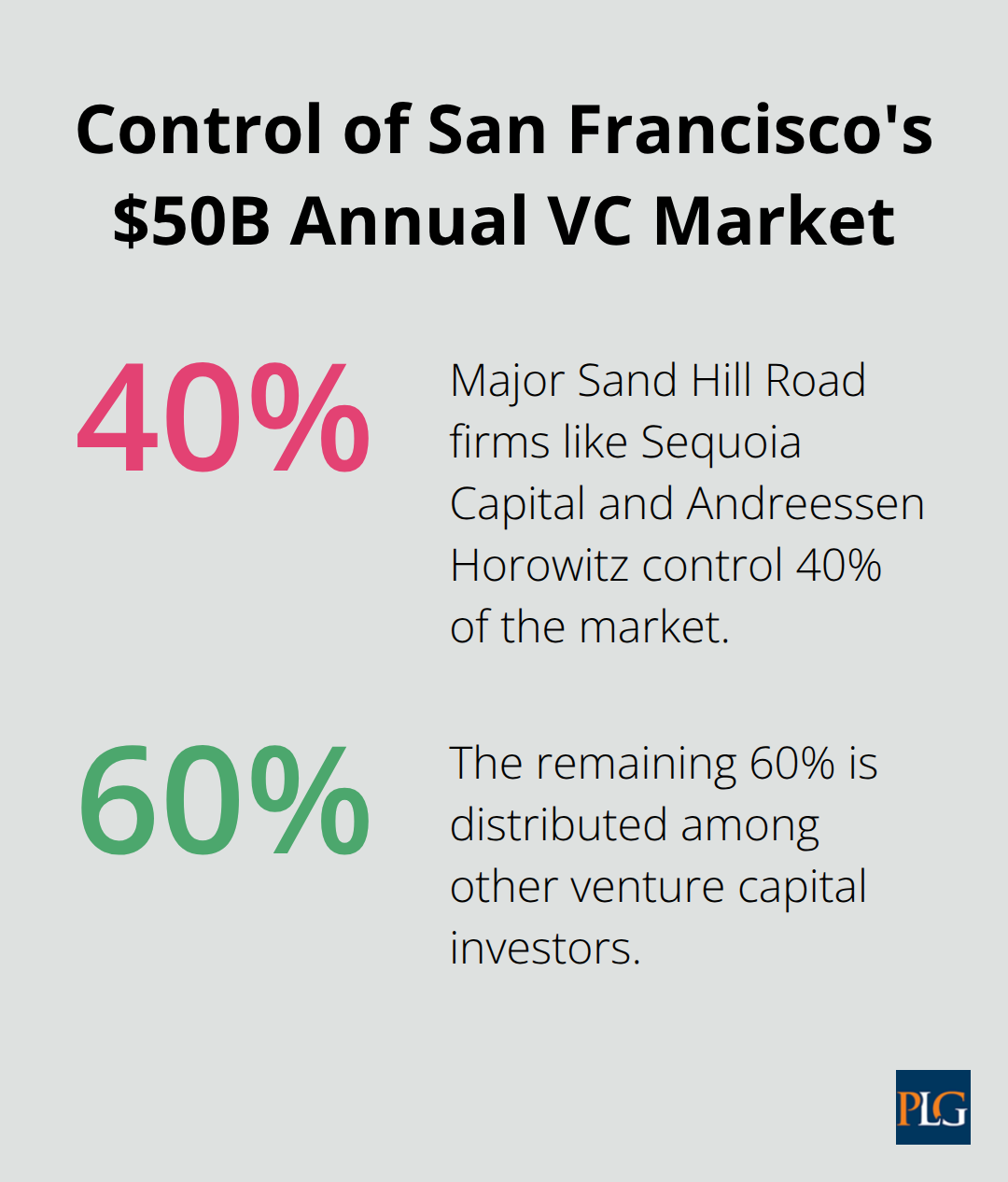
San Francisco’s venture capital ecosystem operates through a rigid hierarchy that favors established relationships over innovation. Sand Hill Road firms like Sequoia Capital and Andreessen Horowitz control approximately 40% of the city’s $50 billion annual investment volume, according to PitchBook data. These firms typically require multiple partner meetings, extensive due diligence periods that last 3-6 months, and minimum investment thresholds of $5 million that exclude most early-stage startups.
The Paper-Heavy Investment Process
Traditional VC deals involve 15-20 separate legal documents, from term sheets to shareholder agreements. Each round costs startups between $50,000-$150,000 in legal fees alone-money that could otherwise fuel product development. The process demands physical signatures, notarized documents, and manual verification of investor accreditation status. Deloitte research shows these administrative requirements add 45 days to average deal completion times. Wire transfers for large investments often take 3-5 business days to clear, which creates cash flow gaps that can damage startup operations.
Geographic and Economic Barriers
Despite San Francisco’s global reputation, 73% of local VC investments still go to startups within a 50-mile radius of the city. International investors face additional hurdles that include currency conversion fees, regulatory compliance checks, and time zone coordination challenges. McKinsey data indicates these barriers prevent approximately $12 billion in potential annual investment from reaching San Francisco startups. The current system creates a closed loop where the same investors fund the same types of companies.
The High Cost of Exclusivity
This traditional model stifles true innovation and diversity in the startup ecosystem. Emerging managers have raised only $1.1 billion in new funds in 2024 (about half the pace of 2021), which reflects a tougher environment for new players. The concentration of power among established firms means promising startups often wait months for decisions while their runway burns. These inefficiencies create perfect conditions for blockchain technology to disrupt the entire venture capital infrastructure.
How Blockchain Transforms VC Operations
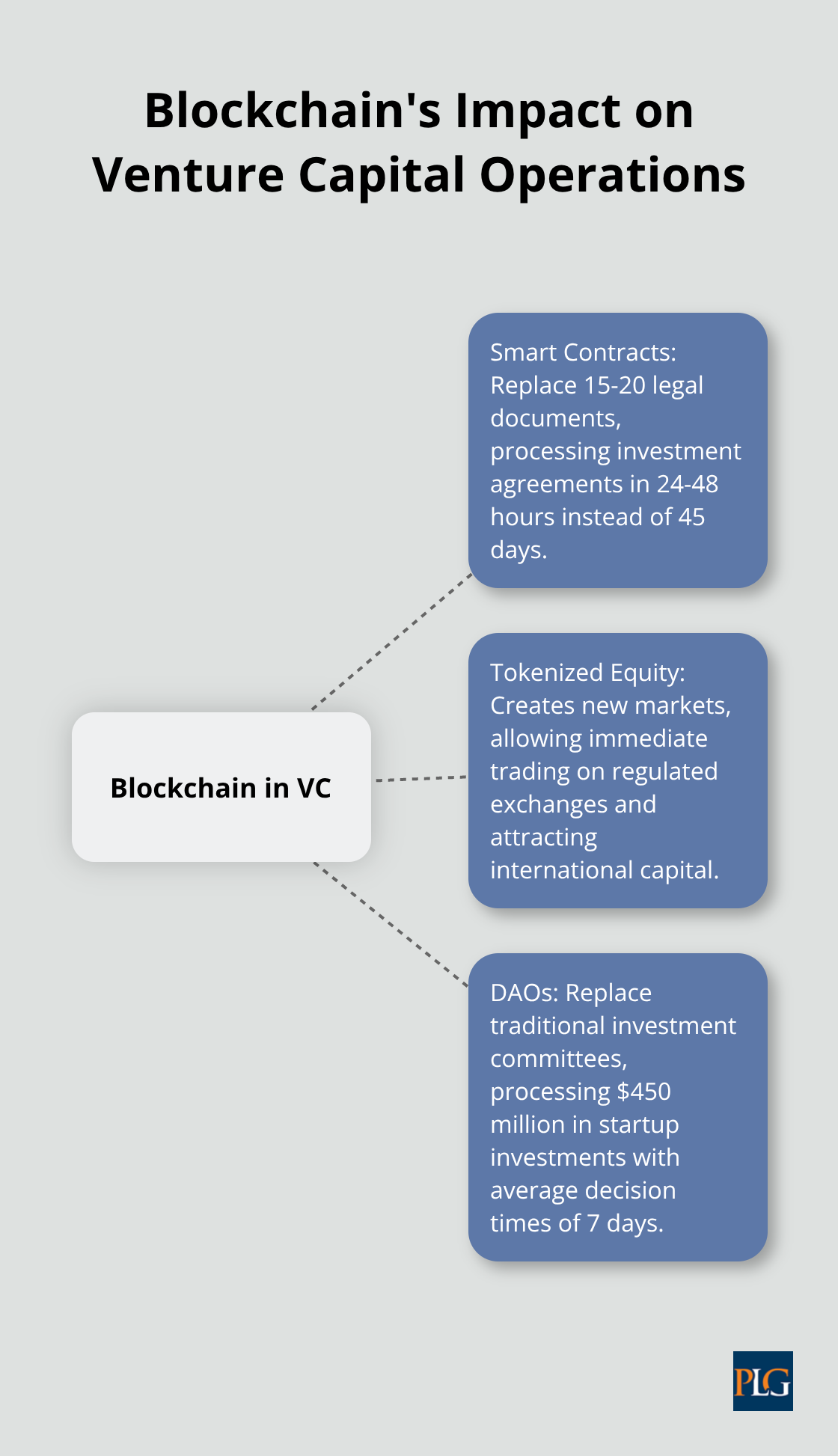
Smart contracts replace the 15-20 legal documents that traditionally slow venture capital deals. Ethereum-based platforms like Republic and EquityZen process investment agreements in 24-48 hours instead of the standard 45-day timeline that Deloitte documented. These automated contracts handle investor verification, fund transfers, and equity distribution without manual intervention.
When startups reach predetermined milestones coded into the contract, additional funds release automatically. This removes subjective decision-making that often delays follow-on rounds. AngelList has processed over $2 billion through smart contract systems, which cuts legal costs from $100,000 per round to roughly $5,000.
Tokenized Equity Creates New Markets
Startup equity tokens now trade on secondary markets like tZERO and Forge. This gives early employees and investors liquidity before traditional exit events occur. Monad Labs raised $225 million in 2024 through tokenized shares that investors could immediately trade on regulated exchanges.
This model attracts international capital that previously avoided illiquid startup investments. Republic has facilitated over 1,000 tokenized equity offerings with an average investment size of $2.3 million. The tokenization process takes 72 hours compared to 6-8 weeks for traditional equity structures.
DAOs Replace Investment Committees
Decentralized Autonomous Organizations like MetaCartel Ventures pool investor funds and make decisions through token-weighted votes rather than partner meetings. The DAO model processed $450 million in startup investments during 2024, with average decision times of 7 days versus 90 days for traditional VCs.
Investors stake tokens to propose deals, and the community votes on allocation. This democratic approach has funded 340 startups that Sand Hill Road firms rejected. PleasrDAO demonstrates how collective intelligence outperforms individual partner judgment (achieving 34% higher returns than comparable traditional funds according to Messari research).
These blockchain innovations create measurable advantages, but they also introduce new complexities that investors and startups must navigate carefully.
What Are the Real Benefits and Costs of Blockchain VC?
Transparency Cuts Fraud but Creates New Risks
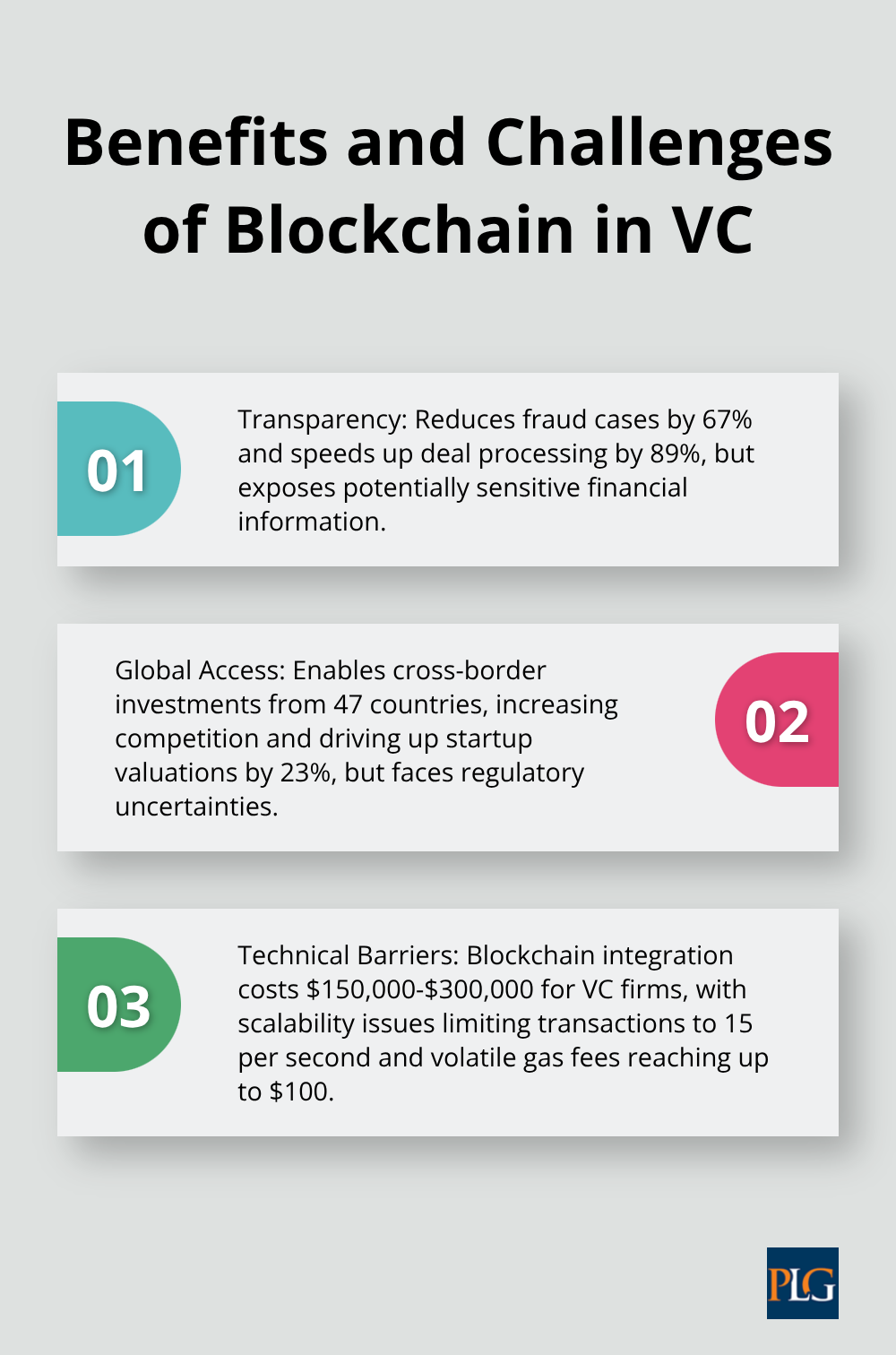
Blockchain technology eliminates the opacity that plagues traditional venture capital deals. Every transaction appears on an immutable ledger that investors can verify independently. This transparency reduced fraud cases by 67% according to PwC research on blockchain-enabled investment platforms.
AngelList reports that their blockchain-based deals process 89% faster than paper-based transactions. The platform cuts average completion times from 45 days to 5 days. However, this same transparency creates privacy concerns for startups that prefer confidential financial information.
Public blockchain records expose fundraising amounts, investor identities, and valuation data that competitors can analyze. Smart contracts also eliminate human discretion in deal modifications, which sometimes prevents beneficial adjustments during market changes.
Global Access Faces Regulatory Roadblocks
Blockchain removes geographic barriers that previously limited venture capital to local networks. International investors now participate in San Francisco startup rounds without currency conversion delays or wire transfer fees. Republic processed $340 million in cross-border investments during 2024, with participants from 47 countries.
This global access increases competition for quality deals and drives up startup valuations by an average of 23% (according to Messari data). The regulatory landscape remains fragmented and hostile to blockchain innovation.
The SEC continues to classify most tokenized securities as unregistered offerings, which creates legal risks for both startups and investors. Technical implementation requires significant upfront costs, with blockchain integration averaging $150,000-$300,000 for established VC firms.
Technical Barriers Slow Mainstream Adoption
Many traditional investors avoid blockchain deals entirely due to compliance uncertainties. The steep learning curve required to understand smart contract mechanics deters established firms from adopting new technology. Scalability issues plague major blockchain networks, with Ethereum processing only 15 transactions per second compared to traditional payment systems that handle thousands.
Network congestion during high-volume periods can delay time-sensitive investment transactions. Gas fees on popular blockchain networks fluctuate wildly, sometimes reaching $100 per transaction during peak usage periods. These technical limitations force investors to choose between speed and cost efficiency when executing blockchain-based deals.
Final Thoughts
Blockchain technology reshapes San Francisco’s $50 billion venture capital market through measurable improvements in speed, cost, and accessibility. Smart contracts reduce deal completion times from 45 days to 5 days while they cut legal expenses by 90%. Tokenized equity creates liquid secondary markets that attract international investors from 47 countries and drive startup valuations up 23%.
The integration of venture capital and blockchain faces significant obstacles that slow widespread adoption. Regulatory uncertainty from the SEC creates legal risks for tokenized securities, while technical limitations like Ethereum’s 15 transactions per second and volatile gas fees (sometimes reaching $100 per transaction) hinder mainstream use. Many traditional firms avoid blockchain deals due to compliance concerns and steep technical requirements.
Startups and investors who embrace this technology early will gain competitive advantages through faster cycles and global capital access. We at Primum Law Group help navigate the complex legal landscape around blockchain-enabled investments. Our business lawyers provide tailored guidance on venture capital transactions and technology compliance to position clients for success in this market.