

San Francisco leads the nation with some of the strictest environmental regulations for businesses. Companies operating in the city face complex compliance requirements that go far beyond federal standards.
We at Primum Law Group see corporations struggling to navigate these evolving corporate environmental law requirements daily. Understanding these regulations isn’t optional-it’s essential for business survival in San Francisco’s regulatory landscape.
What Environmental Laws Control San Francisco Corporations?
San Francisco’s Mandatory Business Requirements
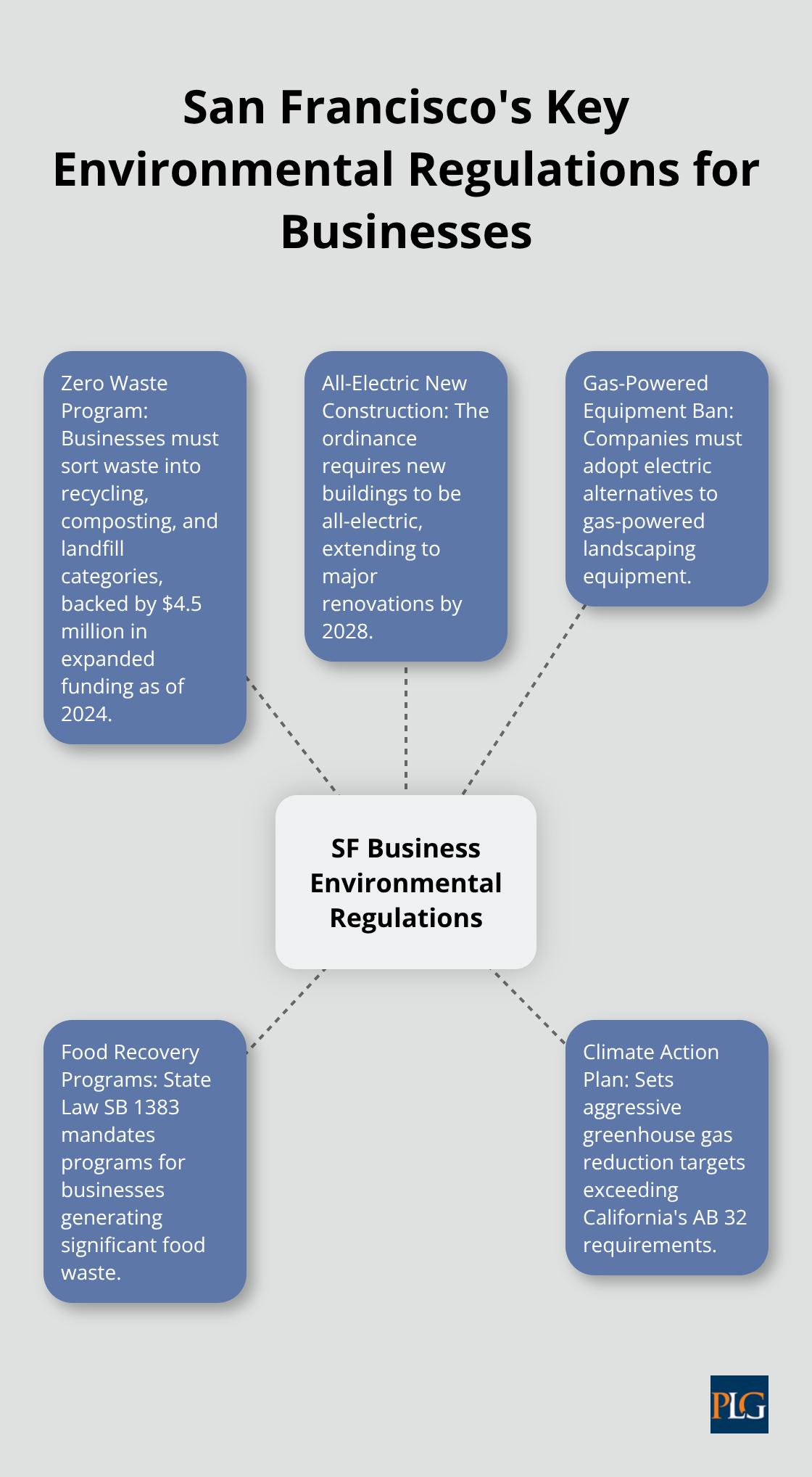
San Francisco enforces environmental regulations that surpass federal standards in both scope and severity. The city requires businesses to sort waste into recycling, composting, and landfill categories through its Zero Waste program, backed by $4.5 million in expanded funding as of 2024. Corporations must comply with the All-Electric New Construction Ordinance, which will extend to major renovations by 2028. The gas-powered landscaping equipment ordinance requires companies to adopt electric alternatives, while State Law SB 1383 mandates food recovery programs for businesses that generate significant food waste.
Climate Action Plan Compliance Standards
San Francisco’s Climate Action Plan sets aggressive greenhouse gas reduction targets that exceed California’s AB 32 requirements. Companies must participate in benchmarking programs to monitor energy consumption and face mandatory compliance with the Commuter Benefits Ordinance. The Construction and Demolition debris recovery law requires all mixed debris management at approved facilities, with stricter enforcement measures adopted in 2024.
Hazardous Waste and Green Business Standards
Businesses that generate hazardous waste must use approved take-back collection centers or registered pickup services rather than optional disposal methods. The SF Green Business Program certifies over 400 local companies that meet high environmental standards, and the city offers grants up to $1,000 for green purchases and automatic dishwashing systems that reduce water waste. The program provides free technical assistance and promotional materials to help businesses achieve certification (which often results in lower operational costs and increased customer traffic).
These regulations create a complex web of requirements that businesses must navigate carefully. Understanding how to develop effective compliance strategies becomes the next critical step for corporations operating in San Francisco’s demanding regulatory environment.
How Do San Francisco Businesses Build Effective Environmental Compliance?
Conduct Environmental Impact Assessments First
San Francisco businesses must complete environmental impact assessments under the California Environmental Quality Act before they launch major projects or expansions. Companies file initial studies with the Planning Department and prepare detailed environmental impact reports for projects that affect air quality, water resources, or waste generation. The SF Recycles tool helps businesses identify proper waste sorting and disposal methods, while the California Green Business Network website provides certification pathways. Smart companies engage environmental consultants early in the planning process to avoid costly delays and redesigns.
Create Systematic Waste Management Programs
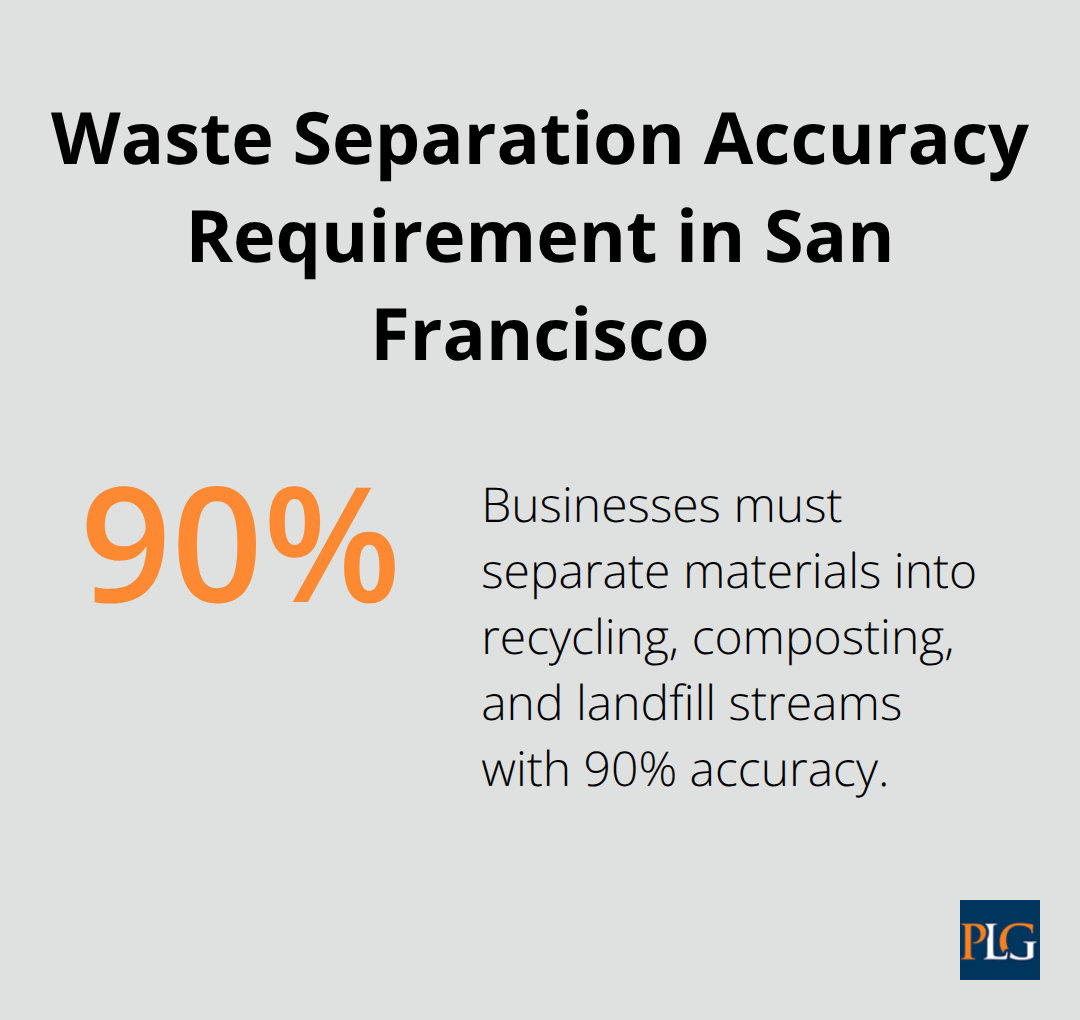
The city’s expanded Zero Waste program with $4.5 million in funding requires businesses to separate materials into recycling, composting, and landfill streams with 90% accuracy rates. Companies must register with approved hazardous waste collection centers and schedule regular pickups through certified services.
The Construction and Demolition debris recovery law mandates that all mixed debris goes to approved facilities, with violations that result in fines up to $500 per incident.
Access Available Financial Incentives
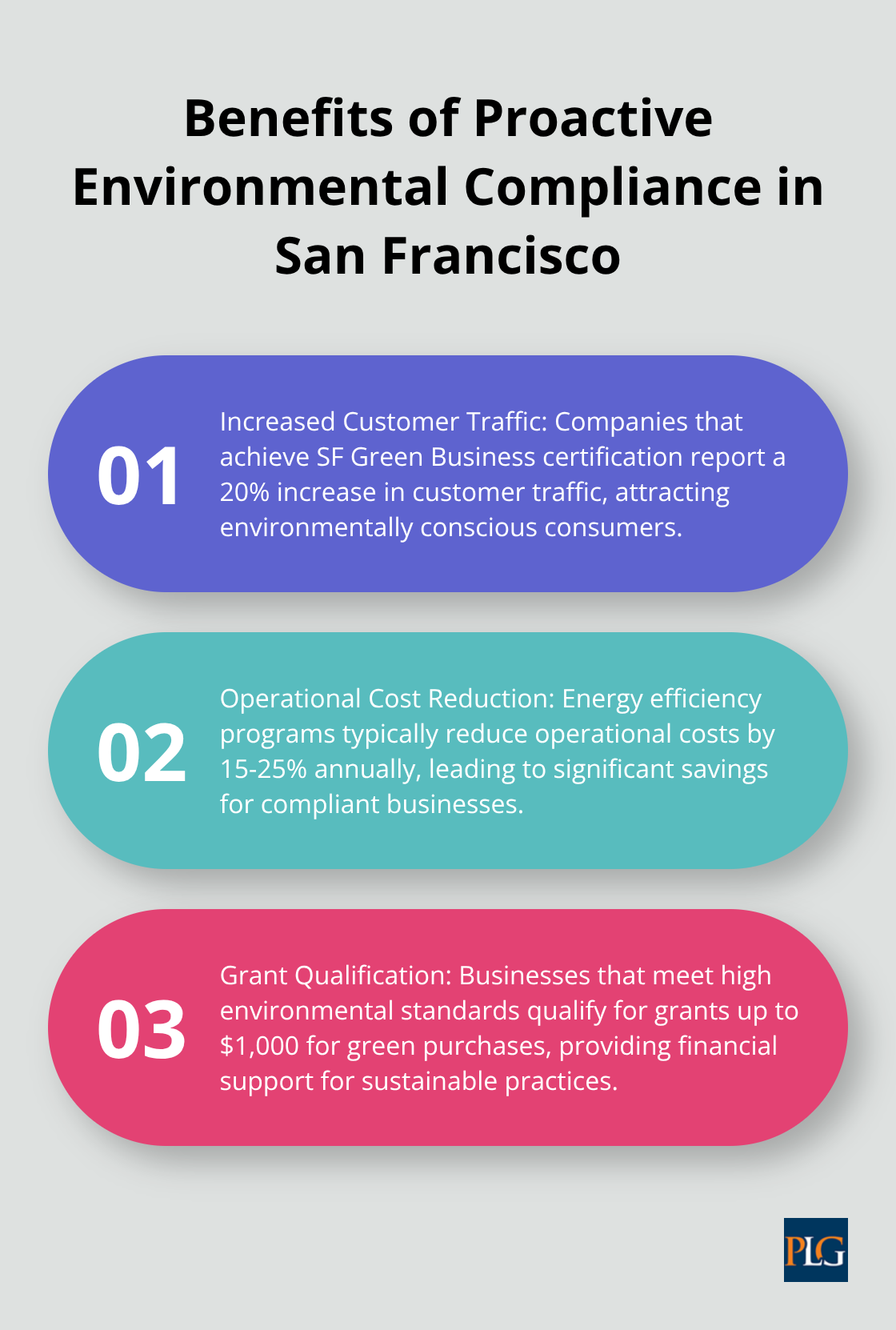
Businesses can access free reusable foodware through city programs and apply for the Automatic Dishwashing Grant to reduce water consumption by up to 30%. The BayREN Business Program offers energy efficiency assessments that typically reduce operational costs by 15-25% annually. Companies that achieve SF Green Business certification report average customer traffic increases of 20% and qualify for grants up to $1,000 for green purchases (with over 400 local businesses already certified).
These compliance strategies form the foundation for successful environmental management, but even well-prepared companies face significant regulatory challenges. Understanding common environmental law obstacles helps businesses anticipate and address potential compliance issues before they become costly legal problems that require corporate law expertise.
What Environmental Challenges Threaten San Francisco Businesses?
Regulatory Updates Create Constant Compliance Pressure
California lawmakers failed to reinstate environmental protections in September 2025, which left businesses uncertain about future requirements. The June 2025 changes allowed certain developments to bypass environmental reviews and created exemptions for advanced manufacturing facilities (including hydrogen production and lithium mining). These regulatory shifts happen without extensive public discussion through budget trailer bills, which makes it difficult for companies to anticipate compliance changes. Senate leaders acknowledged that significant environmental reforms require multi-party agreements, but the lack of consensus among lawmakers creates unpredictable regulatory environments that force businesses to constantly monitor policy developments.
Enforcement Actions Carry Substantial Financial Penalties
San Francisco imposes fines up to $500 per incident for Construction and Demolition debris violations, while waste sorting compliance failures result in escalated penalty structures. The city’s Environment Department received an additional $3 million in funding specifically to bolster enforcement of Zero Waste programs, which indicates increased scrutiny of business compliance. Companies face litigation challenges under the Clean Water Act for non-compliance, and toxic tort litigation against corporations has risen significantly as environmental justice groups target pollution in vulnerable communities. The expanded enforcement budget means more frequent inspections and higher detection rates for violations.
Third-Party Claims and Community Opposition Escalate
Environmental justice advocates argue that manufacturing exemptions threaten community health, particularly in low-income neighborhoods within 300 feet of homes and schools. Asha Sharma from Leadership Counsel for Justice and Accountability emphasizes that environmental review processes often provide the only avenue for residents to voice objections to local developments. Citizen suits against companies for environmental violations have increased, driven by community groups that challenge projects which affect local ecosystems and public health. The divide between pro-development policies and environmental protection creates more opportunities for third-party challenges that can delay projects and increase legal costs for corporations that operate in San Francisco.
Final Thoughts
Proactive environmental compliance delivers measurable business advantages beyond penalty avoidance. Companies that achieve SF Green Business certification report 20% increases in customer traffic and qualify for grants up to $1,000, while energy efficiency programs typically reduce operational costs by 15-25% annually. Early compliance prevents costly project delays and redesigns that can derail business operations.
Corporate environmental law in San Francisco requires legal guidance due to the complex regulatory landscape and frequent policy changes. The September 2025 failure to reinstate environmental protections and June exemptions for manufacturing facilities created uncertainty that businesses cannot navigate alone. Environmental justice groups increasingly file citizen suits, while enforcement budgets have expanded with an additional $3 million in funding for Zero Waste programs.
Future regulations will likely become more stringent as San Francisco pursues aggressive climate goals. The All-Electric New Construction Ordinance extends to major renovations in 2028, and California will prohibit non-reusable propane cylinders in January 2028 (creating new compliance requirements for affected businesses). Primum Law Group provides the corporate governance and compliance guidance that businesses need to navigate San Francisco’s demanding environmental regulations successfully.