

Startups in San Francisco and beyond face a critical choice when raising capital: how to fund growth without giving away too much equity. Convertible notes offer a practical path forward.
We at Primum Law Group see convertible note strategy as one of the most efficient financing tools for early-stage companies. This guide walks you through how they work, why they matter, and when to use them instead of other funding options.
Convertible Notes: How They Work in San Francisco Startups
What Makes Convertible Notes Different From Other Debt
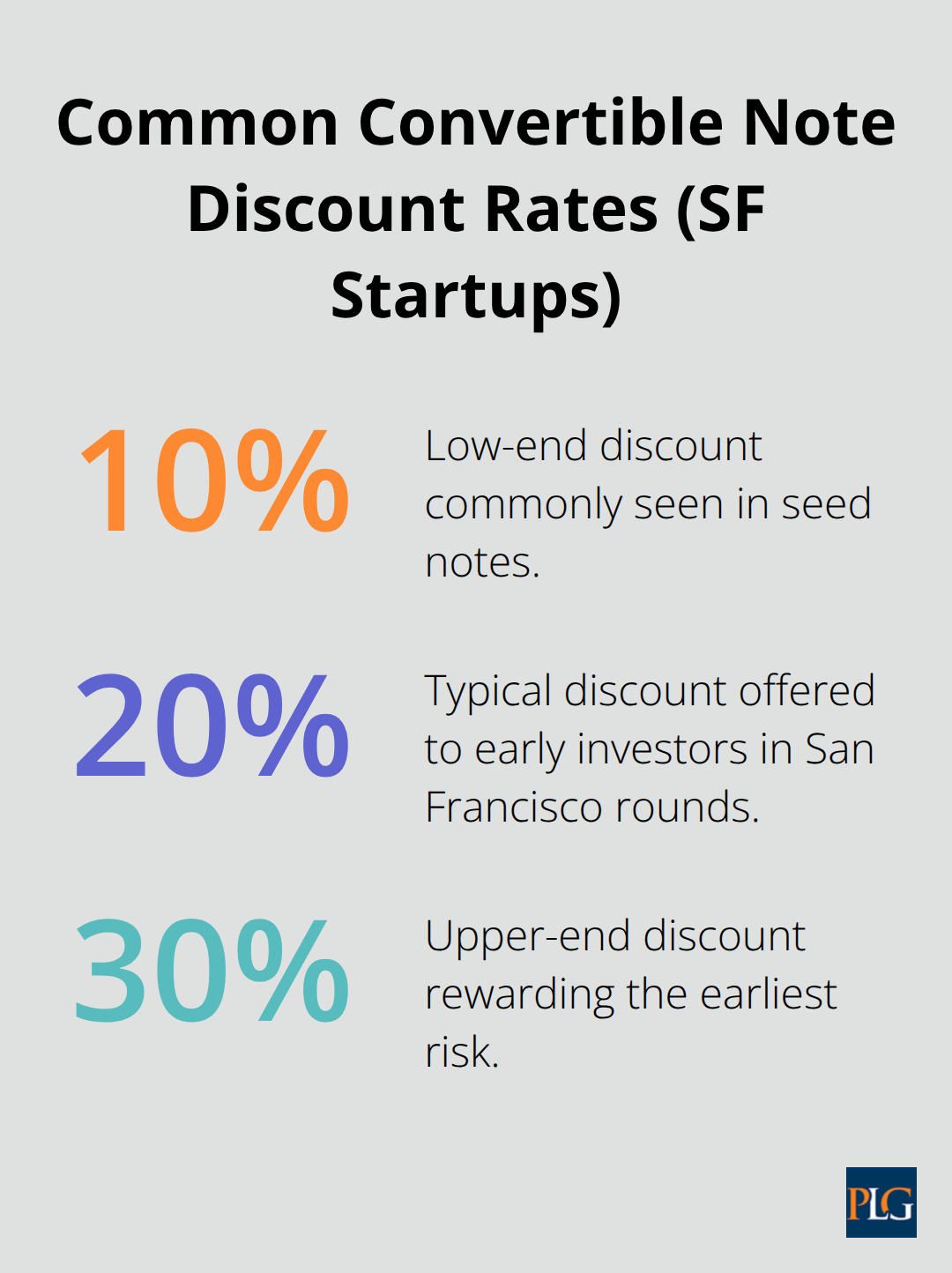
A convertible note is a short-term debt instrument that converts into equity when certain conditions are met. Unlike traditional loans, convertible notes eliminate monthly payments and fixed repayment schedules. Instead, investors receive their return through equity conversion, typically triggered by a future funding round or a maturity date. The structure benefits both parties: founders avoid immediate dilution and valuation negotiations, while investors gain downside protection through debt status plus upside through equity conversion. Most convertible notes in San Francisco’s startup ecosystem mature between 18 and 36 months, according to venture capital tracking platforms. Three critical components determine how conversion happens: a valuation cap, which sets a maximum valuation at conversion; a discount rate, typically ranging from 10 to 30 percent, that rewards early investors with a lower per-share price; and an interest rate, usually between 5 and 8 percent annually, that accrues and converts alongside the principal.
How Valuation Caps and Discounts Work Together
The valuation cap acts as the ceiling price at which your note converts. If your Series A values the company at 15 million dollars, but your note has a 10 million dollar cap, conversion happens at the capped valuation instead. The discount rate operates separately: it applies a percentage reduction to the Series A price per share. A 20 percent discount means investors pay 80 percent of whatever price Series A investors pay. These mechanisms often work in tandem, and conversion uses whichever is more favorable to the note holder. Maturity dates typically range from 24 to 36 months, and if no qualifying event occurs by then, the note either converts automatically at a default valuation, extends, or requires repayment. Interest accrual is standard, compounding annually and converting into equity alongside the principal. A 100,000 dollar note at 7 percent interest becomes roughly 107,000 dollars in conversion value after one year.
Why Valuation Caps Matter More Than You Think
Valuation caps protect early investors from excessive dilution in high-growth scenarios. When a startup’s valuation skyrockets between the note issuance and Series A, the cap prevents investors from paying inflated prices. This protection makes convertible notes attractive to seed-stage investors who take on higher risk. However, founders should understand that aggressive caps (too low) signal weakness to future investors and may complicate Series A negotiations. The cap also influences investor appetite: notes with reasonable caps attract more interest than those with unrealistic valuations. Understanding this dynamic helps you structure notes that appeal to investors without handicapping your company’s future rounds.
Interest Rates and Their Impact on Conversion
Interest rates on convertible notes typically fall between 5 and 8 percent annually, though rates vary based on market conditions and company stage. This interest accrues throughout the note’s life and converts into equity at the same valuation as the principal. Higher interest rates make notes more attractive to investors but increase the equity stake they receive upon conversion. Lower rates appeal to founders concerned about dilution but may deter conservative investors seeking adequate returns. The interest component transforms a convertible note into a hybrid instrument that rewards patience while maintaining debt characteristics. When structuring your note, consider how interest rates affect both investor returns and your eventual equity distribution.
Preparing for Your Next Funding Round
Understanding these mechanics positions you to negotiate effectively when Series A conversations begin. Investors will scrutinize your note terms, and founders who grasp valuation caps, discount rates, and interest calculations navigate these discussions with confidence. The convertible note structure you choose today shapes how much equity you retain and how future investors perceive your company’s value. Getting this right requires careful attention to market conditions, investor expectations, and your own growth projections. When you’re ready to formalize these agreements, working with experienced legal counsel helps you avoid costly mistakes and structure terms that serve your long-term interests.
Why Convertible Notes Cost Less Than Equity Rounds
How Convertible Notes Slash Legal and Administrative Costs
Convertible notes eliminate the valuation negotiation that makes equity rounds expensive and time-consuming. When you raise a traditional Series A, investors demand months of due diligence, board presentations, and valuation debates. Legal fees alone for a Series A typically run 15,000 to 50,000 dollars, according to venture capital data tracking firms. Convertible notes cut these costs dramatically because valuation happens later, at a Series A or qualifying event. You pay legal fees upfront for the note agreement, usually between 2,000 and 5,000 dollars, then defer the expensive valuation conversation.
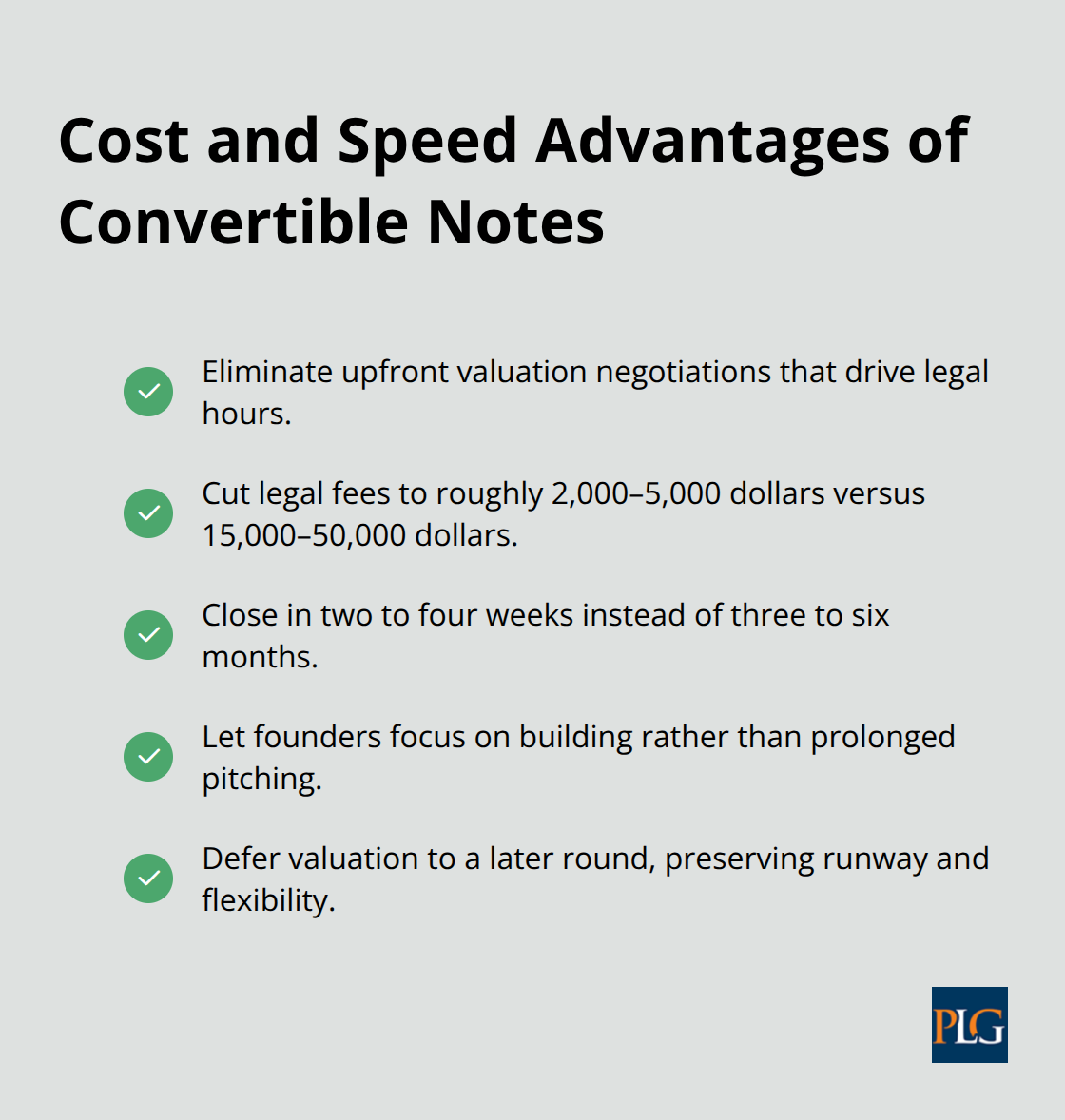
This cost difference matters most to capital-constrained startups that need runway preserved for product development.
Speed Advantages That Compound Your Savings
The speed advantage compounds the savings: founders close convertible notes in two to four weeks instead of the three to six months typical for equity rounds. Your team stays focused on building rather than pitching to dozens of potential investors. Investors also benefit from lower friction, which means they move faster and commit capital sooner. This mutual efficiency is why convertible notes dominate the pre-Series A landscape in San Francisco and beyond.
Flexibility That Protects Your Future Valuation
The flexibility in convertible note terms gives founders negotiating power that traditional equity rounds don’t allow. You control the valuation cap, discount rate, and maturity timeline without the rigid structures that Series A investors impose. A startup in San Francisco raising 500,000 dollars through a convertible note might set a 5 million dollar cap and 20 percent discount, knowing these terms reflect current market conditions and investor expectations. If market conditions shift or your growth accelerates, you adjust terms for subsequent note rounds rather than being locked into a single valuation.
Why Adaptability Matters in Early-Stage Growth
This adaptability is critical because early-stage startups face unpredictable growth trajectories. You avoid the situation where an aggressive Series A valuation becomes a liability when growth slows, or where a conservative valuation leaves early investors with outsized returns. The maturity date flexibility also matters: notes typically mature in 24 to 36 months, giving you a realistic window to hit Series A milestones without pressure to force premature fundraising. Interest rates between 5 and 8 percent annually remain reasonable across market cycles, unlike equity valuations that swing wildly based on investor sentiment.
Moving Forward With Confidence
These cost and flexibility advantages position you to raise capital efficiently while maintaining control over your company’s trajectory. The next section examines how convertible notes stack up against other financing options you might consider.
Convertible Notes vs. Equity and SAFE Agreements in San Francisco
How Convertible Notes and SAFE Agreements Differ
Convertible notes and SAFE agreements both defer valuation, but they operate under fundamentally different legal and financial structures. A SAFE, or Simple Agreement for Future Equity, is technically not debt-it’s a contractual right to equity conversion without interest accrual or maturity dates. Convertible notes, by contrast, carry interest rates between 5 and 8 percent annually and mandatory maturity dates, typically 24 to 36 months out. This distinction matters enormously. If your startup never reaches a qualifying event, SAFE holders have no claim to repayment, while convertible note holders can demand their principal back plus accrued interest.
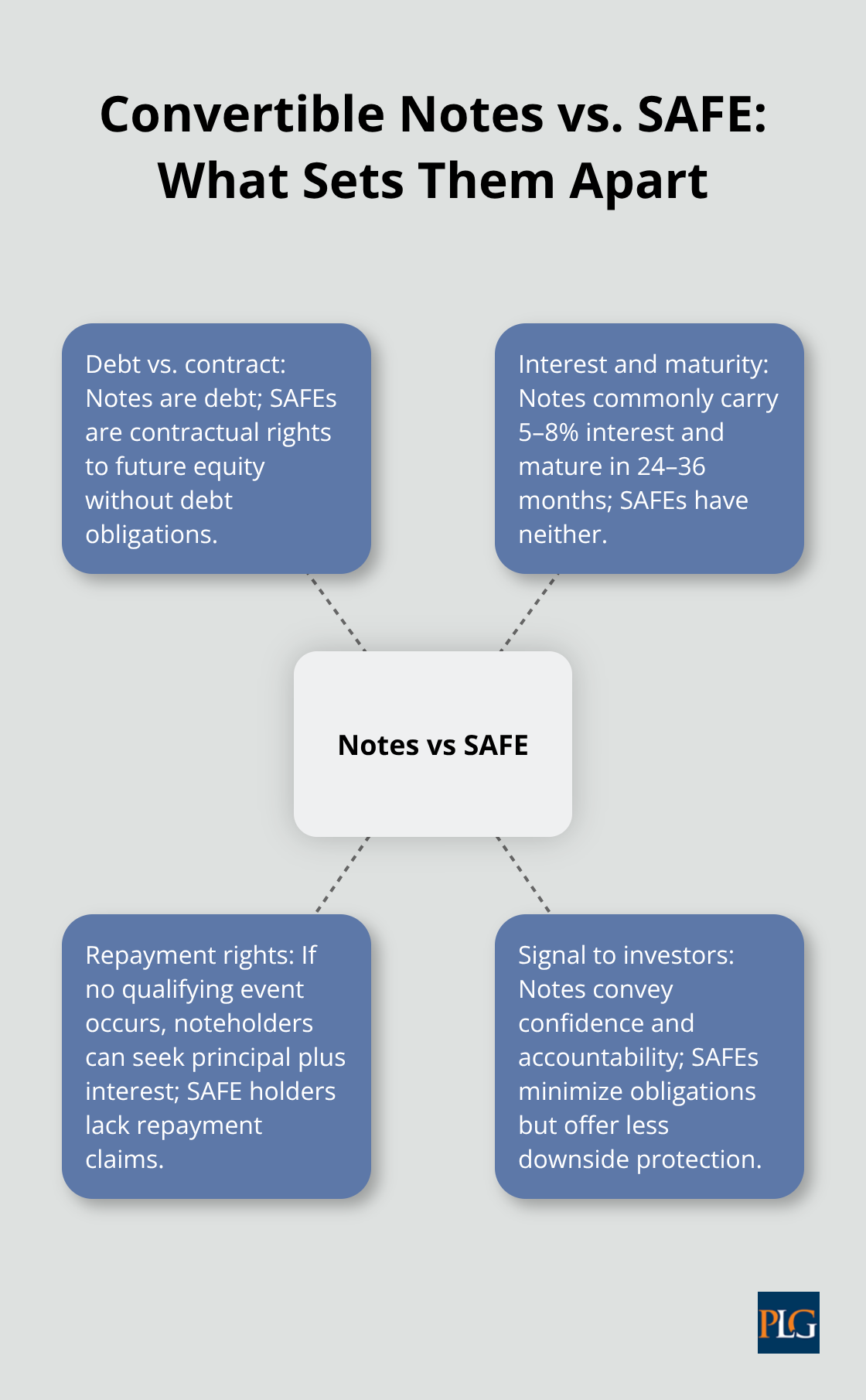
Investors understand this difference clearly: SAFE agreements attract founders who want minimal obligations, while convertible notes appeal to investors who seek downside protection through debt status.
Why Convertible Notes Signal Confidence to Investors
In San Francisco’s competitive funding environment, the choice between these two instruments signals your confidence in hitting Series A milestones. Convertible notes demonstrate that you believe in your timeline enough to accept repayment obligations if you miss your targets. This confidence matters to investors who want assurance that you’re serious about reaching the next major funding event. SAFE agreements, by contrast, suggest you’re uncertain about your fundraising trajectory and want to minimize obligations. Both approaches have merit, but they communicate different messages to your investor base.
Convertible Notes vs. Traditional Equity Rounds
Traditional equity rounds require immediate valuation consensus, expensive legal work costing 15,000 to 50,000 dollars, and three to six months of negotiation. You avoid all of this with convertible notes, which close in two to four weeks and cost only 2,000 to 5,000 dollars in legal fees. The speed advantage alone justifies convertible notes over equity rounds for pre-Series A capital raises. Equity rounds make sense only if you’ve already achieved significant traction-meaningful revenue, user growth, or partnerships-that justifies immediate valuation negotiations.
Matching Your Instrument to Your Situation
If you’re confident you’ll reach Series A within 24 months and want investor protection that encourages follow-on funding, convertible notes win. If you’re uncertain about your fundraising timeline and want to minimize obligations, SAFE agreements reduce friction but offer less certainty to investors, potentially limiting your fundraising capacity. Most startups raising under 1 million dollars benefit from convertible notes because they preserve runway, move fast, and keep early investors committed to your success through debt protections. When you structure your capital strategy, working with experienced legal counsel helps you match the instrument to your actual fundraising situation rather than adopting whatever trend dominates current startup discourse. At Primum Law Group, we help San Francisco startups navigate these decisions by analyzing your specific timeline, growth projections, and investor expectations to recommend the right financing structure.
Final Thoughts
Convertible notes solve a real problem for San Francisco startups: how to raise capital quickly without getting trapped in expensive valuation negotiations. The mechanics are straightforward-debt that converts to equity at a future event-but the strategic advantages compound over time. You preserve runway by avoiding 15,000 to 50,000 dollars in legal fees typical of equity rounds, and you close funding in two to four weeks instead of three to six months. Your convertible note strategy maintains flexibility to adjust terms across multiple note rounds rather than locking into a single valuation.
Your capital plan should account for your actual growth trajectory and Series A timeline. If you’re confident you’ll hit meaningful milestones within 24 months, convertible notes make sense because they create mutual accountability between you and your investors-the interest rates between 5 and 8 percent annually and maturity dates keep everyone focused on reaching the next funding event. Most startups benefit from convertible notes because they balance founder flexibility with investor protection.
Three concrete steps move you forward. First, determine your Series A timeline realistically, not optimistically. Second, set valuation caps and discount rates that reflect current market conditions and your growth stage. Third, work with experienced legal counsel to structure terms that attract investors while protecting your long-term interests-Primum Law Group helps San Francisco startups navigate these decisions by analyzing your specific situation and recommending the right financing structure for your stage and goals.