

Corporate law interviews in San Francisco present unique challenges that reflect the city’s dynamic legal landscape. The tech-heavy environment means candidates face questions about venture capital, IPOs, and complex corporate structures.
We at Primum Law Group see candidates struggle most with corporate law interview questions that blend traditional legal concepts with Silicon Valley’s fast-paced business realities.
What Corporate Law Interview Questions Really Test
Corporate law interviews test three fundamental areas that separate strong candidates from weak ones. First, interviewers assess your grasp of corporate formation mechanics, including Delaware incorporation benefits, board composition requirements, and equity structure implications. Second, they evaluate your understanding of securities regulations, particularly Rule 506 exemptions and accredited investor definitions that drive Silicon Valley fundraising. Third, they probe your knowledge of M&A processes, from due diligence procedures to purchase agreement negotiations.
Question Formats That Matter Most
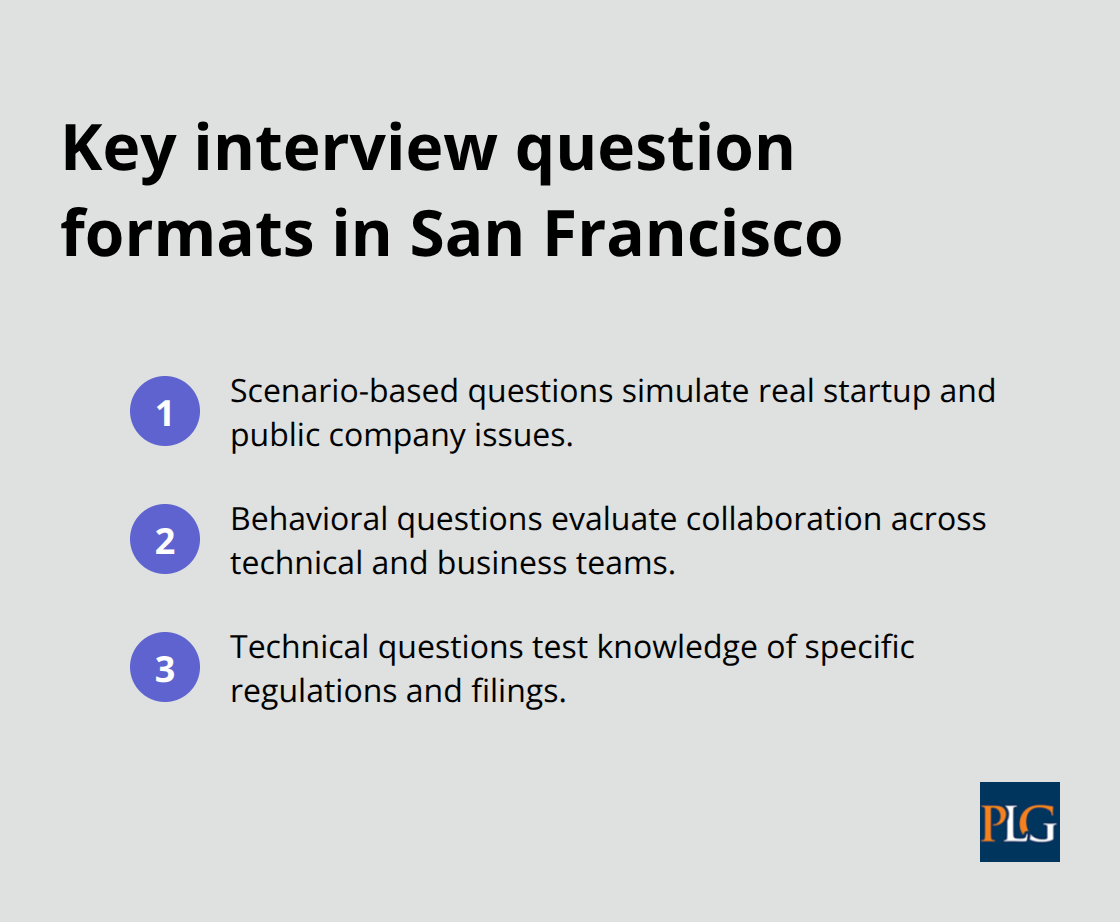
San Francisco interviews follow predictable patterns that smart candidates prepare for systematically. Scenario-based questions dominate, where interviewers present real situations like a startup that faces down round protection triggers or a public company that deals with insider trading allegations. Behavioral questions focus heavily on collaboration skills because tech companies demand lawyers who work seamlessly with engineers, product managers, and business development teams. Technical questions drill down on specific regulations like Section 409A valuations or Regulation D filing requirements that East Coast firms rarely emphasize.
Why San Francisco Interviews Stand Apart
The Bay Area legal market operates differently than New York or Los Angeles, which creates interview dynamics that catch unprepared candidates off guard. Local firms prioritize business judgment over pure legal analysis because startup clients need practical solutions, not academic treatises. Citi Private Bank reported Bay Area firms achieved 7.2% revenue growth in 2017 (the highest nationally), driven by their ability to balance legal rigor with commercial reality. Interviewers expect candidates to understand venture capital economics, including liquidation preferences and anti-dilution provisions that traditional corporate lawyers never encounter.
Technical Knowledge Areas You Must Master
Silicon Valley interviews probe deeper into venture capital mechanics than traditional corporate law positions. Candidates must understand preferred stock structures, including participating preferred rights and multiple liquidation preferences that protect early investors. Anti-dilution provisions become central topics, with interviewers testing knowledge of weighted average versus ratchet protection mechanisms. Section 83(b) elections surface frequently because startup employees receive restricted stock grants that require immediate tax decisions.
The next section examines specific corporate law topics and sample questions that San Francisco interviewers use to evaluate candidates across these technical areas.
Which Questions Will San Francisco Interviewers Actually Ask
Corporate Formation Questions That Trip Up Candidates
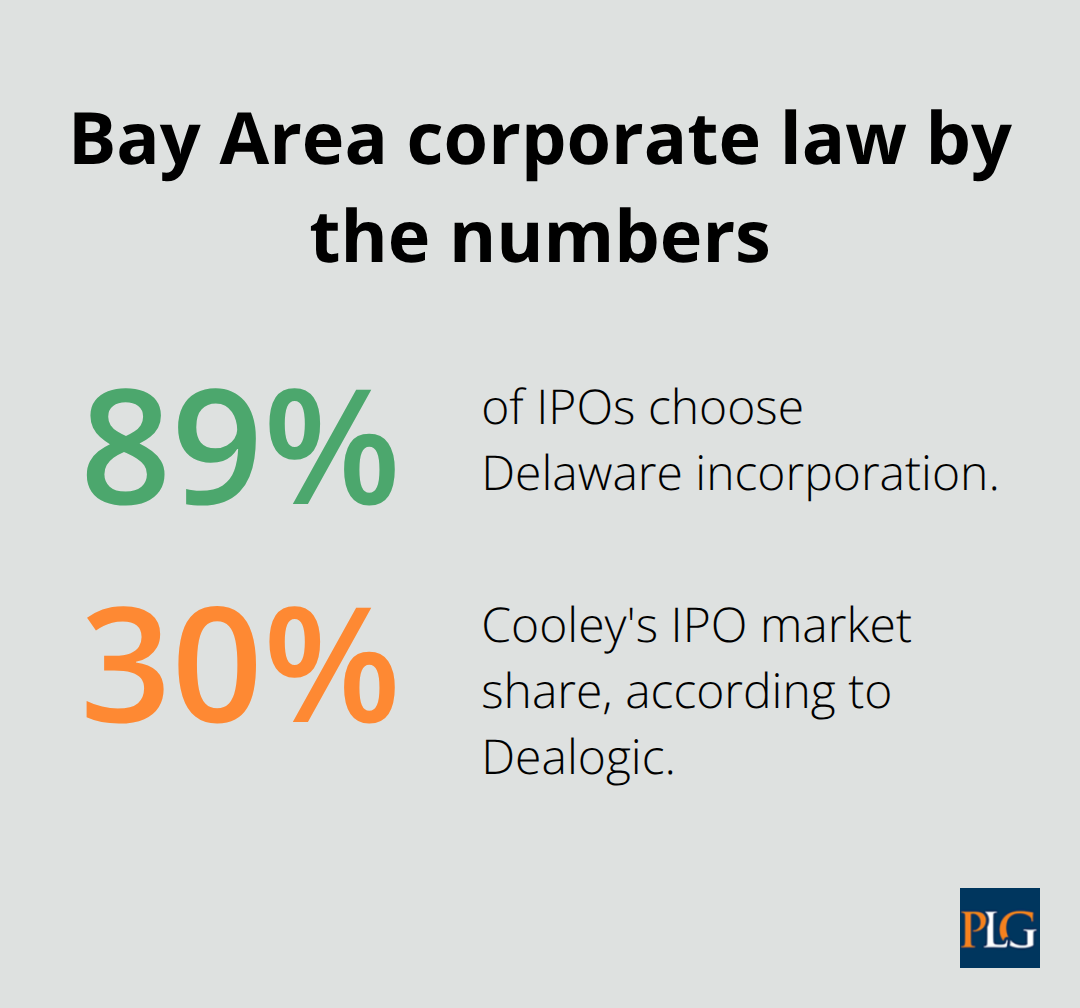
San Francisco interviewers focus on Delaware incorporation mechanics because 89% of IPOs choose Delaware incorporation. They ask why startups select Delaware over California, and they test your knowledge of the Court of Chancery’s business judgment rule and Section 102(b)(7) liability limitations. Expect questions about authorized versus issued shares, particularly how 10 million authorized shares with 1 million issued creates flexibility for future equity rounds.
Interviewers probe board composition requirements and ask how independent director mandates affect Series A preferred stock agreements. They test knowledge of 83(b) elections, ask when founders should file within 30 days of restricted stock grants, and explore why founders who miss this deadline pay thousands in additional taxes.
Securities Law Scenarios That Matter in Silicon Valley
Venture capital questions dominate because Bay Area firms raised $63 billion in 2021 according to PwC MoneyTree. Interviewers present scenarios where startups need bridge notes with conversion discounts, and they test your grasp of Rule 506(b) versus 506(c) exemptions and their investor verification requirements. They ask about accredited investor definitions, particularly the $1 million net worth threshold (excluding primary residence). Expect detailed questions about liquidation preferences, including how 2x participation affects founder returns in acquisition scenarios. Anti-dilution provisions surface frequently, with interviewers who ask how weighted average broad-based protection differs from narrow-based calculations and why investors prefer ratchet provisions in down rounds.
M&A Interview Challenges That Separate Strong Candidates
Acquisition questions focus on due diligence processes because tech M&A hit $1.1 trillion globally in 2021. Interviewers test knowledge of material adverse change clauses and ask how COVID-related revenue drops triggered MAC provisions in deals. They probe purchase price adjustment mechanisms, particularly how working capital calculations affect final acquisition values. Expect questions about representations and warranties insurance, including how $5-15 million policies shift risk allocation between buyers and sellers. Hart-Scott-Rodino thresholds become technical topics, with interviewers who ask about the $101 million size-of-transaction test and 30-day periods that delay closings.
The next section covers how to prepare effectively for these challenging interviews through targeted research and practice techniques that address San Francisco’s unique legal environment.
How Should You Prepare for San Francisco Corporate Law Interviews
Target the Right Bay Area Firms
Research begins with firms that match your career goals, not broad applications to every corporate practice. Wilson Sonsini Goodrich & Rosati leads venture capital work with over 3,000 startup clients, while Cooley dominates IPO representations with 30% market share according to Dealogic data. Latham & Watkins built their Bay Area presence by recruiting top partners from local firms, creating hybrid East Coast rigor with Silicon Valley practicality. Target firms based on their client mix: emerging company practices serve early-stage startups with flexible billing, while growth equity teams handle Series C and later rounds with traditional hourly rates. Study recent deals through PitchBook or Crunchbase to understand each firm’s transaction volume and average deal size.
Master Silicon Valley Business Mechanics
Silicon Valley interviews require deep knowledge of startup economics that traditional corporate lawyers never encounter. Understand how liquidation preferences work in practice: a $10 million Series A with 1x non-participating preferred means investors get their money back first, then share remaining proceeds pro rata with common stockholders. Anti-dilution protection becomes critical in down rounds, where weighted average broad-based calculations protect investors better than narrow-based formulas. Section 409A valuations drive option pricing for private companies, with firms like Carta providing automated valuations that replace expensive third-party appraisals.
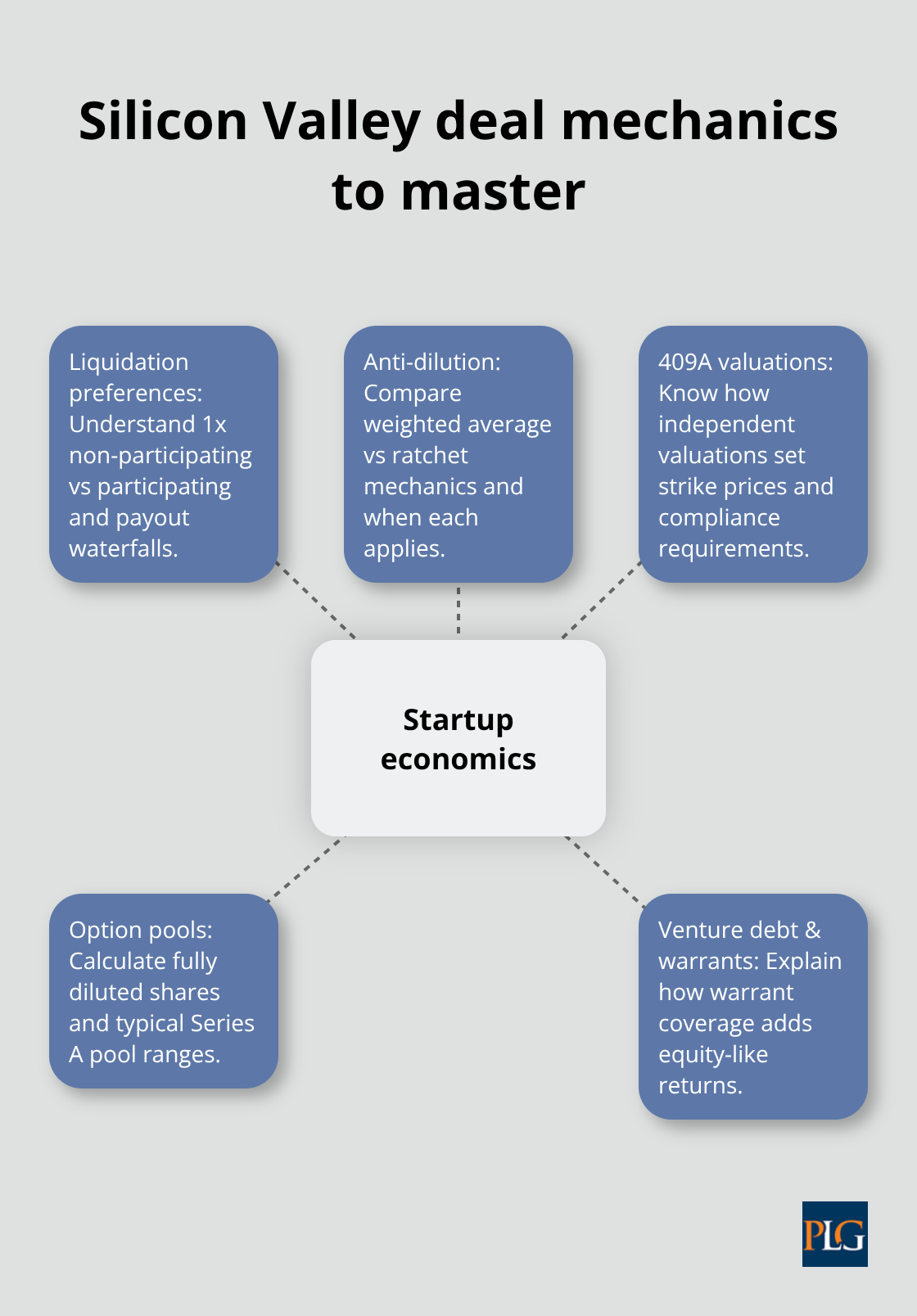
Practice calculating fully diluted share counts including employee option pools (which typically range from 15-20% for Series A companies). Mock interviews should cover venture debt structures, particularly how Silicon Valley Bank’s warrant coverage creates additional investor returns through equity kickers.
Practice With Real Deal Documents
Download actual financing documents from SEC EDGAR filings to understand how theoretical concepts appear in practice. Series A term sheets follow standard National Venture Capital Association formats, but each deal includes unique provisions like board composition requirements or information rights that affect governance. Study public company proxy statements to understand executive compensation structures, including how performance-based equity aligns management incentives with shareholder returns. Practice explaining complex transactions in simple terms because startup clients need practical guidance, not legal jargon. Use resources like Fenwick & West’s Venture Capital Survey to understand current market terms for liquidation preferences, anti-dilution provisions, and board composition requirements that interviewers test frequently.
Prepare for Technical Question Formats
San Francisco interviews test practical application rather than theoretical knowledge. Interviewers present scenarios where startups face down round protection triggers or public companies deal with insider trading allegations. They expect candidates to walk through Section 83(b) election deadlines and explain why founders who miss the 30-day window pay thousands in additional taxes. Practice explaining Delaware Court of Chancery decisions and how business judgment rule protections affect board liability in M&A transactions. Technical questions probe Rule 506 exemptions and accredited investor verification requirements that drive Silicon Valley fundraising rounds. Understanding corporate venture capital interview formats helps candidates prepare for strategic fit analysis questions that differ from traditional VC firm approaches.
Final Thoughts
Corporate law interview questions in San Francisco test your ability to blend traditional legal principles with Silicon Valley’s innovation-driven environment. Success requires practical knowledge of venture capital mechanics, securities regulations, and M&A processes that drive the Bay Area’s $63 billion annual funding ecosystem. Firms prioritize candidates who demonstrate business judgment alongside technical legal skills.
Your next career steps should focus on relationships within the local legal community through bar association events and startup networking gatherings. The San Francisco legal market rewards lawyers who understand both legal technicalities and business realities that startups face daily. Over 70 AmLaw100 firms compete for talent in the Bay Area, which makes professional networking particularly important for career advancement.
We at Primum Law Group help corporate lawyers navigate San Francisco’s competitive market through our experience with startup counseling and venture capital transactions. The firms that thrive combine technical legal knowledge with practical business judgment that helps clients navigate complex corporate challenges. This approach allows lawyers to provide the strategic guidance that growing companies need most.