

Founders often sign tech startup agreements without fully understanding what they’re agreeing to. Terms like intellectual property ownership, licensing restrictions, and data security obligations can make or break your business, yet many founders treat them as afterthoughts.
At Primum Law Group, we’ve seen startups face costly disputes because their agreements lacked clarity. This post walks you through the essential terms, key clauses, and practical steps to protect your company from day one.
What Founders Get Wrong About Tech Agreement Terms
Intellectual Property Ownership Creates the Most Costly Mistakes
Founders misread intellectual property ownership clauses more often than any other contract section. Most assume that because they built something, they automatically own it-that assumption costs startups thousands in disputes. When you work with contractors, use open-source code, or bring on co-founders, ownership becomes murky fast. The person who wrote the code isn’t always the person who owns it legally.
Your agreement needs to state explicitly who retains rights to source code, patents, trademarks, and trade secrets from day one. If your agreement says the contractor retains ownership while you thought you were buying full rights, you’ve handed control of your product to someone else. Many founders only spot this problem when they try to raise funding and investors demand clear IP chain of title.
Licensing Clauses Trap Founders Who Confuse Ownership With Usage Rights
Licensing clauses create similar confusion because founders conflate ownership with usage rights. You might own something outright but still need a license to use someone else’s technology, APIs, or libraries within it. Open-source licenses like MIT or GPL come with specific obligations-GPL requires you to open-source your own code if you modify theirs, while MIT lets you do almost anything.
Missing this distinction has tanked more than a few startups mid-development when they realized they couldn’t commercialize their product without rewriting major components. Your agreement should map out which licenses apply to each external tool and what restrictions they impose on your business model.
Data Privacy and Security Obligations Carry Legal Weight Beyond Contracts
Data privacy and security obligations sit in a different category of risk because they’re not just contractual-they’re legal mandates. The California Consumer Privacy Act gives users rights to their data, and GDPR applies if you have any European users. Your agreement must specify who owns user data, who can access it, how long you store it, and what happens if there’s a breach.
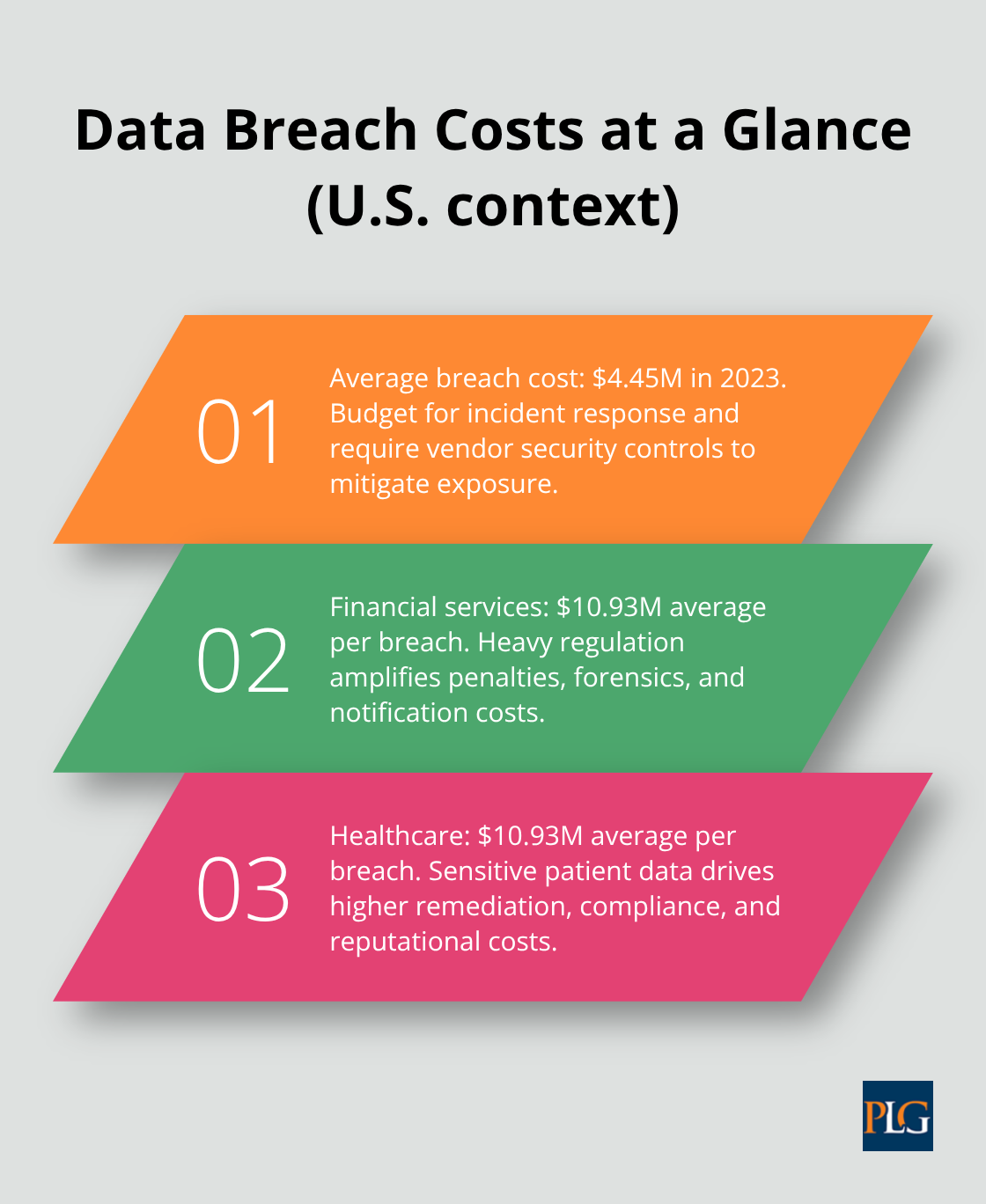
A 2023 IBM report found that the average data breach cost companies 4.45 million dollars, with financial services and healthcare hitting 10.93 million respectively. Your agreement should mandate that vendors maintain specific security standards and carry cyber liability insurance. Too many founders skip this entirely, then face massive liability when a third-party vendor gets compromised and exposes customer data.
Audit Every External Tool and Service Your Startup Uses
The practical move is to audit every external tool, library, and service your startup uses and confirm what rights and obligations each one creates. This audit becomes the foundation for the key clauses you’ll need in your actual agreements-the ones that protect you when disputes arise or security fails.
Key Clauses Every Tech Startup Agreement Needs
Indemnification Clauses Determine Who Pays When Things Break
Indemnification clauses separate founders who understand their actual liability from those who face unexpected lawsuits. This clause states who pays for damages if something goes wrong-if a vendor’s code infringes on someone else’s patent, or if their security fails and exposes customer data, the indemnification clause determines whether you or they absorb the cost. Most founders skip reading this section and assume the vendor will cover their mistakes. That assumption is dangerous.
Your agreement should explicitly state that vendors indemnify you for intellectual property infringement, data breaches caused by their negligence, and violations of laws they’re responsible for. Liability caps matter equally-vendors will push hard to limit their exposure to the fees you’re paying them, which means if a breach costs you a million dollars but you only paid them ten thousand annually, you recover nothing. Push back on liability caps for breaches, IP infringement, and confidentiality violations. Accept caps only on indirect damages and lost profits, never on direct damages from security failures or stolen code.
Termination and Dispute Resolution Clauses Control What Happens When Relationships Fall Apart
Termination and dispute resolution clauses determine what happens when the relationship falls apart, and they matter far more than most founders realize. A termination clause should give you the right to exit immediately if the vendor breaches security obligations or stops performing, not after thirty or sixty days of notification. Dispute resolution clauses typically offer three options: litigation in court, arbitration through a private arbitrator, or mediation before arbitration.
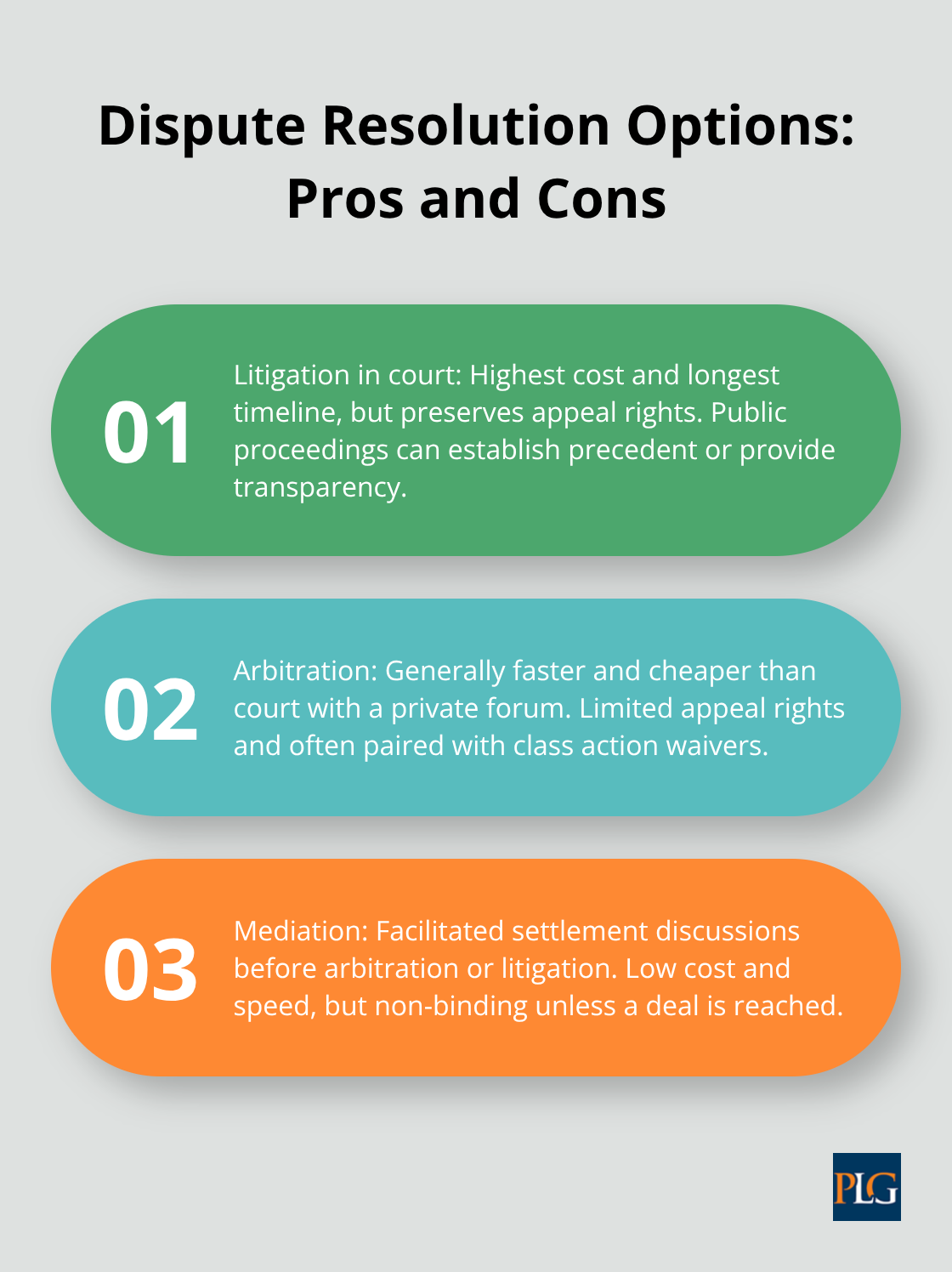
Arbitration moves faster and costs less than court but strips away your right to appeal and keeps disputes private-that matters if you’re protecting trade secrets or want public vindication. Litigation costs more but gives you more control and appeal rights. Many tech vendors push arbitration clauses that also include class action waivers, meaning if they harm thousands of customers, each person must sue separately rather than joining forces. Resist this if you can, especially with vendors handling customer data. For dispute resolution location, negotiate for California or your home state rather than accepting their choice-traveling across the country to arbitrate a contract dispute drains your startup’s resources.
Payment Terms and Fee Structures Control Your Cash Flow
Payment terms and fee structures deserve more attention than founders typically give them because bad payment terms can strangle cash flow during critical growth phases. Most vendors want payment upfront or net-fifteen, but startups need longer terms to match their cash cycles. Try negotiating for net-thirty or net-sixty if the vendor is mission-critical to your operations.
Volume discounts matter more than founders realize-if you commit to annual usage, lock in pricing that scales down as your usage grows rather than accepting their standard per-user rates. Annual prepayment often brings ten to twenty percent discounts, but only accept this if you’re confident the vendor won’t disappear or degrade service. Include language that lets you suspend service without penalty if the vendor experiences a material breach of their obligations, especially around uptime guarantees or security standards. Define what constitutes acceptable uptime-ninety-nine percent sounds solid until you realize it means over seven hours of downtime yearly, which could tank your business during a critical product launch. Try pushing for ninety-nine point nine percent or higher for vendors handling core infrastructure or customer data.
These three clause types form your foundation, but the real protection comes from how you customize them to your specific business risks and vendor relationships. The next section walks you through identifying those risks and drafting agreements that actually defend your startup.
How to Draft Tech Agreements That Protect Your Business
Map Your Actual Business Risks First
Start by identifying what could actually hurt your business, not what sounds risky in theory. Most founders draft agreements based on templates they found online or clauses they copied from another startup’s contracts. This approach fails because your risks depend entirely on your business model, your vendors, and what data or code you’re protecting. A SaaS company handling customer payment information faces different risks than a hardware startup using third-party manufacturing. A marketplace connecting users faces liability risks a B2B software tool doesn’t.
Spend a full day documenting every vendor relationship, external tool, and data flow in your product. Write down what happens if each one fails or gets compromised. This risk map becomes your drafting blueprint. You’ll know exactly which clauses need teeth and which ones you can negotiate away to save time and relationship capital with vendors.
Customize Templates Rather Than Using Generic Versions
Stop using generic templates entirely once you’ve identified your real risks. Generic templates protect the template creator’s liability, not your specific business. They include clauses you don’t need and miss clauses you do. Take a template as a starting point, then surgically remove every clause that doesn’t address something on your risk map.
For payment processing vendors, that means aggressive indemnification for payment card industry compliance failures and breach notification timelines measured in hours, not days. For infrastructure providers, that means uptime guarantees above ninety-nine point five percent and explicit rights to migrate your data if they go down. For contractors building core product features, that means ironclad IP assignment language stating they transfer all ownership to you immediately upon creation. Customization takes more time than copying a template, but it prevents the costly disputes that force founders to rewrite code, renegotiate vendor relationships, or settle lawsuits.
Resist Vendor Pushback on Non-Negotiable Terms
Never let a vendor push back on customization by claiming their standard agreement is non-negotiable. Their standard agreement protects them, not you. If they refuse reasonable modifications around security standards, data ownership, or liability for their breaches, that tells you something important about how they view customer protection. Find a vendor who will negotiate.
The time investment in customization pays back within weeks if a vendor breach or IP dispute ever arises. Vendors who resist reasonable changes often resist accountability too. This resistance signals risk.
Get Legal Review Before Signing Anything
The final step happens before you sign anything. Get a lawyer to review your customized agreement, specifically someone who understands tech startups and vendor relationships. This isn’t the moment to save money by skipping legal review. A lawyer spots liability traps that founder eyes miss, catches ambiguous language that vendors will exploit later, and negotiates language that actually holds up if disputes arise.
The review cost is trivial compared to litigation over a poorly drafted clause. A thirty-minute legal review would have clarified language that startups later waste months and thousands of dollars fighting over. Tech startup agreements require someone who understands both the legal landscape and the realities of vendor relationships in early-stage companies.
Final Thoughts
Clear tech startup agreements separate founders who protect their business from those who inherit costly problems. The terms you negotiate today determine whether you own your code, control your data, and survive vendor failures without litigation. Founders who skip this work pay the price through disputes that drain cash, delay product launches, and sometimes force complete rewrites of core infrastructure.
The most common mistake founders make is treating agreements as paperwork rather than business protection. They copy templates, sign quickly, and assume vendors will act reasonably if problems arise. This approach fails because vendors optimize their agreements for their protection, not yours-when a breach happens or a dispute emerges, the language you negotiated months earlier becomes your only defense. Vague terms about security standards, ambiguous IP ownership clauses, and liability caps that don’t cover actual damages leave you exposed.
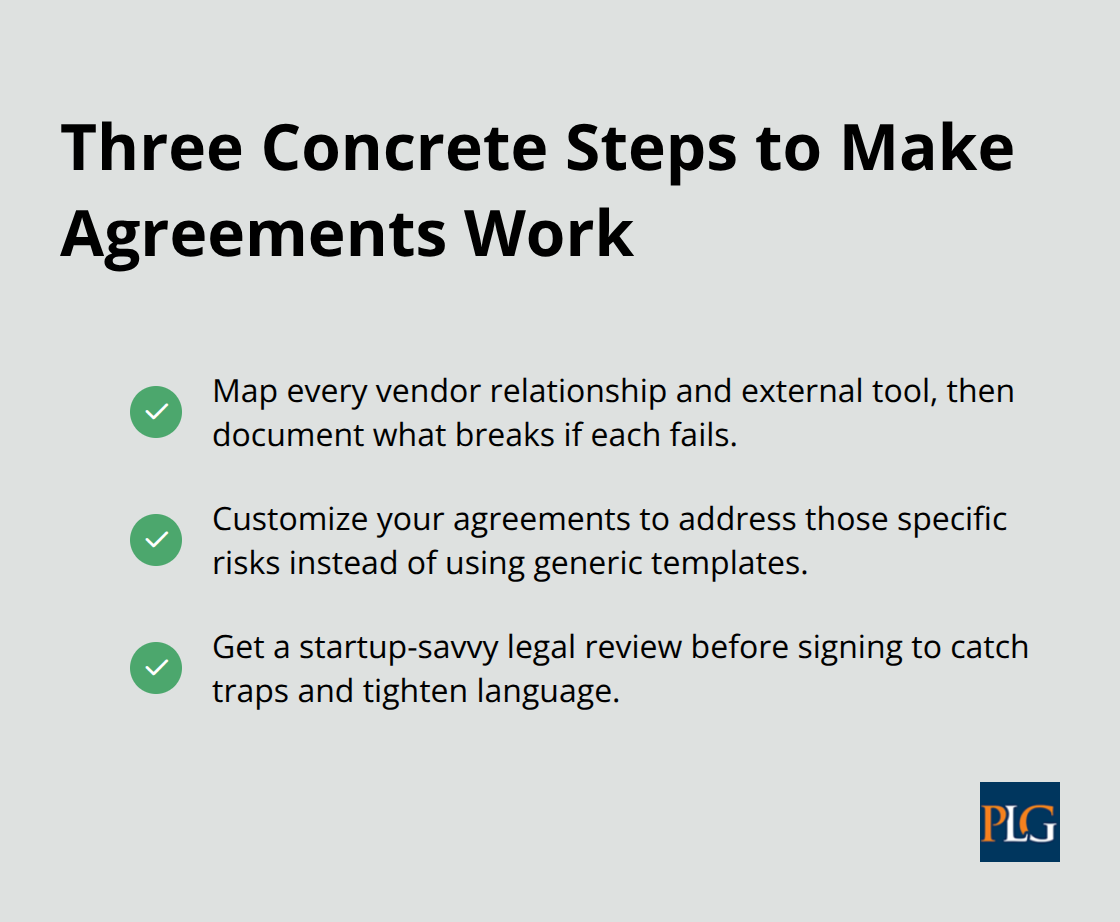
Tech startup agreements require three concrete steps to work effectively. First, map every vendor relationship and external tool your startup depends on, then document what breaks if each one fails. Second, customize your agreements to address those specific risks rather than using generic templates, and third, have a lawyer review your customized agreements before signing anything.
Primum Law Group works with startups through exactly this process, helping founders negotiate tech startup agreements that actually protect their business rather than just transferring risk to them.