

Most startup failures stem from internal conflict, not market problems. At Primum Law Group, we’ve seen founding teams collapse because they never established clear governance structures from day one.
Startup governance best practices aren’t bureaucratic overhead-they’re the foundation that keeps your team aligned, protects your equity, and prevents costly disputes down the road.
Clear Roles and Responsibilities Within Your Founding Team
Define Each Founder’s Role and Decision-Making Authority
Founding teams fail when decision-making authority stays fuzzy. We at Primum Law Group have watched startups burn through months of progress because founders disagreed about who had final say on hiring, spending, or product direction. The fix is straightforward but rarely implemented: assign ownership domains before conflicts erupt. One founder owns product decisions, another owns finance and fundraising, a third owns operations. This doesn’t mean they work in silos-it means each person holds clear authority within their domain, and the team respects those boundaries.
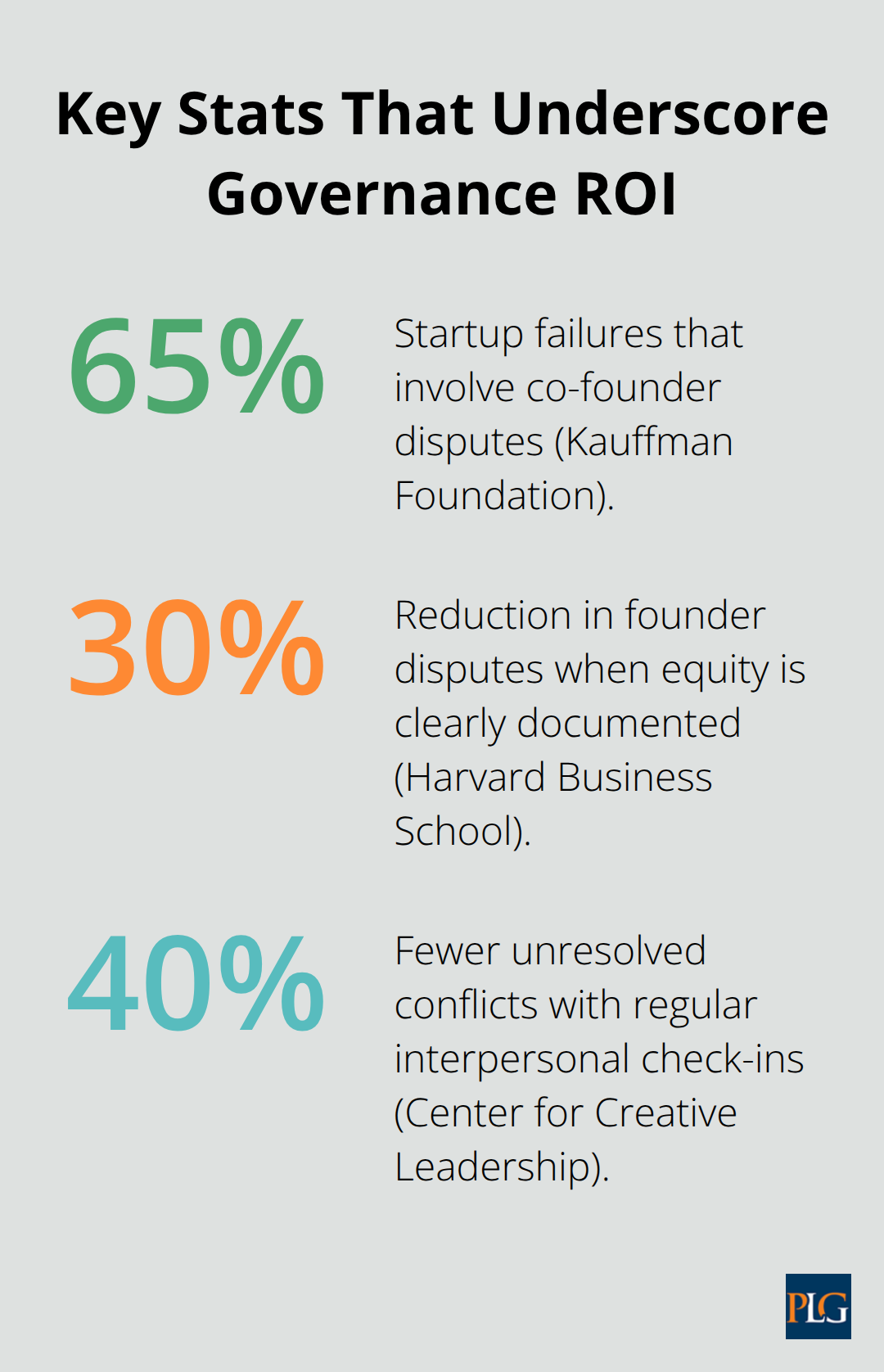
Document these assignments in writing. A one-page founder agreement that spells out decision-making authority prevents the circular arguments that drain momentum. According to research from the Kauffman Foundation, 65 percent of startup failures involve co-founder disputes, many rooted in unclear expectations about who decides what.
Your founding team needs to answer three specific questions before moving forward: What decisions can each founder make unilaterally? What decisions require consensus? What decisions need investor approval? Write these down and share them with advisors.
Establish Communication Protocols and Meeting Schedules
Weekly founder meetings aren’t optional-they form the operating system that keeps your team synchronized. These meetings should be short, focused, and structured (thirty minutes works well for most early-stage teams). Discuss one specific issue per week: this week you talk hiring, next week you talk burn rate, the week after you talk product roadmap. Rotate who leads the meeting so no single founder dominates the conversation.
Many successful founding teams also block off monthly off-sites where they step back from daily operations and talk strategy, long-term goals, and interpersonal dynamics. The co-founders of Airbnb spent significant time on these longer conversations early on, which helped them weather the company’s near-collapse in 2009. These extended sessions create space for the deeper work that weekly meetings cannot accommodate.
Create Documentation for Accountability and Transparency
Create a simple shared document-a Google Doc works fine-where founders log decisions made, action items assigned, and deadlines. This document becomes your accountability layer. When someone commits to handling fundraising calls or fixing a technical debt issue, it goes in the doc with a due date. This transparency prevents the passive-aggressive follow-up messages that poison founding team relationships.
Track what you discussed, who committed to what, and what actually got done. Review it at the start of each meeting (this practice takes five minutes and pays dividends). Quarterly, revisit your decision-making assignments as your company grows and roles shift. The clarity you build now determines whether your team stays aligned or fractures when pressure mounts.
Equity and Founder Agreements in San Francisco Startups
Why Equity Splits Matter Most
Equity splits destroy more founding teams than any other single issue. We at Primum Law Group have watched teams with solid products and market fit implode because founders disagreed about who owned what percentage of the company. The problem isn’t that equity distribution is complicated-it’s that founders avoid the conversation until resentment builds. You need to settle this before you write code, before you pitch investors, before the company has any real value.
Equal splits sound fair but often aren’t. If one founder works full-time while another contributes part-time, equal equity creates long-term friction. The standard approach ties equity to role, responsibility, and time commitment. A founder leading product and working full-time might receive 40 percent, while a part-time advisor handling introductions receives 5 percent.
Structure Equity with Vesting Schedules
Document these splits in a formal founder agreement that includes vesting schedules. Vesting matters enormously because it protects the company if a founder leaves early. A four-year vesting schedule with a one-year cliff means a founder who departs after six months loses all equity, while someone who stays three years keeps 75 percent of their grant. This structure aligns incentives and prevents dead weight.
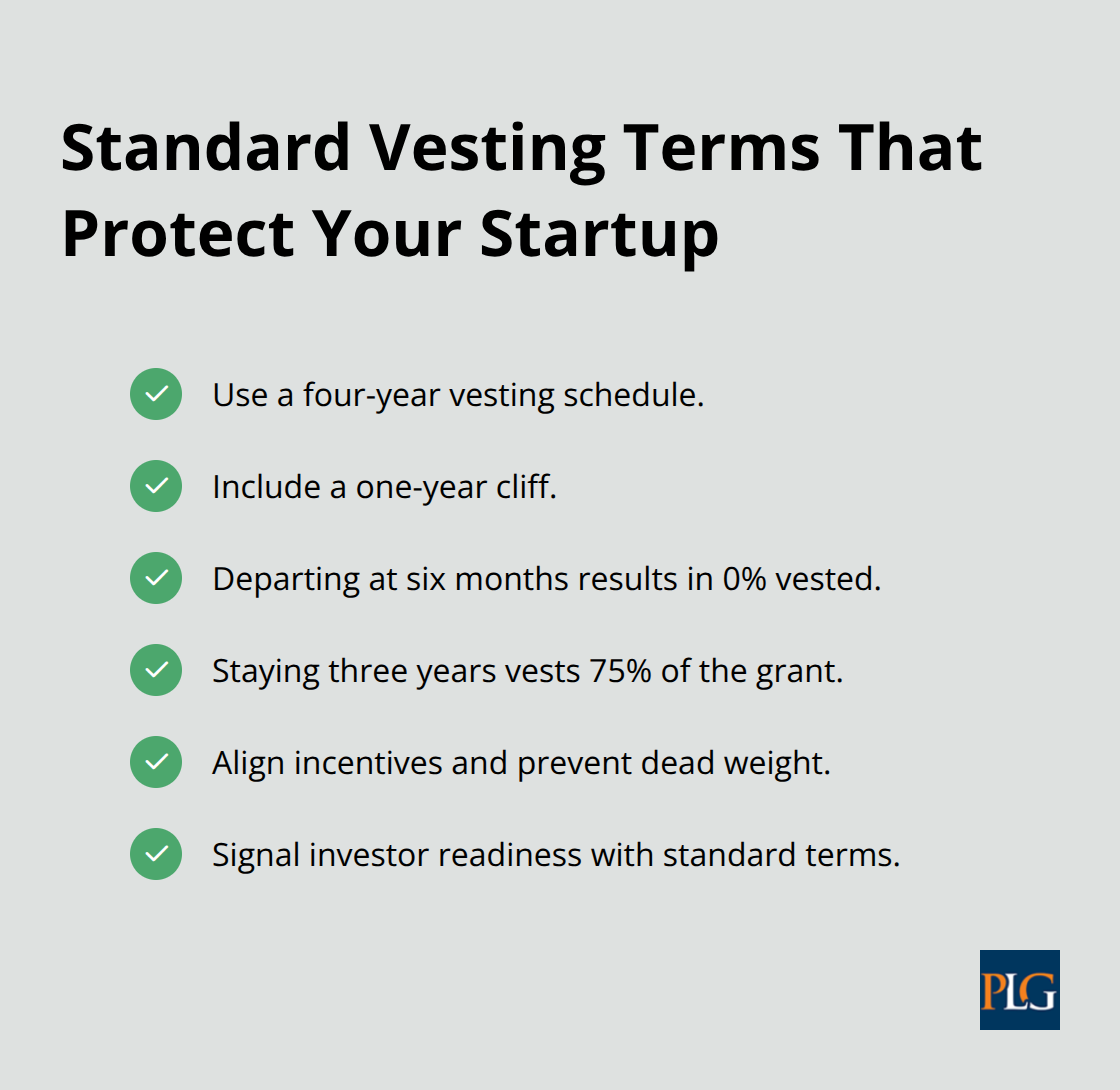
According to research from the Harvard Business School, startups with clearly documented equity arrangements experience 30 percent fewer founder disputes than those without formal agreements. The vesting schedule also signals to investors that your team has thought through retention and alignment. Most venture capital firms expect to see standard vesting terms before they commit capital.
Draft a Comprehensive Founder Agreement
The founder agreement itself should address three concrete issues: equity splits with vesting details, decision-making rights tied to ownership percentages, and what happens if founders disagree. Include a dispute resolution clause that specifies whether conflicts go to mediation, arbitration, or voting by board majority. Many San Francisco founders skip this step and regret it when tensions rise.
Your agreement should also clarify what happens if a founder wants to exit, becomes incapacitated, or violates non-compete terms. Specify whether remaining founders have the right to buy out the departing founder’s shares, at what price, and over what timeline. The cost of drafting a solid founder agreement through a law firm runs between $2,000 and $5,000, which sounds expensive until you face a $500,000 dispute over who owns what.
Use Your Agreement as a Conversation Tool
Templates exist online, but they often miss jurisdiction-specific issues or fail to address your company’s unique situation. Treat the founder agreement as a conversation starter, not a legal formality. Use it to discuss hard questions: What happens if the company fails? What if one founder wants to pivot the product direction? What if someone needs to step back for personal reasons?
These conversations, anchored in a written agreement, prevent the silent resentment that poisons teams months later. The Airbnb co-founders spent significant time on these discussions early on, which helped them weather the company’s near-collapse in 2009. Once your equity structure and founder agreement are locked in place, your team can shift focus to the interpersonal dynamics that determine whether you actually stay together when pressure mounts.
Building Trust and Managing Conflict in San Francisco Startups
Founding teams rarely argue about equity splits or decision-making authority on the surface. The real damage happens beneath the surface, when small frustrations accumulate into resentment that poisons every interaction. We at Primum Law Group have watched teams with aligned visions and fair equity splits still collapse because founders never built mechanisms to surface and resolve tension before it metastasizes. The difference between teams that survive pressure and teams that implode often comes down to one thing: whether founders talk about conflict directly or let it fester in silence.
Most startup founders avoid difficult conversations because they fear damaging relationships, but the opposite happens. Avoidance creates distance and suspicion. Direct, structured conversation builds trust.
Commit to Radical Honesty
Start with a commitment to radical honesty. Founders agree upfront that any issue affecting the company or the team gets discussed within forty-eight hours, not weeks later when emotions have calcified. Set a standing monthly founder dinner outside the office where you explicitly discuss how the team is functioning, not just what the company is building.
Research from the Center for Creative Leadership found that teams with regular interpersonal check-ins experience 40 percent fewer unresolved conflicts than teams without them. Make these conversations formal enough that they happen consistently, but casual enough that they feel natural. One founder at a San Francisco biotech startup schedules a Tuesday lunch with each co-founder individually every other week, rotating who picks the restaurant. This removes the meeting-room formality and creates space for honest conversation about frustrations, concerns, or shifts in how they feel about their role.
Establish a Three-Step Conflict Resolution Process
When tension emerges, most founding teams have no process for handling it. Someone feels slighted, mentions it to an investor or advisor instead of to the co-founders directly, and suddenly the entire cap table knows about internal drama. Establish a three-step conflict resolution process before you need it.
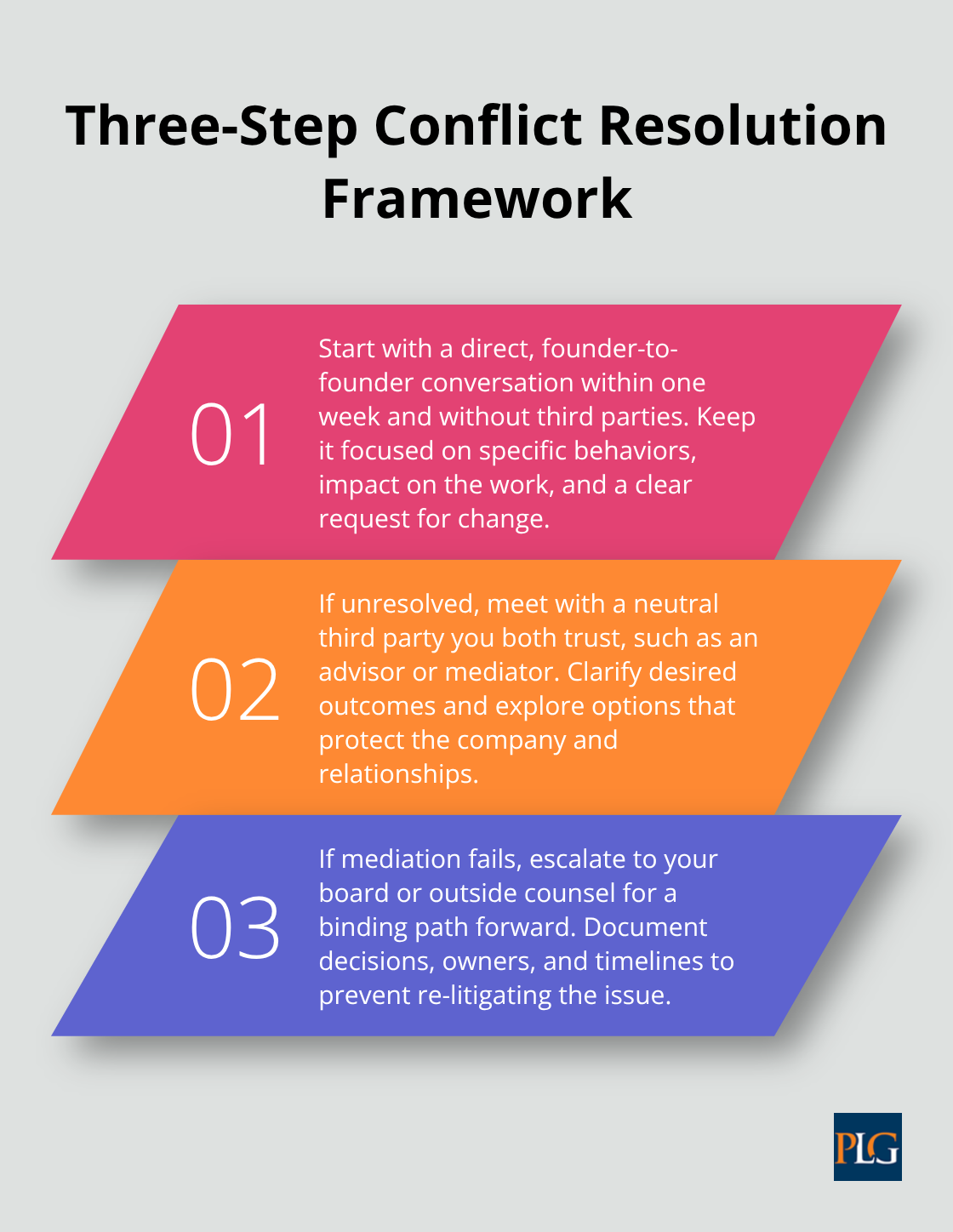
First, the two founders involved have a direct conversation within a week, with no third parties present. Second, if that conversation doesn’t resolve the issue, both founders meet with a neutral third party, either an advisor you both trust or a mediator. Third, if mediation fails, you escalate to your board or bring in outside counsel. The process matters less than having one. Document it in your founder agreement so everyone knows what happens when disagreement turns into conflict.
Most startup conflicts center on three issues: resource allocation, strategic direction, and one founder feeling like they’re carrying more weight than others. Address these patterns directly rather than treating each disagreement as isolated. If you notice tension around hiring decisions, for example, revisit your decision-making authority document. Maybe one founder needs more input on hiring for their domain, or maybe you need a hiring committee that includes both technical and business perspectives. The cost of having a mediator on retainer runs roughly $200 to $400 per hour, which sounds expensive until you consider that unresolved co-founder conflict costs the average startup six months of lost productivity and focus.
Align on Shared Purpose and Long-Term Vision
Teams that stay together through pressure share something deeper than just equity or a business model: they share a genuine commitment to the same long-term outcome. This sounds abstract, but it’s intensely practical. Spend time explicitly discussing what success looks like in five years, what problem you’re solving that matters to you personally, and what you’d regret not attempting. These conversations sound like therapy, but they’re actually the foundation of resilience.
When a major customer leaves or a critical hire falls through, teams with clarity about shared purpose recover faster because they remember why they’re doing this. Teams without that clarity start blaming each other. Set a quarterly meeting where you step away from quarterly metrics and discuss whether the company is still moving toward the vision you all signed up for.
If one founder wants to build a billion-dollar company and another wants to build a sustainable business they can run profitably for decades, that misalignment destroys teams. Finding it early, through honest conversation, either realigns your visions or leads to an amicable split before resentment sets in. Airbnb’s founders spent significant time discussing their shared vision and values in the company’s early years, which helped them stay unified through the near-collapse in 2009 when occupancy rates tanked and the company nearly ran out of cash.
Final Thoughts
Startup governance best practices come down to three concrete actions: define who decides what, document equity and vesting clearly, and talk about conflict before it destroys your team. Most founding teams skip these steps because they feel like overhead when you’re racing to build product and find customers. That’s backwards-the teams that survive pressure invested time in governance early.
The pitfalls are predictable and costly. Founders avoid equity conversations until resentment builds, skip written decision-making authority and end up in circular arguments about who has final say, and treat conflict as dysfunction instead of a normal part of working closely with other people. Each of these gaps costs months of lost momentum and focus. A solid founder agreement runs between $2,000 and $5,000 through a law firm, while monthly mediator retainers cost $200 to $400 per hour-modest investments that prevent the $500,000 disputes and six-month productivity losses that plague teams without structure.
Proper governance protects your company because it keeps your team aligned when external pressure mounts. When a major customer leaves or fundraising stalls, teams with clear roles and documented agreements recover faster because they’re not simultaneously fighting internal battles. Primum Law Group helps founding teams in San Francisco and Silicon Valley build governance frameworks that actually work, not theoretical documents that sit in a drawer.