

Most founders skip the legal groundwork because they’re focused on product and growth. This mistake costs them thousands in restructuring fees and equity disputes down the road.
At Primum Law Group, we’ve seen early-stage teams avoid major problems by handling founder startup legal advice correctly from day one. The right legal foundation protects your company, clarifies ownership, and makes fundraising smoother.
The Three Mistakes That Derail Early-Stage Companies
Wrong Business Entity Costs You Later
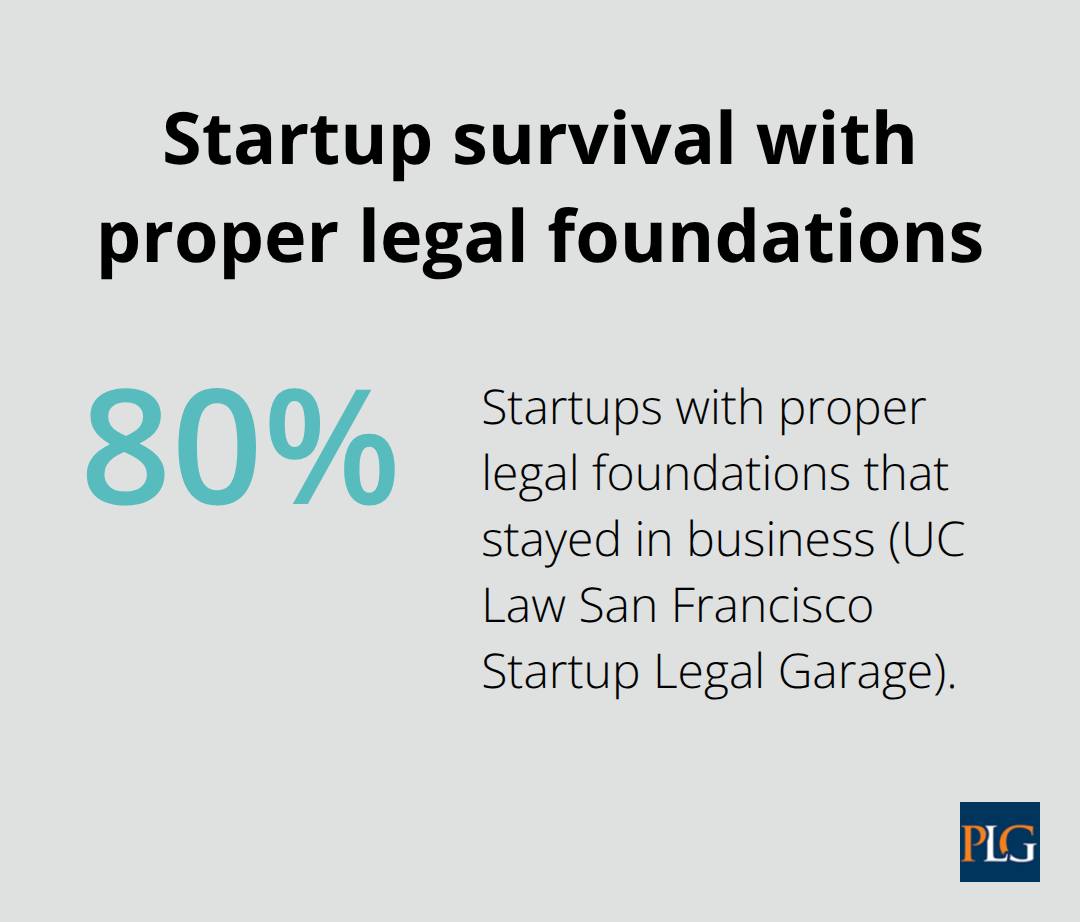
Founders often operate as sole proprietorships or general partnerships when they should be C corporations or LLCs, exposing personal assets to liability and complicating future fundraising. Many teams skip incorporation thinking they’ll handle it later, but waiting leaves you without liability protection and makes it nearly impossible to bring in investors or hire talent with confidence. The Startup Legal Garage at UC Law San Francisco has worked with over 550 startups and found that 80% of those with structured legal foundations remain in business, compared to lower survival rates among teams that delayed formalization.
Setting up the right entity takes two to three weeks and costs between $500 and $1,500 through a lawyer. This small investment protects your personal assets and signals to investors that you’ve built a legitimate company.
Co-Founder Disputes Destroy Value Without Written Agreements
Co-founder disputes rank among the most common problems in startups, and without clear written agreements on equity splits, vesting schedules, and decision-making authority, disagreements turn into costly litigation. Many founders shake hands on equity percentages and never write them down, then discover months later that they had different understandings about vesting or buyout terms. A proper founder agreement and cap table take three to four weeks to create and cost $2,000 to $4,000, but the cost of resolving a dispute without one routinely exceeds $50,000.
Clear documentation prevents misunderstandings before they become legal battles. The time you invest now in writing these agreements pays dividends when tensions arise or when you need to bring in new investors.
Intellectual Property Protection Protects Your Competitive Edge
If your startup’s value lies in software, algorithms, designs, or proprietary processes, you need to establish ownership clearly and file for trademark protection on your brand name. Founders often assume their code is automatically theirs, but without clear IP assignment agreements with co-founders and early employees, ownership becomes murky. Filing a trademark takes four to eight weeks and costs $300 to $600 per mark through the USPTO, yet many teams delay this until they’ve already invested tens of thousands in brand building.
The window to address all three mistakes closes quickly. Once you raise money or add complexity to your cap table, fixing these problems becomes exponentially harder and more expensive. Your next step is establishing the legal foundations that make fundraising possible.
Build Your Legal Foundation Before Fundraising
Choose the Right Business Structure First
Most founders treat legal setup as a checkbox to complete later, but the order matters. You need the right business structure first, then founder agreements, then employee contracts. The Startup Legal Garage at UC Law San Francisco tracked 550+ startups and found that 80% of those with proper legal foundations stayed in business. That’s not luck-that’s structure.
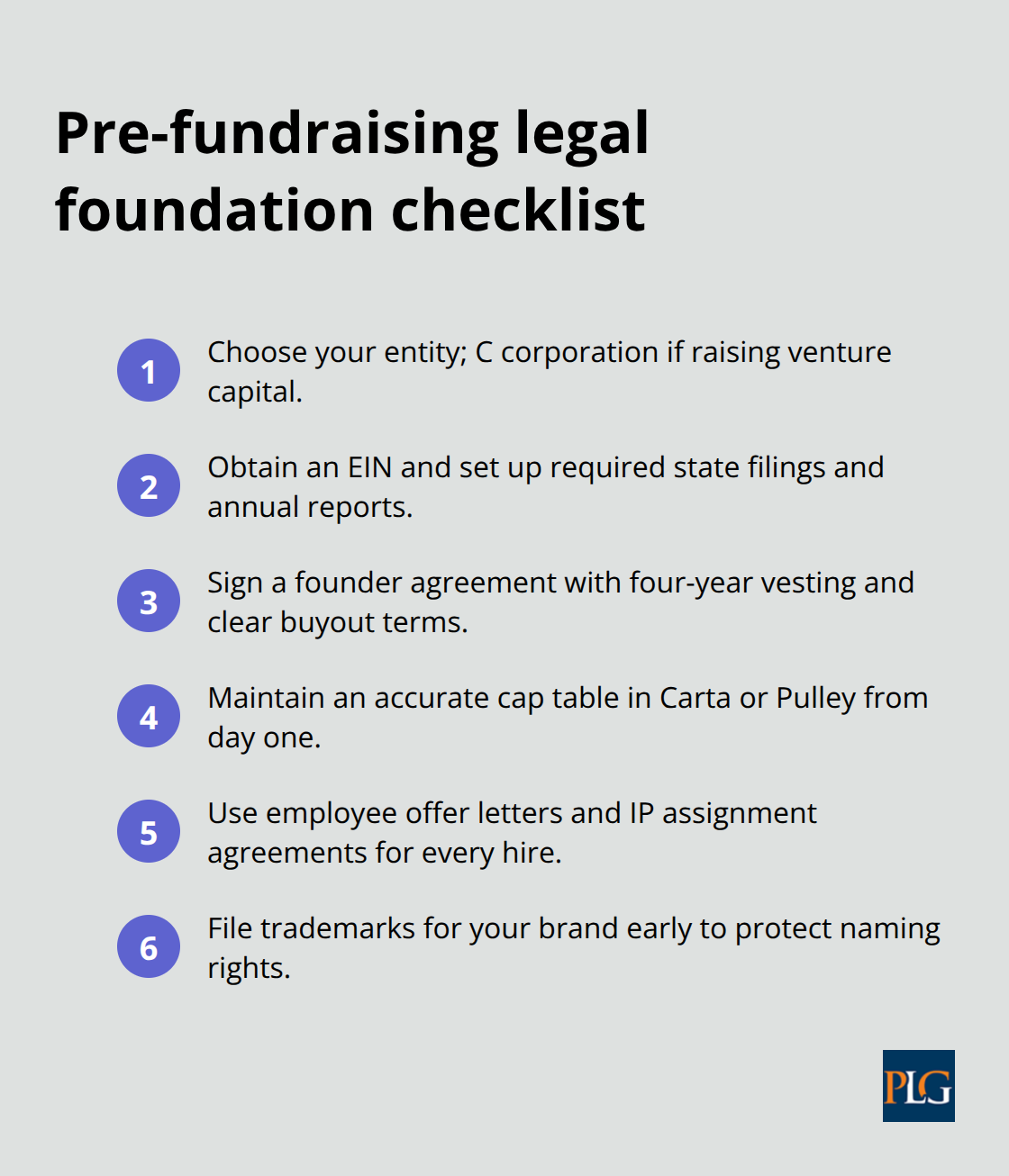
Your first decision is choosing between an LLC and a C corporation. If you plan to raise venture capital, a C corporation is the only option investors will accept. LLCs work for bootstrapped companies or those seeking angel funding, but they create tax complications and complicate future rounds. A C corporation costs $500 to $1,500 to form and takes two to three weeks. You’ll also need an Employer Identification Number from the IRS, which is free and takes minutes online. Once incorporated, you must file annual reports in your state, typically costing $100 to $300 yearly-this isn’t optional.
Lock Down Founder Agreements and Cap Tables
Next comes your founder agreement, and this document prevents the disputes that destroy more startups than market failure. Your agreement must specify equity percentages, vesting schedules over four years, and what happens if someone leaves early. Without vesting, a founder who quits after three months walks away with full equity. The agreement should also cover decision-making authority, what happens in a dispute, and buyout terms if someone wants out. Creating this document takes three to four weeks and costs $2,000 to $4,000 through a startup lawyer. Skipping this step and facing a co-founder dispute later costs $50,000 to $150,000 in legal fees and often destroys the company.
Your cap table is the spreadsheet that tracks every share issued to founders, employees, and investors. It must be accurate from day one because investors will request it during fundraising, and errors create massive friction. Many founders track equity in email or informal notes, then scramble to reconstruct the cap table when an investor asks for it. Use a tool like Carta or Pulley to maintain this automatically-both cost under $500 annually for early-stage startups.
Protect Your Company with Employee and IP Agreements
Employee agreements come last but are equally important. Every hire should sign an offer letter specifying salary, equity grants, vesting terms, and at-will employment status. You’ll also need an intellectual property assignment agreement stating that any work created belongs to the company, not the individual. Without this, an engineer who writes code could claim ownership. These agreements protect your company and set clear expectations.
Many founders assume they can handle this internally or use templates from the internet, but poorly drafted agreements create liability. A lawyer can create template agreements in two to three weeks for $3,000 to $5,000, then you reuse them for each hire. The cost per employee drops significantly after the initial investment. Startup-focused firms in the Bay Area offer fixed-fee startup packages that bundle entity formation, founder agreements, and employment templates-this approach saves money compared to hourly billing.
Move Forward with Confidence
The investment you make in these three components now-correct entity, founder agreements, and employee contracts-eliminates the restructuring costs and disputes that derail startups later. Once you have these foundations in place, you’re ready to navigate the next critical phase: preparing for investor conversations and understanding what venture capital partners actually want from your legal structure.
How Investors Read Your Legal Structure
Investors don’t care about your legal documents the way you do. They care whether your cap table is clean, your equity grants are properly documented, and your company can actually function as a going concern. Term sheets arrive after investors have already decided they like your business, so the legal phase is about removing obstacles, not creating them. Most founders panic when they see a term sheet because it’s dense and filled with unfamiliar terms, but the reality is simpler: investors want assurance that you own what you claim to own and that no hidden liabilities will surface after they write the check.
Audit Your Cap Table Before Any Investor Conversation
The first thing investors request is your cap table, and it must match your stock ledger exactly. If your Carta or Pulley records show 10 million shares outstanding but your cap table lists 9 million, investors will halt due diligence until you reconcile the discrepancy. This happens more often than you’d think because founders grant equity informally, forget to record it, or issue duplicate grants by accident. Before any investor conversation, spend a day auditing every equity grant you’ve issued since founding. Pull your stock ledger, cross-reference it with your cap table, and fix errors immediately. Investors interpret sloppy records as a sign that you don’t understand your own company, and that kills deals.
Negotiate Term Sheets With Your Eyes on Long-Term Control
When a term sheet arrives, most founders focus on valuation and their own dilution. Those matter, but the terms that actually constrain your future are liquidation preferences, board composition, and pro-rata rights. A one-times non-participating liquidation preference means investors get their money back before you see anything if the company sells below the investment price. A participating preference means they get their money back and then share in remaining proceeds alongside founders. The difference can cost founders millions in an acquisition at an unfavorable price. If you raise at a $10 million valuation and sell for $12 million, a non-participating investor walks away satisfied and you keep most of the upside. A participating investor in the same scenario takes their original check plus a share of profits, shrinking your return.
Board composition determines who controls major decisions. Most early-stage rounds give investors one board seat and founders control the rest. Later rounds often shift to investor control, and once that happens, founders need unanimous consent to hire, fire, sell the company, or raise more capital.
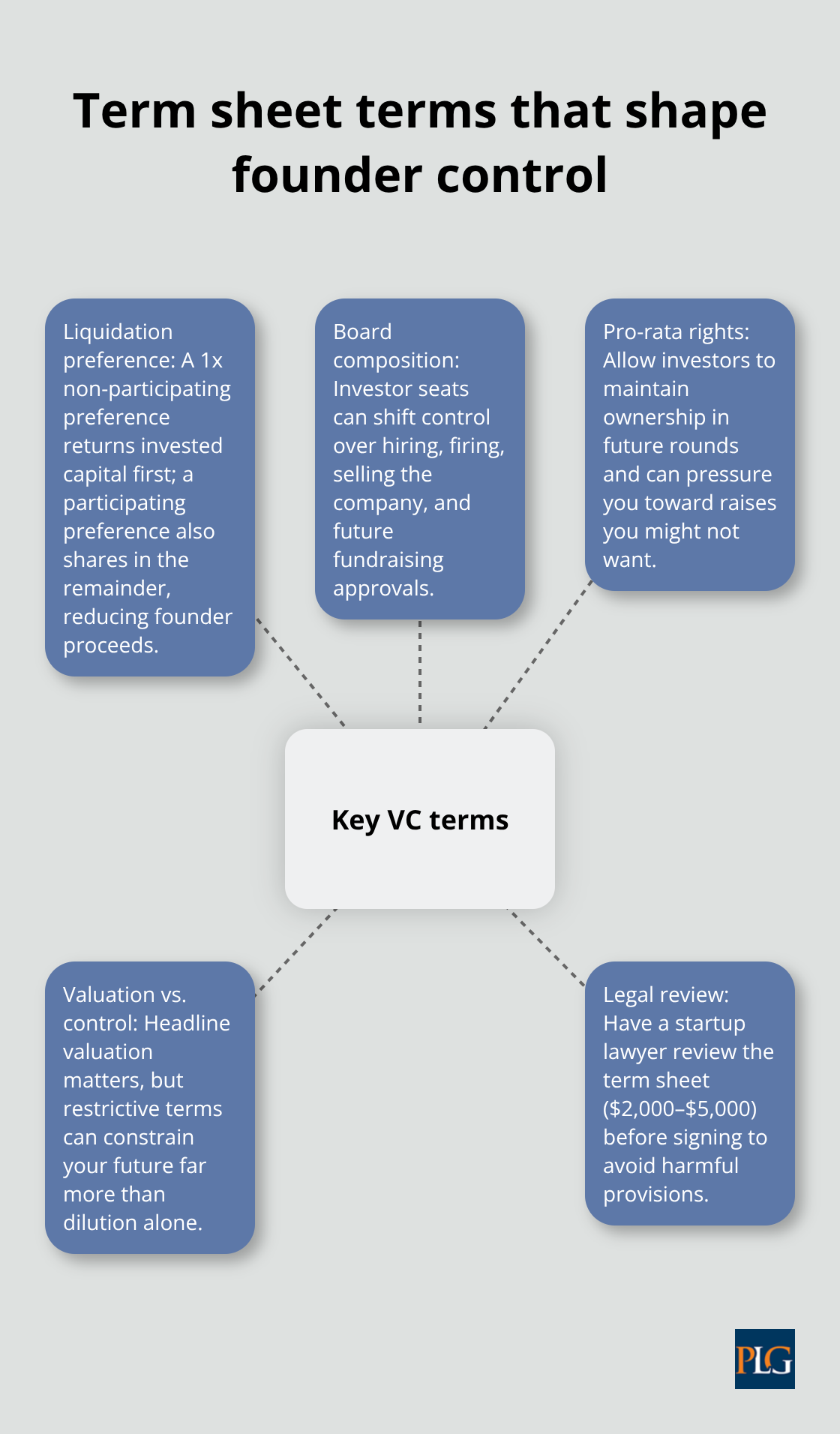
Read the board-composition clause carefully and understand what voting rights each seat holds. Pro-rata rights let investors buy shares in future rounds to maintain their ownership percentage. This sounds neutral, but it means investors have leverage to force you into later rounds you might not want. A tight cap on pro-rata rights protects your flexibility. Hire a startup lawyer to review your term sheet before you sign anything. This costs $2,000 to $5,000 and prevents you from accepting terms that haunt you for years.
File Form D and Comply With Securities Laws Immediately
The moment you accept investment, you trigger securities law obligations. You must file Form D with the SEC within 15 days of your first sale, and you must maintain records of every investor, their investment amount, and the terms they received. Many founders treat this as paperwork they’ll handle later, then forget entirely. The SEC publishes enforcement actions regularly against companies that fail to file, and penalties include fines and orders to unwind transactions. In 2023, the SEC brought enforcement actions against multiple startups for improper equity grants and unregistered securities sales. Form D filing costs $0 and takes 30 minutes online through the SEC’s EDGAR system. File it immediately.
You must also comply with state securities laws where your investors live. California, New York, and Texas have their own filing requirements, and some states require you to register before accepting money from residents. Using Regulation D exemptions allows you to raise money without full registration, but you still must follow the rules. A common mistake is selling equity to friends and family without realizing you’ve triggered state securities laws. Each state treats this differently, and violations can expose you to liability years later when an investor discovers the sale was technically illegal. A startup lawyer in your state can confirm your compliance posture in one consultation. This costs $1,500 to $3,000 and prevents expensive corrections later.
Build Trust Through Transparency With Your Investors
Venture capital partners invest in founders they trust, and trust builds through transparency about your cap table, your previous financing, and any legal issues that might surface. If you hide equity grants, previous investor agreements, or litigation, investors will find out during diligence and walk away. The best approach is radical honesty early. Tell investors about every outstanding option, every founder dispute you’ve resolved, and every contract that restricts your freedom. Investors respect founders who surface problems proactively because it signals competence and integrity.
Once you take money, your relationship with investors becomes contractual and ongoing. You’ll need to provide annual financial statements, maintain proper corporate records, and notify investors of major developments. Many founders treat investors as one-time contacts, then surprise them with bad news months later. Investors interpret silence as incompetence or deception. Schedule quarterly updates with your lead investor, share financial results and operational metrics, and flag problems before they become crises. This takes four hours per quarter and prevents the investor friction that derails companies. The founders who maintain strong investor relationships raise follow-on capital faster and get better terms because investors already know the business and trust the team.
Final Thoughts
The legal decisions you make in your first months as a founder determine whether your company survives its first funding round or collapses under restructuring costs and disputes. Incorporate as a C corporation if you plan to raise capital, document founder agreements with clear vesting schedules, and establish IP assignment agreements before you hire your first employee-these three steps cost between $5,000 and $10,000 total and take six to eight weeks to complete. Skipping them costs ten times that amount when investors demand a clean cap table or when a co-founder dispute forces you to hire litigation counsel.
If you’re pre-seed or seed stage, focus on getting the legal foundations right before you pitch investors. If you’re already in conversations with venture capital partners, audit your cap table immediately and hire a startup lawyer to review any term sheet before you sign. The difference between a favorable term sheet and one that constrains your future often comes down to details most founders miss on first read.
When you need outside legal counsel, choose a firm that understands startups and has worked with early-stage teams through multiple funding rounds. We at Primum Law Group provide startup counseling, venture capital transactions, and corporate governance services tailored to founders navigating these exact challenges. Visit Primum Law Group to discuss your specific situation and get clarity on what your company needs right now.