

Most startups skip the contract details and pay the price later. Bad terms can drain your cash, create legal headaches, and stall growth.
At Primum Law Group, we’ve seen how startup commercial contracts make or break early-stage companies. The right negotiation strategy protects your business and builds trust with partners.
Three Contract Types That Shape Your Startup
Vendor and Supplier Agreements: Control Your Costs
Vendor and supplier agreements are where most startups stumble first. These contracts control your cost of goods, delivery schedules, and payment terms-the financial arteries of your business. Many founders accept whatever terms suppliers push across the table, treating them as standard. They’re not. A 30-day payment term versus 60 days changes your cash flow dramatically.
According to research from the University of Michigan’s negotiation course, 70% of negotiations fail due to insufficient preparation, and vendor deals are prime examples. Before you sign, map out what you actually need: a payment schedule that matches your revenue cycle, quality standards with clear metrics, and termination clauses that protect you if the supplier fails. Push back on automatic price increases and demand volume discounts as you scale. Suppliers expect negotiation on these points because every other startup does it.
Client and Customer Contracts: Protect Your Liability
Client and customer contracts operate differently because you’re the vendor now. These agreements define what you deliver, when you deliver it, and what happens when things go wrong. Payment terms matter just as much as they do with suppliers-net 30 or net 60 changes whether you can pay your own bills.
Liability clauses are where startups get exposed. If a customer sues you for damages, an uncapped liability clause could bankrupt you. Cap your liability to the contract value or a multiple of annual fees. Include clear performance metrics so disputes don’t become subjective arguments. This approach protects both you and your customers by setting realistic expectations upfront.
Employment and Independent Contractor Agreements: Get the Structure Right
Employment and independent contractor agreements require different legal structures depending on how people work for you. The IRS has strict rules about who qualifies as a contractor versus an employee, and misclassification costs money through back taxes and penalties.
Contractors need detailed scope-of-work statements, deliverables, and payment schedules. Employees need offer letters that specify compensation, benefits, and equity if applicable. Non-compete and confidentiality clauses matter here because your team has access to your business secrets. Make these agreements in writing before anyone starts working-handshake deals create disputes that drain your focus and resources when you should be building.
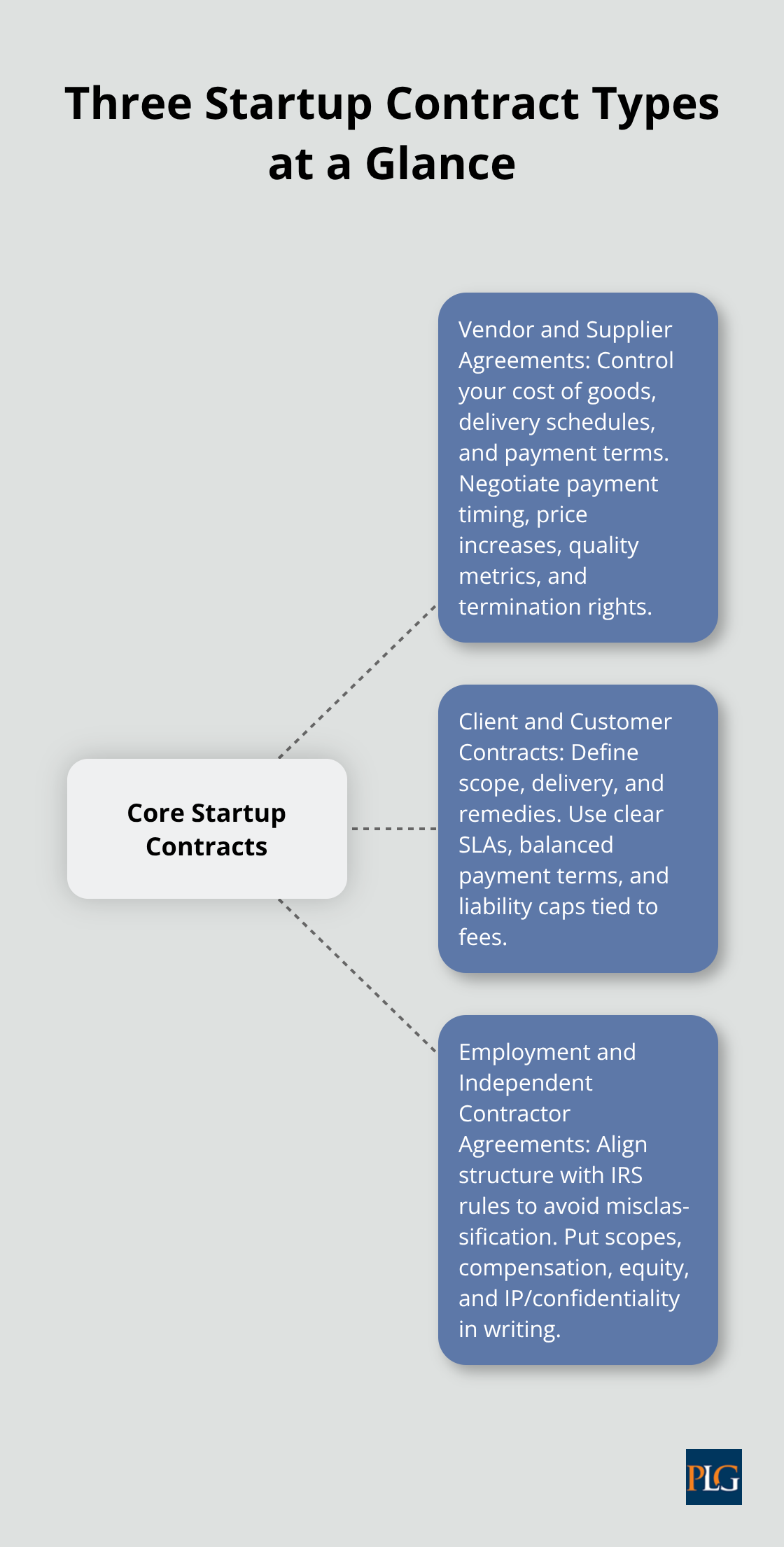
With these three contract types in place, you’ve covered the major relationships that shape your startup. But knowing what contracts you need is only half the battle. The real power comes from how you negotiate the terms inside them.
How to Know What You Can Actually Negotiate
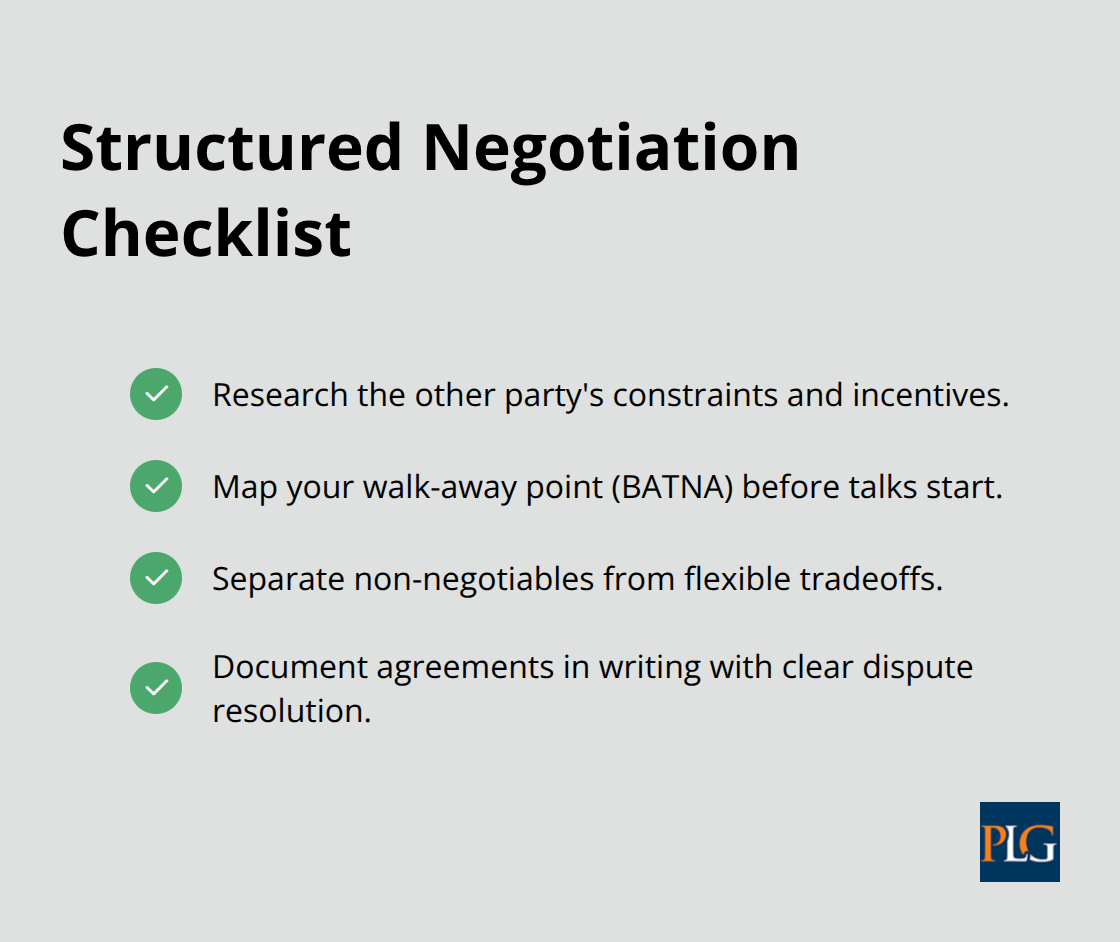
Identify Your Real Leverage Before You Sit Down
Negotiation leverage is not abstract. It’s the concrete ability to walk away from a bad deal without destroying your startup. Most founders negotiate as if they have no leverage, accepting whatever terms appear because they fear losing the deal entirely. This mindset costs money.
Before any negotiation, identify what you actually bring to the table and what alternatives exist if talks fail. If a vendor has ten other customers like you, your leverage is lower than if you’re their first major client in a new market. If a customer has competing options for your service, you need different negotiation tactics than if you’re solving a problem no one else addresses.
Research the other party’s financial health, recent funding rounds, and market position. This intelligence shifts the entire dynamic. According to Harvard Business Review, 70% of negotiations fail due to insufficient preparation, and founders typically underestimate how much preparation moves the needle.
Map Your Walk-Away Point Early
Map out your walk-away point before the first meeting, not during it. This is your BATNA-your best alternative to a negotiated agreement. If you can’t afford a 45-day payment term, state this upfront rather than sign something you’ll struggle to honor. If a customer wants an unlimited liability clause and you can’t absorb that risk, state your limit clearly.
Suppliers and customers respect founders who know their boundaries because it signals you’ve thought through the deal seriously. You avoid the trap of making desperate concessions under pressure when you’ve already decided what you will and won’t accept.
Separate Non-Negotiable Terms from Flexible Areas
The actual negotiation happens when you separate what matters from what doesn’t. Every startup has non-negotiable terms, and every startup has room to move. Payment timing is often non-negotiable because it affects your cash runway directly. Delivery schedules might be flexible if the supplier can guarantee quality. Liability caps are non-negotiable for your survival; the specific cap amount is flexible. Confidentiality terms are non-negotiable; the duration might shift.
Identify these categories before conversations start, then use them as your negotiating framework. When a supplier pushes back on price, you can offer a longer commitment or higher volume to justify better rates. When a customer demands unlimited liability, you counter with a capped amount and performance metrics that prevent disputes.
Build Relationships That Last Beyond the Deal
This approach builds long-term relationships because both sides walk away feeling heard, not defeated. Fair dealing means you’re not extracting maximum value from every negotiation; you’re creating value that makes the other party want to work with you again. A vendor who feels squeezed on price will deprioritize your orders when supply tightens. A customer who feels trapped by unfair terms will leave the moment a competitor appears.
Startups that scale fastest negotiate with the future in mind, not just the immediate deal. They understand that today’s vendor becomes tomorrow’s strategic partner, and today’s customer becomes tomorrow’s reference account. This perspective transforms how you approach every negotiation-you’re not winning a single transaction; you’re investing in a relationship that compounds over time.
The companies that treat negotiations as one-time transactions lose critical partnerships when pressure mounts. Those that build fair agreements from the start create partners who prioritize them when choices tighten. With your leverage mapped and your negotiation framework in place, you’re ready to handle the specific pitfalls that derail most startup contracts.
Common Pitfalls Startups Make in Contract Negotiations
Accepting Terms Without Reading Them Thoroughly
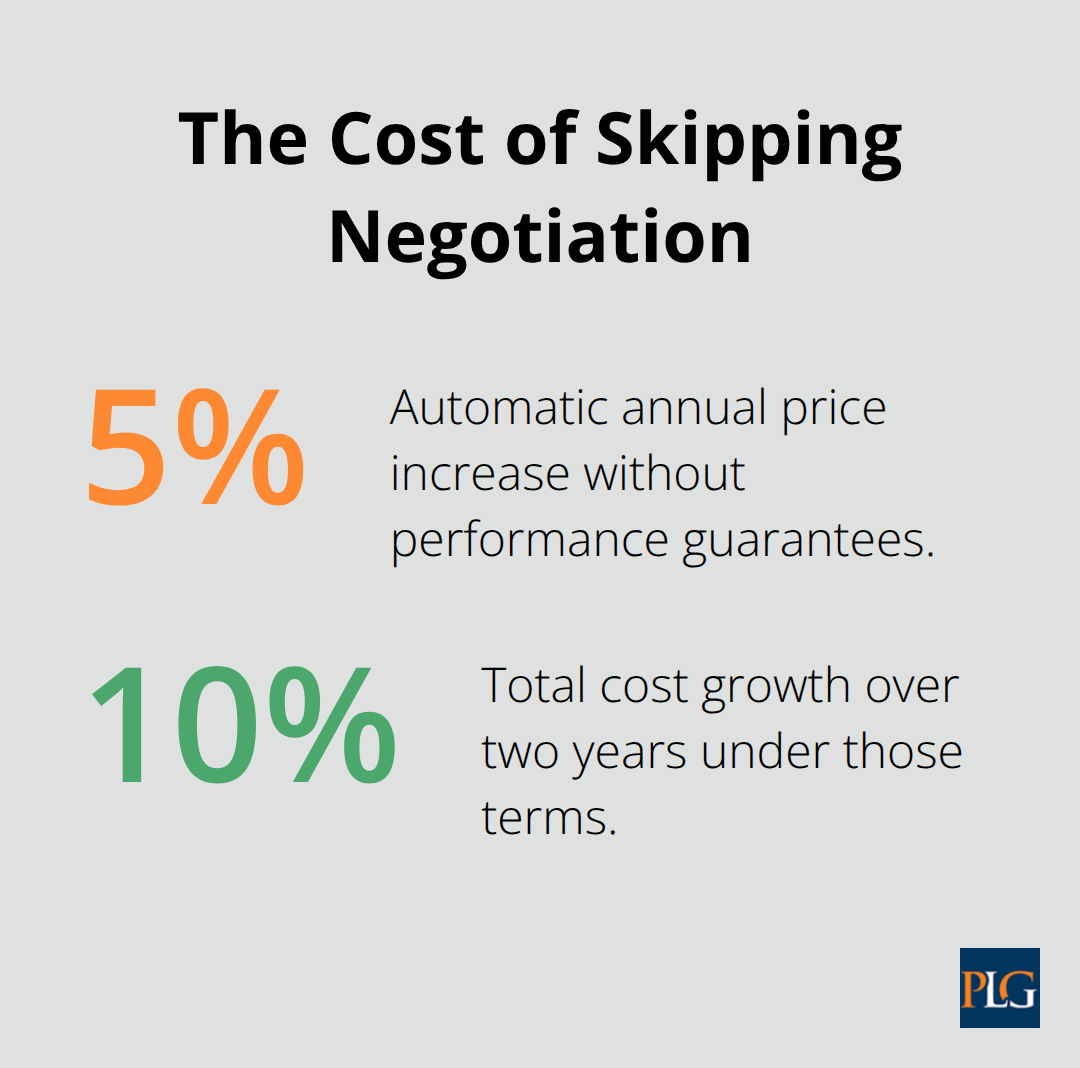
Most startup founders sign contracts without reading them thoroughly, and this habit costs real money. A founder at a SaaS startup accepted a vendor agreement that included automatic price increases of 5% annually without any performance guarantees. After two years, the cost had grown 10% while service quality declined. She could have negotiated a performance-based pricing model or capped increases at inflation rates, but she never reviewed the fine print.
This happens constantly because founders feel pressure to move fast and assume standard terms are non-negotiable. Vendors expect pushback on pricing, payment terms, and service levels. When you accept their first offer without question, you signal that you’ll accept unfavorable terms throughout the relationship.
Overlooking Payment Terms and Liability Exposure
Payment terms deserve specific attention because they directly impact your runway. A net 60 payment term means you wait two months to receive cash, while your own employees and suppliers demand payment faster. If a customer insists on net 90 or net 120, your cash flow deteriorates quickly, especially as you scale. Liability clauses are equally dangerous when ignored. Many startup founders don’t understand what uncapped liability means until a customer sues and demands damages far exceeding the contract value. Capping your liability at the annual contract value or a specific dollar amount protects you from catastrophic exposure. Without this protection, a single customer dispute can threaten your entire business.
Failing to Plan for Dispute Resolution
Dispute resolution planning separates founders who stay in control from those who react to problems after they occur. Most startup contracts lack clear dispute resolution language, which means disagreements escalate to expensive litigation immediately. Mediation costs significantly less than litigation and preserves business relationships, but only if you’ve included a mediation clause that requires it before lawsuits begin. The University of Michigan’s negotiation course emphasizes that contracts should specify dispute resolution paths, including mediation timelines, arbitration procedures if mediation fails, and who bears costs. Without these provisions, a customer billing dispute can spiral into months of legal fees with no resolution path defined.
Leaving Verbal Agreements Unwritten
You must document everything in writing once you’ve negotiated terms. Many founders agree to modifications verbally and assume they’re covered, then discover later that the written contract contradicts the conversation. Email confirmations of agreed changes, amendment documents that both parties sign, and meeting notes that reference specific term adjustments all protect you when disputes arise. A customer who claims you promised unlimited support becomes manageable when you have written evidence of the actual scope.
Taking Control Through Structured Negotiation
Founders who maintain control over their contracts treat negotiation as a process with defined steps: research the other party’s constraints, map your walk-away point, separate negotiables from non-negotiables, and formalize everything in writing with clear dispute resolution language. Those who skip these steps pay the price through cash flow problems, unexpected liability exposure, and disputes that consume months of management attention when you should be building your product.
Final Thoughts
Strong startup commercial contracts remove friction from growth by clarifying payment terms, capping liability, and defining dispute resolution paths. When these elements are in place, you stop fighting internal battles and focus on building your product instead. Every hour spent managing a contract dispute is an hour lost to customer acquisition or service improvement.
Treat negotiation as a core business skill rather than a legal checkbox. Map your leverage before sitting down, separate what you will not accept from what you can negotiate, and document everything in writing. These steps take hours upfront but save months of headaches later, and they transform how vendors and customers perceive your startup.
Fair dealing builds relationships that last because both parties feel heard and respected. Vendors and customers who trust you prioritize your orders and referrals when supply tightens or competition increases. We at Primum Law Group help startups structure their startup commercial contracts so growth happens without legal surprises-contact us to discuss your contract strategy.