

Poorly drafted contracts cost startups thousands in disputes, lost IP rights, and unexpected liabilities. Most founders skip the fine print or use generic templates, leaving critical gaps that haunt them later.
We at Primum Law Group have seen how the right startup contract drafting tips make the difference between a protected business and one vulnerable to costly mistakes. This guide walks you through the language that matters, the red flags to catch, and when to get professional review.
The Three Drafting Mistakes That Drain Startup Budgets
Vague Payment Terms Create Cash Flow Chaos
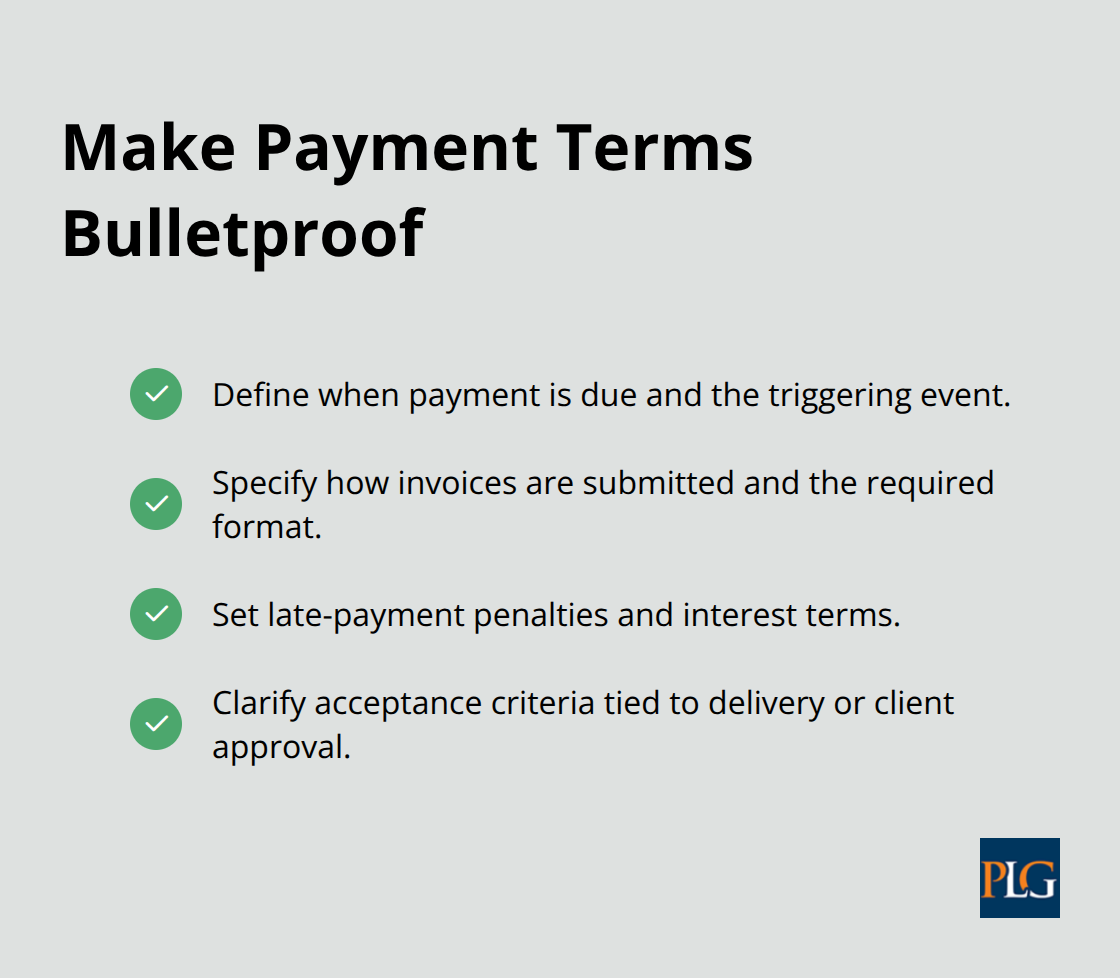
Founders often treat contracts as paperwork to rush through rather than business documents that shape their company’s future. The consequences are immediate and expensive. Vague payment terms create disputes that escalate into months of back-and-forth negotiation, delaying cash flow when startups can least afford it. Most founders write something like “payment due upon completion” without specifying what completion actually means, how invoices are submitted, or what triggers payment. A SaaS founder in San Francisco once lost forty thousand dollars in disputed fees because the contract didn’t define whether payment was due when services were delivered or when the client accepted them-that ambiguity cost him two months of legal fees to resolve.
The fix requires specificity that most templates don’t provide. Write exactly when payment is due, how many days after what event, what constitutes acceptable invoice format, and what happens if payment is late. Precise obligations eliminate the ambiguity that turns small disagreements into expensive disputes.
Intellectual Property Ownership Breaks Funding Rounds
Intellectual property ownership creates an even worse problem. Founders assume that anything created by their team automatically belongs to the company, but courts don’t work that way. Without explicit IP assignment language, a departing engineer can legally claim ownership of code they wrote, a designer can own their interface work, and investors will reject your funding round because your IP chain is broken. The Defend Trade Secrets Act protects company secrets only if you take reasonable steps to identify and protect them-which means your contract must spell out what counts as proprietary and who owns it.
Assign all work product created during employment to the company, include confidentiality obligations that survive departure, and define what counts as trade secrets. This language protects your company from IP disputes that can derail investor interest and create legal nightmares.
Missing Dispute Resolution Clauses Force Expensive Litigation
Missing dispute resolution clauses force founders into expensive litigation when disagreements arise. Without a clear path to arbitration or mediation, a contract dispute over fifty thousand dollars can cost twice that in legal fees before you see a verdict. Generic language that sounds professional but stays vague is worse than no contract at all because it creates the illusion of protection while leaving gaps a lawyer can drive through.
Commit both parties to mediation before arbitration, specify the arbitrator selection process, and name your jurisdiction upfront. These provisions keep disputes small and manageable instead of letting them spiral into courtroom battles.
Why Precision Pays Off Immediately
Founders who take two extra hours to write precise obligations, timelines, and ownership rules avoid months of disputes later. The investment in clarity at the drafting stage pays back tenfold when disagreements stay small or disappear entirely. With these three mistakes corrected, your contracts shift from liability traps into protective documents that actually work.
The language you choose now determines whether your startup protects its assets or leaves them exposed. What specific contract language matters most depends on your business model and the relationships you’re building-which is exactly why the next section walks through the essential clauses every startup needs in place.
The Language That Protects Your Startup’s Core Assets
Confidentiality Clauses Stop Departing Employees From Stealing Your Secrets
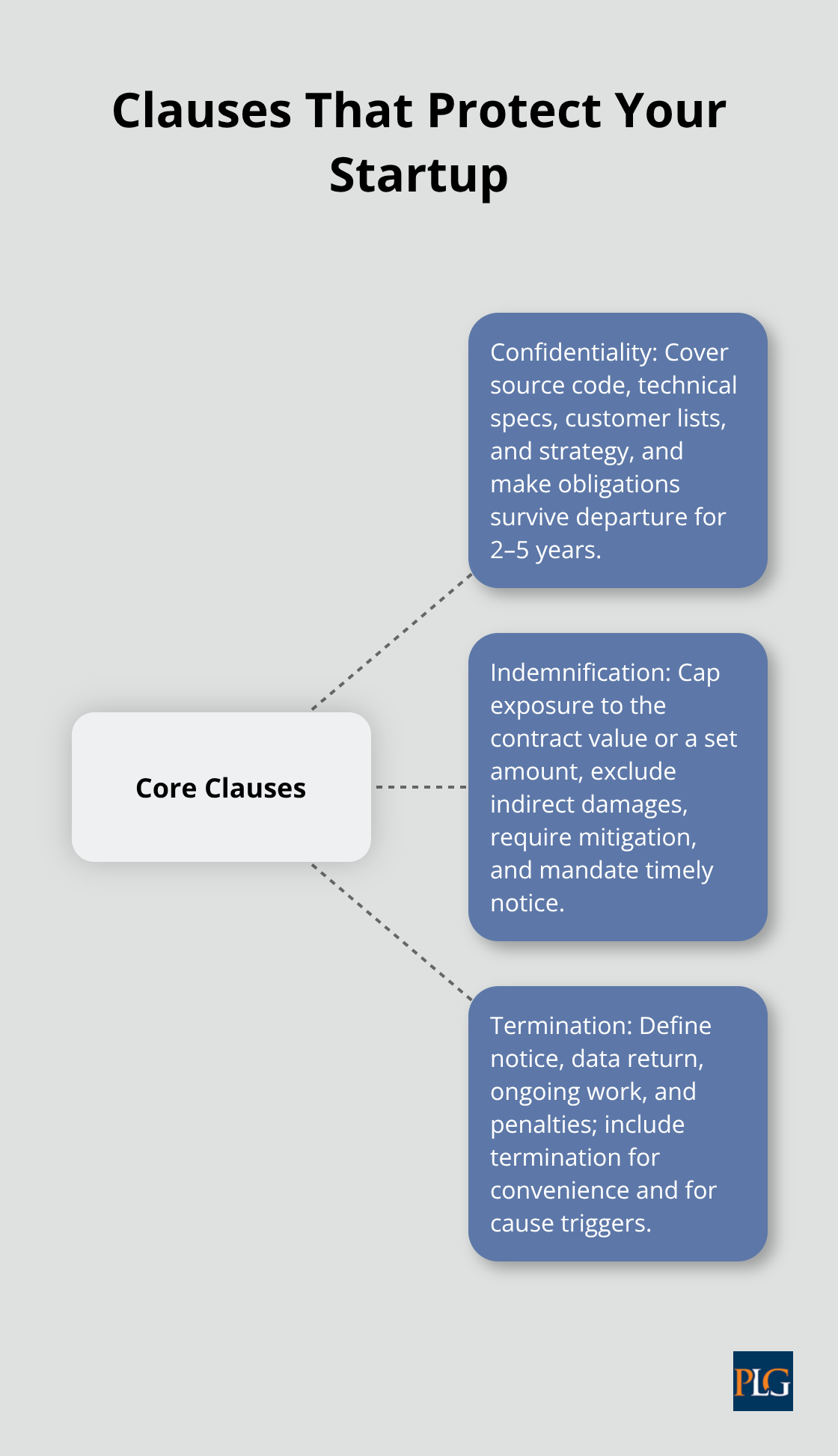
Confidentiality provisions are non-negotiable, yet most founders treat them as boilerplate that everyone skips anyway. That’s wrong. A confidentiality clause that explicitly covers source code, technical specifications, customer lists, and business strategy creates legal protection under the Defend Trade Secrets Act, which means you can pursue damages if someone steals your secrets after they leave. The clause must survive the employment or contract period-typically two to five years after departure-and it needs to define what counts as confidential information with specificity.
Don’t write vague language like “proprietary information.” Instead, list the categories: algorithms, architectural decisions, pricing models, customer acquisition costs, and any data you consider competitive advantages. This precision matters because courts won’t enforce trade secret protection if you haven’t taken reasonable steps to identify what you’re protecting. When a developer leaves your San Francisco startup to join a competitor, that confidentiality language determines whether they can use your system design or whether you have legal recourse.
Indemnification Clauses Shift Liability Without Bankrupting Your Company
Indemnification clauses shift liability risk in ways that most founders don’t understand until something goes wrong. The basic principle is simple: if your vendor’s software infringes a patent, they indemnify you by covering the legal costs and damages. But the language matters enormously. Founders often accept unlimited indemnification language that exposes their company to catastrophic liability for situations they can’t control.
Instead, cap indemnification at the value of the contract or a specific dollar amount, exclude indirect damages and lost profits, and require the indemnified party to mitigate damages rather than let them spiral. Define what triggers indemnification-actual infringement claims, not mere allegations-and require notice within a reasonable timeframe so you can respond.
Termination Rights Give You an Exit When Relationships Fail
Termination rights deserve equal attention because they determine your exit strategy when a relationship fails. Write exact termination provisions: how much notice is required, what happens to ongoing work, how you retrieve your data, and whether either party pays penalties for early exit. Include termination for convenience language that lets you end the relationship without cause if you provide sufficient notice, paired with termination for cause provisions that activate immediately if the other party breaches material obligations (such as failure to deliver promised services or unauthorized use of your IP).
This balance protects you from being locked into a failing relationship while holding vendors accountable for serious failures. The specificity you build into these three clause types-confidentiality, indemnification, and termination-transforms your contracts from generic documents into instruments that actually protect your business. Yet even the strongest language fails if you don’t know what red flags to watch for when the other party presents their contract to you.
Red Flags to Watch for When Reviewing Contracts in San Francisco
Unlimited Liability Clauses Destroy Startups Faster Than Most Founders Realize
Unlimited liability clauses expose your company to catastrophic financial risk that can bankrupt you over a single dispute. A contract that holds your company responsible for unlimited damages from breach, negligence, or IP infringement leaves you vulnerable to claims that far exceed the contract’s actual value. The problem intensifies when you purchase software, hire contractors, or sign vendor agreements-the other party drafts terms that protect them completely while leaving you exposed. You need hard caps on liability tied to the contract value itself. If you pay a vendor fifty thousand dollars annually, your maximum liability exposure should never exceed that amount, and indirect damages like lost profits should be excluded entirely. A San Francisco startup signed an unlimited liability clause with a cloud infrastructure provider and faced a potential ten million dollar claim when service outages affected their customers, even though the contract value was only two hundred thousand dollars. The startup spent eighteen months fighting the claim before settling for a fraction of the alleged damages, but the legal costs and distraction nearly killed the business. Cap every liability provision at the contract value or a specific dollar amount, exclude consequential and indirect damages, and require the other party to mitigate their losses rather than letting damages accumulate unchecked.
Restrictive Non-Compete Language Suffocates Your Team and Hiring Flexibility
Restrictive non-compete clauses that survive employment indefinitely or cover geographic areas and industries broader than your actual business create serious problems for both your team and your ability to hire talent. A clause that prevents a departing engineer from working at any competitor for three years across the entire United States is unenforceable in California and most tech hubs, yet founders still waste time and money fighting them. More dangerous are non-competes that appear reasonable on their surface but actually restrict your ability to hire talent or pivot your business model. You need non-compete language that stays narrowly tailored to your actual competitive threat, limited to geographic areas where you actually operate, and time-bound to twelve to eighteen months maximum. This approach protects your legitimate business interests without creating legal battles that drain your resources.
Ambiguous Performance Metrics Create Disputes Over What Success Actually Means
Ambiguous performance metrics in vendor contracts and service agreements create disputes because neither party agrees on what success looks like. A contract that promises results based on undefined terms like improved engagement or better performance sets you up for months of argument about whether obligations were met. Insist on objective, measurable metrics tied to specific numbers-conversion rate increases of at least fifteen percent, response times under two seconds, uptime of ninety-nine point nine percent. When metrics are quantified and verifiable, disputes dissolve because both parties can point to actual data and determine whether the contract was fulfilled.

This precision prevents the costly disagreements that turn vendor relationships into legal nightmares.
Final Thoughts
The startup contract drafting tips covered in this guide address the mistakes that drain resources and create legal exposure. Vague payment terms delay cash flow, missing IP language breaks funding rounds, and absent dispute resolution clauses force expensive litigation. The essential language you add now-confidentiality provisions, indemnification caps, and termination rights-transforms contracts from generic documents into protective instruments that actually work.
Your contracts determine whether your startup protects its assets or leaves them exposed to preventable disputes. The precision you build into obligations, timelines, and ownership rules pays back tenfold when disagreements stay small or disappear entirely. Most founders underestimate how much their contract language shapes their company’s financial health and investor readiness, yet this single factor often determines whether funding rounds succeed or stall.
Primum Law Group provides startup counseling and contract review services tailored to your specific business needs, helping you navigate vendor agreements, employment contracts, and investor terms without the generic template approach that leaves gaps. Start by reviewing your existing contracts against the red flags outlined here, then prioritize getting legal review for your highest-value agreements and any contracts that involve IP, customer data, or long-term commitments.