

Global startups operating across multiple countries face a complex web of regulations that shift with every border crossed. International corporate compliance isn’t optional-it’s the foundation that keeps your business operating legally and protects you from costly penalties.
At Primum Law Group, we’ve seen firsthand how startups that build strong compliance frameworks early avoid the scramble later. This guide walks you through the regulatory landscape, shows you how to scale your policies as you grow, and highlights the mistakes that trip up most international teams.
What Compliance Rules Actually Apply When You Operate Across Borders
Global startups need to stop treating international compliance as a one-size-fits-all problem. The reality is messier. A regulation that matters in Germany might not touch your operations in Singapore, and assuming otherwise wastes resources on the wrong priorities. The first step is mapping what actually applies to your business based on three hard filters: where your customers sit, where your data flows, and where you have employees or legal entities.
Data Protection Laws Set the Foundation
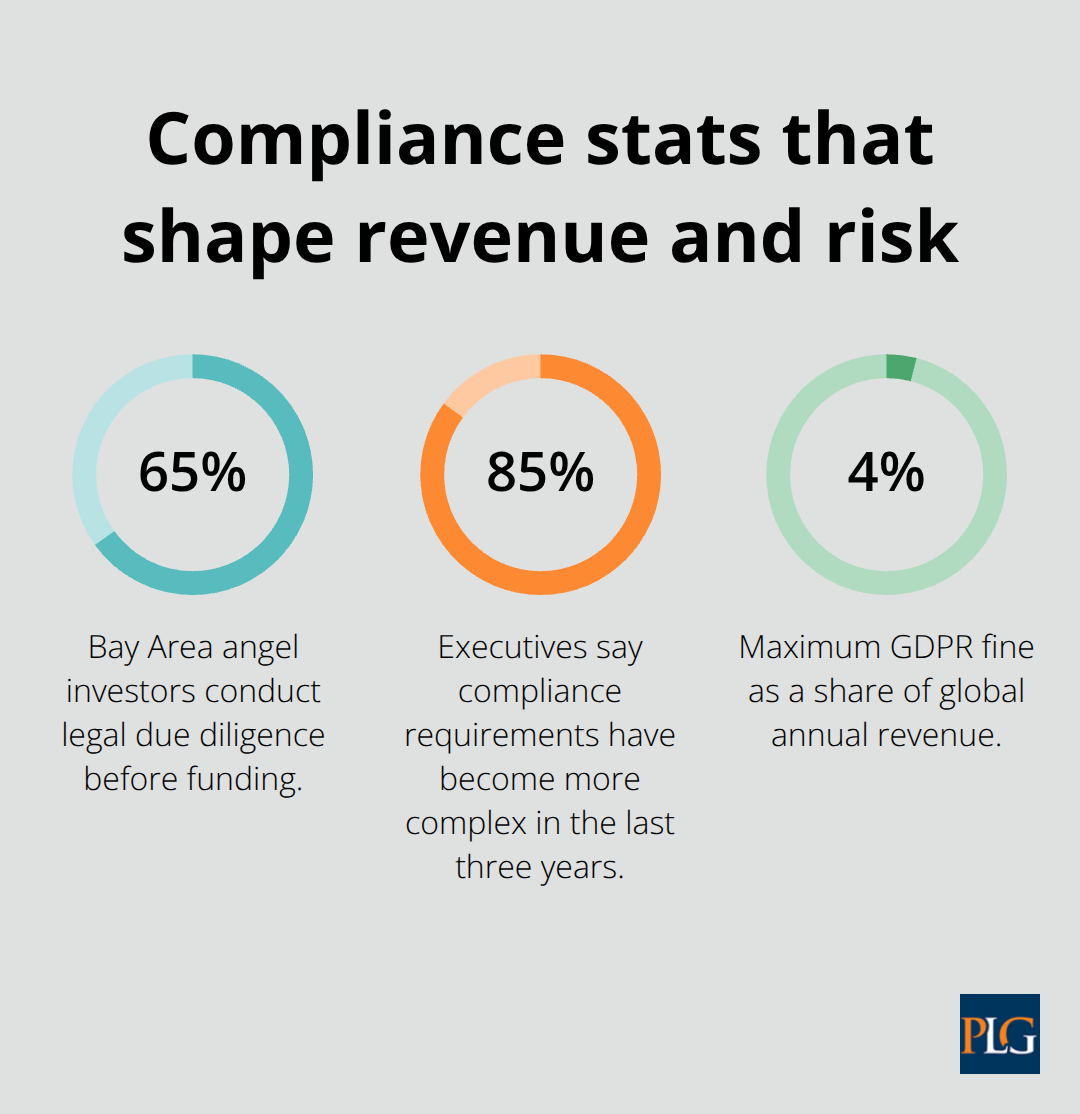
Data protection laws are the non-negotiable starting point. GDPR in the EU isn’t optional if you process any personal data from European residents, and the fines are brutal-up to 4% of global annual revenue or 20 million euros, whichever is higher. CCPA in California applies if you collect personal information from California residents, period, regardless of where your company is incorporated. The LGPD in Brazil follows the same territorial logic. This means a San Francisco startup with a single European customer needs GDPR compliance mechanisms in place.
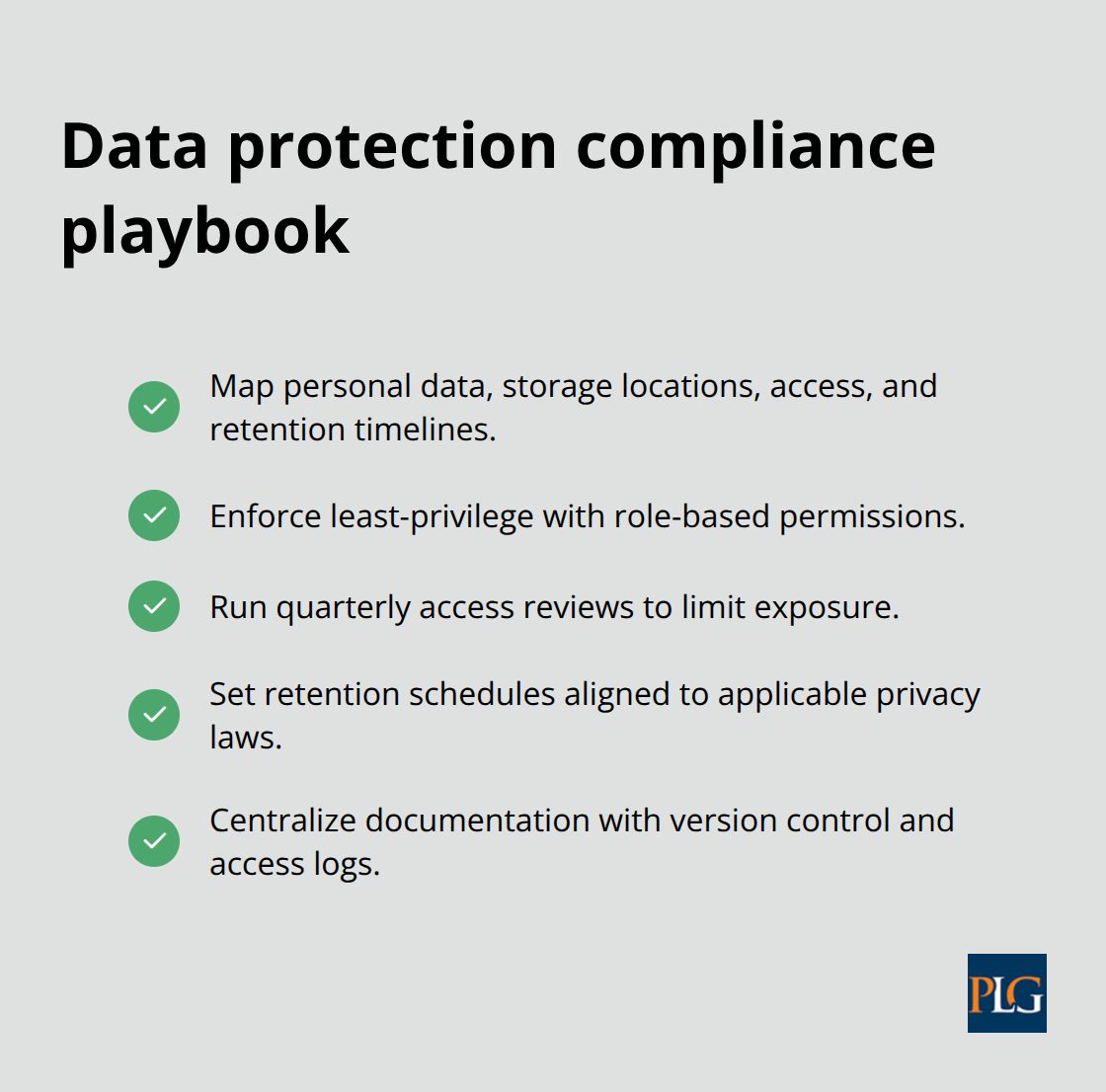
The practical move is to map what personal data you collect, where it lives, who accesses it, and how long you keep it. Then implement least-privilege access controls with role-based permissions and conduct quarterly reviews to limit exposure. Data retention policies should align with privacy laws-don’t hoard customer information longer than necessary. Centralize your documentation with version control and access logs so you can prove compliance during audits.
A 72-hour breach notification window under GDPR means incident response plans aren’t theoretical luxuries; they’re operational requirements. You need escalation procedures, customer notification templates, and evidence handling protocols mapped out before a breach happens.
Tax Compliance Requires Continuous Systems, Not Annual Scrambles
Tax compliance across borders isn’t about guessing. Each jurisdiction has specific rules for corporate income tax, sales tax or VAT, payroll withholding, and transfer pricing if you move money between entities. The OECD Pillar Two global minimum tax initiative pushes toward 15% minimum tax rates across countries, which means startups can no longer exploit low-tax jurisdictions without scrutiny.
Build clean bookkeeping from day one with standardized chart of accounts, consistent invoicing, and documented intercompany pricing. Many startups fail here by treating tax filing as an annual scramble rather than a continuous process. Use unified accounting platforms like Stripe Tax that automate sales tax and VAT calculations across jurisdictions, reducing manual error and keeping records audit-ready.
If you operate through multiple entities in different countries, transfer pricing documentation becomes critical-sloppy intercompany arrangements trigger disputes and penalties that can exceed six figures. Assign clear ownership for tax compliance, establish quarterly review cycles, and work with local accountants or tax advisors on retainer to catch regulatory changes. The California Department of Fair Employment and Housing enforces stricter wage and hour standards than federal law, and a single misclassification can trigger back wages and penalties exceeding 10,000 dollars.
Customer Mix Determines Which Additional Frameworks Apply
Your customer mix determines which additional compliance frameworks matter. Enterprise buyers often require SOC 2 certification or ISO 27001 compliance before signing contracts. Government customers in the United States demand FedRAMP authorization for cloud services or CMMC compliance for defense contractors. If you operate in healthcare, HIPAA compliance is non-negotiable.
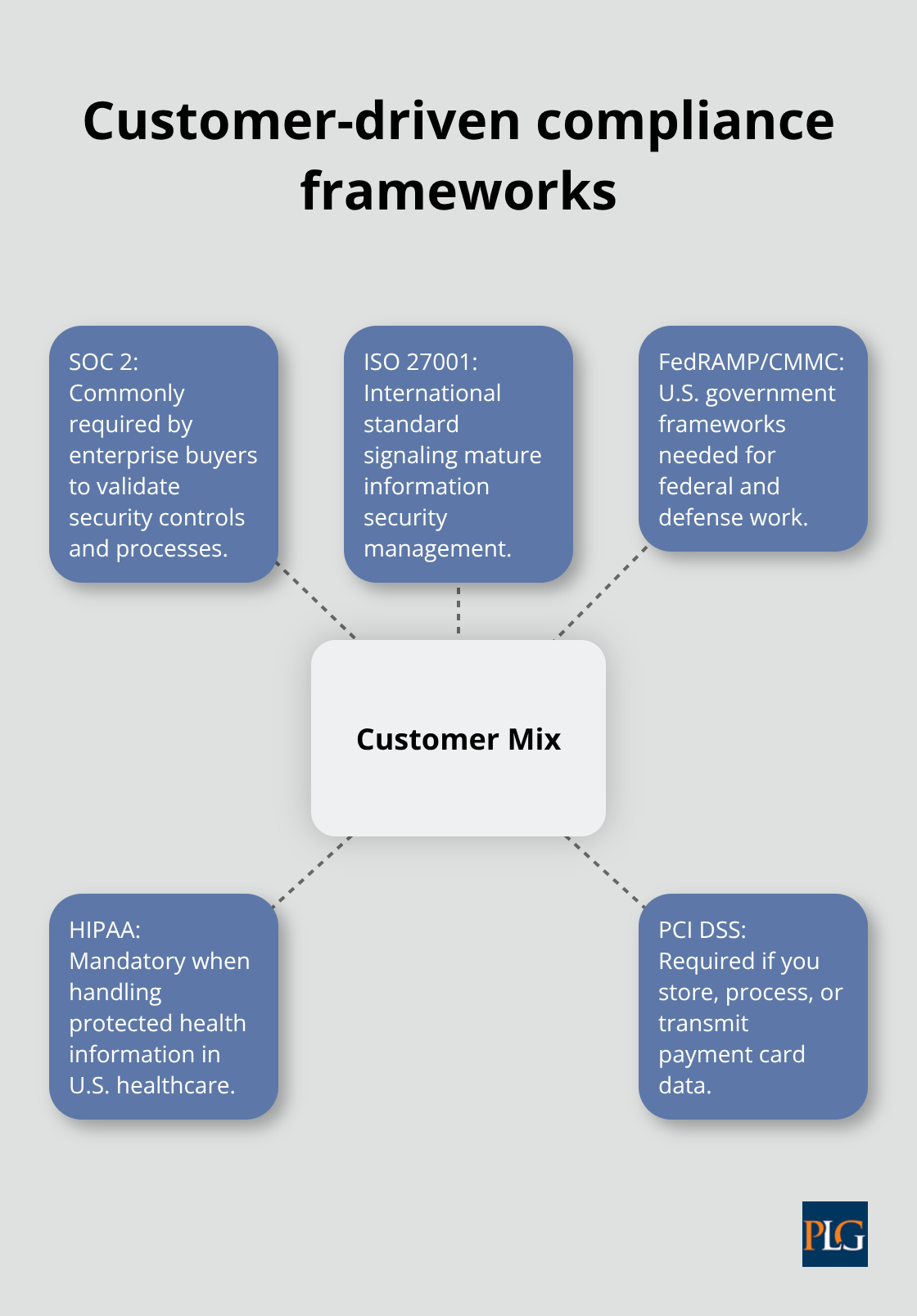
If you process payments, PCI DSS applies. These aren’t optional-they’re deal gates.
Start by identifying which industries and customer segments you target, then research what certifications or standards they require. Build compliance into your product architecture early rather than bolting it on later, which costs exponentially more. A practical approach is to conduct a quarterly scan of your customer pipeline and ask what compliance certifications each prospect requires, then prioritize implementations that unlock the most revenue. Understanding these requirements upfront shapes how you structure your operations and which compliance investments deliver the fastest return.
How to Prioritize Compliance Without Overextending Your Team
Rank Obligations by Revenue Impact, Not by Noise
Starting with the wrong priorities wastes months and drains resources on compliance work that doesn’t match your actual business risk. The first move is to rank your compliance obligations by severity and likelihood, not by noise level or what a vendor is pushing. A San Francisco startup selling to enterprise customers in the EU faces GDPR data handling requirements and SOC 2 certification demands-those are non-negotiable gates to revenue. A different startup processing payments faces PCI DSS requirements that are equally non-negotiable but operate on different timelines and with different control requirements. The gap between these two scenarios is enormous, yet many startups treat all compliance equally.
Start by listing every regulation, standard, or certification your customers, regulators, or geographic footprint requires. Then sort by revenue impact-which compliance gaps block deals or trigger fines-versus nice-to-have certifications that strengthen trust but don’t unlock immediate revenue. A 2024 Gust report found that 65% of Bay Area angel investors conduct legal due diligence before funding, which means incomplete compliance documentation becomes a deal-breaker during fundraising. That shifts compliance from back-office work to a revenue enabler.
Assign Ownership and Use External Advisors to Scale
Assign one person ownership of each priority area with a clear deadline and measurable outcome. Don’t hire a full-time compliance officer yet; instead, use external advisors on predictable monthly retainers to access specialized knowledge without fixed overhead. This approach scales as you grow-you add capacity without bloated headcount.
Build Systems That Reduce Manual Work
Documentation and monitoring systems must reduce manual work, not create busywork. Create policy templates for data handling, incident response, access control, and vendor management, then customize them for each jurisdiction where you operate rather than writing from scratch each time. Use centralized platforms like Stripe for payment compliance and automated tax filing tools that pull from your accounting system to reduce error and keep audit trails intact.
Implement role-based access controls with quarterly reviews, assign accountability through documented onboarding training and annual refreshers, and maintain a data room with version-controlled policies, training records, and vendor assessments. Automate transaction monitoring, identity verification, and sanctions screening where regulations require it-tools that embed these checks reduce the manual compliance burden. The California Department of Fair Employment and Housing example illustrates why documentation matters: a single wage misclassification triggers penalties exceeding $10,000, but clean employment contracts and payroll records caught the issue during quarterly review instead of at audit.
Monitor Regulatory Changes and Close Gaps Before Auditors Find Them
Set up alerts for regulatory changes by subscribing to updates in each jurisdiction and conducting quarterly reviews to catch shifts before they hit your operations. Conduct internal assessments against external frameworks like GDPR, SOC 2, or ISO 27001 on a quarterly cycle so you find gaps before external auditors do. This isn’t theoretical-it’s the difference between a clean audit and a compliance surprise that derails your quarter. As your operations expand across new markets and customer segments, your compliance obligations shift alongside them, which means your framework must adapt in real time.
Where Global Startups Go Wrong with Compliance
Treating Compliance as a Global Template Instead of a Jurisdiction-Specific Problem
Most global startups make compliance mistakes not because they’re careless, but because they assume regulations work the same way across borders. A startup that builds solid GDPR controls for Europe assumes those same controls work for California under CCPA-they don’t. GDPR requires consent before data collection in most cases; CCPA gives Californians the right to opt out after collection. The technical controls overlap, but the legal architecture is fundamentally different. Similarly, a San Francisco startup might nail California employment law with proper wage classification and paid sick leave accrual, then expand to New York and discover that New York’s wage payment rules require more frequent paycheck cycles and have stricter definitions of what counts as compensable work time.
The mistake isn’t ignorance; it’s assuming one jurisdiction’s compliance framework ports directly to another. This assumption costs time and money because you end up retrofitting policies instead of building them right from the start. Stop treating compliance as a global template problem. Instead, assign someone to map the specific regulatory differences in each jurisdiction where you operate, document where your current policies fall short, and prioritize fixes by revenue impact and legal risk. A PwC survey from 2025 found that 85% of business executives feel compliance requirements have become more complex in the last three years, which means the problem is getting worse, not better. You need a system that flags jurisdictional differences automatically rather than relying on annual audits to surface them.
Waiting Until Growth Forces Compliance Action
The second critical mistake is waiting until growth forces your hand. Startups tell themselves they’ll handle SOC 2 certification when they land their first enterprise customer, or they’ll fix their cap table documentation once they’re fundraising. This creates enormous friction because compliance retrofitting costs exponentially more than building it in. A startup that implements data access controls from day one spends weeks setting up role-based systems; a startup that bolts controls onto chaotic access patterns spends months untangling who has access to what and why.
The same applies to intercompany pricing documentation-startups that move money between entities without documented transfer pricing face penalties and disputes that dwarf the cost of getting it right upfront. Identify which compliance obligations unlock revenue or prevent legal exposure, then implement them before you need them. If your customer pipeline includes government contracts, start FedRAMP or CMMC compliance planning now, not when you win a deal. If you’re hiring across multiple states, map employment law differences and lock in compliant payroll practices before your first hire in a new state. Quarterly reviews of your customer pipeline and regulatory footprint keep this system active-you spot emerging compliance needs three to six months before they block a deal. This transforms compliance from a crisis response into a competitive advantage because you can say yes to opportunities faster than competitors who are still scrambling to get compliant.
Treating Policies as Static Documents Instead of Living Systems
The third mistake-failing to update policies as operations expand-is where many startups stumble after initial growth. A startup that implements solid incident response procedures for GDPR compliance often treats those procedures as static. Then they add a new product line that handles payment data, and suddenly PCI DSS incident response requirements create conflicts with existing procedures. Or they expand to Brazil and discover that LGPD has different breach notification timelines than GDPR, but their incident response template doesn’t distinguish between jurisdictions. Policies become outdated not because they were bad, but because the business changed and nobody connected those dots.
Conduct quarterly reviews that explicitly ask: has our customer mix changed, have we entered new jurisdictions, have we added new data types or product lines? Each of those changes triggers a compliance audit against your existing policies. Use a hub-and-spoke governance model where a central team sets policy standards while local leaders in each jurisdiction flag gaps specific to their region. Automate what you can-transaction monitoring, sanctions screening, access control reviews-so that manual review cycles focus on exceptions and changes rather than routine compliance work. Documentation matters here because when you’re audited or due diligence happens, clean records of quarterly policy reviews and updates prove you’re maintaining active compliance, not just following outdated templates. The California Department of Fair Employment and Housing conducts audits that specifically look for wage and hour compliance over time; startups with documented quarterly reviews of employment practices and payroll procedures pass those audits cleanly, while startups with static policies from two years ago face reconstructed penalties and back wages. This pattern repeats across every compliance domain-the startups that win are the ones that treat policies as living systems that evolve with the business, not documents you write once and shelve.
Final Thoughts
International corporate compliance operates as a living system that adapts as your business expands across new markets and customer segments. The startups that scale successfully treat compliance as a strategic asset that signals operational maturity to investors, unlocks enterprise revenue through certifications, and protects founders from personal liability. Start by mapping every jurisdiction where you operate or plan to operate, then rank obligations by revenue impact and legal risk rather than noise level.
Assign clear ownership for each priority with measurable deadlines and use external advisors on monthly retainers to access knowledge without hiring full-time staff upfront. Build systems that reduce manual work through automation, centralized documentation, and role-based access controls. Conduct quarterly reviews that explicitly connect changes in your business to changes in your compliance obligations, so your framework adapts when your customer mix shifts, when you enter a new jurisdiction, or when you add a new product line.
We at Primum Law Group work with global startups to build compliance frameworks that scale with your business. Whether you navigate GDPR in Europe, CCPA in California, or tax obligations across multiple jurisdictions, the right legal structure and documented processes reduce friction and accelerate growth. Your next step is to conduct a compliance audit against your current operations and identify which obligations block revenue or create legal exposure.