
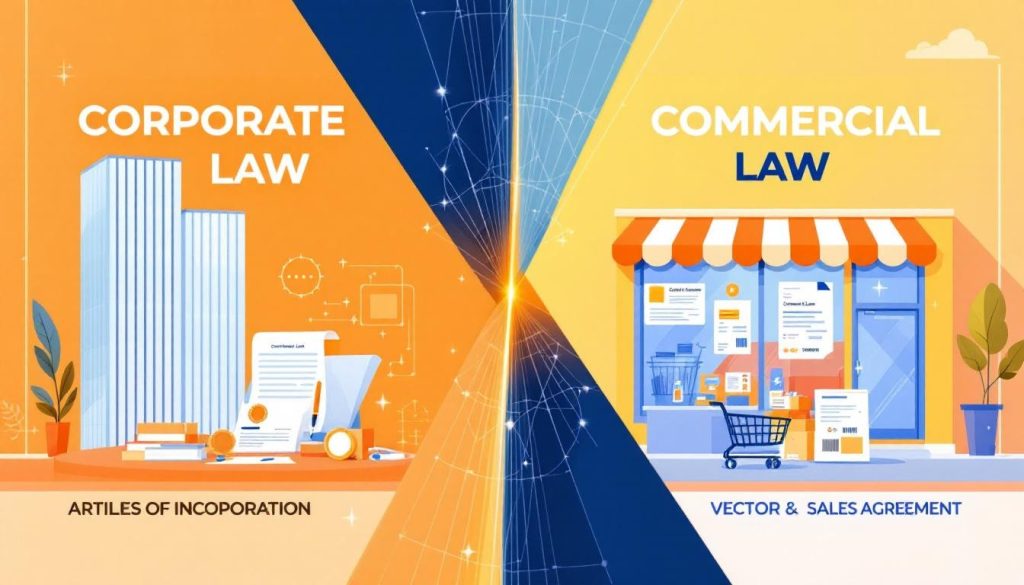
Many business owners confuse corporate law with commercial law, treating them as interchangeable. They’re not. One governs how your company is structured and run internally, while the other handles your day-to-day business transactions with customers and partners.
At Primum Law Group, we see this confusion cost startups time and money. Understanding the difference between corporate and commercial law helps you get the right legal guidance when you need it most.
How Corporate Law Shapes Your Company’s Foundation
Corporate law determines how your company legally exists and operates from day one. It covers everything from incorporating your business to managing shareholder relationships and ensuring your board makes decisions that comply with state and federal rules. For startups in San Francisco, getting this right early prevents costly restructuring later. The National Association of Corporate Directors found that 79% of directors cite understanding fiduciary duties as their top priority, which tells you how seriously corporate governance matters once you have investors or multiple stakeholders involved.

Incorporation and governance setup
When you incorporate in California, you create a separate legal entity with its own rights and obligations. This decision triggers corporate law requirements immediately. You’ll need articles of incorporation filed with the California Secretary of State, bylaws that govern how your board and shareholders operate, and clarity on stock classes and ownership percentages. San Francisco Chamber of Commerce data shows that over 85% of businesses engage in transactions governed by commercial law daily, but that percentage reflects companies already operating-corporate law is what gets you to that operating stage in the first place.
Your incorporation structure also affects how you’ll later handle fundraising, employee equity, and tax treatment. Many startups rush through incorporation without considering how their chosen structure will constrain or enable future financing rounds or acquisitions. If you structure as a C corporation, you’re setting yourself up for venture capital but also double taxation. An S corporation or LLC offers different trade-offs. This choice, made under corporate law, shapes your financial future for years.
Shareholder rights and board responsibilities
Once you have shareholders-whether founders, investors, or employees with equity-corporate law defines what they can and cannot do. Shareholders have rights to inspect corporate records, vote on major decisions like mergers or dissolution, and receive dividends if the board declares them. Directors and officers carry fiduciary duties to act in the corporation’s best interest, not their own. California courts take these duties seriously.
Your bylaws should specify how often the board meets, who can call special meetings, what constitutes a quorum, and how voting works. Many founders skip the detailed bylaws and rely on default state rules, which often require more formality than early-stage teams expect. When disputes arise between founders or between founders and investors, weak governance documentation becomes expensive to fix.
Compliance obligations and board oversight
The board handles compliance obligations-tax filings, securities disclosures if you’ve raised venture capital, regulatory reporting, and maintaining corporate records. San Francisco startups raising venture capital must comply with Securities and Exchange Commission rules for any equity offerings, and your board approves those filings. Neglecting these obligations can expose directors to personal liability and jeopardize your company’s legal standing.
Attorney-client privilege protects confidential communications between corporate leadership and counsel when those communications serve the corporation’s interests. This protection means your board can discuss strategy and legal risks without fear of later disclosure. That confidentiality becomes especially valuable when your company faces complex decisions about financing, restructuring, or regulatory compliance.
As your company grows and external transactions increase-contracts with vendors, customer agreements, licensing deals-you’ll need to shift focus from corporate structure to the commercial agreements that drive daily operations. Understanding which legal issues fall under corporate law versus commercial law helps you allocate resources and get the right guidance at the right time.
Where Commercial Law Enters Your Business
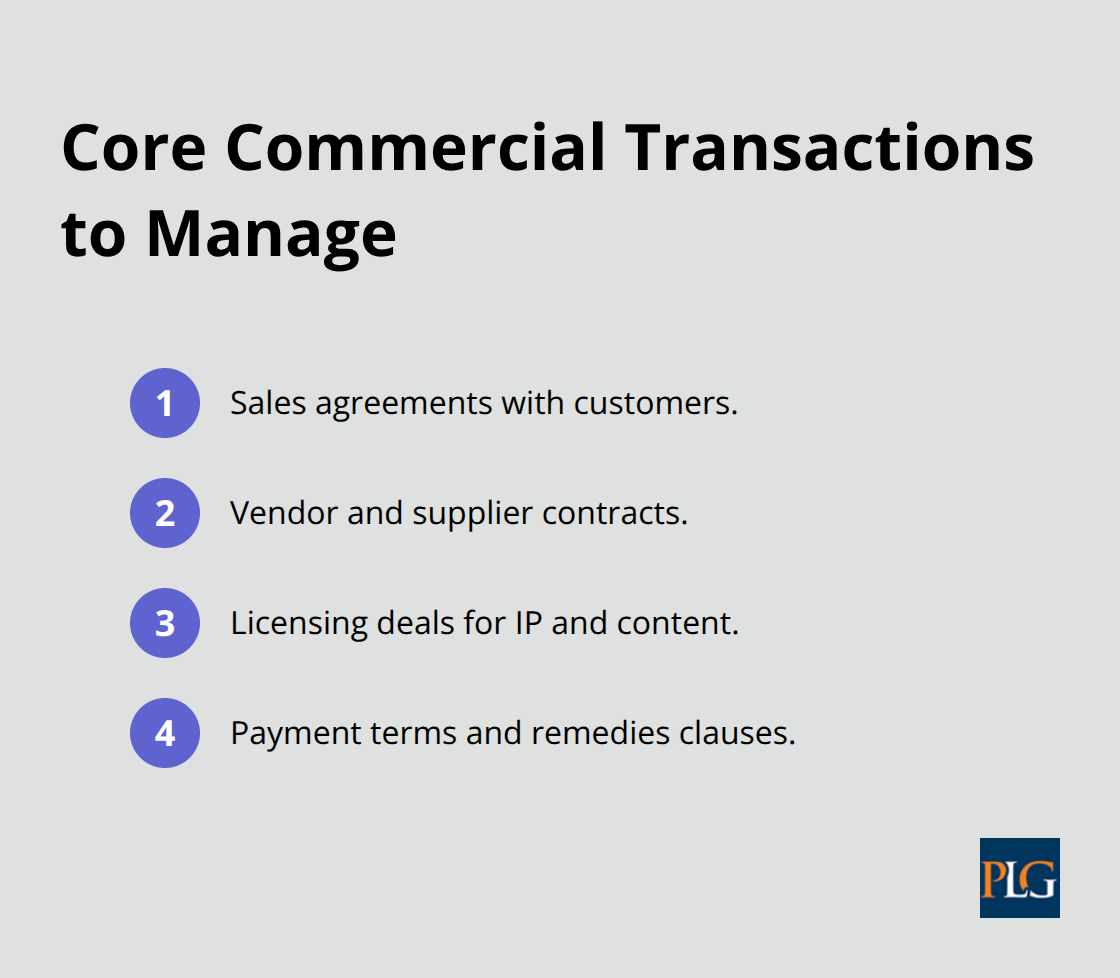
While corporate law builds your internal structure, commercial law governs the transactions that generate revenue and keep your business running. This is where contracts with customers, suppliers, and partners live. San Francisco businesses handle roughly 150 commercial transactions per month on average, according to the San Francisco Chamber of Commerce, which means commercial law touches your operations constantly once you move beyond the startup planning phase. Every sales agreement, vendor contract, licensing deal, and payment arrangement falls under commercial law.
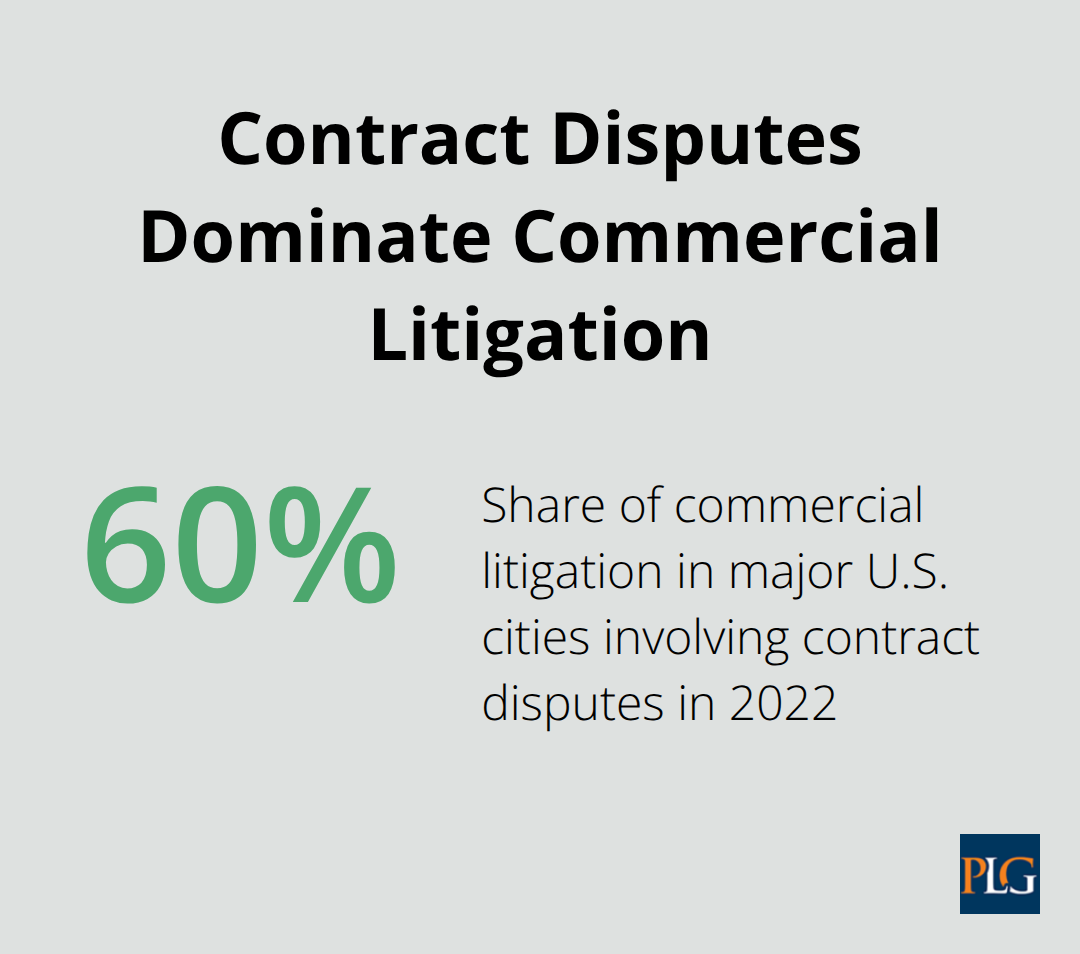
The American Bar Association reported that contract disputes accounted for about 60% of commercial litigation in major U.S. cities in 2022, making contract discipline a survival skill for growing companies. You cannot ignore this area without exposing yourself to payment disputes, performance failures, and enforcement headaches that drain resources faster than almost any other legal problem.
The Uniform Commercial Code and Your Contracts
The Uniform Commercial Code provides the backbone for most commercial transactions across states, including contracts, leases, negotiable instruments, and secured transactions. California has adopted and modified the UCC framework, which means your vendor agreements and customer contracts operate within a specific legal structure whether you write them that way or not. If you don’t draft your agreements carefully, state law fills the gaps-often in ways that hurt you. For example, if you sell goods or services without a clear payment term, California law assumes a reasonable price, but reasonable is not the same as profitable. Many startups discover this problem only when a customer disputes the invoice. A written contract that specifies payment due within 30 days, late fees, and remedies for non-payment prevents these disputes entirely.
Data Privacy and Customer Agreements
The California Consumer Privacy Act, effective since 2020, shapes commercial agreements by requiring transparency and consumer control in data-handling clauses. If you collect customer data, your contracts must reflect CCPA compliance, or you face regulatory exposure. This requirement changed how San Francisco companies draft customer agreements, employment contracts, and vendor arrangements that involve personal information. Your commercial agreements need to account for privacy law, not as an afterthought but as a core negotiation point.
Intellectual Property Licensing
Intellectual property licensing agreements present another commercial-law minefield. If you license software, patents, trademarks, or content from third parties, or if you license your own IP to others, the licensing agreement defines what each party can and cannot do. Vague licensing terms lead to disputes over permitted use, sublicensing rights, and indemnification obligations. A well-drafted license specifies the scope of use, territory, duration, fees, and what happens if the licensee breaches the agreement. Without this clarity, you end up renegotiating mid-relationship or litigating over interpretation.
Employment Contracts and Confidentiality
Employment contracts and independent contractor agreements also fall under commercial law. These contracts define compensation, confidentiality obligations, non-compete terms, and intellectual property ownership. California limits non-compete clauses significantly-most are unenforceable-but confidentiality and IP-ownership provisions remain enforceable if drafted properly. Many startups use generic templates for employment agreements without tailoring them to California law, which exposes them to unenforceability arguments when they need those agreements most. As your company scales, the gap between corporate governance decisions and the commercial agreements that support those decisions becomes impossible to ignore.
Where Corporate and Commercial Law Diverge
Corporate law and commercial law operate in entirely different domains, and confusing them costs startups real money. Corporate law governs your internal machinery-who owns what percentage of the company, how decisions get made, what fiduciary duties directors owe shareholders, and how the corporation itself faces taxation. Commercial law governs everything your company does with outsiders-what you promise customers, what suppliers promise you, how you get paid, and what happens when someone breaches a contract. The distinction matters because the same transaction can trigger both bodies of law simultaneously. When you raise venture capital, corporate law shapes how you issue stock and structure the investment, while commercial law governs the investor rights agreement and term sheet. When you hire an employee, corporate law determines whether you can grant equity, while commercial law controls the employment contract itself. San Francisco startups that blur these lines end up with governance documents that fail to protect their decisions and commercial agreements that expose them to unexpected liability.
Internal Governance Versus External Transactions
Corporate law applies narrowly to the corporation as a legal entity, the relationships among shareholders, directors, and officers, and the rules that govern how the corporation conducts its affairs. California state law, specifically the California Corporations Code, sets the default rules, though your bylaws and shareholder agreements can modify them in many cases. Commercial law, by contrast, applies to every transaction between your company and external parties-customers, vendors, lenders, licensees, and partners. The Uniform Commercial Code provides the backbone, but California has modified it in specific ways, and other state law layers on top.
Territorial Complexity and Jurisdiction
If a customer in New York buys your software, both California commercial law (governing your terms of service) and New York law (governing the customer’s rights) could apply, depending on how your contract allocates jurisdiction. This territorial complexity means commercial agreements require careful attention to choice-of-law clauses. Corporate law issues rarely involve competing state jurisdictions in the same way because the corporation’s internal governance is controlled by the state of incorporation, typically Delaware or California. A San Francisco startup incorporated in Delaware still follows Delaware corporate law for governance questions, even though it operates in California. Commercial transactions, however, create exposure across multiple states and sometimes multiple countries, which is why contract drafting demands precision about which law governs disputes.
Litigation Frequency and Resolution Paths
The American Bar Association found that contract disputes accounted for roughly 60% of commercial litigation in major U.S. cities in 2022, underscoring how frequently commercial-law conflicts land in court. Corporate law disputes-shareholder derivative suits, director-duty breaches, governance deadlocks-are far less common and often resolve through negotiation or internal arbitration before litigation becomes necessary.
Final Thoughts
The difference between corporate and commercial law shapes how you build and operate your startup. Corporate law handles your internal structure-incorporation, shareholder agreements, board governance, and compliance obligations that protect your company’s legal standing. Commercial law handles everything external-contracts with customers, vendor agreements, licensing deals, and payment terms that generate revenue and keep operations running. Both matter from day one, but they demand attention at different stages and for different reasons.
Early-stage startups need corporate law guidance immediately. Before you take on investors or hire employees with equity, you need proper incorporation, bylaws that reflect your governance intentions, and shareholder agreements that prevent future disputes. If you’re raising venture capital, corporate law structures the investment and protects both you and your investors through clear documentation of rights and obligations. San Francisco startups that skip solid corporate groundwork discover the cost when founders disagree about ownership percentages or when investors demand governance rights you never documented.
Commercial law becomes critical as soon as you start transacting with customers, suppliers, and partners. Your first customer contract, vendor agreement, or licensing deal falls under commercial law, and the California Consumer Privacy Act requires privacy clauses in customer agreements. Contract disputes account for roughly 60% of commercial litigation in major U.S. cities, which means sloppy commercial agreements expose you to expensive disputes that drain resources faster than almost any other legal problem. Contact us for outsourced general counsel or targeted guidance on a specific transaction.