

Your corporate law cover letter is often your only chance to stand out before the interview. Most candidates send generic letters that hiring partners dismiss in seconds.
At Primum Law Group, we’ve reviewed thousands of applications, and the difference between letters that land interviews and those that don’t comes down to one thing: specificity. This guide shows you exactly how to write one that works.
Make Your Opening Sentence and Transaction Details Prove Your Value
Open with Specific Research, Not Generic Praise
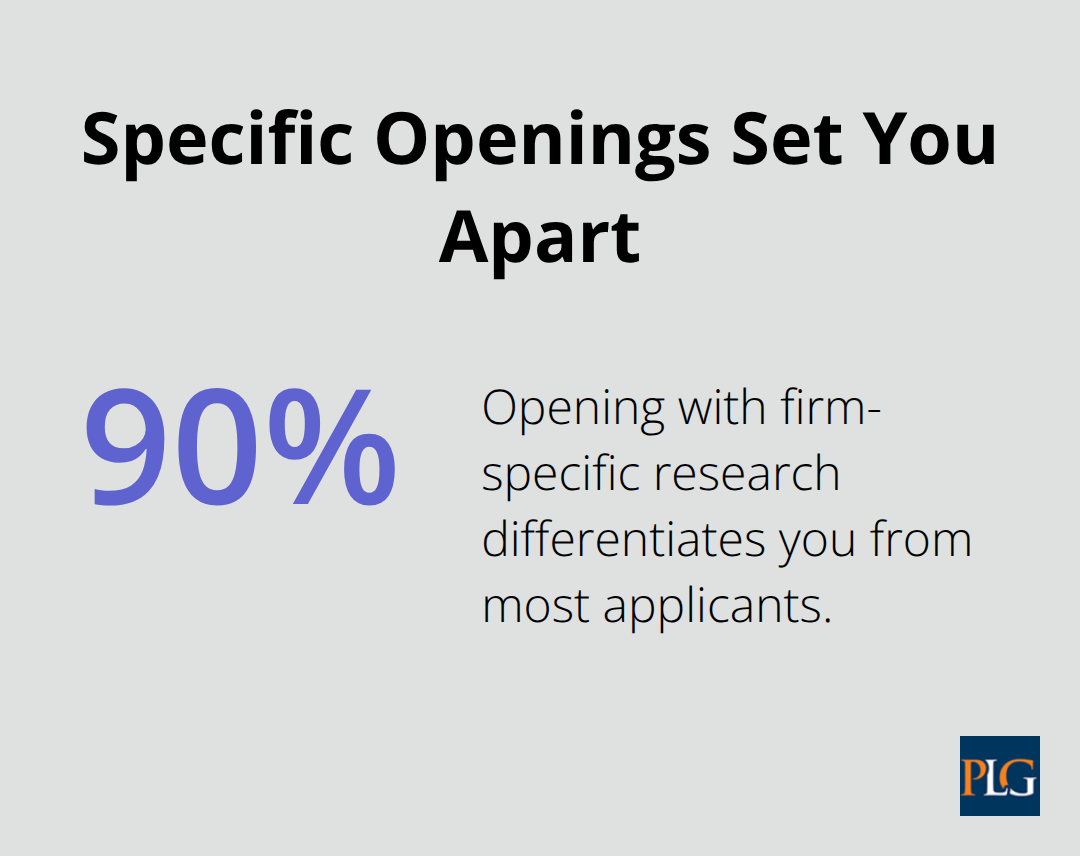
Your first sentence determines whether a hiring partner reads the rest of your letter or moves to the next application. Most candidates fail here. They write something like “I am interested in joining your firm because of its strong reputation in corporate law.” A hiring partner has heard this hundreds of times. Instead, open with a specific observation that shows you have conducted real research into the firm’s work. If the firm just closed a $140 million acquisition for a healthcare technology client, reference that deal by name and explain how your experience in similar transactions makes you the right fit. This approach takes five minutes of research but separates you from 90 percent of other applicants.
Research the Firm’s Recent Activity and Practice Patterns
Look at the firm’s recent press releases, SEC filings if they represent public companies, and their partner profiles on the website. Notice which practice areas receive the most attention and which clients appear repeatedly. Then connect your background directly to those patterns. If a firm has completed three major fintech deals in the last two years, mention that you have spent the last four years handling SaaS and fintech contracts. Specificity signals that you understand what the firm actually does and that you are not sending a template letter to every firm in the city.
Quantify Your Transaction Experience in Numbers That Matter
Your transaction experience needs to speak in numbers that matter to corporate law hiring partners. Instead of saying you have led successful negotiations, state that you reduced contract cycle time by 45 percent through template standardization or that you managed vendor agreements that delivered seven-figure annual savings. These metrics prove impact in language that in-house counsel and partners understand. If you have worked on deals, quantify the size and complexity: led diligence for a $140 million acquisition, coordinated 12 parallel workstreams, and closed on time.
Name Your Practice Areas, Tools, and Cross-Functional Work
Mention specific practice areas where you have depth, whether that is mergers and acquisitions, contract lifecycle management, equity administration, or regulatory compliance. If you have implemented tools like Ironclad or DocuSign CLM, name them. If you have managed cross-functional teams across sales, finance, and product, describe that collaboration. Hiring partners want to know that you can handle their current workload from day one. The strongest cover letters connect your skills to the firm’s needs without making the reader guess how your background applies. This is not the place for modesty or vague language. Your next step is to show that you have researched the specific person who will read your letter.
Tailor Your Message to the Hiring Partner or In-House Counsel in San Francisco
Find the Decision-Maker and Research Their Work
Identifying the hiring partner’s or in-house counsel’s name is not optional. LinkedIn and the firm’s website make this search straightforward, yet most applicants skip it entirely. Once you identify the decision-maker, spend 15 minutes learning their background. Read their bio on the firm website, check their recent transactions on their LinkedIn profile, and look for any articles or speaking engagements they have authored. A partner who led a major acquisition in your target industry will respond differently to your letter than one focused on early-stage venture work.
Reference Their Specific Deals and Focus Areas
If the partner led a major acquisition in your target industry or published a thought piece on contract automation, reference that work in your opening. Tailor your message to their specific focus and increase your chances of a callback because you speak directly to what that person cares about and what they need filled on their team. This approach demonstrates genuine interest rather than mass application behavior.
Leverage Mutual Connections When They Exist
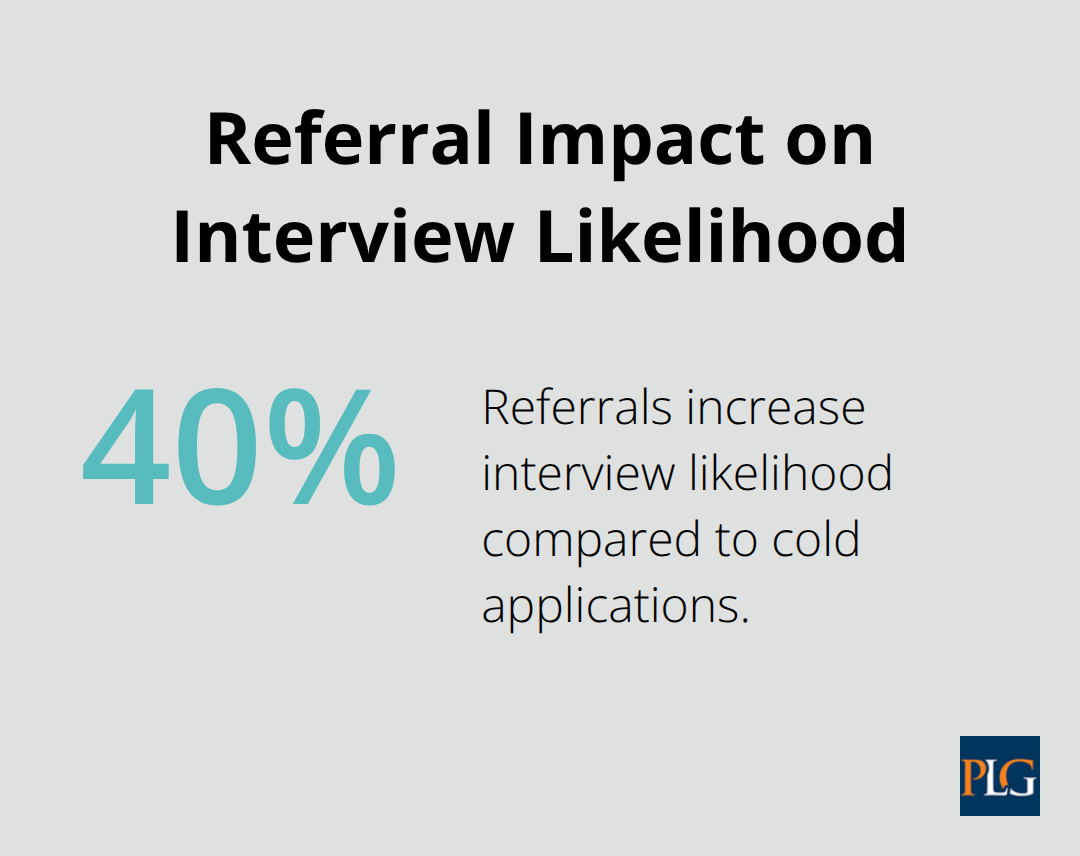
Finding a mutual connection strengthens your letter dramatically. Research whether you share any connections through LinkedIn, law school networks, or professional organizations. If a former colleague or professor knows the hiring partner, mention that connection in your opening paragraph. Studies on hiring bias show that referrals increase interview likelihood by 40 percent compared to cold applications.
If no mutual connection exists, reference the partner’s specific work instead and state how their recent transaction aligns with your background.
Close with Clear Availability and a Follow-Up Commitment
Close your letter by indicating your availability and stating that you will follow up within one week. Hiring partners receive dozens of applications weekly, and your willingness to follow up signals seriousness. Include your phone number and email address clearly and commit to making that follow-up call or email on schedule. Candidates who follow up within seven days secure interviews at twice the rate of those who do not. This follow-up transforms your letter from a static document into the start of an actual conversation with the person who makes hiring decisions.
Common Mistakes That Weaken Corporate Law Cover Letters in San Francisco
Generic Language Signals You Did Not Research the Firm
Most candidates sabotage themselves before a hiring partner reads past the first paragraph. The most damaging mistake is using language that could describe any law firm or any corporate role. Phrases like “I am impressed by your firm’s commitment to excellence” or “I am excited about the opportunity to work in corporate law” tell the hiring partner nothing about why you are applying to their firm specifically or what you actually know about their practice. A partner at a firm focused on healthcare M&A does not care that you are excited about corporate law generally-they care that you understand their healthcare clients, their deal patterns, and their current staffing gaps.
When you write generically, you signal that you either did not research the firm or you are sending identical letters to fifty firms simultaneously. Either way, the letter goes into the rejection pile. The hiring partner spends seconds deciding whether to continue reading, and generic praise wastes that critical moment.
Focusing on Your Goals Instead of the Firm’s Problems
The second mistake is centering your career development rather than the firm’s needs. Candidates write sentences like “I am seeking a position where I can develop my M&A skills” or “I am looking for an environment where I can grow as a lawyer.” A hiring partner reads your letter to answer one question: can this person handle my workload and help my team close deals faster? Your ambitions matter to you, not to them.
Every sentence in your cover letter should answer what problem you solve for the firm or what specific work you can start on immediately. A candidate who writes “I have managed vendor negotiations for SaaS agreements across fifteen product lines and implemented DocuSign CLM to reduce contract cycle time by 45 percent” demonstrates immediate value. A candidate who writes “I am excited to learn more about contract management” demonstrates nothing. The difference is stark and determines whether the hiring partner calls you back.
Errors and Formatting Lapses Disqualify Strong Candidates
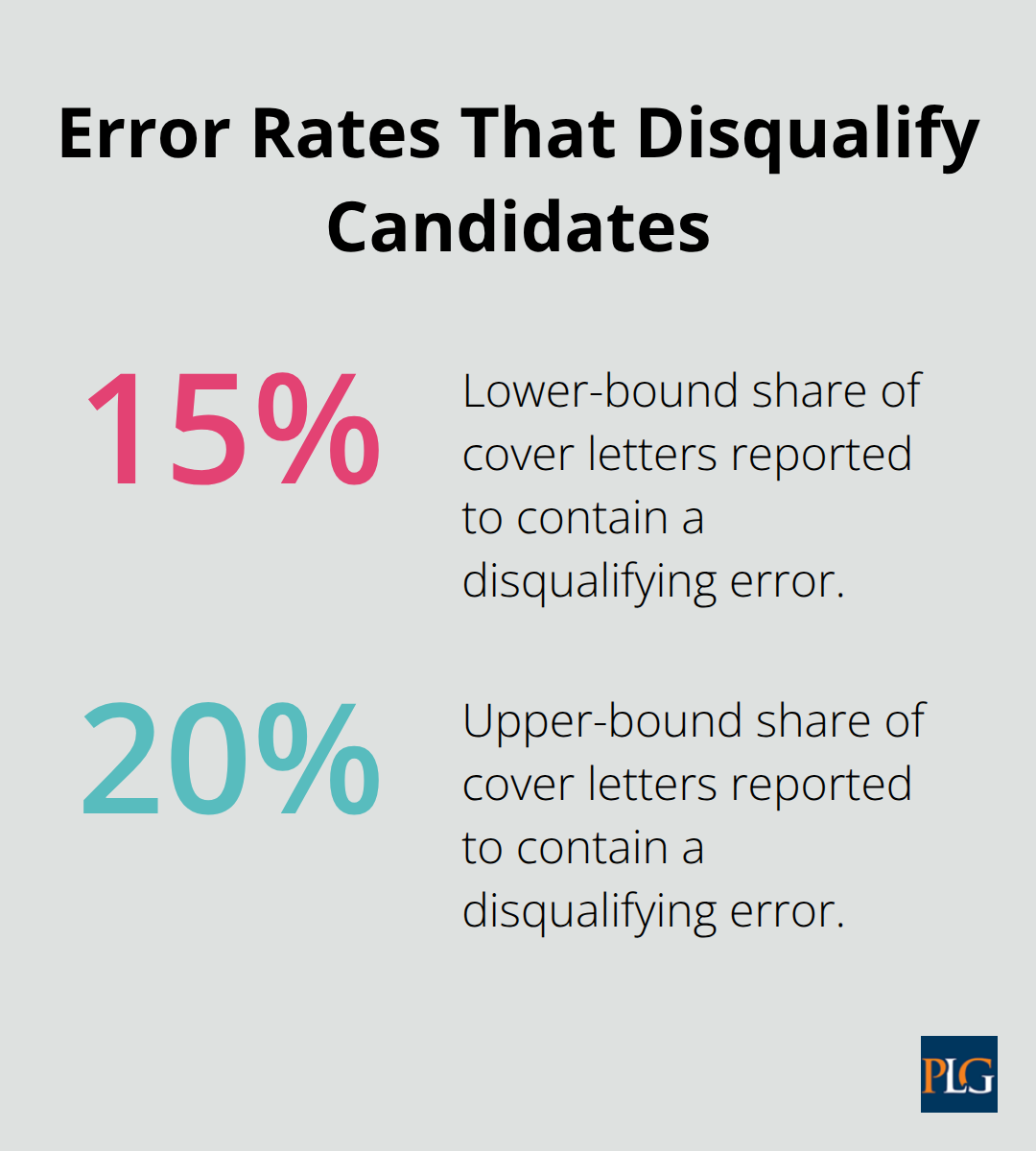
The third mistake is sending a letter with formatting errors, typos, or inconsistent spacing. A single spelling error or misaligned margins signals carelessness to a partner who depends on attention to detail in contract drafting and deal documentation. Hiring partners at major firms report that 15 to 20 percent of cover letters contain at least one error that would disqualify the candidate immediately.
Read your letter aloud three times before sending it. Have someone else read it. Check your email signature for consistency with the letterhead. Verify that your phone number is correct and matches your voicemail greeting. Test your email address by sending yourself a draft version to confirm it arrives properly. These steps take ten minutes and eliminate the errors that derail otherwise strong applications.
Standard Formatting Separates Serious Candidates from Casual Ones
The formatting itself matters as well. Use a standard business letter format with one-inch margins, single spacing within paragraphs, and a blank line between paragraphs. Address the letter to a specific person by name and title. If you cannot identify the hiring partner after checking the firm website and LinkedIn, call the firm’s main number and ask the receptionist or recruiting coordinator for the correct name and spelling (do not guess at names or use generic salutations like “To Whom It May Concern”).
These details separate candidates who are serious about the position from those who are applying casually. A partner notices when you take time to get their name right and format your letter professionally. That attention to detail reflects how you would handle their contracts and transactions.
Final Thoughts
Your corporate law cover letter is your first and often only chance to convince a hiring partner that you deserve an interview. The candidates who succeed invest time in research and personalization rather than sending generic applications to dozens of firms. A letter that references a specific deal, names the decision-maker, and connects your quantified experience directly to the firm’s current needs will stand out immediately.
Hiring partners spend seconds deciding whether to read beyond your opening sentence. That sentence must prove you have conducted real research into their firm, their recent transactions, and their practice focus. Your body paragraphs must translate your background into concrete value using numbers and specific tools, while your closing must demonstrate follow-through by committing to a callback within one week. These three elements separate candidates who land interviews from those who disappear into the rejection pile.
Personalization and research are not optional extras-they form the foundation of every corporate law cover letter that works. A partner who has closed three major fintech deals in the last two years will respond to a candidate who mentions those deals and connects their SaaS contract experience directly to that pattern. We at Primum Law Group work with startups, investors, and executives on venture capital transactions, corporate governance, and business structuring, and we encourage you to apply these strategies to every letter you send.