

Hiring international talent or expanding operations across borders requires understanding corporate immigration law. At Primum Law Group, we help San Francisco businesses navigate the complex rules that govern employee work authorization, visa sponsorship, and compliance with federal regulations.
This guide breaks down what corporate immigration law covers, the challenges companies face, and practical strategies to manage your workforce legally and cost-effectively.
What Corporate Immigration Law Actually Covers
Corporate immigration law governs how companies hire foreign workers, relocate employees across borders, and maintain compliance with work authorization requirements. It differs fundamentally from individual immigration law because it focuses on employer obligations rather than personal immigration status. When you sponsor a foreign worker, you take on legal responsibilities that can result in civil fines, penalties, and operational disruptions if mishandled. The scope includes selecting appropriate visa categories like H-1B for specialty occupations or L-1 for intracompany transfers, filing petitions with U.S. Citizenship and Immigration Services (USCIS), and maintaining valid work authorization documentation.
Form I-9 Compliance Is Non-Negotiable
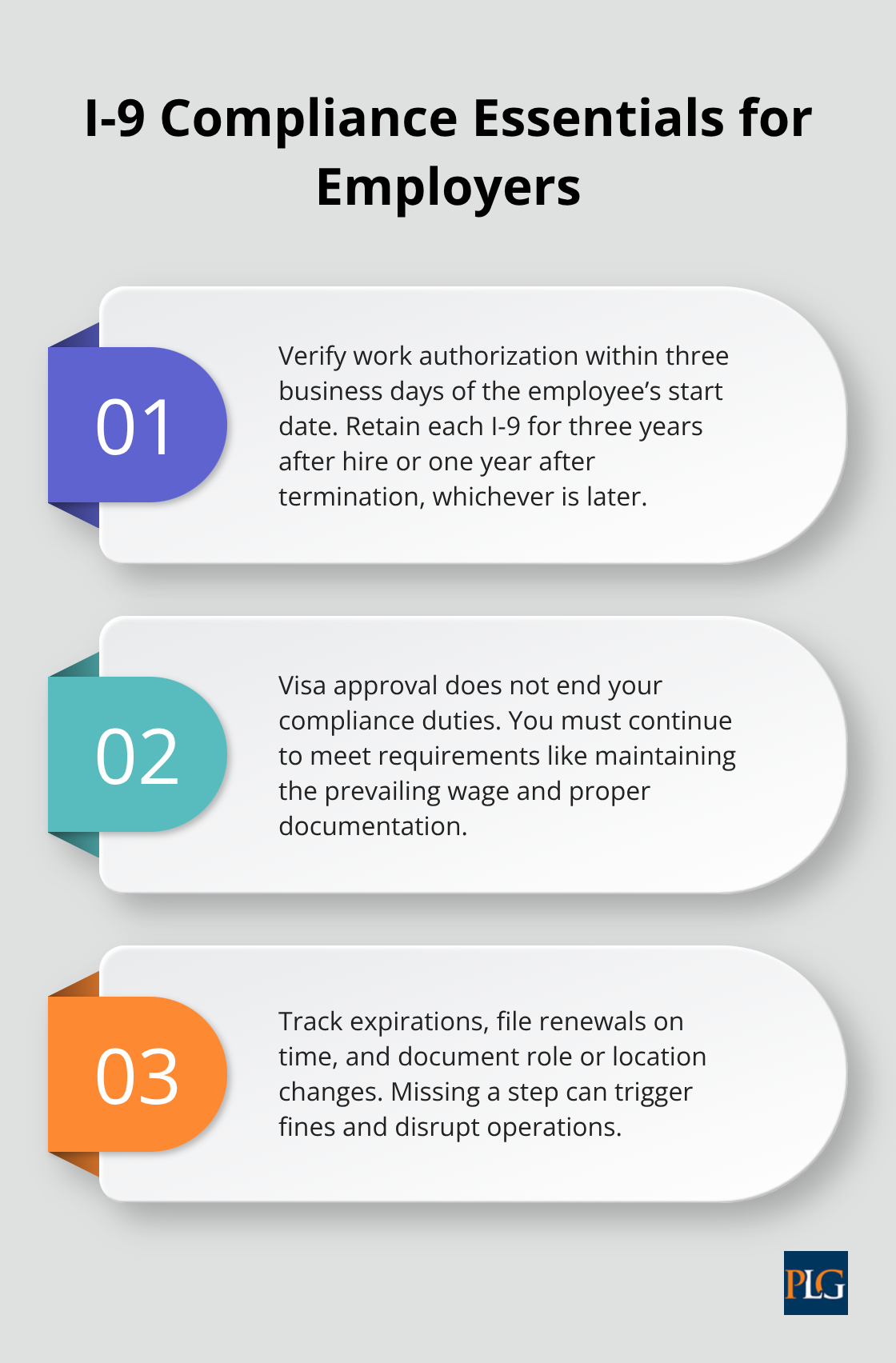
Form I-9 compliance forms the foundation of corporate immigration law. You must verify every new hire’s work authorization within three days of employment and retain I-9 forms for three years after hiring or one year after the worker’s last day, whichever is later, according to USCIS guidance. Many companies underestimate the complexity here-they assume that once a visa receives approval, compliance ends. That assumption is wrong. You must maintain prevailing wage requirements, handle timely visa renewals, and process transfers properly if an employee changes roles or locations.
Immigration Enforcement Creates Real Business Risk
Immigration and Customs Enforcement conducts workplace audits with increasing frequency. When ICE notifies you of an I-9 audit, you have three working days to produce all relevant forms. If audits uncover workers without valid authorization, you have ten days to provide documentation or face termination and potential legal consequences. This isn’t theoretical-companies across the tech sector and other industries have faced significant penalties. The distinction between corporate and individual immigration law becomes critical here because your company bears the legal liability, not the employee.
California adds another layer with AB 450, the Immigrant Worker Protection Act, which restricts how employers handle immigration enforcement. You cannot consent to ICE searches in private areas of your workplace without a judicial warrant, and you must notify workers before I-9 audits occur. Many San Francisco businesses overlook these protections, creating unnecessary legal exposure.
Visa Categories Shape Your Hiring Strategy
Different visa categories serve different business needs, and selecting the wrong one wastes time and money. The H-1B visa suits specialty occupations and requires demonstrating that no qualified U.S. workers are available (though this process can take months). The L-1 visa enables intracompany transfers and works well for startups establishing U.S. operations-initial validity is typically one year and can extend up to seven years. The E-2 visa supports foreign investors establishing U.S. businesses and requires demonstrating substantial capital investment.
Each visa type carries distinct compliance obligations and processing timelines that directly affect your hiring speed and cost. Companies that understand these distinctions upfront avoid costly delays and rejections. Immigration counsel can help you select the right category for your situation and integrate legal guidance into your broader mobility planning, which reduces risk and accelerates hiring timelines. The choices you make here directly influence the challenges you’ll face in managing your international workforce.
Visa Sponsorship and Work Authorization: Why Companies Struggle
The True Cost of Sponsoring Foreign Workers
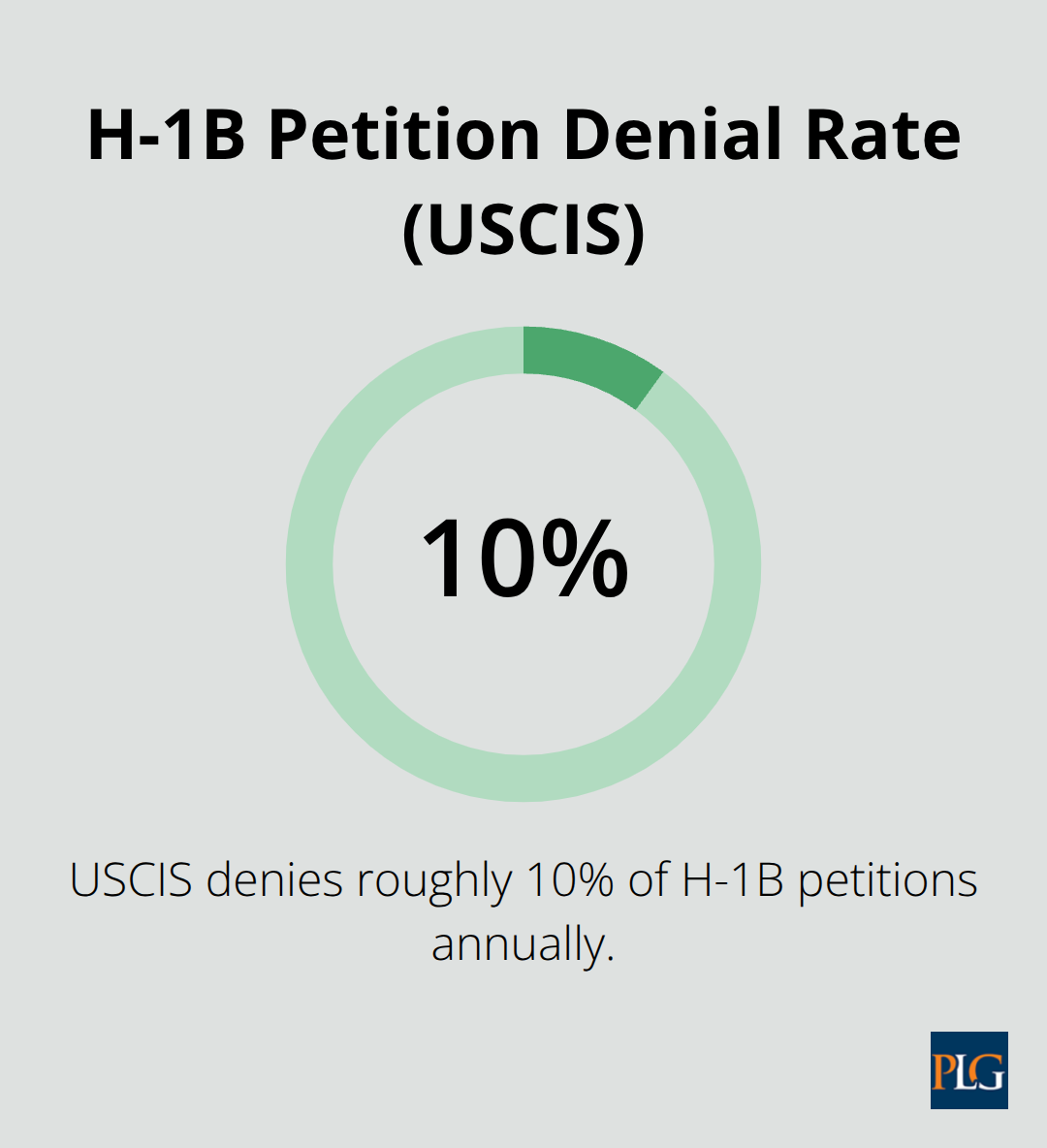
Sponsoring a foreign worker demands significant investment in both money and time. The H-1B visa process requires filing a Labor Condition Application with the Department of Labor, waiting for approval, then submitting a petition to USCIS. Processing times typically range from two to six months, and USCIS denies roughly 10% of H-1B petitions annually according to agency data. A denial means you lose filing fees and must restart the entire process, delaying your hire by months.
Most companies treat visa sponsorship as a checkbox rather than a strategic decision that shapes hiring timelines and costs.
Verification and Documentation Never Stop
You must verify every employee’s work authorization status before they start work using Form I-9, and you must maintain this documentation accurately. Many San Francisco tech companies assume that once an employee receives a visa approval notice, compliance ends. That assumption creates serious legal exposure. You need to track visa expiration dates, process extensions before they expire, and update records if an employee transfers to a different role or location. One missed renewal deadline can render an otherwise qualified worker unauthorized, forcing termination and creating legal liability for your company.
Multi-Country Workforces Multiply Compliance Risk
The real challenge emerges when your workforce spans multiple countries. Each country maintains its own work permit requirements, employment laws, and documentation standards. Canada requires a Labour Market Impact Assessment for most foreign workers, adding weeks to hiring timelines. The United Kingdom now uses a points-based immigration system that favors workers earning above £26,200 annually and those in shortage occupations. Germany offers residence permits for skilled workers earning above certain salary thresholds but requires German language proficiency in some cases.
Managing these variations manually creates enormous compliance risk. Companies that hire in five or more countries often discover documentation gaps during audits because they never established a centralized system for tracking work authorization across jurisdictions. Without such systems, you operate with incomplete visibility into your workforce’s authorization status, which is how penalties happen.
Technology Reduces Authorization Gaps
HR technology platforms can mitigate this risk by automating visa eligibility checks and flagging renewal deadlines across all countries simultaneously. These systems create a single source of truth for work authorization data, eliminating the manual tracking that leads to missed deadlines and compliance failures. When you centralize this information, you gain real-time visibility into which employees need renewal processing, which visas expire soon, and which jurisdictions require updated documentation. This visibility transforms visa sponsorship from a reactive scramble into a proactive compliance function.
The complexity of managing work authorization across borders-combined with the financial penalties and operational disruptions that result from gaps-makes professional legal guidance essential. Immigration counsel can help you establish systems and processes that prevent the documentation failures that trigger audits and penalties.
How San Francisco Businesses Navigate Immigration Law
AB 450 and SB 294 Shape Your Compliance Obligations
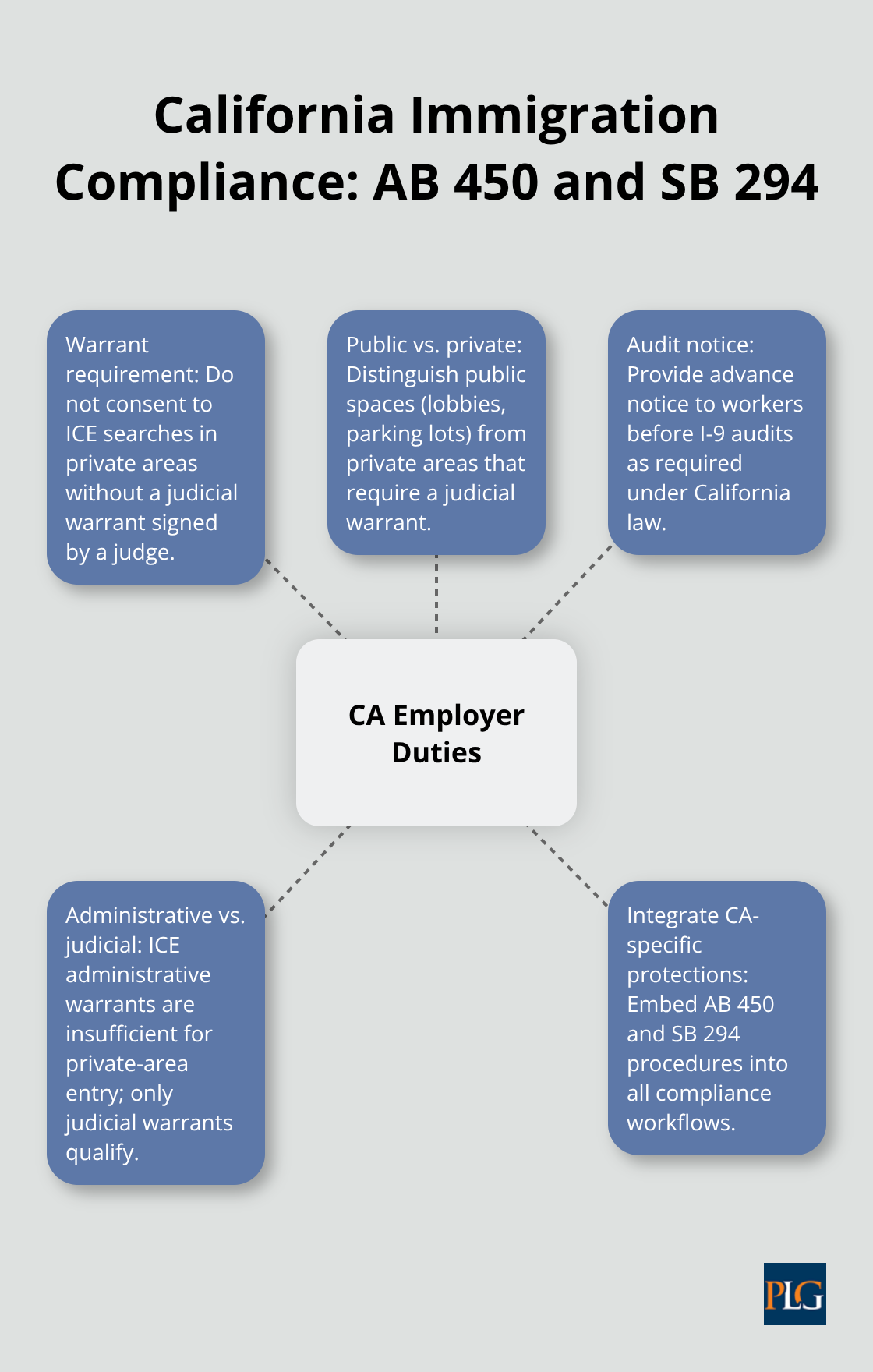
AB 450, the Immigrant Worker Protection Act, and SB 294, the Workplace Know Your Rights Act, create a regulatory environment that fundamentally shapes how San Francisco companies must handle immigration compliance. AB 450 restricts your ability to consent to ICE searches in private workplace areas without a judicial warrant and requires advance notice before I-9 audits occur. SB 294 mandates that you use a standardized notice template to inform workers of their rights and obligations. San Francisco businesses cannot simply adopt a standard immigration compliance program-you must integrate California-specific protections into every process. When ICE arrives at your facility, you must distinguish between public areas like parking lots and lobbies, where ICE can operate without a warrant, and private areas where a judicial warrant is required. An administrative warrant from ICE does not satisfy this requirement; only a warrant signed by a judge and identifying the court allows entry to private spaces.
Many San Francisco companies treat these distinctions as minor procedural details, but they represent the difference between lawful operations and civil liability.
Develop a Written Response Plan Before Enforcement Occurs
Immigration counsel can help you develop a written response plan for potential ICE enforcement actions, conduct Know Your Rights training for your workforce, and establish clear protocols for handling audits. An attorney can also help you maintain secure data practices during I-9 processes, which California law emphasizes heavily. Many San Francisco businesses operate with outdated immigration procedures inherited from previous years, not realizing that both federal rules and California law have shifted significantly. An attorney can review your current I-9 documentation, visa tracking systems, and enforcement response procedures to identify gaps before an audit occurs.
Select Visa Categories That Match Your Timeline
Immigration counsel can help you select appropriate visa categories for your hiring needs. If you are establishing a U.S. office through a foreign executive, an L-1 visa with initial validity of one year may serve your timeline better than an H-1B, which requires a longer approval process. This strategic alignment between visa selection and your business timeline reduces delays and unnecessary costs.
Proactive Planning Prevents Costly Mistakes
Cost-effective immigration management comes from proactive planning, not reactive crisis response. Companies that invest in proper counsel upfront avoid the civil fines, operational disruptions, and reputational damage that result from compliance failures. The cost of a consultation with qualified immigration counsel is negligible compared to the penalties ICE can impose for I-9 violations or the expense of replacing key employees after an enforcement action. The California Department of Industrial Relations provides guidance on these requirements, and staying current with their updates directly reduces your legal exposure.
Final Thoughts
Corporate immigration law shapes your hiring timelines, determines which employees you can bring onboard, and creates legal liability that extends across your entire organization. Understanding what corporate immigration law covers-from Form I-9 compliance to visa category selection to enforcement response procedures-directly affects your ability to build an international workforce without triggering penalties or operational disruptions. The stakes are real: ICE audits happen without warning, California’s AB 450 and SB 294 impose specific obligations that differ from federal rules, and multi-country workforces require tracking work authorization across jurisdictions with different requirements and timelines.
Professional legal guidance transforms immigration from a compliance burden into a strategic advantage. An immigration attorney helps you select visa categories that match your hiring timeline, establish systems that prevent authorization gaps, develop enforcement response procedures tailored to California law, and integrate compliance into your broader business planning. This guidance costs far less than the civil fines, operational disruptions, and reputational damage that result from compliance failures.
We at Primum Law Group help San Francisco businesses navigate corporate immigration law by providing tailored legal advice that aligns with your specific hiring needs and business timeline. If you need guidance on visa sponsorship, I-9 compliance, or enforcement preparedness, contact Primum Law Group to discuss your situation with qualified immigration counsel.