

Corporate social responsibility isn’t purely a legal requirement-it’s a mix of mandatory rules and voluntary commitments that vary significantly by location and industry.
For San Francisco businesses, the landscape is particularly complex, with California state laws, local regulations, and industry-specific mandates all shaping what companies must do. We at Primum Law Group help organizations navigate these overlapping requirements to stay compliant while building genuine value.
Where CSR Becomes Law
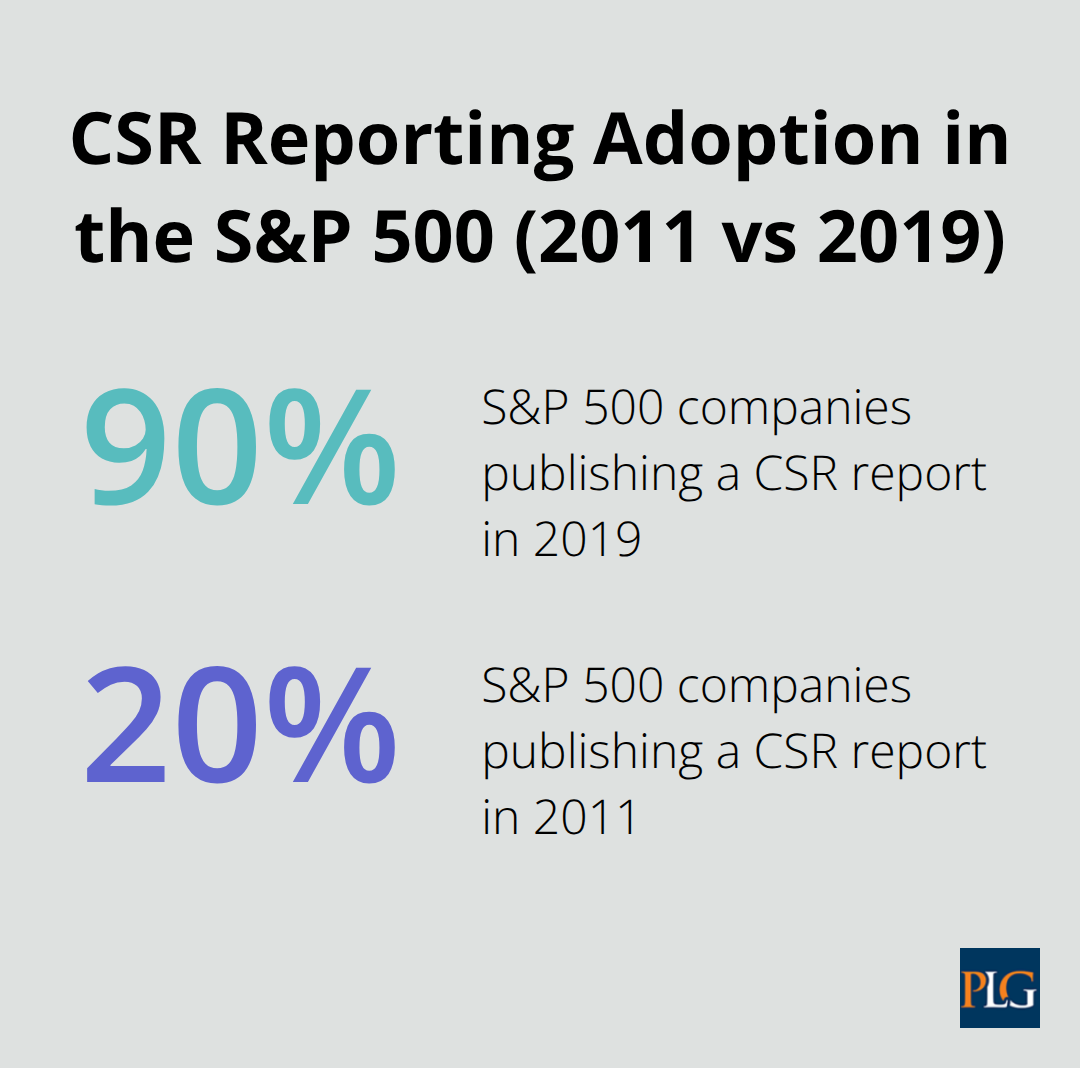
Corporate social responsibility exists in a gray zone between voluntary action and legal mandate. In the United States, CSR is not required by federal law, which means companies technically could ignore it entirely. That said, the landscape has shifted dramatically in the past decade. According to Harvard Business School Online, 90% of S&P 500 companies published a CSR report in 2019, up from just 20% in 2011. This rapid adoption reflects reality: CSR has become legally relevant even where it remains technically voluntary.
The European Union took a different path. The EU Non-Financial Reporting Directive codifies CSR disclosure requirements, forcing large companies to report on environmental, social, and labor practices. California’s Transparency in Supply Chains Act and the UK Modern Slavery Act follow the same pattern, turning what was once optional corporate virtue into enforceable obligation. The shift matters because it changes how boards and executives must approach these issues. They can no longer treat CSR as a public relations exercise.
Fiduciary Duty and CSR Strategy
Fiduciary duty now extends to CSR initiatives aligned with long-term shareholder value, as established in legal precedent like Shlensky v. Wrigley. This means directors pursuing CSR strategies have legal cover, provided those strategies serve the company’s sustainable interests rather than pure philanthropy. Companies must integrate CSR metrics into executive compensation to align leadership incentives with sustainability goals. This alignment transforms CSR from a peripheral concern into a core governance function.
California’s Mandatory Disclosure Requirements
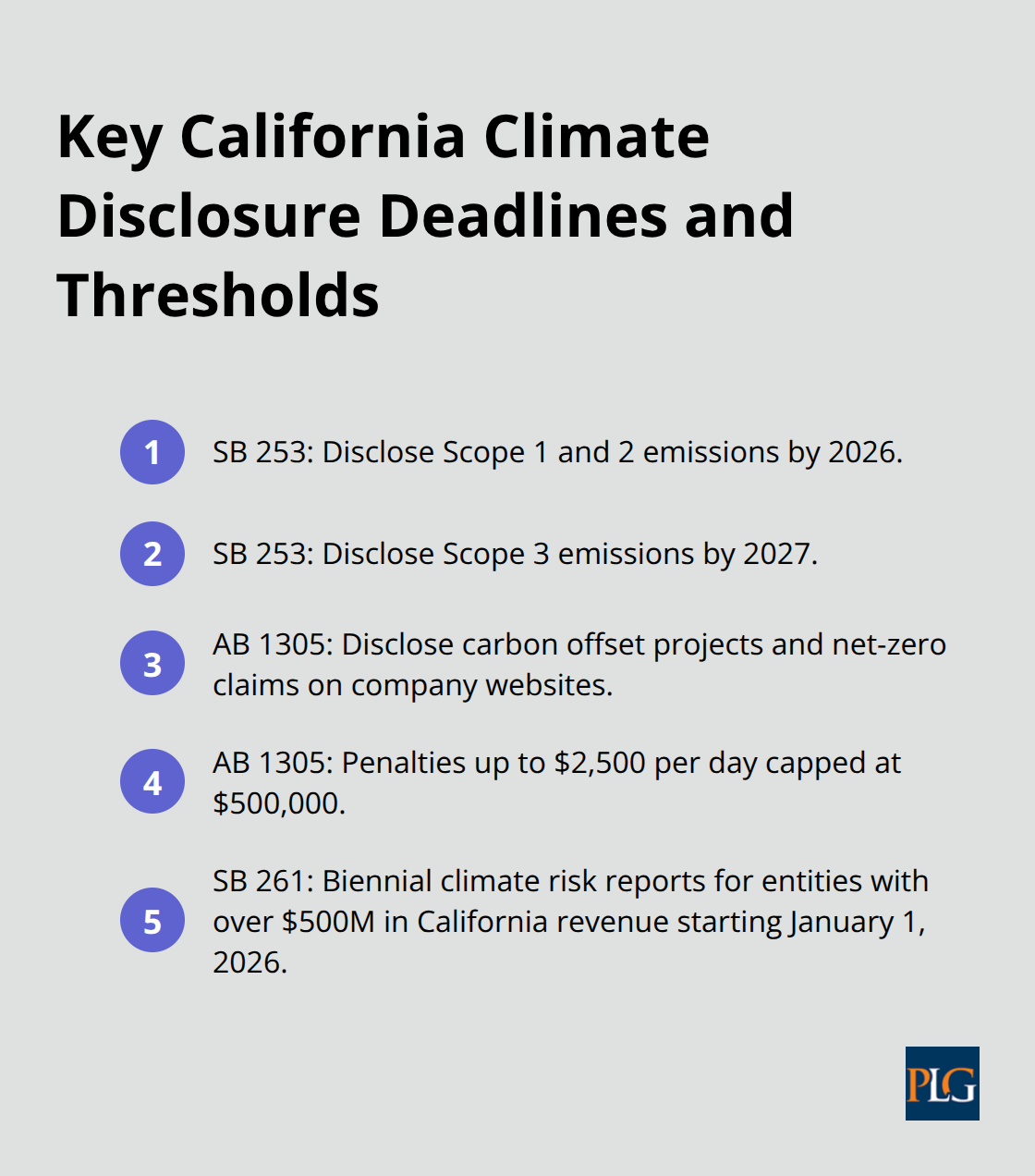
San Francisco and California have emerged as global leaders in mandating CSR-adjacent disclosures. SB 253 requires companies with over $1 billion in revenue doing business in California to publicly disclose Scope 1, 2, and 3 greenhouse gas emissions using the Greenhouse Gas Protocol framework. Scope 3 emissions-those from supply chains-typically account for over 90% of a company’s total emissions according to the EPA, making this requirement genuinely difficult to satisfy. Companies must report Scope 1 and 2 by 2026 and Scope 3 by 2027.
AB 1305 goes further, requiring transparent disclosures about carbon offset projects and net-zero claims on company websites, with penalties up to $2,500 per day capped at $500,000. SB 261, California’s climate risk disclosure law, mandates biennial climate-related financial risk reports for entities with over $500 million in California revenue, aligned to frameworks like TCFD or IFRS. Reporting begins January 1, 2026. These laws create real compliance obligations with teeth.
Building Compliant Data Systems
A company cannot simply claim net-zero status without documenting the underlying projects and methodologies. Scope 3 reporting requires supplier engagement and data collection across entire supply chains. Companies operating in California must build robust data systems, coordinate with suppliers, and prepare for regular updates. This is not optional, and violations carry financial and reputational consequences.
Global Standards and Litigation Risk
International frameworks now influence domestic law. The United Nations Guiding Principles on Business and Human Rights, endorsed in 2011, established the first global standard for preventing business-related human rights violations. The Corporate Human Rights Benchmark, launched in 2018, publicly scores companies on human rights performance. ExxonMobil scored 18.5 out of 100, while Chevron scored 28.8, showing how transparency creates competitive pressure.
These benchmarks assess governance, human rights due diligence, remedies, grievance mechanisms, and transparency. Companies with international operations face heightened liability risks under these soft-law standards, which increasingly inform civil and commercial disputes in cross-border operations. CSR content must now be litigation-ready. Greenwashing litigation has exploded as regulators and private parties challenge misleading sustainability claims. Consumer protection laws require transparency and responsible marketing. Inaccurate CSR claims can trigger securities actions or consumer fraud suits.
Demonstrating Due Diligence Through Documentation
Building robust CSR compliance frameworks covering environmental, labor, supply chain due diligence, and ethical marketing is no longer optional. Regular auditing and documentation of CSR efforts provide evidence of due diligence in legal challenges. Supplier screening, contractual provisions enforcing compliance, and remediation mechanisms demonstrate that a company took reasonably practicable steps to prevent violations. The legal landscape has moved decisively away from voluntary CSR toward binding accountability in global operations. This shift means that San Francisco businesses face particular pressure to implement compliant CSR programs, which we address in the next section on local requirements.
CSR Compliance Deadlines San Francisco Businesses Face Now
California’s Immediate Reporting Requirements
California’s climate disclosure laws create hard deadlines that San Francisco companies cannot ignore. SB 253 requires organizations with over $1 billion in annual revenue to disclose Scope 1 and 2 greenhouse gas emissions by 2026, with Scope 3 emissions by 2027. The EPA confirms that Scope 3 emissions typically exceed 90% of total emissions, which means most companies will struggle to meet this requirement without overhauling their supply chain data collection. Companies need to start building these systems now rather than waiting until 2026. AB 1305 adds immediate pressure by requiring transparent, verifiable disclosures about carbon offset projects and net-zero claims on company websites, with penalties reaching $2,500 per day capped at $500,000. SB 261, California’s climate risk disclosure law, mandates biennial climate-related financial risk reports for entities with over $500 million in California revenue, effective January 1, 2026.
Companies must align these reports to frameworks like TCFD or IFRS Sustainability Disclosure Standard.
Building Supply Chain Data Systems
Scope 3 reporting demands that companies engage suppliers and collect emissions data across entire supply chains. Most organizations lack the infrastructure to gather this information quickly or accurately. Companies operating in California must map supplier networks, establish data collection protocols, and validate information before submission. Third-party assurance strengthens credibility and reduces audit risk. Rushed compliance work creates inaccurate disclosures vulnerable to regulatory scrutiny and litigation.
San Francisco’s Local CSR Requirements
San Francisco’s regulatory environment extends beyond state law into local procurement and environmental standards. The Social Impact Partnership Program, codified in the San Francisco Administrative Code Section 21F.3, embeds CSR expectations into city contracting. The SIPP framework requires contractors to align with CSR principles within public utility procurement. San Francisco’s Environment Code mandates green building requirements, energy efficiency targets, and renewable energy incentives that affect real estate and construction operations. First Source Hiring and Local Hiring provisions prioritize local employment in city projects, creating labor-related CSR obligations.
Integrating Overlapping Requirements
Companies operating in San Francisco must map state climate disclosure laws, local procurement standards, environmental codes, and labor provisions into a single compliance framework. This integration requires supplier engagement, robust data systems, legal documentation of due diligence efforts, and regular auditing. Fragmented compliance efforts leave companies exposed to regulatory enforcement, shareholder litigation, and reputational damage in a city where stakeholders scrutinize corporate responsibility with unusual intensity. The complexity of these overlapping mandates means that building a compliant CSR program demands sustained attention and coordination across departments. Beyond meeting these legal requirements, companies that implement CSR strategically gain competitive advantages-something we explore in the next section on business benefits.
Why CSR Compliance Drives Real Business Growth
CSR compliance stops being a regulatory burden the moment companies realize it attracts talent, retains customers, and reduces operational risk. The data is unambiguous. According to Harvard Business School Online, 77% of consumers purchase from CSR-conscious brands, while 73% of investors say CSR efforts influence their investment decisions. For San Francisco businesses operating in a market where stakeholder scrutiny runs high, this translates directly into revenue and capital access. Companies that treat CSR as a checkbox exercise miss the competitive advantage entirely. Those that integrate CSR into core strategy gain measurable returns.
Investor Capital Flows Toward Purpose-Driven Companies
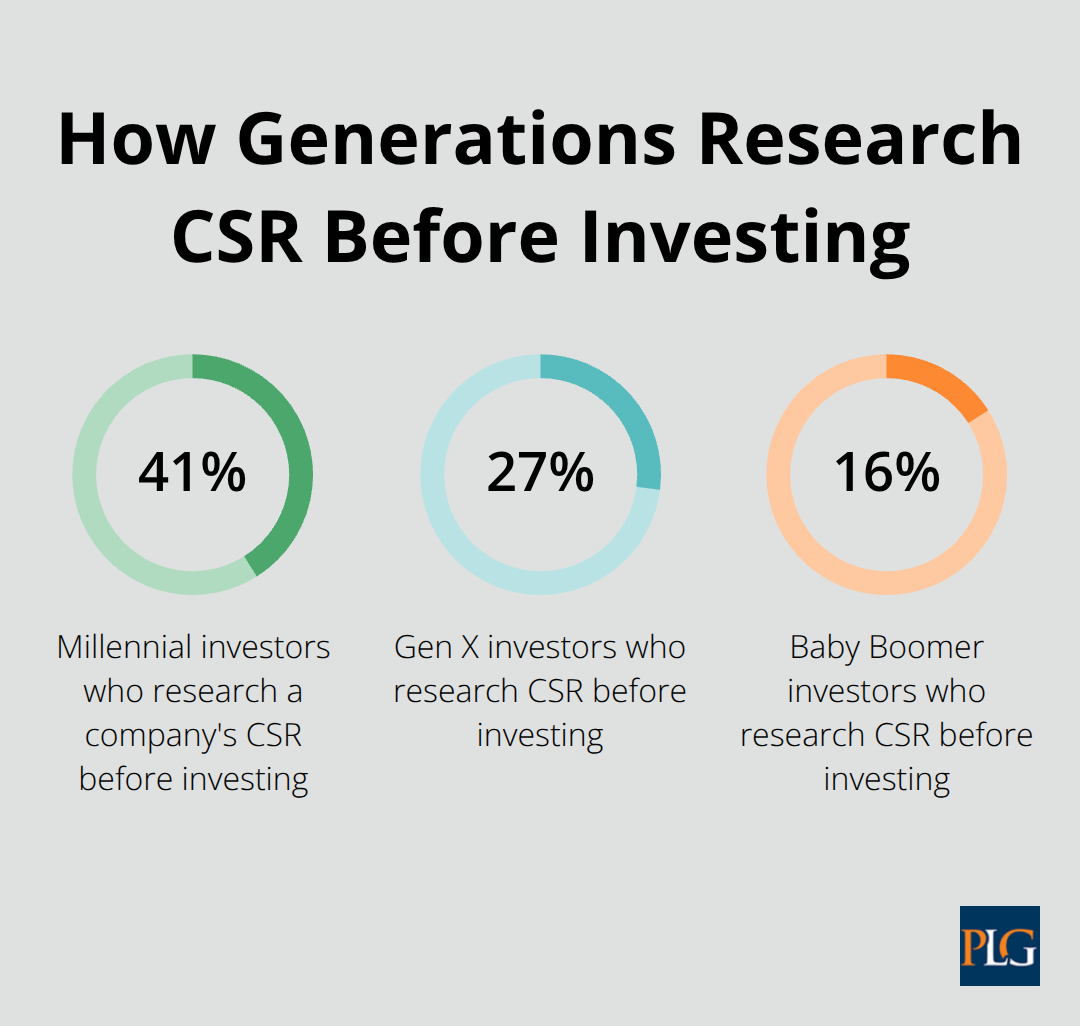
Younger investors prioritize CSR transparency with particular intensity: 41% of millennial investors research a company’s CSR practices before investing, compared to 27% of Gen X and 16% of Baby Boomers. This generational shift matters because millennials now control significant capital flows. A company ignoring CSR compliance doesn’t just face regulatory penalties; it loses access to the fastest-growing investor base.
Companies that demonstrate robust CSR frameworks signal financial stability and long-term thinking to institutional investors evaluating risk.
Employee Retention and Recruitment Power
The employee case for CSR compliance is equally compelling and often overlooked by leadership. Harvard Business School Online reports that 93% of employees believe companies must lead with purpose, and 88% think it’s no longer acceptable to profit at society’s expense. Nearly 70% of employees wouldn’t work for a company without a strong purpose, and 60% would take a pay cut to work at a purpose-driven firm. For San Francisco companies facing intense talent competition in technology and professional services, this reality reshapes hiring strategy.
Companies with a strong sense of purpose see 92% of employees likely to recommend their employer to others. Employee turnover costs roughly 50% to 200% of annual salary depending on role level, meaning that CSR-driven retention directly impacts the bottom line. When companies implement CSR compliance frameworks, they signal to potential hires that leadership takes stakeholder responsibility seriously. This messaging attracts mission-aligned talent willing to accept competitive compensation because they value the company’s commitment to responsible practices. Conversely, companies with poor CSR records face reputational damage that makes recruitment harder and more expensive.
Risk Reduction Through Documented Compliance
CSR compliance built on robust documentation and auditing reduces legal exposure substantially. Companies that maintain thorough records of CSR efforts gain protection in litigation. Greenwashing cases have multiplied as regulators and private parties challenge misleading sustainability claims. Inaccurate CSR disclosures trigger consumer protection actions, securities litigation, and regulatory enforcement. A company that documents its supply chain due diligence, supplier screening processes, contractual compliance provisions, and remediation mechanisms demonstrates it took reasonably practicable steps to prevent violations. This documentation becomes critical evidence in disputes.
California’s climate disclosure laws create additional risk if companies rush compliance work or submit inaccurate Scope 3 emissions data. The safe harbor for Scope 3 misstatements extends only until 2030, after which penalties apply. Companies that build compliant data systems now, engage suppliers in emissions tracking, and validate information before submission avoid costly corrections and regulatory scrutiny later. Risk mitigation through CSR compliance isn’t theoretical; it’s the difference between surviving regulatory challenges and facing substantial penalties.
Final Thoughts
The answer to whether corporate social responsibility is a law depends on where your company operates and what industry you serve. In the United States, CSR remains technically voluntary at the federal level, but California has transformed this reality through mandatory climate disclosure laws that carry real penalties. San Francisco businesses face a particularly demanding regulatory environment where state mandates, local procurement standards, and environmental codes converge into binding obligations.
CSR compliance serves dual purposes that matter equally to your bottom line. First, it satisfies legal requirements that regulators actively enforce-companies missing California’s 2026 and 2027 reporting deadlines face penalties and shareholder litigation. Second, CSR compliance attracts the capital, talent, and customers that drive sustainable growth, since investors increasingly screen companies on CSR performance, employees reject firms without clear purpose, and consumers vote with their wallets for responsible brands.
We at Primum Law Group help San Francisco and Silicon Valley companies navigate overlapping CSR requirements, build compliant governance structures, and integrate sustainability into core business strategy. The regulatory landscape continues evolving, and the stakes for getting CSR wrong have risen substantially. Starting now with a clear compliance roadmap positions your company to meet legal obligations while capturing the business benefits that purpose-driven organizations consistently achieve.