

San Francisco remains the epicenter of venture capital, with over 40% of all US VC funding flowing through Bay Area firms in 2023. Landing a venture capital firm internship here opens doors to the world’s most influential investment networks.
We at Primum Law Group understand the legal complexities these firms navigate daily. Breaking into this competitive field requires strategic preparation and insider knowledge of what top-tier firms actually want.
Which VC Firms Actually Hire Interns
San Francisco houses the world’s most powerful venture capital ecosystem, with firms like Sequoia Capital, Andreessen Horowitz, and Kleiner Perkins that manage billions in assets. These marquee names attract thousands of applications but typically hire only 2-3 summer interns each. The reality shows that mid-tier firms with $100-500 million in assets under management offer better internship odds.
Target Mid-Tier Firms for Better Success Rates
Firms like Precursor Ventures, which makes 30-50 investments annually and manages $250 million, actively recruit graduate interns for 12-week programs. Battery Ventures, True Ventures, and Foundry Group represent the sweet spot where you can gain meaningful experience without competition from 1,000+ applicants. These firms provide hands-on deal exposure while maintaining more accessible application processes than their larger counterparts.
Two Distinct Internship Models
VC firms operate two fundamentally different internship tracks. Summer Camp programs target early-university students and career changers, with focus on market research, startup sourcing, and portfolio data management across platforms like Airtable. Real Internships demand prior finance experience and involve actual deal processes, financial modeling, and due diligence work.
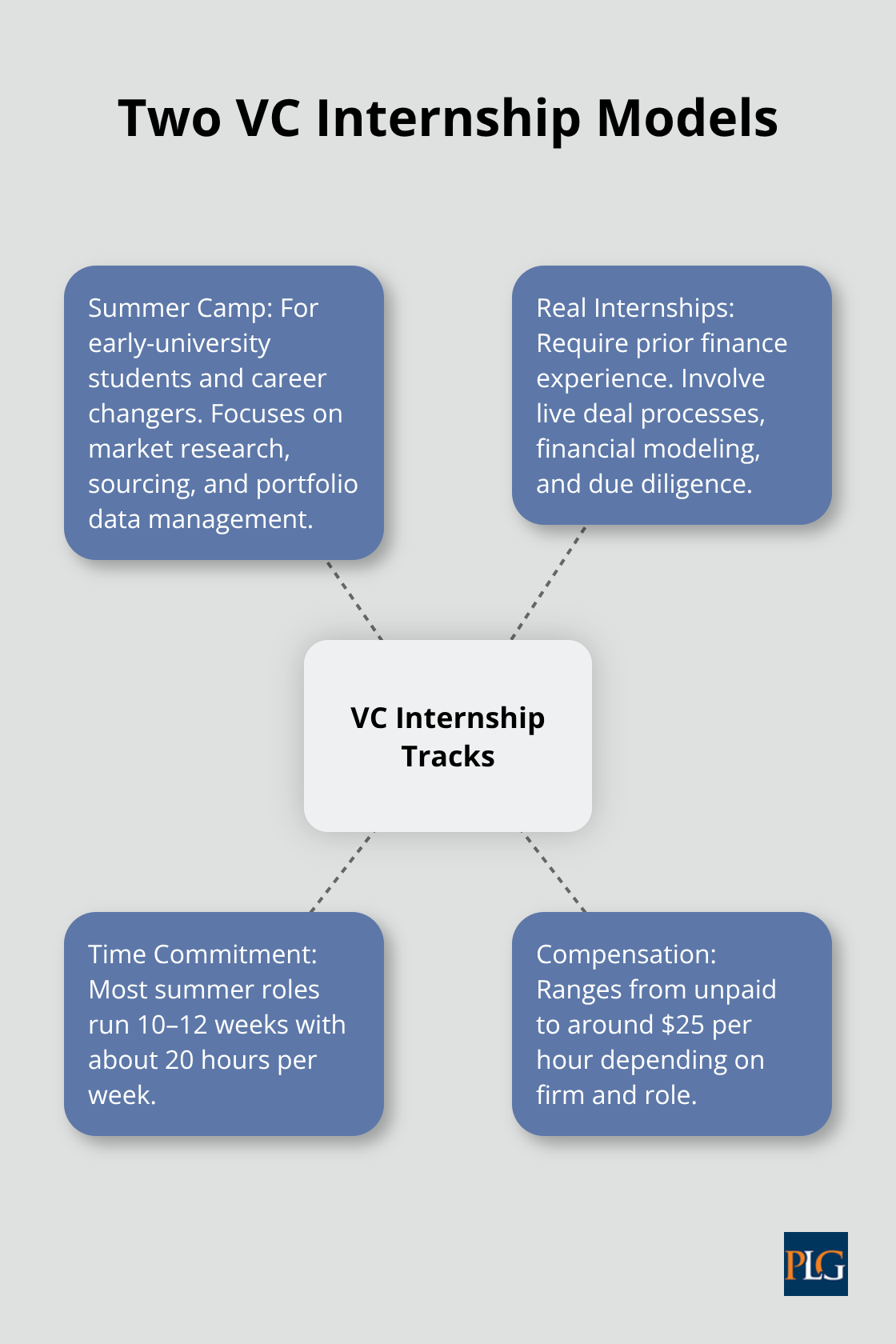
According to PitchBook data, candidates with startup experience have a 30% higher success rate for Real Internships. Most summer positions run 10-12 weeks with 20-hour weekly commitments, though compensation varies wildly from unpaid to $25 per hour.
Skills That Set Candidates Apart
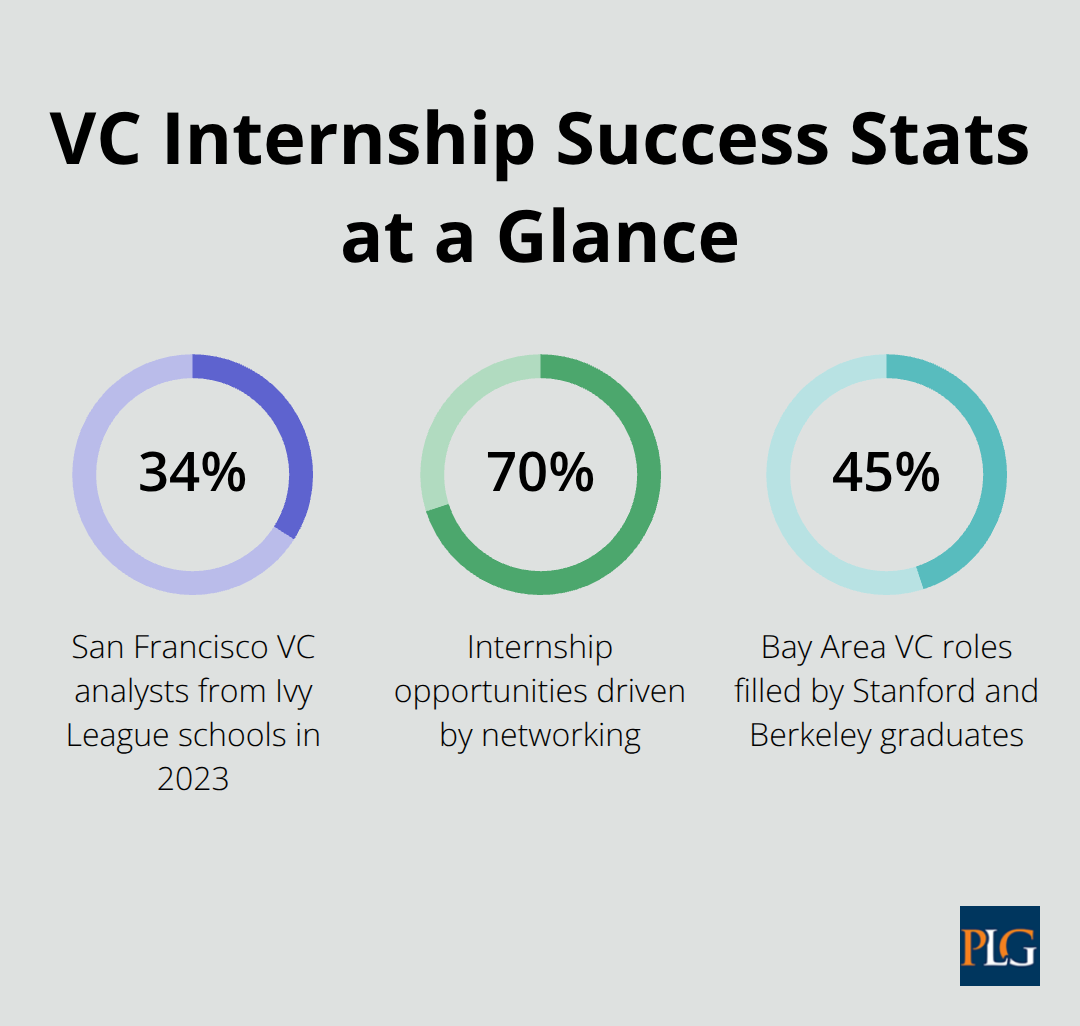
VC firms prioritize analytical thinking over finance pedigree (34% of San Francisco VC analysts came from Ivy League schools in 2023). Strong Excel and PowerPoint skills remain non-negotiable, even for strategy-focused roles. Technical backgrounds in STEM fields give candidates significant advantages, particularly for deep-tech investments.
Communication skills matter more than most realize since interns present investment theses and attend founder meetings. Networking accounts for 70% of internship opportunities according to industry surveys, which makes relationship-building skills as valuable as financial modeling abilities.
With this foundation of firm types and required skills established, the next step involves crafting an application strategy that positions you competitively within this demanding landscape.
What Makes Your Profile Stand Out to VC Firms
Your educational foundation matters less than most candidates believe, but strategic course selection can differentiate your application. Stanford and Berkeley graduates fill 45% of Bay Area VC roles according to Crunchbase data, yet firms increasingly value diverse academic backgrounds when paired with relevant skills.
Academic Strategy That Actually Works
Computer science, economics, and engineering majors dominate intern selections, but finance coursework alone won’t secure interviews. Take classes in data analysis, statistics, and business strategy rather than traditional finance theory. Corporate finance and valuation courses provide practical skills that translate directly to investment analysis work. These technical foundations matter more than prestige when firms evaluate your analytical capabilities.
Real Startup Experience Trumps Academic Theory
Work at early-stage startups, even in non-finance roles, gives you insights that classroom theory cannot replicate. Operations roles at Series A companies teach you unit economics and growth metrics that VC firms analyze daily. Product management positions at tech startups demonstrate your ability to assess market opportunities and competitive landscapes.
Sales roles provide customer acquisition insights that inform investment decisions. According to PitchBook research, 65% of successful VC interns had previous startup exposure before application. Volunteer for startup accelerators like Y Combinator or Techstars to gain deal flow exposure without formal employment commitments.
Strategic Network Development Beats Cold Applications
LinkedIn outreach generates 10x higher response rates than online applications for VC internships. Target associates and principals rather than partners who receive hundreds of messages weekly. Alumni networks from your university provide the strongest connection pathways to VC professionals.
Attend startup pitch events hosted by organizations like SF New Tech and Startup Grind to meet investors in casual settings. Join VC-focused programs like GoingVC which connect aspiring professionals with industry mentors (these programs often lead to direct internship referrals). Follow portfolio companies of target firms on social media and engage thoughtfully with their content to demonstrate genuine industry interest.
The foundation you build through education, experience, and connections directly impacts how you present yourself in applications and interviews.
How Do You Actually Win VC Internship Applications
Your resume must highlight quantifiable startup achievements rather than generic finance coursework. Include specific metrics like revenue growth percentages, user acquisition numbers, or cost reduction figures from your previous roles. VC firms scan resumes for data-driven results, not job descriptions.
Position your startup experience prominently, even if it was a three-month role at a pre-revenue company. Technical skills sections should list specific tools like Excel, Python, SQL, and presentation software with proficiency levels. Education sections need GPA only if above 3.7, and relevant coursework should focus on statistics, data analysis, and business strategy rather than traditional finance classes.
Technical Interview Mastery
Technical interviews test your ability to evaluate startup pitches and build basic financial models. Practice analysis of real pitch decks from TechCrunch or similar sources, with focus on market size calculations, competitive analysis, and unit economics evaluation. Prepare to walk through a simple DCF model or comparable company analysis on a whiteboard.
Most firms expect candidates to assess business viability within 15-20 minutes of pitch deck review. Study portfolio companies from your target firms and understand their investment rationale. This preparation demonstrates genuine interest and analytical thinking that sets you apart from generic applicants.
Behavioral Question Strategy
Behavioral questions center on your interest in specific portfolio companies and recent market trends. Research the firm’s investment thesis thoroughly and prepare specific examples of startups that align with their focus areas. Mock interviews with MBA students or finance professionals help refine your presentation skills and build confidence for high-pressure situations.
Prepare stories that showcase your analytical abilities, teamwork skills, and passion for the startup ecosystem. Firms want candidates who can articulate why venture capital appeals to them beyond prestige or compensation (which varies widely from unpaid to competitive rates).
Follow-Up That Converts Interviews
Send thank-you emails within 24 hours that reference specific conversation points from your interview rather than generic appreciation messages. Include additional research or insights about topics discussed during the meeting to demonstrate continued engagement.

Connect with interviewers on LinkedIn with personalized messages that mention shared interests or portfolio companies. Follow portfolio companies on social media and share relevant industry articles that show your ongoing market awareness. Maintain relationships with current interns and recent hires who can provide insider updates about upcoming opportunities. These connections often lead to referrals for future positions since over 50% of VC firms offer full-time roles to former interns according to industry surveys.
Final Thoughts
Securing a venture capital firm internship in San Francisco requires you to target mid-tier firms with $100-500 million in assets, build genuine startup experience, and develop strong analytical skills. Focus your applications on firms like Precursor Ventures rather than compete against thousands for Sequoia positions. Your success depends on demonstrating quantifiable startup achievements and technical proficiency in Excel and financial modeling.
Long-term career planning in venture capital starts with your internship performance. Over 50% of VC firms offer full-time roles to former interns, making this your direct pathway into the industry. Build relationships with portfolio companies, maintain connections with your internship colleagues, and continue to develop your investment thesis capabilities.
Continue to learn through platforms like PitchBook for market data, attend startup pitch events regularly, and follow portfolio companies of your target firms. We at Primum Law Group work closely with venture capital firms and startups throughout their funding journeys (providing legal services for venture capital transactions and startup counseling). Understanding these legal frameworks will enhance your investment analysis skills as you progress in your venture capital career through our legal services.