

San Francisco companies face unprecedented opportunities to scale beyond domestic borders. The international business benefits extend far beyond simple revenue growth.
We at Primum Law Group see businesses transform when they strategically enter global markets. Smart expansion requires careful legal planning and regulatory compliance from day one.
What Revenue Growth Can International Expansion Deliver
The numbers reveal the true potential of international expansion. The International Trade Administration reports that 95% of global consumers live outside the United States, while three-quarters of worldwide purchasing power exists beyond American borders. Forbes research shows that businesses that enter international markets achieve 30% higher revenue growth compared to domestic-only companies. San Francisco tech firms like Apify already generate over half their revenue from U.S. operations, which proves the massive financial upside of strategic market entry.

Access to Untapped Global Markets
International expansion transforms revenue streams through market diversification and geographic reach. The Global Entrepreneurship Monitor found that companies that pursue internationalization show greater resilience during economic downturns and maintain higher innovation rates. San Francisco’s position as the tenth largest U.S. export economy provides natural advantages for global market entry. Companies gain access to markets where competition remains lighter and customer acquisition costs stay lower. Early market entrants establish brand dominance before competitors arrive, which creates sustainable competitive advantages that compound over time.
Market Independence and Risk Protection
Geographic diversification protects businesses from economic volatility in single markets. When domestic markets face recession or regulatory changes, international revenue streams provide stability and growth opportunities. San Francisco companies benefit from the city’s international infrastructure, including over 71 consulates and foreign trade offices that facilitate market entry. The region’s role as America’s gateway to Asia opens pathways to high-growth markets where purchasing power continues to expand. Smart expansion timing during strong domestic momentum maximizes success rates and minimizes expansion risks.
Strategic Advantages of San Francisco’s Global Position
San Francisco’s unique position offers distinct advantages for companies that plan international expansion. The city hosts more than 30 of the largest foreign banks (including Barclays and Industrial and Commercial Bank of China), which simplifies international financial operations. Approximately 50% of San Francisco’s residents are foreign-born, creating a diverse workforce that understands global markets. This international talent pool provides companies with cultural insights and language skills that prove invaluable when entering new territories. The foundation for successful global expansion requires careful legal planning to navigate complex international regulations and compliance requirements.
What Legal Structure Works Best for Global Expansion
International expansion demands precise legal architecture from the outset. San Francisco companies must establish proper corporate structures before they enter foreign markets, as retrofitting legal frameworks after expansion proves costly and complex. Delaware C-corporations remain the gold standard for companies that plan global growth and offer maximum flexibility for international subsidiaries and foreign investor participation. The choice between foreign subsidiaries versus branch offices depends on liability protection needs and tax optimization strategies. Subsidiaries provide complete legal separation but require local compliance, while branch offices offer operational simplicity but expose parent companies to unlimited liability.

Tax Planning Before Border Crossings
International tax planning requires proactive strategies to avoid double taxation and optimize global tax efficiency. The U.S. tax code subjects American companies to worldwide income taxation, which makes advance planning essential for international operations. Transfer pricing regulations govern how multinational companies price transactions between related entities, and improper documentation triggers severe penalties (companies must establish arm’s length pricing policies before international transactions begin). Foreign tax credits offset U.S. tax liability on international income, but proper documentation and timing prove critical for maximum benefits.
Regulatory Compliance Across Multiple Jurisdictions
Foreign market entry requires comprehensive compliance with local regulations that vary dramatically between countries. GDPR compliance costs European market entrants an average of $1.3 million annually according to PwC research. Anti-corruption laws like the Foreign Corrupt Practices Act apply to all international business activities and carry criminal penalties for violations. Export control regulations restrict technology transfers to certain countries and require licenses for specific products (companies must establish compliance systems before international operations begin, as violations result in substantial fines and operational restrictions).
Strategic market research and partnership development become the next critical components that determine international expansion success rates and long-term profitability.
How Do You Build a Winning International Market Strategy
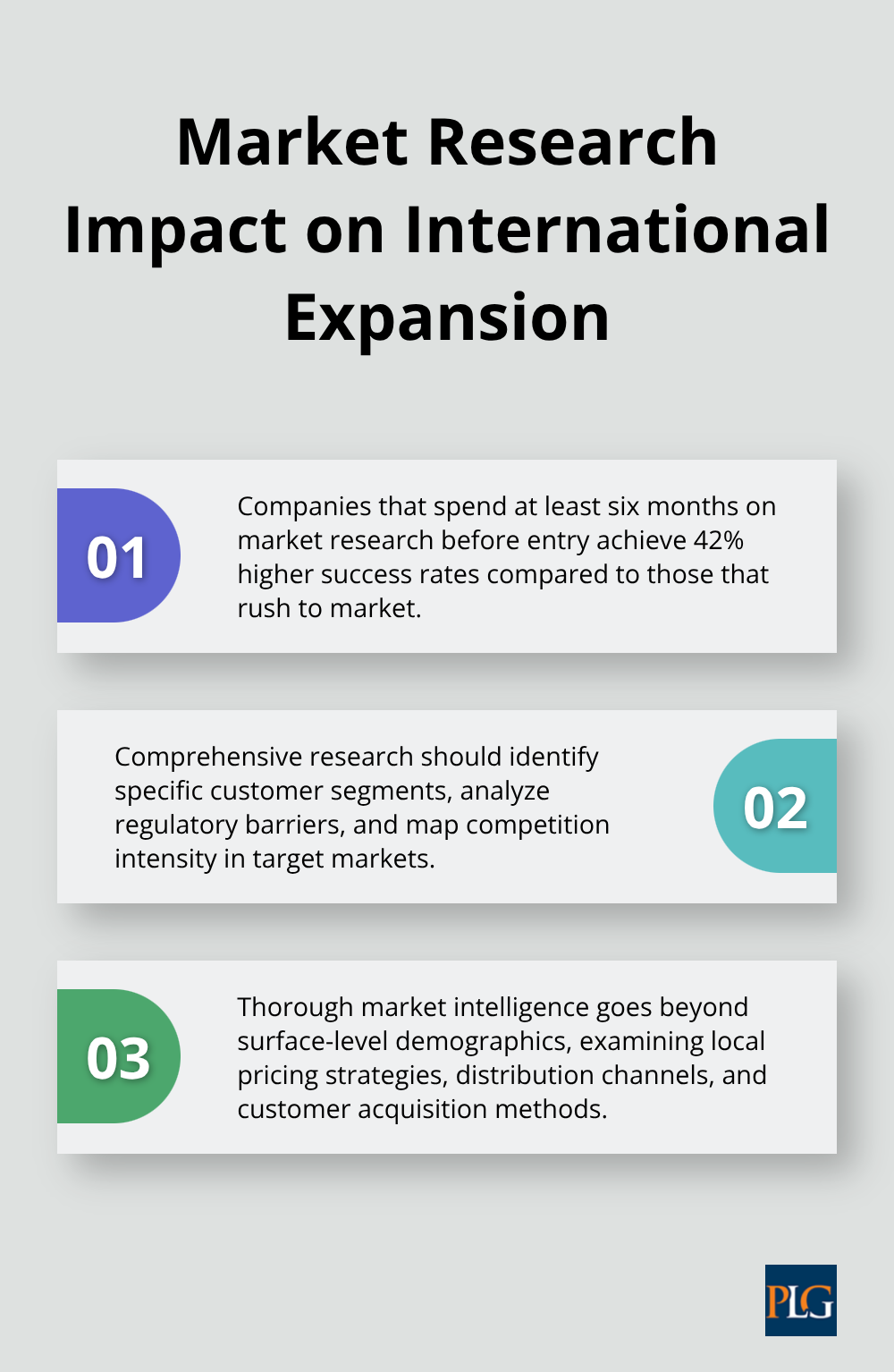
Successful international expansion starts with deep market intelligence that goes beyond surface-level demographics. San Francisco companies must conduct comprehensive competitive analysis in target markets and examine local pricing strategies, distribution channels, and customer acquisition methods. McKinsey research shows that companies that spend at least six months on market research before entry achieve 42% higher success rates than those that rush to market. The research phase should identify specific customer segments, analyze regulatory barriers, and map competition intensity. Stanford Graduate School of Business found that tech companies that enter European markets through Germany or the Netherlands achieve 23% faster revenue growth compared to UK-first strategies due to stronger regulatory frameworks and business infrastructure.
Strategic Market Entry Methods That Work
Market entry strategy determines long-term profitability and operational efficiency across international markets. The land and expand approach proves most effective for San Francisco tech companies (start with one strategic market that maximizes initial impact before geographic expansion). Partnership structures with local companies accelerate market penetration while they reduce regulatory complexity and operational risks. Joint ventures work best when both parties contribute complementary assets, with the American company that provides technology or capital while local partners offer market knowledge and distribution networks. Licensing agreements generate revenue with minimal investment but limit control over brand position and customer relationships. Direct investment through wholly-owned subsidiaries provides maximum control but requires substantial capital commitment and local compliance management.
Intellectual Property Protection Before Global Launch
Intellectual property protection must precede market entry, as retroactive protection proves expensive and often ineffective. Patent applications require filing in each target jurisdiction within 12 months of the initial U.S. filing to maintain priority rights under international treaties. Trademark registration costs vary dramatically between countries, from $200 in some markets to over $2,000 in established economies, but early registration prevents costly disputes later. Trade secret protection requires robust confidentiality protocols with international employees and partners (enforcement mechanisms vary significantly between legal systems). Companies that enter China must register trademarks in Chinese characters to prevent local competitors from claiming similar marks, while European Union trademark registration provides protection across all 27 member states through a single application process.
Partnership Development and Local Networks
Strategic partnerships accelerate market entry while they reduce operational complexity and financial risk. Local partners provide market knowledge, regulatory compliance support, and established distribution channels that take years to develop independently. San Francisco companies should evaluate potential partners based on market position, financial stability, and cultural alignment with business objectives. Due diligence must examine partner reputation, existing client relationships, and regulatory compliance history before formal agreements. Joint venture structures work best when both parties contribute distinct value propositions and share aligned growth objectives for the target market. International businesses seeking venture capital can benefit from specialized guidance on securing funding in the US market.
Final Thoughts
International business benefits extend far beyond revenue growth for San Francisco companies ready to scale globally. The data shows clear advantages: access to 95% of global consumers, 30% higher revenue growth, and enhanced resilience during economic downturns. Companies that expand strategically gain competitive advantages, diversify risk, and tap into markets where competition remains lighter.
Success requires proper legal foundation from day one. Corporate structure decisions, tax plans, and regulatory compliance frameworks must align before market entry. The costs of retrofitting legal architecture after expansion far exceed upfront planning investments (companies must establish these systems before they enter foreign markets).
We at Primum Law Group help San Francisco companies navigate complex international expansion requirements through tailored legal strategies that address corporate structure, tax optimization, and regulatory compliance across multiple jurisdictions. Companies that consider international markets should start with comprehensive market research, establish proper legal structures, and develop strategic partnerships. The window for global expansion continues to widen, but early movers capture the greatest market advantages and long-term profitability.