

San Francisco’s position as a global business hub makes finance for international business operations both complex and rewarding. Companies expanding internationally face currency risks, regulatory compliance challenges, and intricate banking requirements.
We at Primum Law Group understand these financial complexities can make or break your global expansion plans. The right financial infrastructure and legal compliance framework will determine your international success.
What Financial Risks Must International Businesses Navigate?
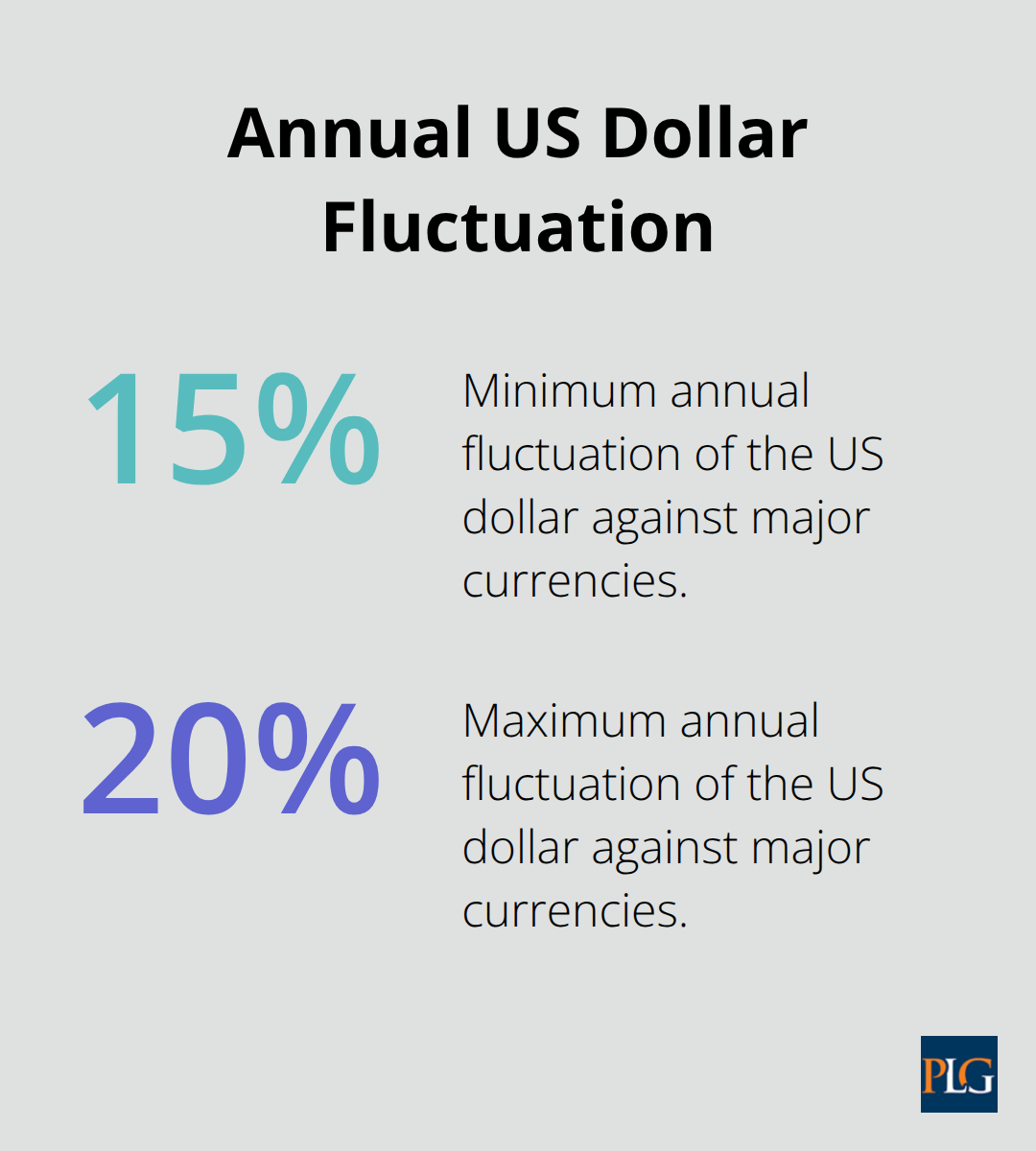
International business operations in San Francisco face three financial challenges that determine success or failure. Currency volatility represents the most immediate threat, with the US dollar fluctuating 15-20% annually against major currencies according to Federal Reserve data.
Currency Risk Management Protects Profit Margins
Companies must implement forward contracts and currency hedging strategies to protect profit margins. Forward contracts lock in exchange rates 3-12 months ahead, while currency swaps provide longer-term protection. Smart businesses also maintain multi-currency cash reserves, typically holding 30-40% of working capital in their primary operational currencies. These strategies shield companies from sudden market shifts that can eliminate quarterly profits overnight.
Payment Systems Drive Operational Efficiency
International banking infrastructure makes the difference between smooth operations and costly delays. SWIFT wire transfers remain the standard for large transactions but cost $25-50 per transfer and take 3-5 business days. Alternative payment platforms like Wise Business reduce costs to $5-15 per transfer with same-day processing. Opening dedicated foreign currency accounts eliminates conversion fees on recurring transactions. San Francisco businesses should establish banking relationships in their target markets within the first 90 days of expansion (as local bank accounts reduce transaction costs by 60-70% compared to international transfers).
Tax Compliance Creates Regulatory Risk
Cross-border tax obligations create the highest regulatory risk for international operations. The Foreign Account Tax Compliance Act requires US companies to report foreign financial accounts that exceed $10,000. Transfer pricing rules demand arm’s length pricing between related entities, with penalties that reach 40% of understated tax amounts. Companies must file Form 8865 for foreign partnerships and Form 5471 for controlled foreign corporations. Tax treaty benefits can reduce withholding taxes from 30% to 5-15%, which makes proper structuring worth millions in savings for larger operations.
These financial foundations set the stage for understanding how securities regulations and investment compliance shape international business operations.
Which Legal Requirements Shape International Finance Operations?
Securities Regulations Control Foreign Investment Activities
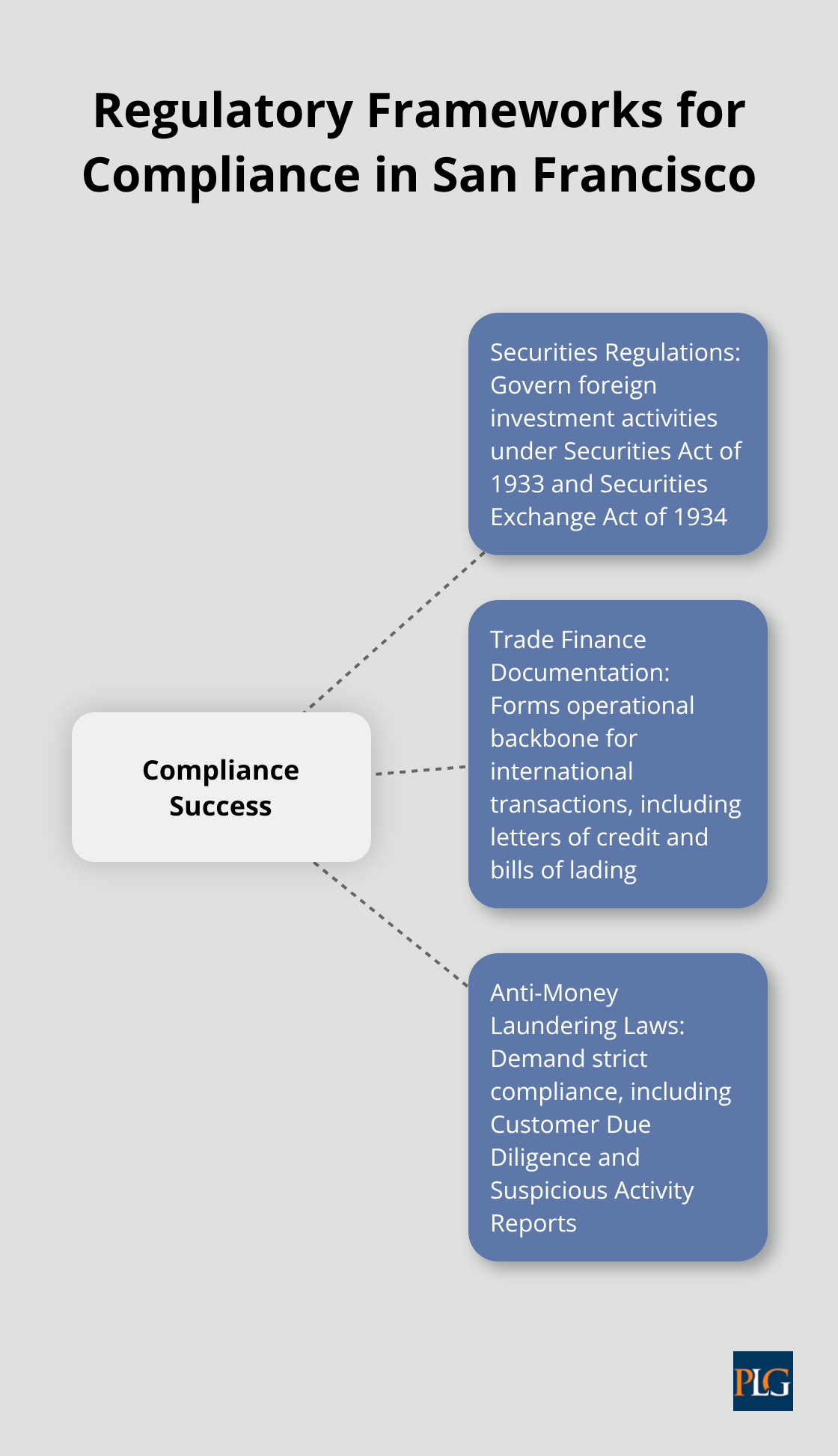
International finance operations must navigate three regulatory frameworks that determine compliance success in San Francisco. Securities regulations govern foreign investment activities under the Securities Act of 1933 and Securities Exchange Act of 1934. Companies must register securities offerings that exceed $5 million within 12 months.
The Committee on Foreign Investment in the United States reviews transactions where foreign entities acquire control of US businesses. Review timelines extend 75-90 days for complex cases. Form D filings must occur within 15 days of first securities sales, while Regulation S provides safe harbor for offshore offerings to non-US persons. Companies that raise capital internationally need qualified intermediary status to reduce withholding taxes from 30% to treaty rates of 5-15%.
Trade Finance Documentation Forms Operational Backbone
Trade finance documentation creates the operational backbone for international transactions. Letters of credit require precise documentation that matches within 24-48 hours. Discrepancies cause payment delays that cost 2-3% of transaction value (according to International Chamber of Commerce data).
Bills of lading serve as title documents that require original copies for cargo release at destination ports. Commercial invoices must include Harmonized Tariff Schedule codes for customs clearance. Certificates of origin qualify shipments for preferential duty treatment under trade agreements.
Anti-Money Laundering Laws Demand Strict Compliance
Anti-money laundering compliance demands Customer Due Diligence procedures for all business relationships. Enhanced Due Diligence applies to politically exposed persons and high-risk jurisdictions. The Bank Secrecy Act mandates Currency Transaction Reports for cash transactions that exceed $10,000.
Suspicious Activity Reports must be filed within 30 days of suspicious transaction detection. Financial institutions face penalties that reach $2 million per violation for compliance failures. This makes robust AML programs non-negotiable for international operations.
These regulatory requirements establish the foundation that companies need before they can build the financial infrastructure necessary for successful global expansion. Understanding these frameworks becomes essential for professionals pursuing international business careers in San Francisco’s competitive market.
How Do You Build Financial Infrastructure for International Operations?
Establish Strategic Banking Relationships
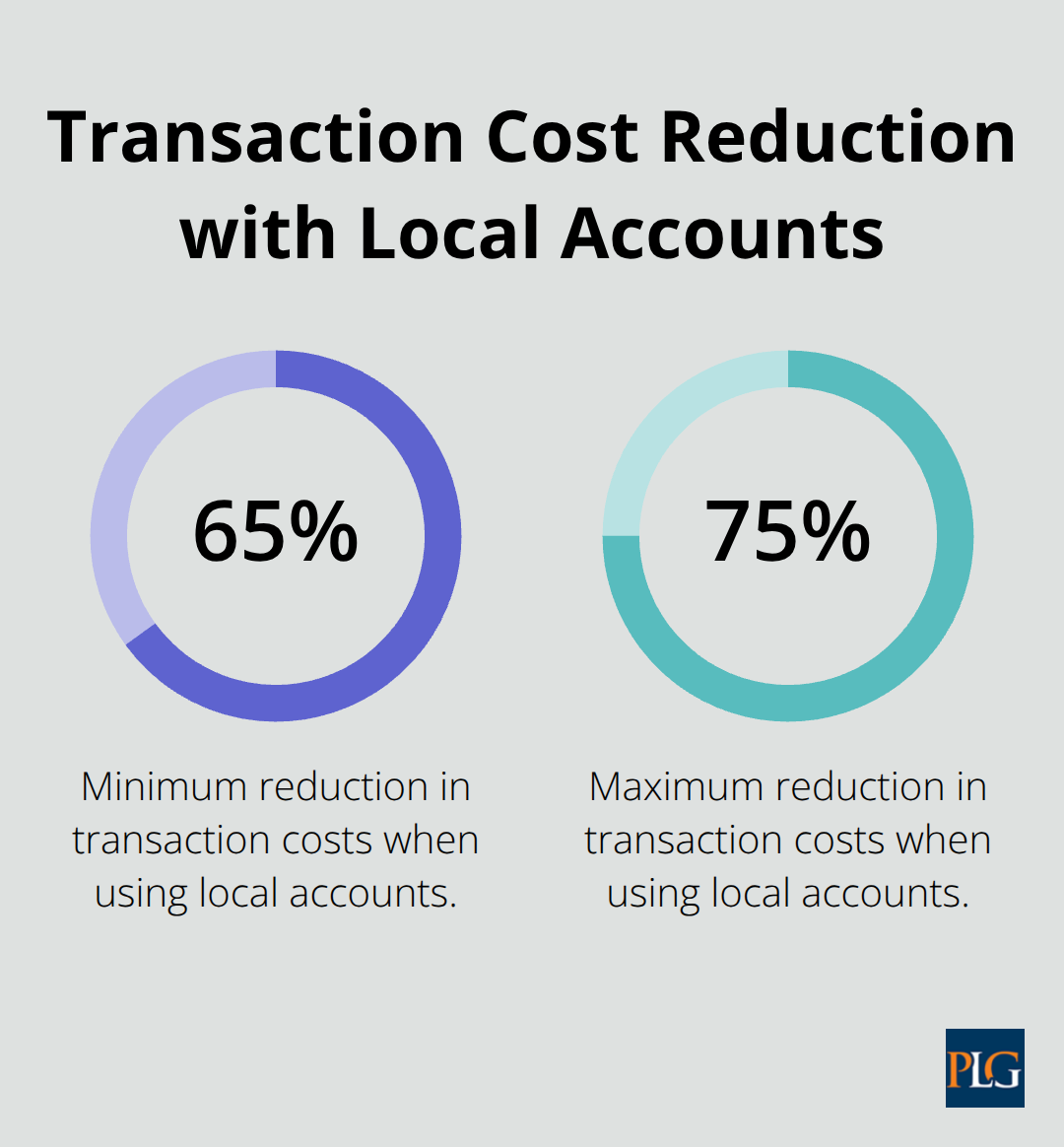
Companies must establish primary banking relationships in target markets within 60 days of expansion. Local accounts reduce transaction costs by 65-75% compared to international wire transfers (McKinsey Global Institute data shows this significant cost advantage). Major international banks like HSBC, Citibank, and JPMorgan Chase offer multi-jurisdiction accounts with integrated treasury management platforms.
Regional banks provide better service and lower fees for specific markets, with relationship managers who understand local regulations. The account setup process requires corporate registration documents, tax identification numbers, and board resolutions that authorize signatories. Account approval takes 30-45 days in developed markets and 60-90 days in emerging markets.
Implement Multi-Currency Accounting Systems
Multi-currency accounting systems eliminate foreign exchange exposure on routine transactions and provide real-time financial reporting across jurisdictions. NetSuite International and SAP Business One handle multi-entity consolidation with automated currency conversion that uses daily exchange rates. These systems track intercompany transactions and generate statutory reports for each jurisdiction.
Companies save 40-50% on accounting costs when they centralize financial operations through integrated platforms. The systems automatically calculate gains and losses from currency fluctuations, which simplifies month-end reporting processes.
Create Robust Internal Controls
Internal controls must include segregation of duties for international wire transfers, monthly bank reconciliations for all foreign accounts, and quarterly reviews of foreign exchange exposures. The Sarbanes-Oxley Act requires documented controls for public companies with foreign subsidiaries.
Private companies benefit from similar frameworks that prevent fraud and regulatory violations. These violations average $1.5 million per incident according to Association of Certified Fraud Examiners research. Wire transfer approval requires two authorized signatures for amounts above $50,000, while monthly reconciliations must be completed within five business days of month-end.
Final Thoughts
Finance for international business requires strategic planning that balances growth opportunities with regulatory compliance. Companies that implement proper currency hedging, establish local banking relationships, and maintain robust internal controls position themselves for sustainable global expansion. Legal and regulatory compliance forms the foundation of successful international operations.
Securities regulations, anti-money laundering requirements, and cross-border tax obligations create complex frameworks that demand professional guidance. Non-compliance costs average $1.5 million per incident (Association of Certified Fraud Examiners data), which makes proper legal structure non-negotiable. Companies must prioritize regulatory compliance from day one rather than retrofit systems after expansion.
The next steps for global financial management include establishment of multi-currency accounting systems within 90 days, securing local banking relationships in target markets, and implementation of documented internal controls. We at Primum Law Group provide international corporate structuring services that help businesses navigate these complex requirements. Our business lawyers work with startups and established companies to create compliant frameworks for global expansion while minimizing regulatory risks.