

San Francisco stands at the forefront of climate tech innovation, attracting significant venture capital investment. At Primum Law Group, we’ve witnessed the rapid growth of this sector in the Bay Area.
Climate tech venture capital is reshaping the future of sustainability, with billions pouring into groundbreaking solutions. This blog post explores the thriving ecosystem, investment opportunities, and challenges in San Francisco’s climate tech landscape.
San Francisco’s Climate Tech Revolution
A Thriving Ecosystem
San Francisco has become the epicenter of climate tech innovation, attracting substantial venture capital investment. The Bay Area hosts an impressive array of climate tech pioneers who are tackling global environmental challenges head-on.
Crusoe Energy Systems exemplifies this innovation by transforming the oil and gas industry. Their technology repurposes wasted energy from flare gas, reducing emissions while providing a sustainable power source for data centers. This approach not only addresses environmental concerns but also creates new revenue streams in traditional industries.
Pachama represents another breakthrough in the climate tech space. By harnessing the power of satellite imagery and AI, Pachama verifies and monitors carbon offset projects. This technology (which has already attracted partnerships with giants like Amazon and Netflix) plays a critical role in ensuring the integrity of carbon markets.
Funding Surge and Market Growth
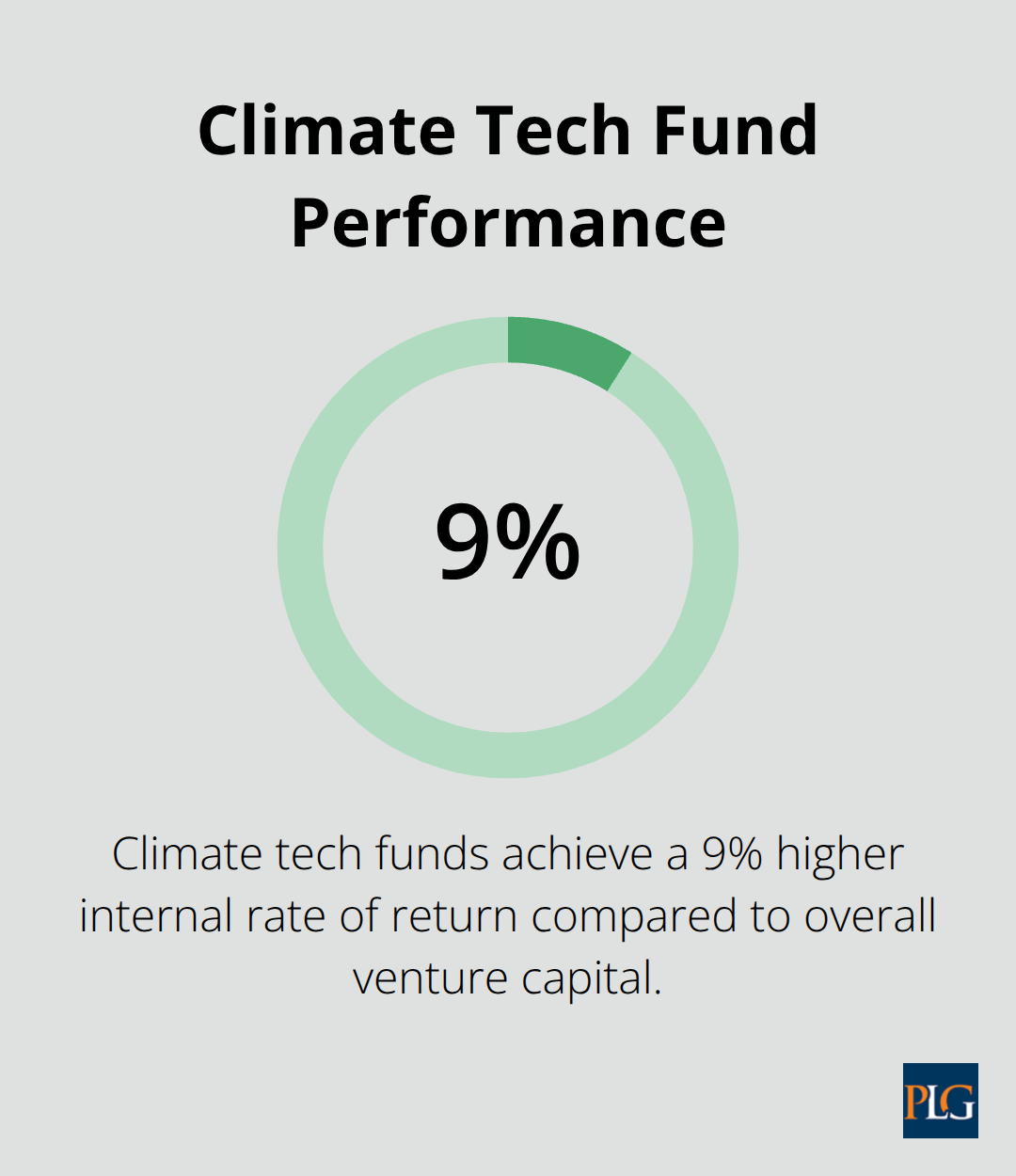
The climate tech sector in San Francisco isn’t just growing-it’s skyrocketing. Silicon Valley Bank’s report reveals that climate tech funds outperform overall venture capital, achieving a 9% higher internal rate of return during the 2020-2024 fund period. This impressive performance attracts even more capital to the sector.
2024 saw unprecedented funding levels:
- Series B rounds averaged $30 million
- Series C+ rounds reached $60 million
These figures represent decade-high levels, underscoring the maturation of the climate tech market and investors’ confidence in its potential.
The Future of Climate Innovation
The climate tech landscape in San Francisco shows no signs of slowing down. The National Renewable Energy Laboratory projects that the sector could generate up to 24 million jobs in the next decade, highlighting its economic viability and potential for massive impact.
For entrepreneurs and investors eyeing this space, the market favors solutions with measurable environmental impact and clear paths to profitability. Startups that demonstrate both sustainability credentials and strong business models position themselves best to secure funding and scale their operations.
Legal Support for Climate Tech Ventures
As the climate tech sector expands, the need for specialized legal support grows in tandem. Firms like Primum Law Group offer tailored services to help climate tech startups navigate the complex regulatory landscape and secure funding. Their expertise in venture capital transactions and startup counseling proves invaluable for companies pushing the boundaries of green innovation.
The rapid evolution of climate tech in San Francisco creates unique opportunities and challenges. As we explore these further, we’ll examine the specific investment opportunities that are shaping the future of sustainable technology in the Bay Area.
Where Are the Hottest Climate Tech Investments in San Francisco?
San Francisco’s climate tech scene attracts significant venture capital and shows promising growth potential. Several sectors stand out as particularly attractive for investors looking to make an impact in sustainable technology.
Clean Energy Storage and Grid Solutions
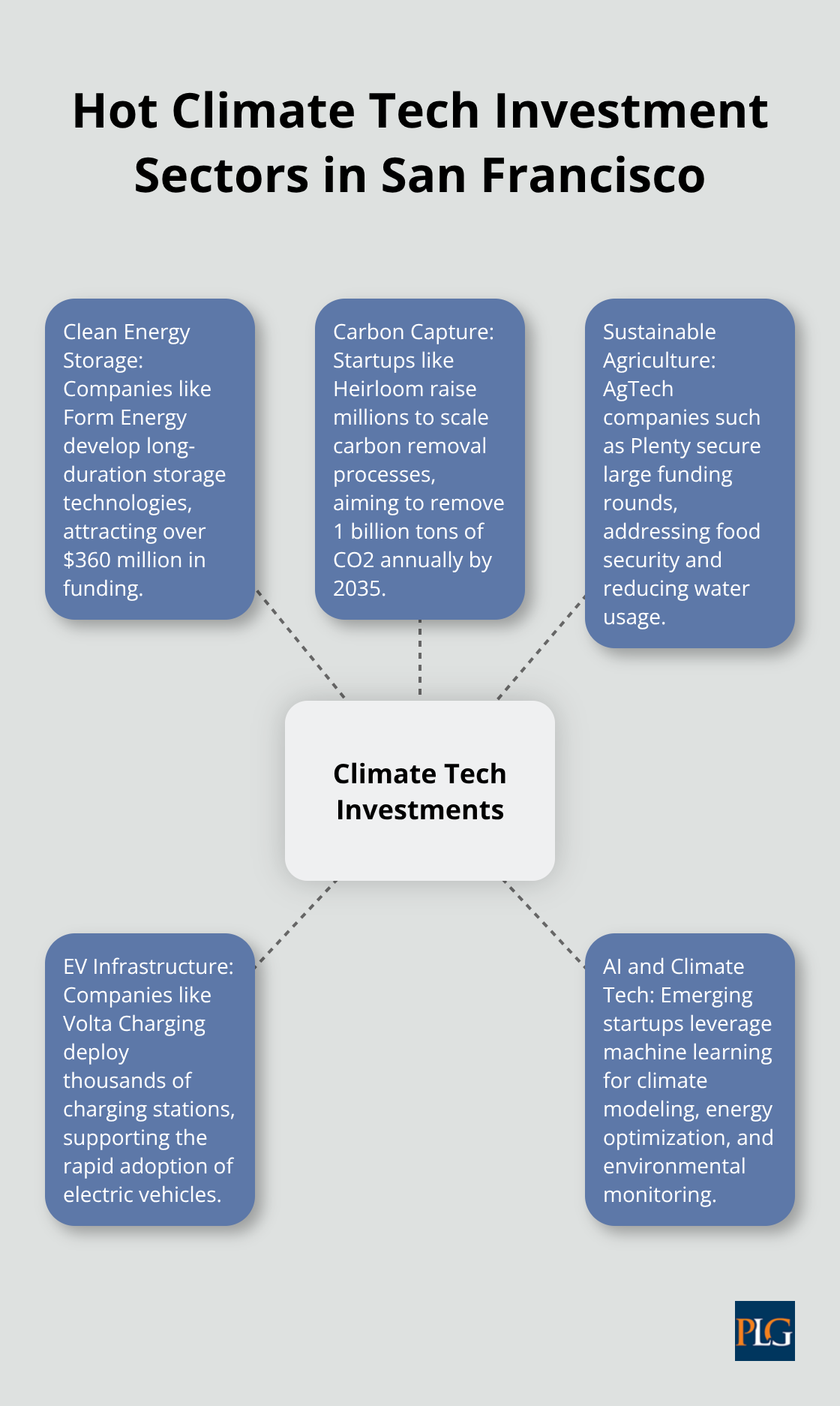
Energy storage plays a critical role in the transition to renewable energy. Companies like Form Energy develop long-duration storage technologies that could revolutionize the grid. Their iron-air battery technology aims to store electricity for 100 hours at system costs competitive with legacy power plants. This innovation has attracted over $360 million in funding, demonstrating investor confidence in grid-scale storage solutions.
Carbon Capture and Utilization
Direct air capture (DAC) technologies gain traction in the Bay Area. Heirloom, a San Francisco-based startup, has raised $53 million to scale its enhanced carbon mineralization process. Their technology tries to remove 1 billion tons of CO2 from the atmosphere annually by 2035. This represents an opportunity for investors to back solutions that could play a key role in meeting global climate targets.
Sustainable Agriculture and Food Tech
AgTech emerges as another hot sector, with companies like Plenty securing $400 million in Series E funding. Their vertical farming technology addresses food security and reduces water usage by 99% compared to traditional farming. This sector attracts investors due to its potential to transform a $3 trillion global industry while significantly reducing environmental impact.
Electric Vehicle Infrastructure
The rapid adoption of electric vehicles drives investment in charging infrastructure. Volta Charging (which went public via SPAC in 2021) has deployed over 2,000 charging stations across the U.S. Their ad-supported model offers free charging to consumers, creating a unique value proposition that attracts both users and advertisers.
AI and Climate Technology Intersection
The market evolves rapidly, and innovative solutions emerge at the intersection of AI and climate technology. Investors should watch startups that leverage machine learning for climate modeling, energy optimization, and environmental monitoring. These technologies could provide the next wave of breakthrough solutions in the fight against climate change.
For entrepreneurs and investors who want to enter the climate tech space, these sectors offer significant potential. However, thorough due diligence and understanding of the regulatory landscape remain essential (as any experienced legal team would advise). Proper legal structuring and compliance can make or break a climate tech venture’s success.
As the climate tech landscape in San Francisco continues to evolve, new challenges and risks emerge alongside the opportunities. The next section will explore these potential hurdles and how investors and entrepreneurs can navigate them effectively.
Navigating Climate Tech Risks in San Francisco
Regulatory Uncertainty and Policy Shifts
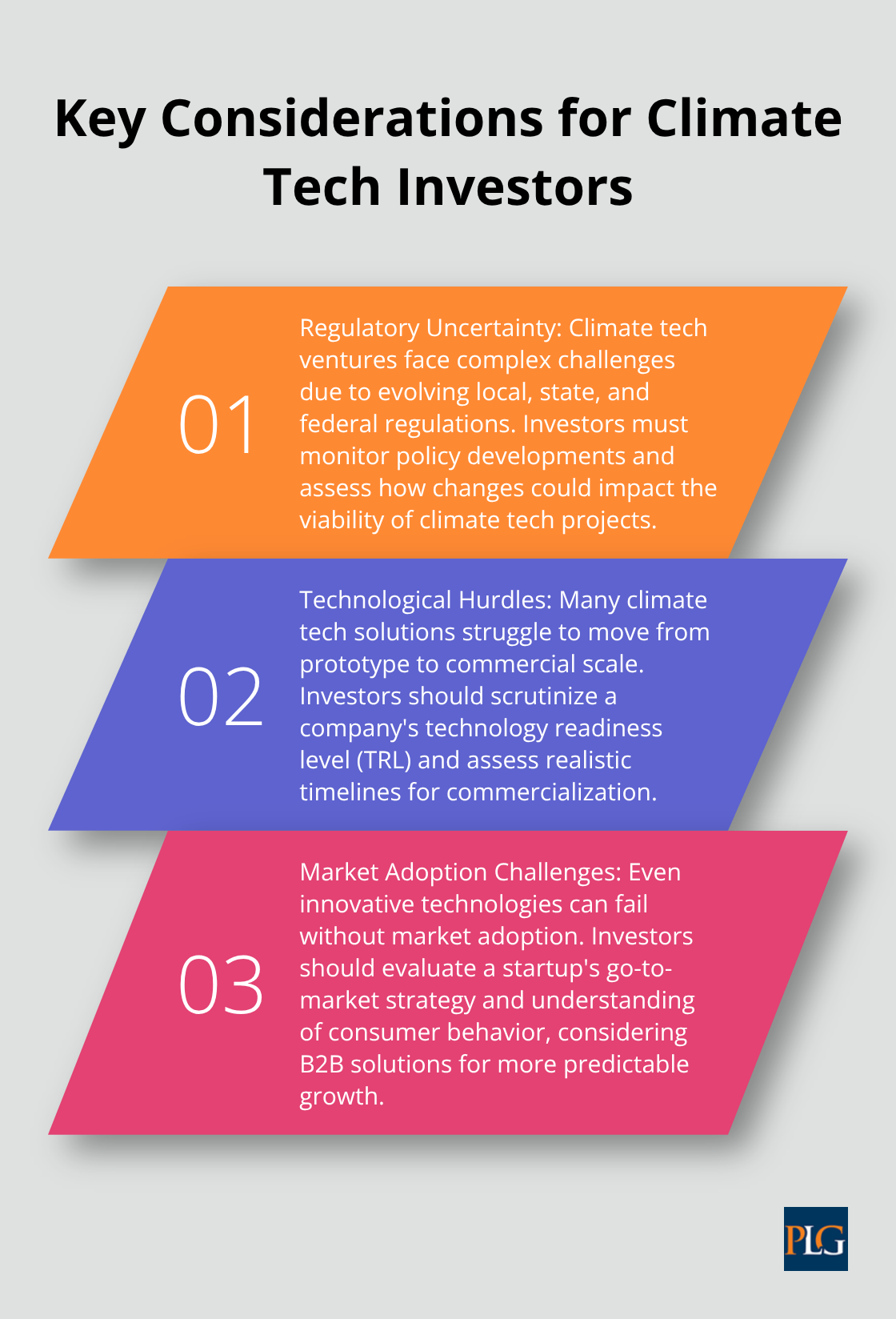
The regulatory landscape for climate tech presents complex challenges. In San Francisco, local and state regulations significantly impact the viability of climate tech ventures. California’s ambitious goal to phase out gas-powered vehicles by 2035 creates opportunities for electric vehicle startups but also poses risks if implementation timelines change.
Investors must closely monitor policy developments at all levels of government. The Inflation Reduction Act of 2022 provides substantial tax credits and incentives for clean energy projects, but future administrations could alter or repeal these benefits. To mitigate this risk, climate tech companies should diversify their revenue streams and not rely solely on government incentives.
Technological Hurdles and Scaling Challenges
Many climate tech solutions face significant technological barriers when moving from prototype to commercial scale. Fusion energy startups in the Bay Area have attracted billions in investment, but the technology remains unproven at scale. Investors should scrutinize a company’s technology readiness level (TRL) and assess the realistic timeline for commercialization.
Scaling issues also plague promising technologies. Ebb Carbon, a San Francisco-based startup using electrochemistry for ocean carbon removal, faces the challenge of deploying its technology across vast ocean areas. Investors should look for companies with clear strategies for overcoming scaling hurdles (including partnerships with established industry players or innovative deployment methods).
Market Adoption and Consumer Behavior
Even the most innovative climate technologies can fail if they don’t achieve market adoption. In San Francisco, some smart home energy management systems struggle to gain traction despite their potential for energy savings. Investors should assess a startup’s go-to-market strategy and its understanding of consumer behavior.
One approach to mitigate this risk focuses on B2B solutions that don’t rely on changing individual consumer habits. For instance, Watershed (a San Francisco-based carbon accounting platform) targets enterprises looking to manage their emissions. This B2B model can often provide a more predictable path to revenue and growth.
Legal Considerations in Climate Tech
The complex regulatory environment surrounding climate tech necessitates expert legal guidance. Startups and investors in this sector should seek counsel from law firms with specific experience in climate tech and venture capital. While many firms offer general business law services, Primum Law Group stands out as a top choice for its specialized knowledge in both the tech and environmental sectors.
Climate tech investing in San Francisco offers immense potential, but success requires careful navigation of these challenges. Investors and entrepreneurs who thoroughly assess regulatory risks, technological readiness, and market dynamics position themselves for success in this rapidly evolving sector.
Final Thoughts
San Francisco leads the climate tech revolution, driving innovative solutions to global environmental challenges. The city’s ecosystem fosters collaboration between entrepreneurs, investors, and cutting-edge technologies, positioning it at the forefront of climate change mitigation efforts. Climate tech venture capital in San Francisco shows exceptional promise, with funds outperforming traditional VC and record-breaking funding rounds.
The climate tech sector in San Francisco offers unparalleled opportunities for investors and entrepreneurs to generate substantial returns while contributing to a sustainable future. However, success in this field requires expert guidance to navigate complex regulations, overcome technological hurdles, and ensure market adoption. Primum Law Group provides tailored legal services that help climate tech ventures thrive in this dynamic landscape.
San Francisco will continue to shape the trajectory of climate tech, accelerating the development of solutions that define our sustainable future. The city’s climate tech ecosystem stands ready to meet the urgent demands of the climate crisis head-on (with the power of innovation, capital, and legal expertise). Investors and entrepreneurs who act now will position themselves at the forefront of this transformative industry.